Ohio buckeye
Aesculus glabra. Family Sapindaceae. Tree.
Also called American buckeye, Fetid buckeye.
Ohio buckeye is a deciduous tree native to central and eastern North America, grown for its hand-shaped leaves, upright spring flower clusters and yellow to orange autumn colour. It suits roomy gardens with moist soil, but summer leaf scorch and early leaf fall can spoil its appearance in hot, dry sites.
At a glance
- Sun
- Full sun to partial shade; afternoon shade helps in hot locations.
- Water
- Moderate to high; keep the root zone evenly moist, especially while young and during dry summers.
- Soil
- Deep, fertile, moisture-retentive but well-drained soil; tolerates clay and a range from slightly acidic to alkaline.
- Height
- 20-40 ft (6-12 m), occasionally taller
- Spread
- 20-40 ft (6-12 m)
- Flowers
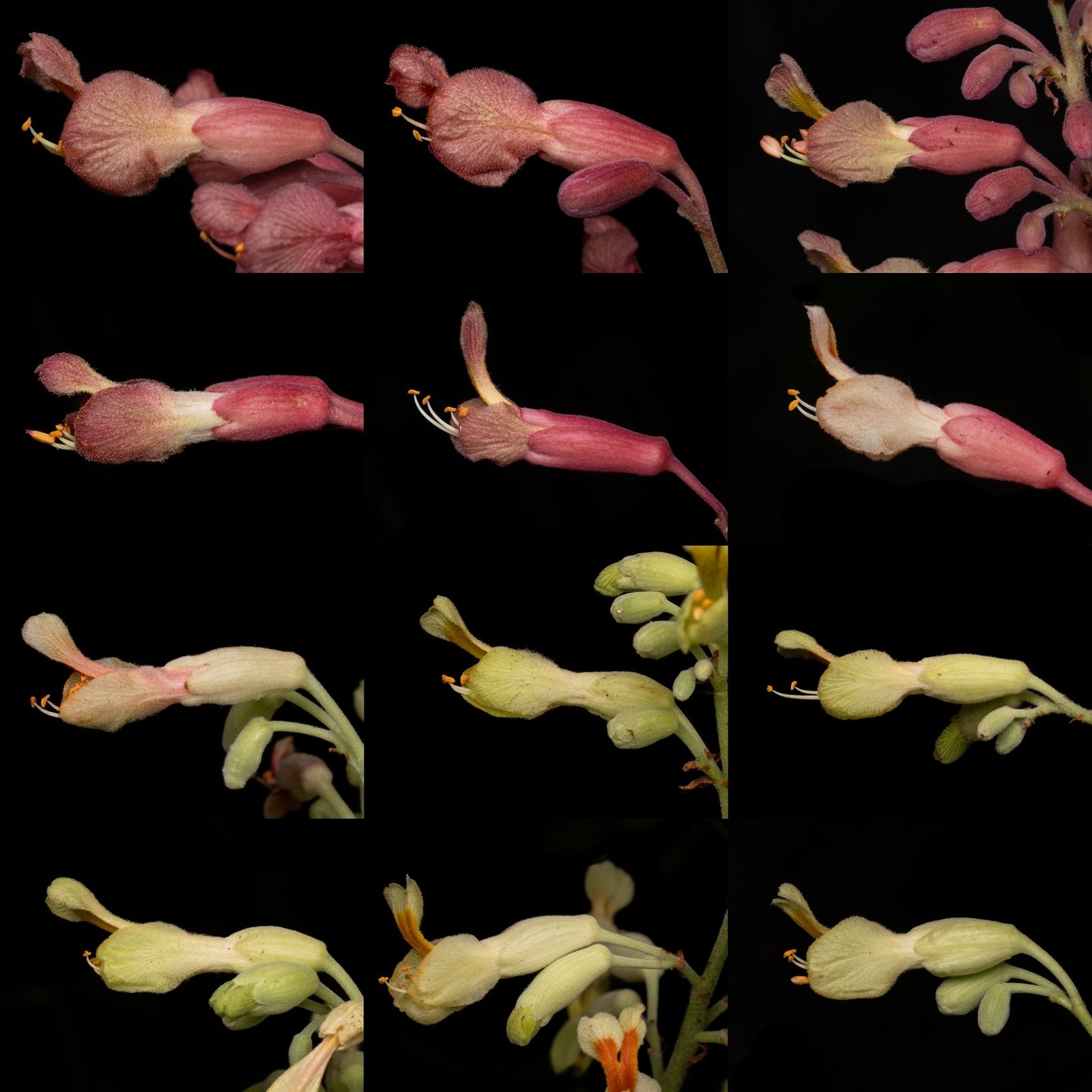
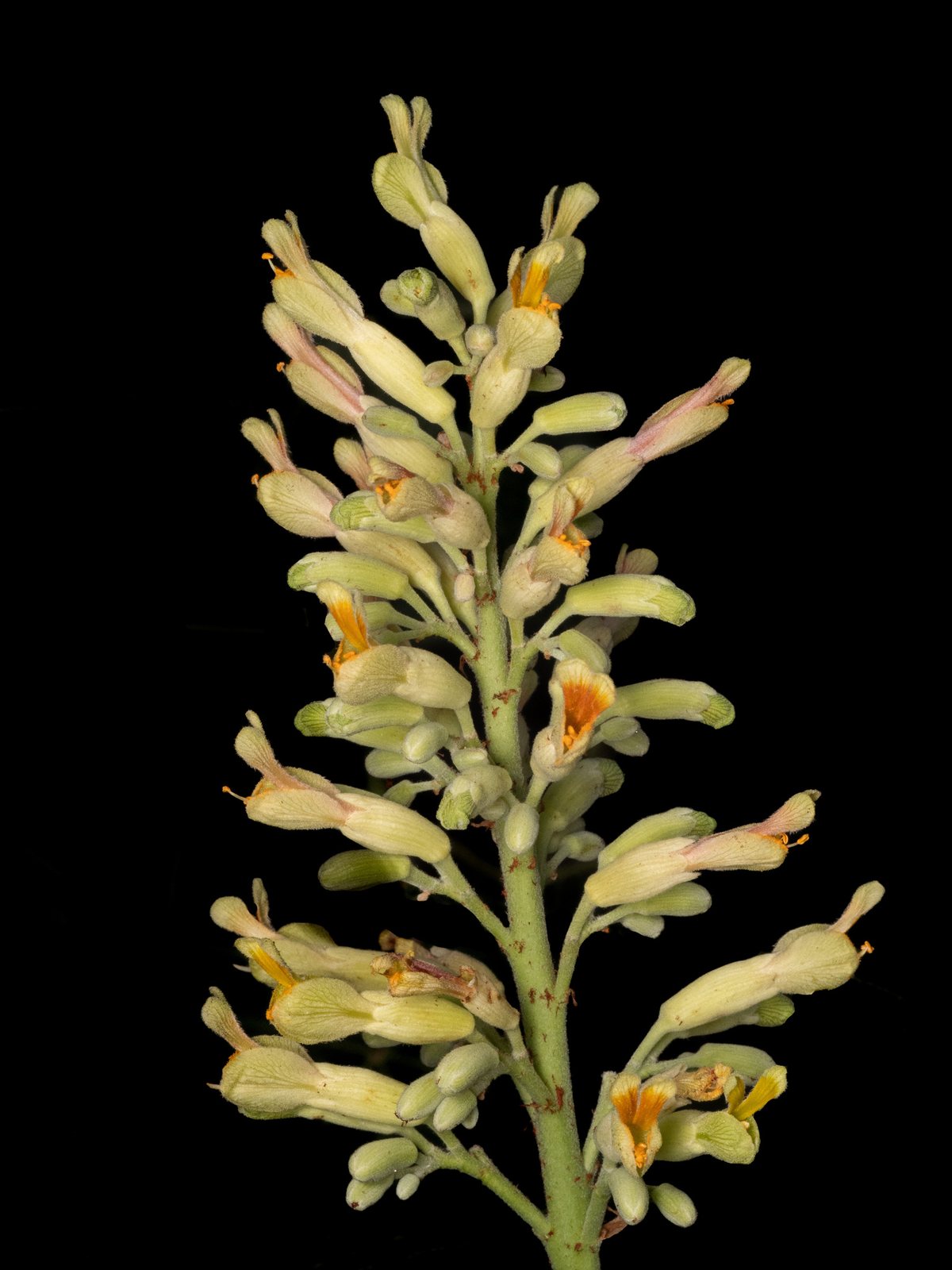
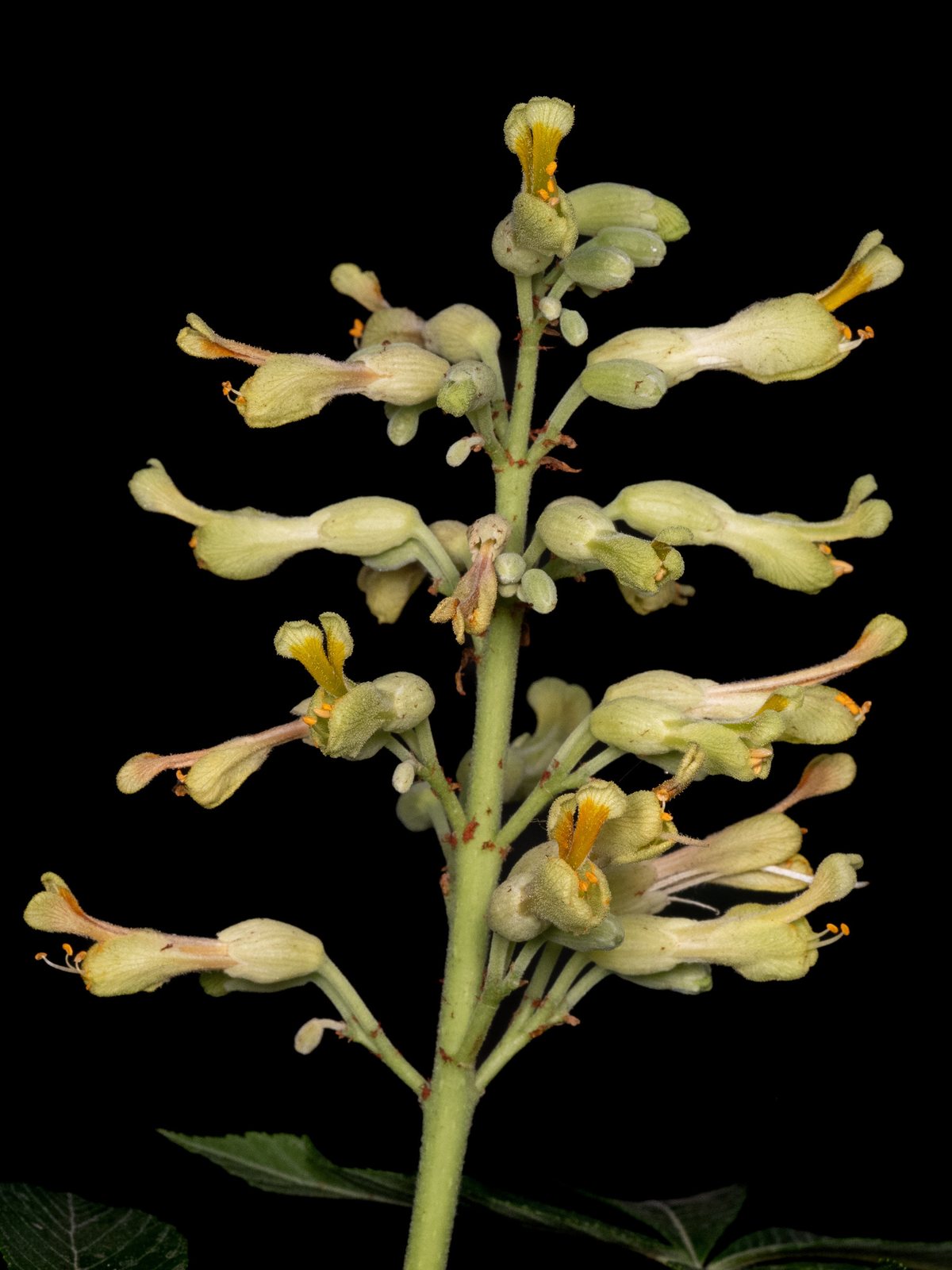
- Upright clusters of greenish-yellow flowers in mid- to late spring.
- Foliage
- Opposite, hand-shaped leaves usually have five pointed leaflets. Leaves emerge early and turn yellow, orange or occasionally reddish in autumn; colour varies.
- Growth
- Moderate
- Care needed
- Medium
The year at a glance
- Pollinators
- Cold hardy
- Wildlife
| J | F | M | A | M | J | J | A | S | O | N | D | |
|---|---|---|---|---|---|---|---|---|---|---|---|---|
| Flowers | ||||||||||||
| Fruit | ||||||||||||
| Plant |
Northern hemisphere months. In Australia, shift them by six.
- Difficulty
- Moderate
- Toughness
- Fairly tough
Will it suit your garden?
Pick your zone, country, light and whether you have pets.
Full sun is 6 or more hours of direct sun a day, part shade 3 to 6 hours, shade under 3.
How it grows
Planting day
7 ft (2 m)
After 1 year
8 ft (2.3 m)
After 2 years
9 ft (2.7 m)
After 3 years
10 ft (3.1 m)
After 5 years
12 ft (3.7 m)
About 20 years to full size.
From a typical nursery size, at an average rate for this kind of plant. A rule of thumb, not a forecast.
Good to know
- Cats and dogs
- Toxic
- Native to
- the US and Canada
- Growth rate
- Moderate
Care
Jobs through the year
- WaterApr–May, Sep–Oct, every 14 days
- Water established trees deeply if soil is drying; young trees need more frequent checks for their first two seasons.
- WaterJun–Aug, every 7 days
- Water deeply during dry weather to keep the root zone evenly moist and reduce leaf scorch.
- MulchMar–Apr
- Maintain 5-8 cm of organic mulch over the root zone, clear of the trunk.
- PruneFeb–Mar
- Remove damaged or crossing branches while dormant; retain a central leader and avoid large cuts.
- ProtectSep–Oct, every 7 days
- Collect fallen toxic seeds promptly wherever children, pets or livestock could reach them.
- ProtectOct–Nov
- Collect and dispose of diseased fallen leaves to reduce fungal carryover.
- Water deeply through the first two growing seasons, and during prolonged dry spells thereafter.
- Spread 2-3 in (5-8 cm) of organic mulch over the root zone, keeping it clear of the trunk.
- Keep lawn and competing weeds away from the base; avoid damaging the shallow roots.
- Feed only if growth is poor and a soil test indicates a nutrient shortage.
- Collect fallen seeds where children, pets or grazing animals could reach them.
Pruning. Prune in late winter while dormant, removing dead, damaged or crossing branches. Train young trees to a sound framework with a central leader, and avoid topping or unnecessary large cuts.
Through the year
- Autumn
- Plant after leaf fall while the soil remains workable; water thoroughly.
- Late winter
- Remove damaged or crossing branches and check the structure of young trees.
- Spring
- Renew mulch, keeping it away from the trunk, and check soil moisture as leaves emerge.
- Summer
- Water deeply during dry spells; check browning leaves for drought stress or leaf blotch.
- Early autumn
- Collect fallen seeds promptly where poisoning could be a risk; sow fresh seed if propagating.
- Late autumn
- Rake up diseased leaves to reduce the carryover of fungal leaf diseases.
In the garden
- Use as a specimen tree in a large lawn, allowing room for the mature crown and fallen fruit.
- Plant at a woodland edge with shade-tolerant shrubs and spring-flowering groundcover.
- Include in a mixed native planting within its North American range for spring flowers and seasonal foliage.
- Place away from patios, paths and play areas where dropped fruit and early leaf fall would be troublesome.
Garden styles it suits: Woodland, Wildlife garden, Traditional, Grand estate, Autumn colour and Rewilded.
Plant it with: Virginia bluebells, Wild ginger, Woodland phlox, Christmas fern, Foamflower and Spicebush.
Wildlife: Flowers provide nectar and pollen for bees and other pollinators. Squirrels eat or cache the seeds, but this does not mean the seeds are safe for people or domestic animals.
Problems to watch for
- Leaf scorch: brown leaf margins and early leaf drop follow heat, drought or drying winds. Mulch, water deeply and avoid exposed, paved sites.
- Leaf blotch: irregular reddish-brown patches can cause premature leaf fall. Collect fallen leaves and maintain good airflow; established trees usually tolerate it without spraying.
- Powdery mildew: a white coating may develop on leaves. Avoid overcrowding and unnecessary nitrogen feeding; treatment is rarely needed on an established tree.
- Scale insects: inspect twigs for fixed bumps, honeydew or sooty mould. Identify the scale before treatment; horticultural oil may help when applied at the appropriate stage according to the label.
Safety
Toxic to people, cats, dogs and horses if eaten. Seeds are especially hazardous; leaves, bark and other parts also contain toxic compounds. Ingestion can cause vomiting, diarrhoea, weakness, trembling and potentially severe neurological signs. Keep fallen seeds away from children, pets and livestock, and seek urgent medical or veterinary advice after suspected ingestion.
Easily confused with
Yellow buckeye (Aesculus flava)
Usually becomes a larger tree and has smooth fruit capsules. Ohio buckeye has short prickles on its capsules and flower stamens that project beyond the petals.
Horse chestnut (Aesculus hippocastanum)
Usually has five to seven broader leaflets and conspicuous white flowers marked yellow and pink. Ohio buckeye usually has five narrower leaflets and greenish-yellow flowers.
Red buckeye (Aesculus pavia)
Usually a shrub or small tree with red tubular flowers and smooth fruit capsules, rather than Ohio buckeye's greenish-yellow flowers and prickly capsules.
The name
The name buckeye refers to the shiny brown seed with its pale scar, which resembles the eye of a deer.
Propagation. Grow from fresh seed collected when capsules split in autumn. Do not let seeds dry out; sow promptly outdoors in a protected seedbed or deep pots, where winter cold allows germination in spring. Protect from rodents and transplant while young, before the roots become difficult to move.
Checked against open data
- Accepted botanical name
- Aesculus glabra
- In the US and Canada
- Native in Canada and the lower 48 states.
- Native range
- Alabama, Arkansas, Georgia, Illinois, Indiana, Iowa, Kansas, Kentucky, Maine, Maryland, Michigan and Minnesota.
- Measured
- Soil pH 5 to 7.1. Average height 1815 cm.
Sources: GBIF (CC BY 4.0), USDA PLANTS and Trefle (CC BY 4.0). The care and design notes are LandscapeGPT's own.
See it in your own yard.
Upload a photo of your yard and see it redesigned with plants that suit your climate, each checked against your zone.