Parsnip
Pastinaca sativa. Family Apiaceae. Annual.
Also called Garden parsnip, Wild parsnip.
Parsnip is a biennial root vegetable grown as an annual for its long, cream-coloured roots, which become sweeter after cold weather. It needs a long growing season and deep soil; plants left for a second year produce tall stems of yellow flowers.
At a glance
- Sun
- Full sun; tolerates light partial shade, usually with smaller roots.
- Water
- Keep the seedbed consistently moist during germination, then water deeply during dry spells without waterlogging the soil.
- Soil
- Deep, loose, well-drained soil, ideally sandy loam, with stones removed. Avoid compacted ground and freshly manured beds, which encourage forked roots.
- Height
- 1-2 ft (0.3-0.6 m) in the cropping year; 3-5 ft (0.9-1.5 m) when flowering
- Spread
- 1-1.5 ft (0.3-0.45 m)
- Flowers
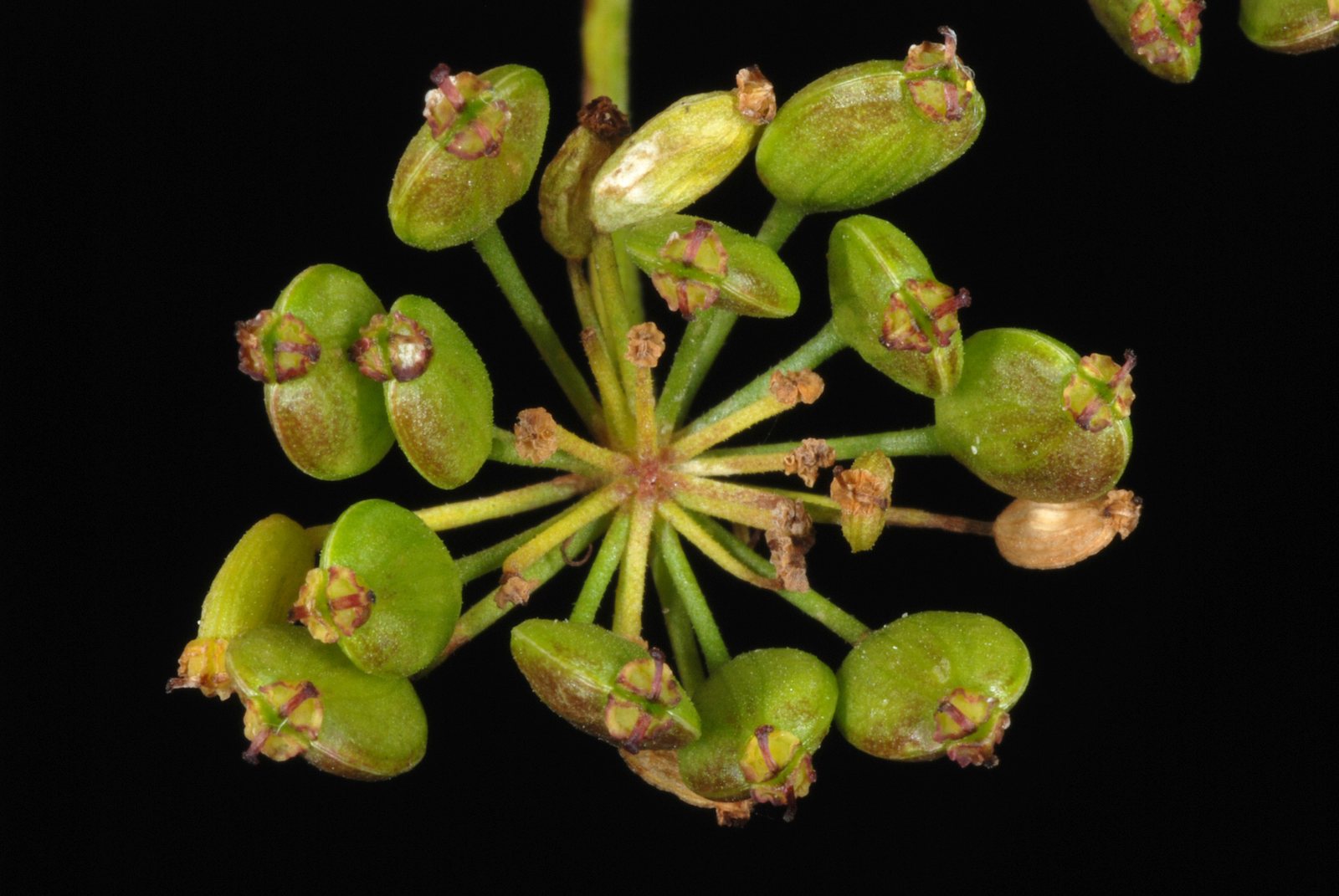
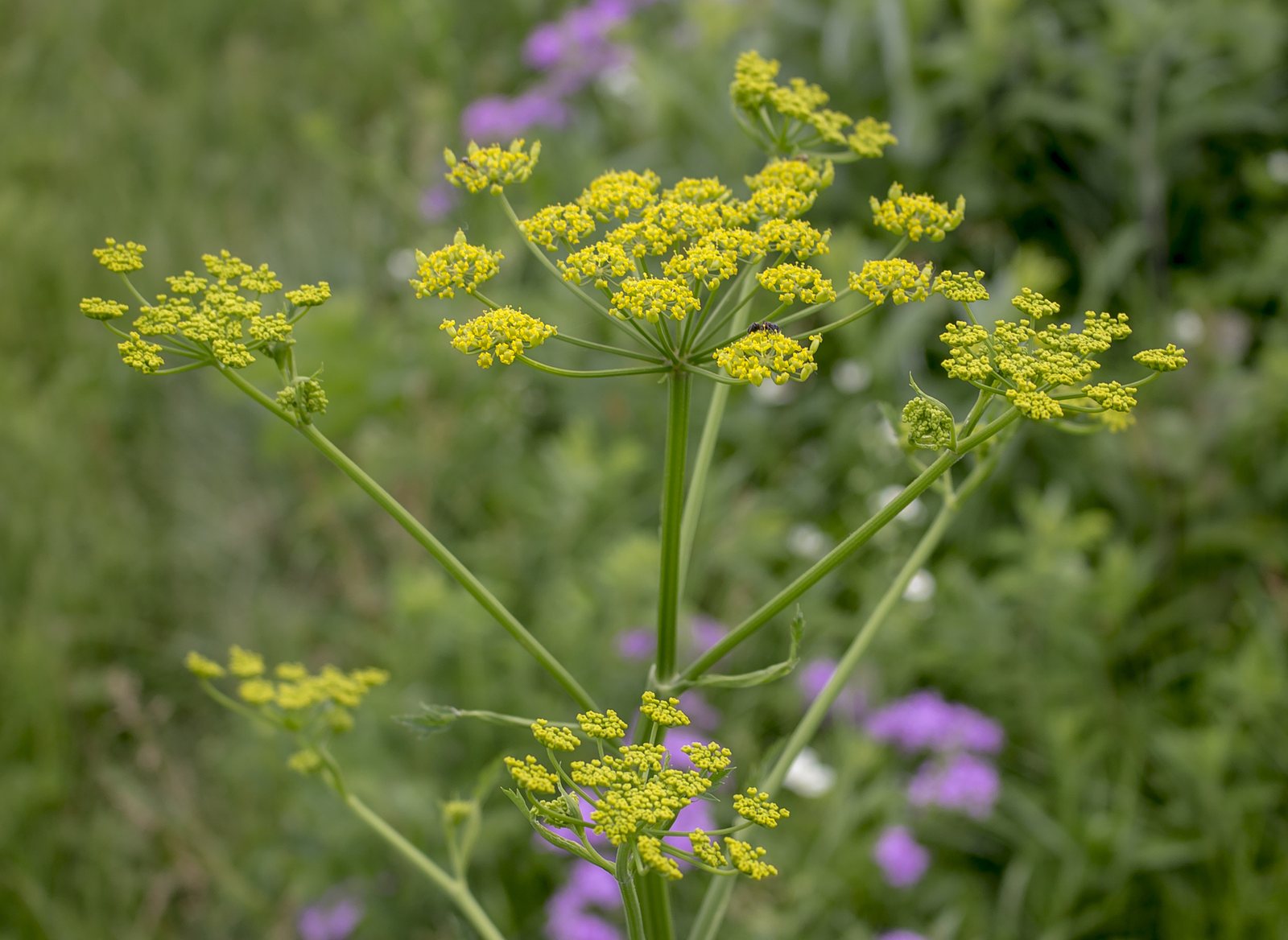
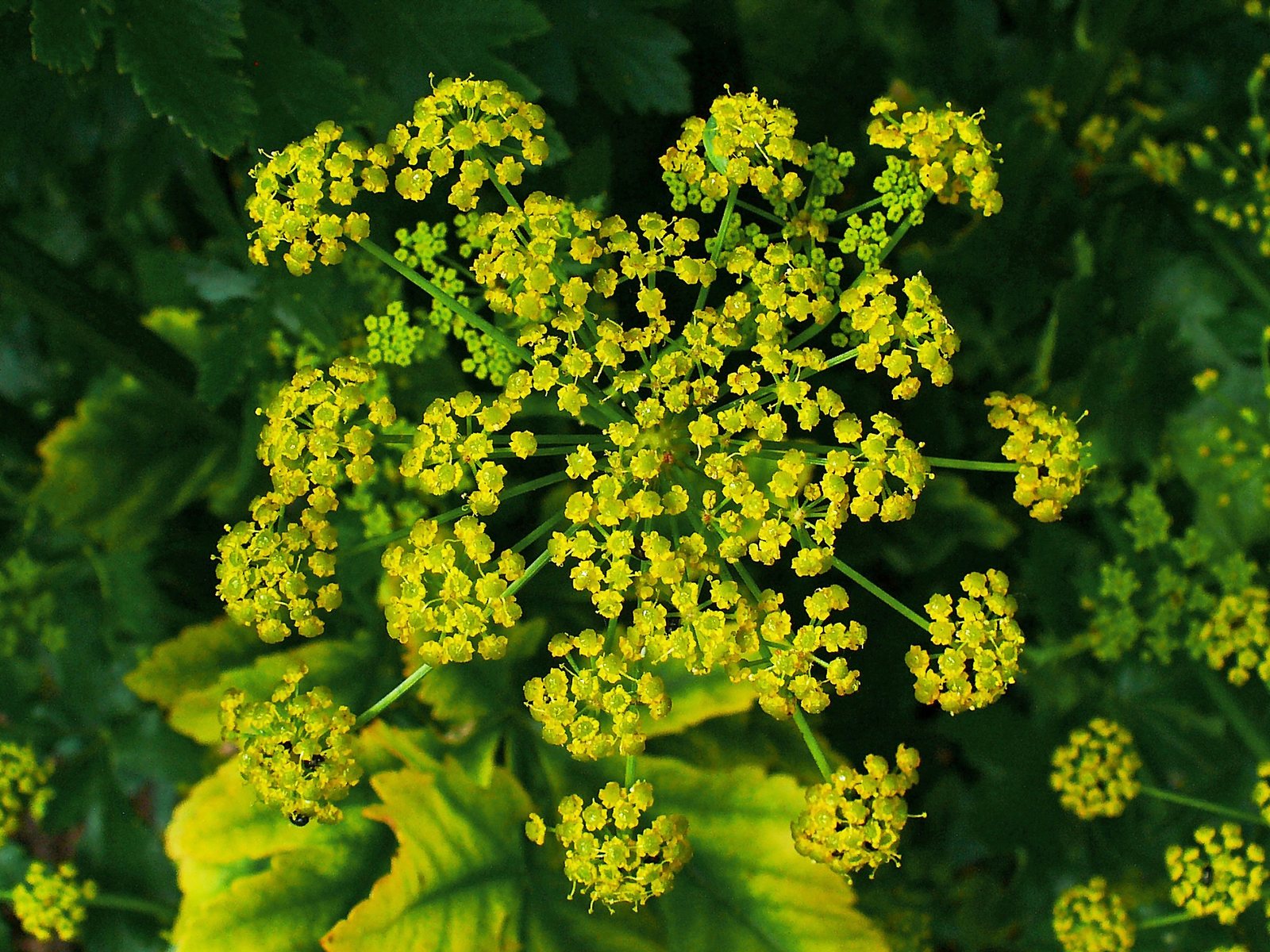
- Flat-topped clusters of small yellow flowers in late spring and summer of the second year.
- Foliage
- Coarse green leaves divided into broad, toothed leaflets; foliage dies back in cold weather.
- Growth
- Slow to germinate, then moderate; roots commonly need 100-150 days to reach harvest size.
- Care needed
- Medium
The year at a glance
- Cold hardy
- Low allergen
- Edible
| J | F | M | A | M | J | J | A | S | O | N | D | |
|---|---|---|---|---|---|---|---|---|---|---|---|---|
| Fruit | ||||||||||||
| Plant |
Northern hemisphere months. In Australia, shift them by six.
- Difficulty
- Moderate
- Toughness
- Very tough
Will it suit your garden?
Pick your zone, country, light and whether you have pets.
Full sun is 6 or more hours of direct sun a day, part shade 3 to 6 hours, shade under 3.
How it grows
Planting day
0.5 ft (0.15 m)
After 1 year
1.5 ft (0.45 m)
full size
Full size in one season.
From a typical nursery size, at an average rate for this kind of plant. A rule of thumb, not a forecast.
Good to know
- Cats and dogs
- Toxic
- Native to
- the UK
- Invasive in
- the US and Canada
- In the garden
- Spreads vigorously: plan to contain it.
- Growth rate
- Slow
Care
Jobs through the year
- WaterMar–May, every 7 days
- Water established crops if dry; keep the seedbed moist throughout slow germination.
- WaterJun–Aug, every 7 days
- Water established roots deeply during dry spells, allowing for rainfall.
- WaterSep–Oct, every 14 days
- Water established crops only if soil is dry; avoid waterlogging.
- MulchFeb–Mar
- Prepare the bed with mature compost; avoid fresh manure and excessive nitrogen.
- MulchMay–Jun
- Apply a light mulch after seedlings establish to conserve moisture and suppress weeds.
- ProtectMar–Oct
- Use sealed insect mesh where carrot fly is a problem; wear protective clothing when handling foliage.
- MulchNov
- Insulate overwintering roots with straw to help keep the ground workable.
- HarvestJan–Mar, Sep–Dec, every 14 days
- Fork out mature roots as needed when soil is workable; finish before spring regrowth.
- Sow fresh seed directly where the crop will grow; transplanting can damage the taproot.
- Keep the seedbed moist for the two to four weeks germination may take, sometimes longer in cold soil.
- Thin seedlings to 4-6 in (10-15 cm) apart and weed carefully while they are small.
- Water deeply during prolonged dry weather; mulch lightly once plants are established.
- Use mature compost before sowing, but avoid fresh manure and heavy nitrogen feeding.
- Wear gloves, long sleeves and eye protection when handling foliage, especially in sunshine.
Pruning. No routine pruning is needed. Unless saving seed, remove any flowering plants before seed ripens, wearing protective clothing to avoid contact with sap.
Harvest
Lift roots from autumn once their shoulders are roughly 1-3 in (2.5-7.5 cm) wide; cold weather usually improves their sweetness. Loosen the soil alongside each root with a garden fork rather than pulling the leaves. Roots can remain in well-drained soil through winter where the ground stays workable, but lift them before spring regrowth makes them woody.
Through the year
- Late winter
- Buy fresh seed and prepare a deep, stone-free bed when the soil is workable.
- Spring
- Direct-sow once soil begins warming; keep the seedbed moist while waiting for germination.
- Late spring
- Thin seedlings and remove weeds before they compete with the crop.
- Summer
- Water during dry spells and inspect roots and foliage for pest or disease damage.
- Autumn
- Begin lifting mature roots; in mild-winter climates, sow an autumn crop if local conditions allow.
- Winter
- Harvest as needed where soil remains workable, or store lifted roots cool and moist where the ground freezes hard.
In the garden
- Plant in straight rows in a kitchen garden for an orderly, productive bed.
- Use the coarse green foliage alongside finer-leaved carrots and onions in a potager.
- Grow in deep raised beds where native soil is shallow or stony.
- Allow a small, closely managed seed-saving group to flower in an edible garden, away from paths and seating.
Garden styles it suits: Potager (kitchen garden), Cottage garden, Farmhouse, Edible landscape, Homestead and Traditional.
Plant it with: Onion, Leek, Lettuce, Radish and Pea.
Wildlife: Second-year flowers attract hoverflies, small bees and parasitic wasps. Prevent seed escape, particularly where wild parsnip is invasive.
Problems to watch for
- Poor germination: use fresh seed, sow into warming soil and prevent the seedbed from drying out.
- Forked or stunted roots: remove stones, loosen compacted soil and avoid transplanting or fresh manure.
- Carrot fly: protect crops with insect mesh from sowing, securing the edges, and rotate the growing site.
- Parsnip canker: choose resistant cultivars, improve drainage, rotate crops and remove affected roots.
Safety
The cultivated root is edible for people. Sap from leaves and stems contains furanocoumarins that can cause severe, delayed skin burns and blisters after sunlight exposure; this hazard applies to people and can affect dogs, cats and horses on exposed skin. Keep pets and livestock away from cut foliage. The edible root is not generally considered poisonous to these animals, but that does not establish every part as safe to eat.
Where it spreads. Escaped plants spread readily by seed. Wild parsnip is invasive across much of the northeastern and midwestern United States and southern Canada, including Ontario and Quebec, especially along roadsides, in grasslands and on disturbed ground. Cultivated plants belong to the same species; prevent unwanted flowering and seed production.
Easily confused with
Wild carrot (Daucus carota)
Wild carrot has finely divided, fern-like leaves and usually white flower clusters; parsnip has broad, toothed leaflets and yellow flowers.
Poison hemlock (Conium maculatum)
Poison hemlock has finely divided leaves, white flowers and usually purple-blotched, smooth stems. It is extremely poisonous; never identify an edible root from root appearance alone.
Giant hogweed (Heracleum mantegazzianum)
Giant hogweed has enormous, deeply lobed leaves, huge white flower heads and thick, bristly, often purple-blotched stems. Its sap also causes serious sunlight-activated burns; do not handle a suspect plant.
The name
Pastinaca is the Latin name for parsnip, and sativa means cultivated.
Propagation. Direct-sow fresh seed in spring, or autumn in suitable mild-winter climates. Seed loses viability quickly, so buy or save a fresh supply each year; seed saving requires overwintering selected roots and allowing them to flower the following year.
Checked against open data
- Accepted botanical name
- Pastinaca sativa
- In the US and Canada
- Introduced in Alaska and the lower 48 states.
- Native range
- Albania, Altay, Austria, Baltic States, Belarus, Belgium, Bulgaria, Central European Rus, Corse, Czechoslovakia, East European Russia and France.
- Measured
- Soil pH 6.5 to 7. Average height 43 cm.
Sources: GBIF (CC BY 4.0), USDA PLANTS and Trefle (CC BY 4.0). The care and design notes are LandscapeGPT's own.
See it in your own yard.
Upload a photo of your yard and see it redesigned with plants that suit your climate, each checked against your zone.