Pink paper daisy
Rhodanthe chlorocephala. Family Asteraceae. Annual.
Also called Rosy everlasting, Pink everlasting, Rhodanthe chlorocephala subsp. rosea.
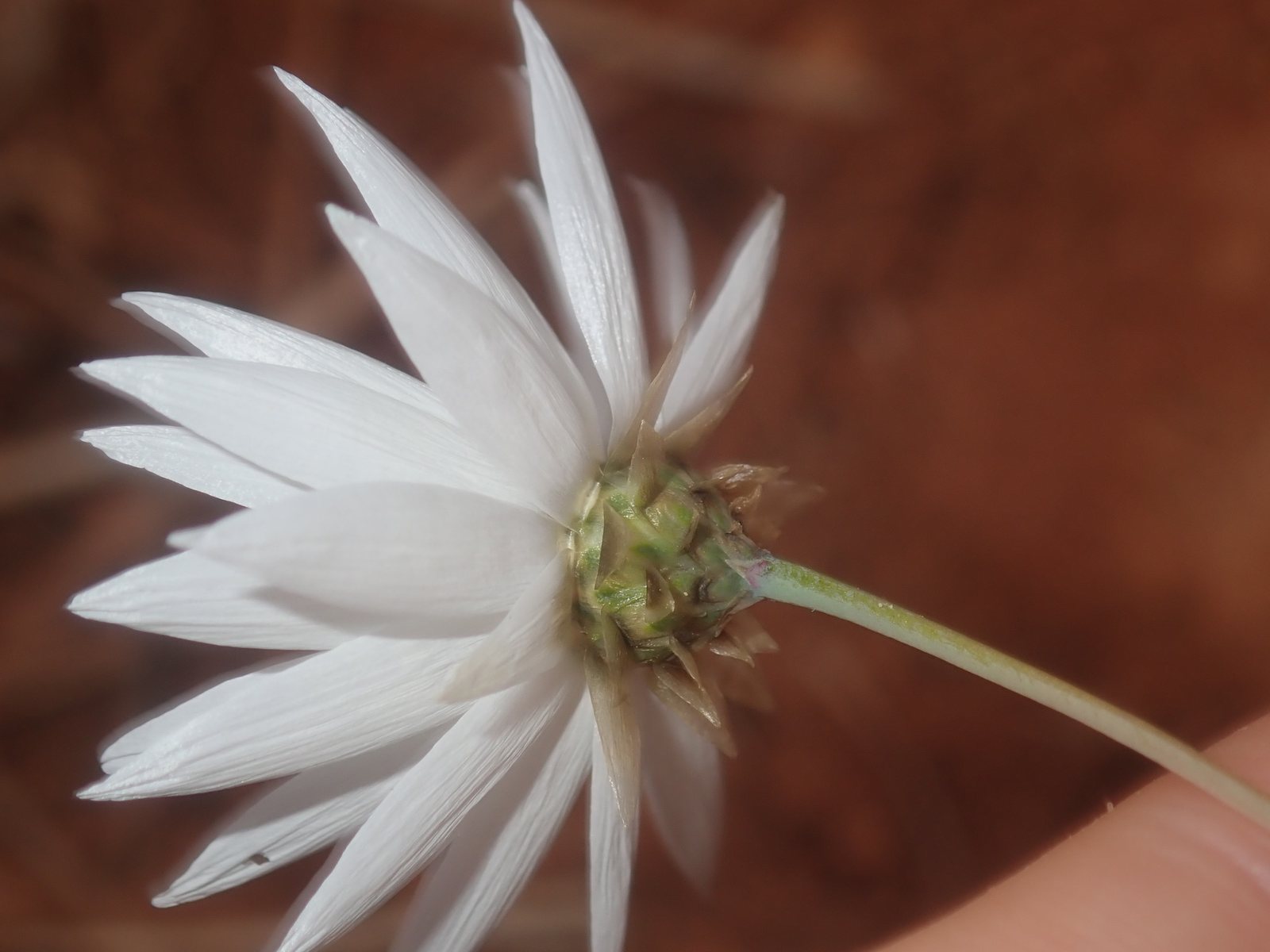
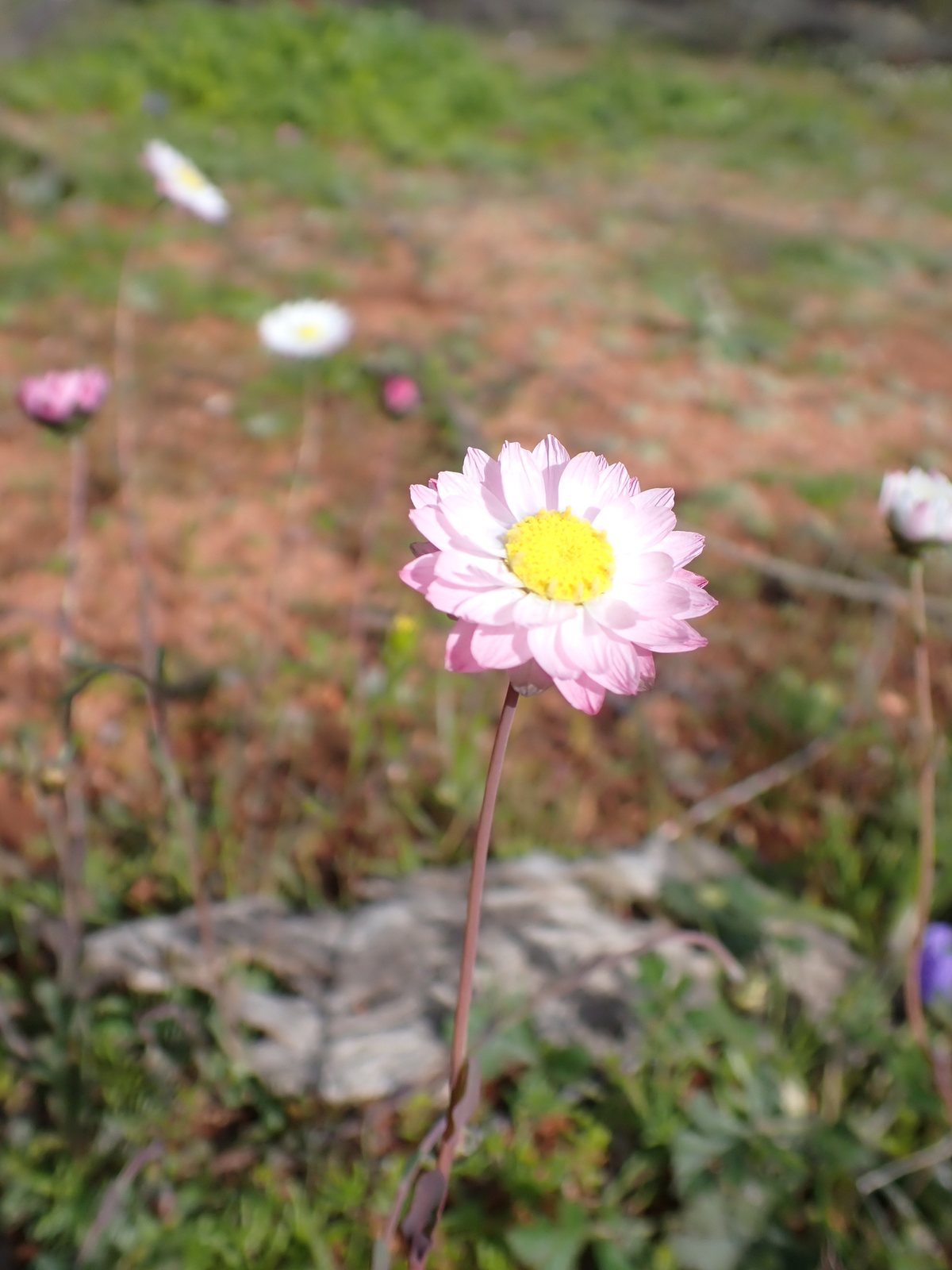
This Australian native is grown as an annual for its papery pink or white flower heads with yellow centres. The pink forms usually sold for gardens belong to Rhodanthe chlorocephala subsp. rosea; they make light, airy bedding displays and useful fresh or dried flowers.
At a glance
- Sun
- Full sun; flowers open best in bright sunlight.
- Water
- Water regularly during establishment, then moderately as the soil dries. Avoid persistently wet soil.
- Soil
- Well-drained sandy or loamy soil, preferably of low to moderate fertility; avoid heavy, waterlogged ground.
- Height
- 1-2 ft (0.3-0.6 m)
- Spread
- 0.7-1 ft (0.2-0.3 m)
- Flowers
- Pink or white papery bracts surrounding yellow centres; usually spring in mild Australian climates, and summer into early autumn from spring sowing in cooler regions.
- Foliage
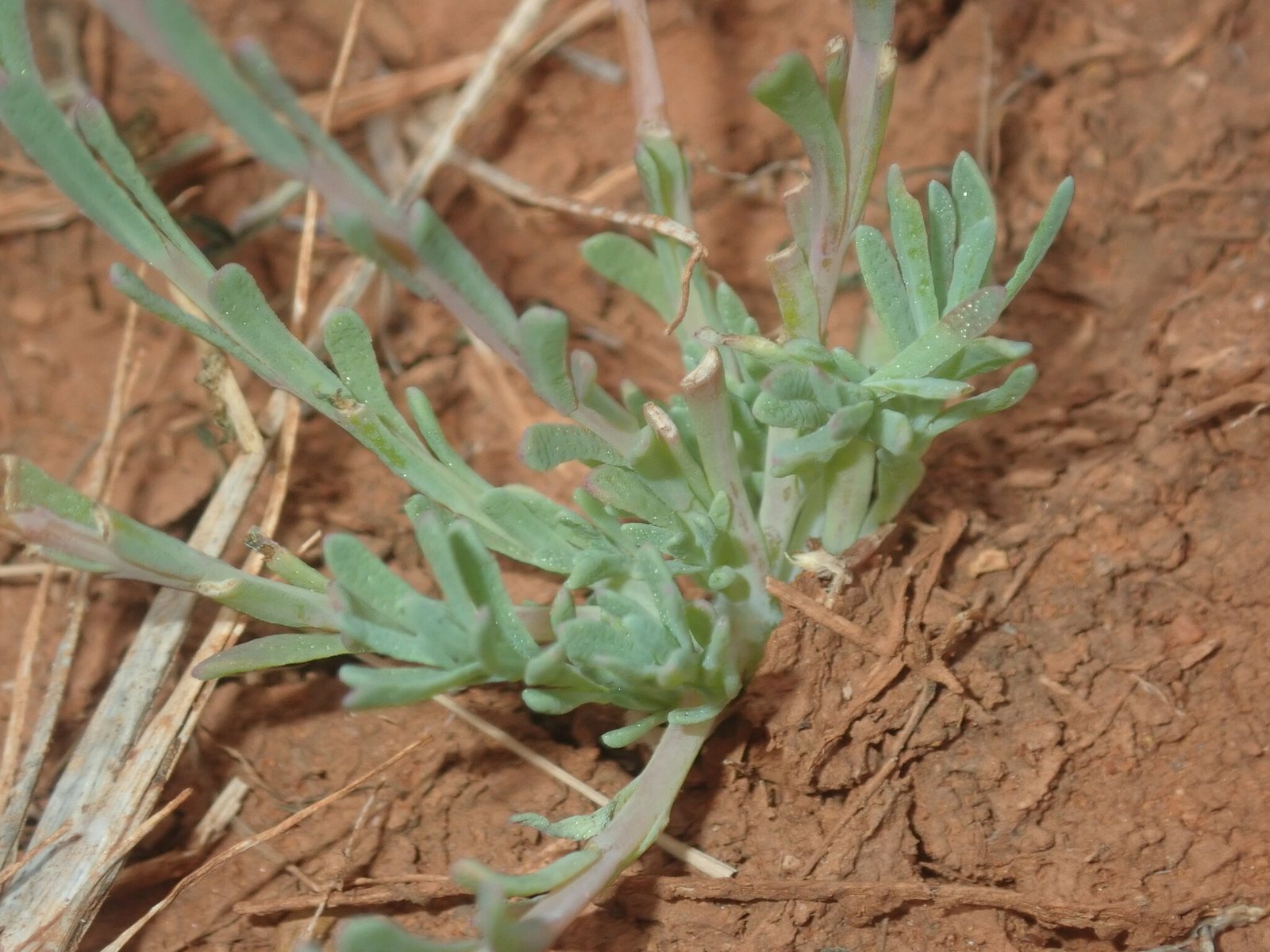
- Narrow, soft green leaves on slender, branching stems.
- Growth
- Fast; flowers within one growing season.
- Care needed
- Low
The year at a glance
- Pollinators
- Low allergen
| J | F | M | A | M | J | J | A | S | O | N | D | |
|---|---|---|---|---|---|---|---|---|---|---|---|---|
| Flowers | ||||||||||||
| Fruit | ||||||||||||
| Plant |
Northern hemisphere months. In Australia, shift them by six.
- Difficulty
- Easy
- Toughness
- Fairly tough
Will it suit your garden?
Pick your zone, country, light and whether you have pets.
Full sun is 6 or more hours of direct sun a day, part shade 3 to 6 hours, shade under 3.
How it grows
Planting day
0.5 ft (0.15 m)
After 1 year
1.5 ft (0.45 m)
full size
Full size in one season.
From a typical nursery size, at an average rate for this kind of plant. A rule of thumb, not a forecast.
Good to know
- Cats and dogs
- Safe
- Native to
- Australia
- Growth rate
- Fast
Care
Jobs through the year
- WaterApr–May, every 7 days
- Check soil weekly; seedlings need more frequent gentle watering until established.
- WaterJun–Aug, every 7 days
- Water established plants during dry spells, allowing the soil to dry between waterings.
- WaterSep, every 14 days
- Water only if dry while plants remain actively flowering.
- DeadheadJun–Sep, every 7 days
- Remove faded heads, leaving a few late flowers to develop ripe seed.
- ProtectApr–May
- Protect seedlings from slugs and late frost; plant out transplants after hard frosts.
- Thin seedlings to about 8-12 in (20-30 cm) apart to allow airflow.
- Water seedlings gently and keep their root zone moist until established.
- Once established, water during dry spells rather than keeping the soil constantly damp.
- Avoid rich manure and heavy nitrogen feeding, which encourage floppy growth.
- Use discreet twig supports if plants lean in exposed positions.
Pruning. Remove faded flower heads regularly to prolong flowering, or leave a few to ripen for seed. Pull up plants once flowering and seed collection are finished.
Through the year
- Autumn
- In mild-winter Australian regions, sow directly into a sunny, well-drained bed for spring flowers.
- Early spring
- In cold-winter regions, sow in modules under cover about 6-8 weeks before the last expected frost.
- Late spring
- Harden off young plants and plant out after hard frosts; alternatively, sow directly once the soil begins to warm.
- Spring
- Thin autumn-sown seedlings and keep developing plants free of competing weeds.
- Summer
- Water spring-sown plants during dry spells and remove spent flower heads.
- Late summer
- Save fully ripe seed from spring-sown plants on a dry day, then clear plants when they finish.
In the garden
- Sow in loose drifts through sunny annual borders for a soft pink-and-white display.
- Combine with blue flowers and fine grasses in informal cottage planting.
- Use in seasonal Australian native beds with other annual everlastings.
- Grow in a dedicated cutting patch for fresh arrangements and dried flowers.
- Plant in sunny containers with free-draining compost and regular watering.
Garden styles it suits: Australian native, Cottage garden, Wildflower, Pastel border, Dry gravel garden and Pollinator garden.
Plant it with: Swan River daisy, Cornflower, California poppy, Love-in-a-mist, Billy buttons and Strawflower.
Wildlife: Open flower heads provide pollen and nectar for small bees, hoverflies and other visiting insects.
Problems to watch for
- Seedlings collapse in wet compost: use clean containers, free-draining seed compost and restrained watering.
- Slugs and snails eat young plants: inspect at dusk, remove hiding places and protect seedlings with suitable barriers or locally approved controls.
- Aphids gather on soft shoots: dislodge small colonies with water and encourage natural predators.
- Tall stems flop or flower poorly in shade or rich soil: move future sowings into full sun, reduce feeding and provide light support where needed.
Safety
Not known to be toxic to people, cats, dogs or horses, but species-specific safety information is limited. No particular toxic part is established; it is ornamental rather than edible, so discourage eating it.
Easily confused with
Strawflower (Xerochrysum bracteatum)
Usually has larger, more substantial flower heads, broader leaves and sturdier stems; its colour range includes strong yellow, orange and red.
Mangles' everlasting (Rhodanthe manglesii)
Has broader, often grey-green leaves that clasp the stems, with smaller flower heads on fine stalks that often nod in bud.
Hoary sunray (Leucochrysum albicans)
A perennial with conspicuously woolly, silvery foliage and usually white or yellow papery flower heads, rather than the soft green foliage of pink paper daisy.
The name
Rhodanthe comes from Greek words meaning rose and flower, while chlorocephala means green-headed.
Propagation. Grow from seed, preferably sown directly where it will flower, or in modules to minimise root disturbance. Cover seed lightly with fine soil and keep moist until germination. Autumn sowing suits mild-winter climates; spring sowing suits cold-winter regions.
Checked against open data
- Accepted botanical name
- Rhodanthe chlorocephala
- In the US and Canada
- Introduced in the lower 48 states.
- Native range
- South Australia and Western Australia.
Sources: GBIF (CC BY 4.0), USDA PLANTS and Trefle (CC BY 4.0). The care and design notes are LandscapeGPT's own.
See it in your own yard.
Upload a photo of your yard and see it redesigned with plants that suit your climate, each checked against your zone.