Ponderosa pine
Pinus ponderosa. Family Pinaceae. Tree.
Also called Western yellow pine, Bull pine.
Ponderosa pine is a large, evergreen conifer native to western North America, grown for its long needles, open crown and orange-brown, plated bark on mature trunks. It suits spacious, sunny gardens with well-drained soil, especially in climates with dry summers; it is too large for most small gardens.
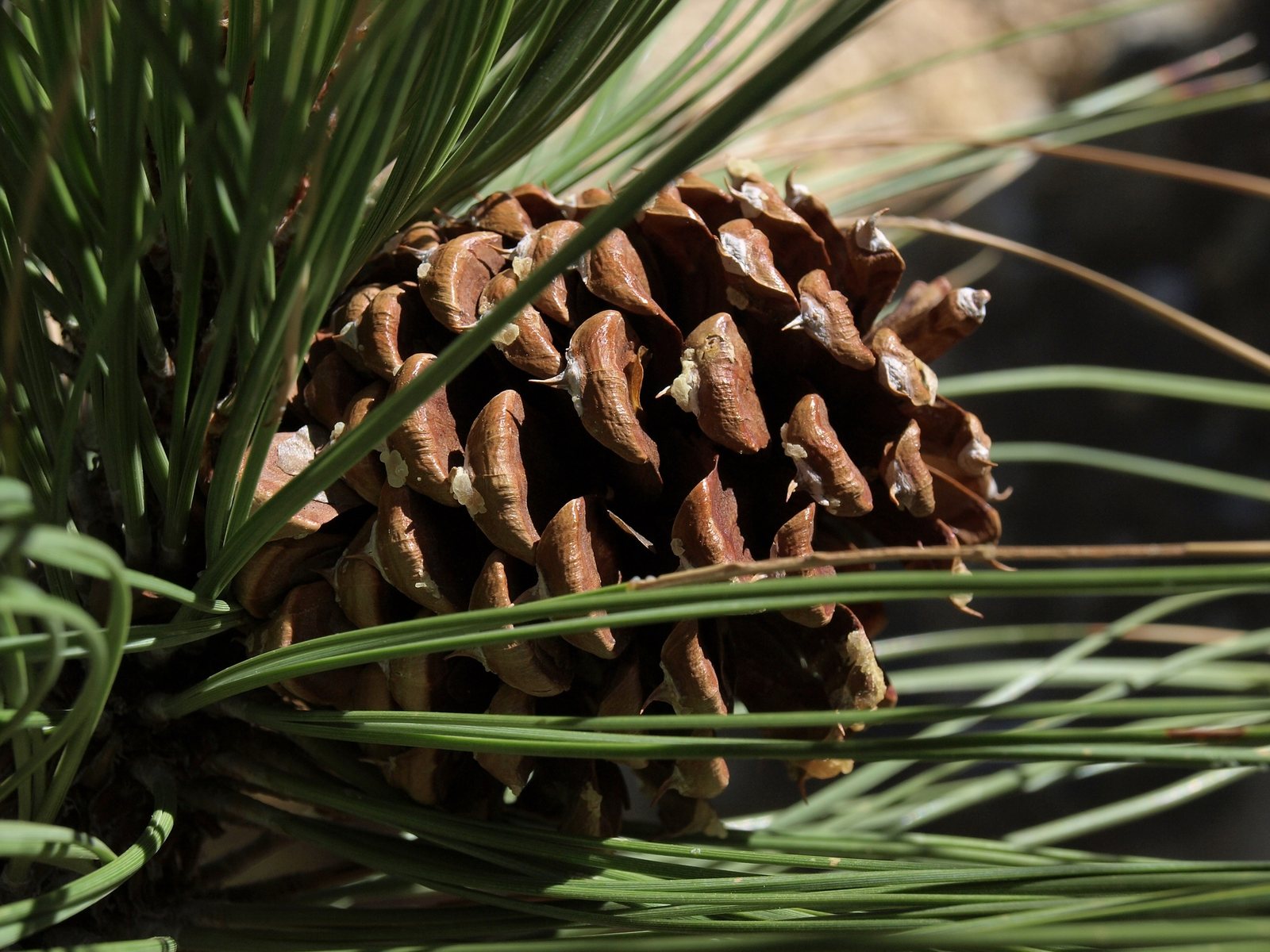
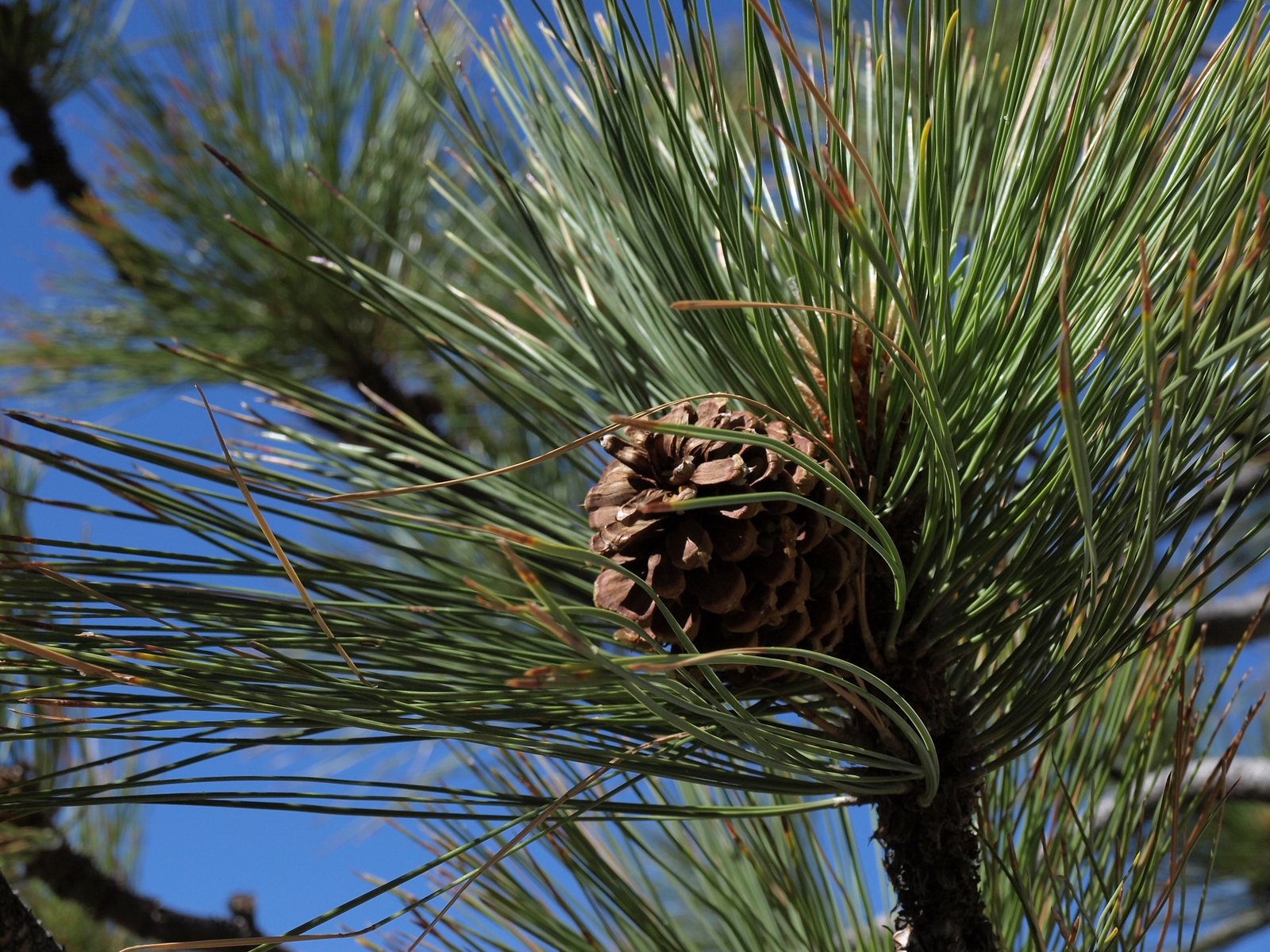
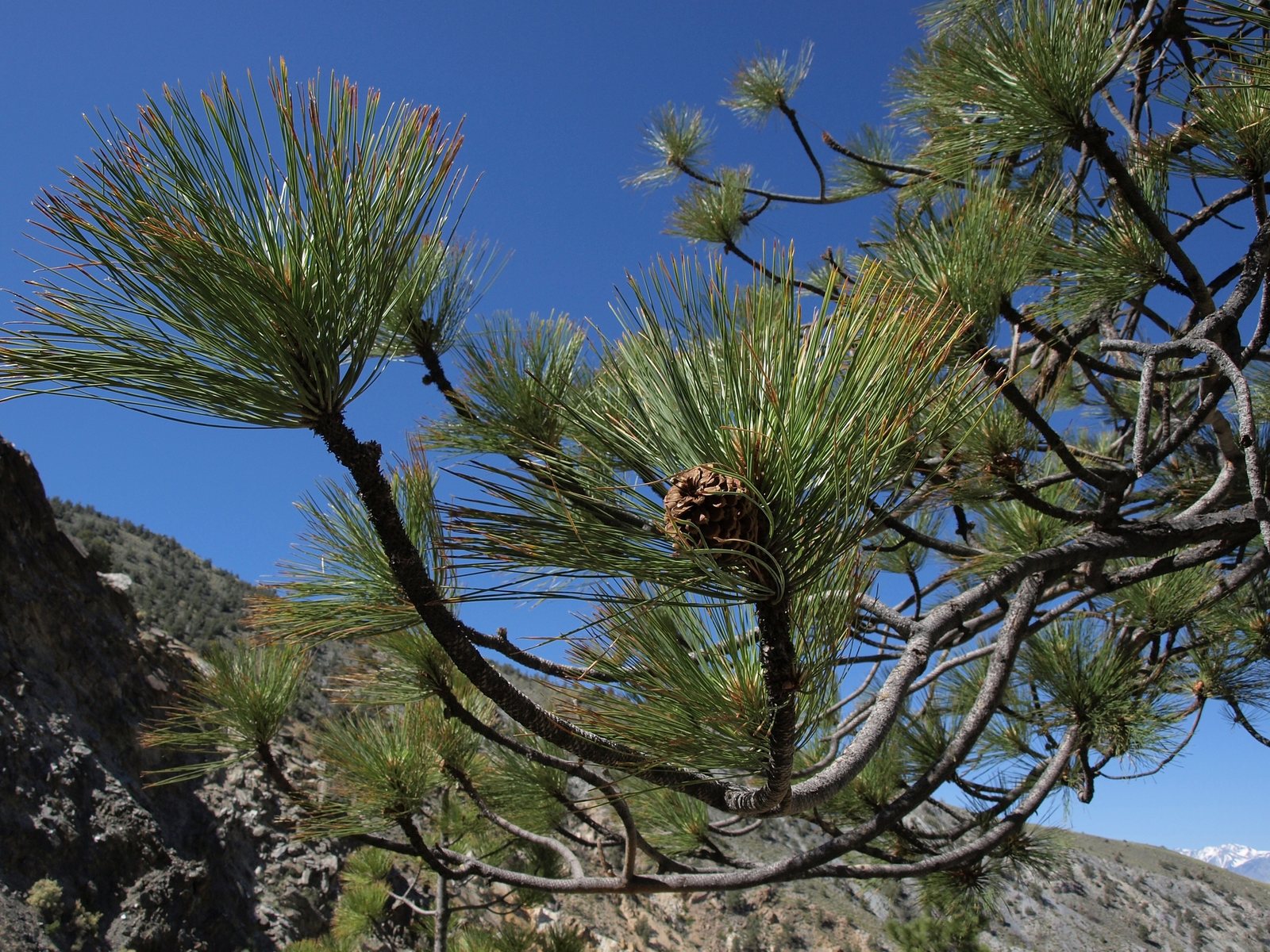
At a glance
- Sun
- Full sun.
- Water
- Water regularly while establishing; drought-tolerant once deeply rooted. Avoid frequent shallow watering and persistently wet soil.
- Soil
- Well-drained sandy, gravelly or loamy soil; tolerates a range of soil pH. Poor drainage and compacted ground are unsuitable.
- Height
- 60-100 ft (18-30 m), sometimes much taller in favourable conditions
- Spread
- 25-40 ft (7.6-12 m)
- Foliage
- Evergreen. Long, stiff, yellow-green to dark green needles, usually in bundles of three, sometimes two. Mature trees develop a high, open crown above a substantial trunk.
- Growth
- Moderate, often 12-24 in (30-60 cm) a year once established, depending on moisture and site.
- Care needed
- Low
The year at a glance
- Deer resistant
- Drought tolerant
- Cold hardy
- Wildlife
| J | F | M | A | M | J | J | A | S | O | N | D | |
|---|---|---|---|---|---|---|---|---|---|---|---|---|
| Fruit | ||||||||||||
| Plant |
Northern hemisphere months. In Australia, shift them by six.
- Difficulty
- Easy
- Toughness
- Very tough
Will it suit your garden?
Pick your zone, country, light and whether you have pets.
Full sun is 6 or more hours of direct sun a day, part shade 3 to 6 hours, shade under 3.
How it grows
Planting day
9 ft (2.9 m)
After 1 year
13 ft (3.9 m)
After 2 years
16 ft (5 m)
After 3 years
20 ft (6 m)
After 5 years
27 ft (8.2 m)
About 20 years to full size.
From a typical nursery size, at an average rate for this kind of plant. A rule of thumb, not a forecast.
Good to know
- Cats and dogs
- Mildly toxic: may upset a stomach
- Native to
- the US and Canada
- Invasive in
- Australia
- Growth rate
- Moderate
Care
Jobs through the year
- WaterApr–May, Sep–Oct, every 28 days
- Deep-water established trees only in prolonged drought; water more often for the first two or three years.
- WaterJun–Aug, every 21 days
- During prolonged drought, soak the root area deeply rather than watering shallowly.
- MulchMar–Apr
- Maintain 5–8 cm of organic mulch over the roots, clear of the trunk.
- PruneFeb–Mar
- Remove dead or damaged branches following local beetle advice; retain the leader and never top.
- ProtectNov–Dec
- Check young-tree ties and remove supports once the tree is securely rooted.
- Choose a permanent site well away from buildings, overhead wires and confined paving; allow for its full mature size.
- Water deeply during dry spells for the first two or three growing seasons, letting the soil drain between waterings.
- Apply 2-3 in (5-8 cm) of organic mulch over the root area, keeping it clear of the trunk.
- Do not feed routinely; use a soil test before applying fertilizer to a poorly growing tree.
- In wildfire-prone areas, follow local defensible-space guidance and keep fallen needles away from buildings and gutters.
Pruning. Prune dead, damaged or poorly attached branches in late winter or early spring, observing local advice on bark-beetle activity. Retain the central leader, never top the tree, and do not cut into bare old wood expecting it to regrow.
Through the year
- Late winter
- Inspect the trunk and branch structure; arrange professional assessment of large dead limbs or structural defects.
- Spring
- Plant while conditions are cool and soil is workable; water thoroughly and mulch the root area.
- Late spring
- Check new shoots and older needles for tip dieback, spotting or unusual browning.
- Summer
- Deep-water young trees during prolonged dry weather, rather than watering a little every day.
- Autumn
- Clear needles from roofs and gutters; some yellowing and shedding of the oldest inner needles is normal.
- Early winter
- Check that ties on newly planted trees are not rubbing or constricting the trunk; remove stakes once the tree is stable.
In the garden
- Use as a long-lived specimen in a large lawn or park-like garden, allowing room for the mature crown.
- Plant in loose groups on spacious, dry slopes for an open western woodland effect.
- Combine with drought-tolerant grasses and low shrubs, keeping planting clear of the trunk.
- Use its evergreen crown and mature patterned bark as year-round structure in a mountain or naturalistic landscape.
Garden styles it suits: Mountain lodge, Desert / xeriscape, Woodland, Wildlife garden, Modern rustic and Winter interest.
Plant it with: Blue grama, Little bluestem, Prairie junegrass, Sulphur buckwheat, Kinnikinnick and Common juniper.
Wildlife: Seeds feed squirrels and seed-eating birds, while the crown provides shelter and nesting sites. Older trees and dead wood support insects and cavity-using wildlife, where retaining them is safe.
Problems to watch for
- Bark beetles: drought-stressed trees are particularly vulnerable. Maintain establishment watering, avoid trunk injuries and seek an arborist's advice promptly if you see pitch tubes, boring dust or rapid crown fading; established infestations are difficult to treat.
- Dothistroma needle blight: needles develop bands or spots and brown prematurely, especially in damp conditions. Improve airflow, avoid overhead irrigation and obtain a diagnosis before considering fungicide treatment.
- Diplodia tip blight: new shoots become stunted and brown, often with resin. Prune affected shoots in dry weather, remove infected debris and reduce drought stress.
- Root decline in wet soil: poor drainage causes weak growth, yellowing and possible root rot. Correct drainage before planting; move a young tree to a better site rather than repeatedly watering or feeding it.
Safety
Needles, including fallen needles, can cause abortion in pregnant cattle and should not be accessible to livestock. Safety for horses is not well established, so keep them from eating needles or branches. It is not known as a major systemic poison to cats, dogs or people, but chewing needles, cones or resin can cause mouth irritation, digestive upset or physical injury; do not use it for needle tea.
Where it spreads. Can escape cultivation and invade open vegetation. It is an invasive wilding conifer in parts of New Zealand and is recorded as an environmental weed in parts of south-eastern Australia, including New South Wales and Victoria. Check local restrictions before planting.
Easily confused with
Jeffrey pine (Pinus jeffreyi)
Very similar, but usually has larger cones with scale prickles curving inward, making them less sharp to handle. Ponderosa cone prickles generally point outward; bark scent alone is not a reliable distinction.
Lodgepole pine (Pinus contorta)
Has much shorter needles in bundles of two and smaller cones. Its mature bark lacks ponderosa pine's broad orange-brown plates.
Austrian pine (Pinus nigra)
Usually has stiff, dark green needles in bundles of two, grey to dark bark and cones without the conspicuous sharp prickles typical of ponderosa pine.
The name
The epithet ponderosa means heavy or weighty, referring to the tree's heavy timber.
Propagation. Grow from seed collected from ripe cones. A period of cold, moist treatment commonly improves germination; sow in deep containers and plant out while young, before roots become crowded. Ordinary branch cuttings are difficult to root.
Checked against open data
- Accepted botanical name
- Pinus ponderosa
- In the US and Canada
- Native in Canada and the lower 48 states.
- Native range
- Arizona, British Columbia, California, Colorado, Idaho, Mexico Northeast, Mexico Northwest, Montana, Nebraska, Nevada, New Mexico and North Dakota.
- Measured
- Soil pH 5 to 9. Average height 1570 cm.
Sources: GBIF (CC BY 4.0), USDA PLANTS and Trefle (CC BY 4.0). The care and design notes are LandscapeGPT's own.
See it in your own yard.
Upload a photo of your yard and see it redesigned with plants that suit your climate, each checked against your zone.