Prairie dock
Silphium terebinthinaceum. Family Asteraceae. Perennial.
Also called Prairie rosinweed.
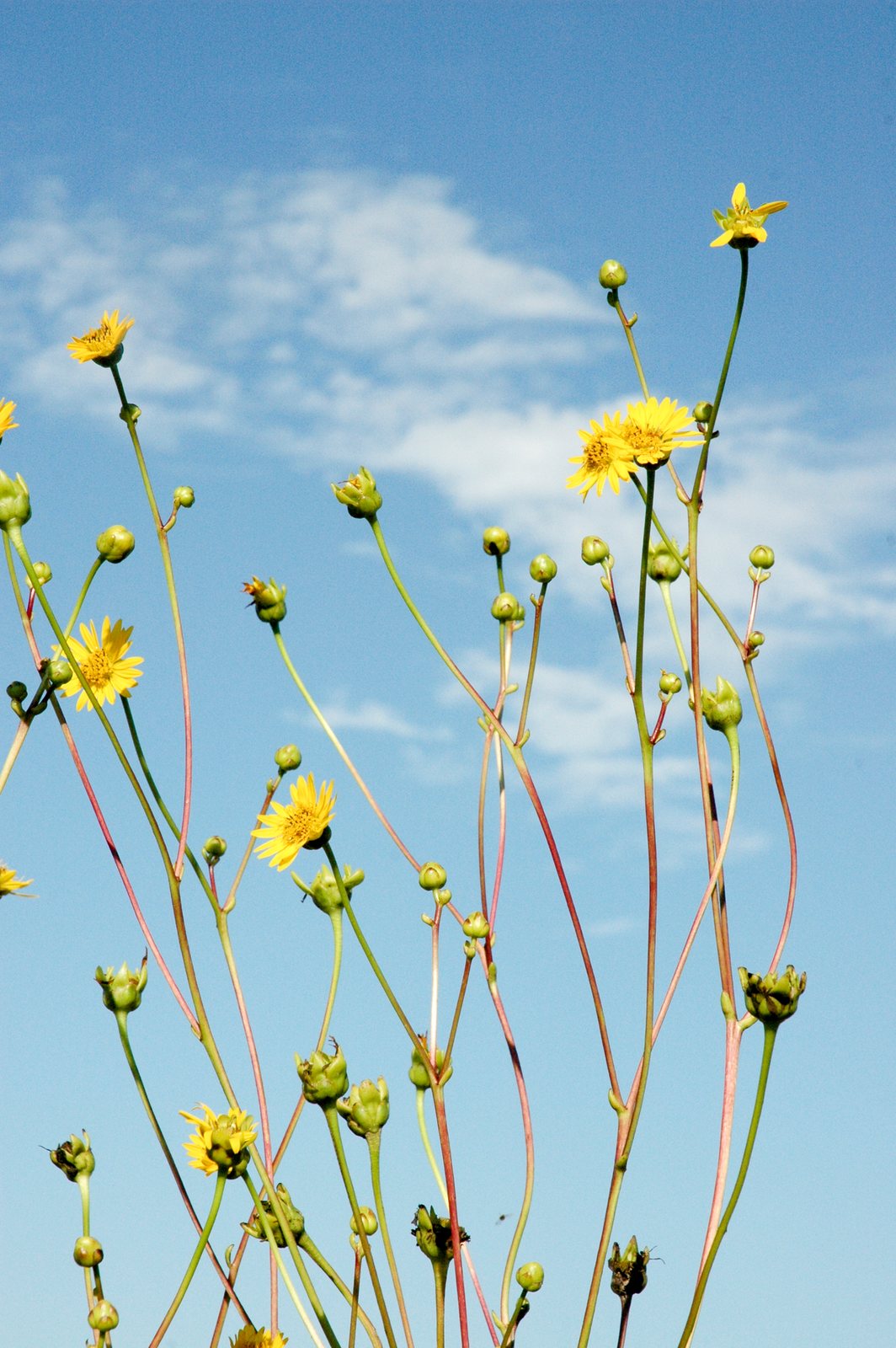
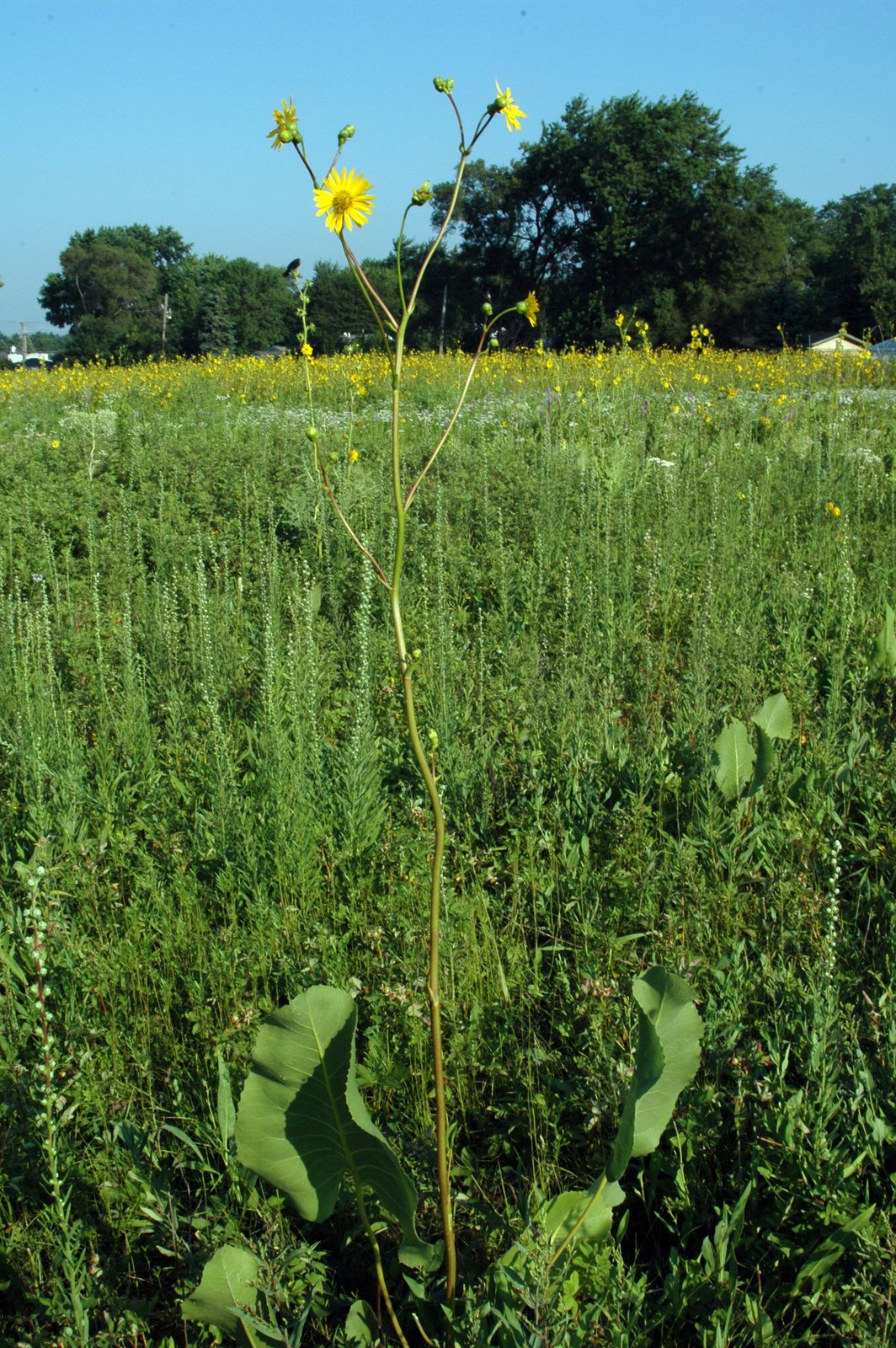
Prairie dock is a long-lived perennial native to central and eastern North America, with huge basal leaves and tall, branching stems of yellow daisies. Grow it for its bold foliage, airy late-season flowers and value to wildlife; it needs generous space and is difficult to move once established.
At a glance
- Sun
- Full sun; light shade is tolerated, but flowering and stem strength are usually better in sun.
- Water
- Water regularly during establishment. Mature plants tolerate drought through their deep root system, but grow best with occasional deep watering during prolonged dry weather.
- Soil
- Average to moderately fertile, well-drained soil, including clay, loam and rocky ground. Avoid persistently waterlogged sites.
- Height
- 6-10 ft (1.8-3 m) in flower
- Spread
- 2-3 ft (0.6-0.9 m)
- Flowers
- Mid-summer to early autumn; yellow daisy-like flowers on tall, mostly leafless stems.
- Foliage
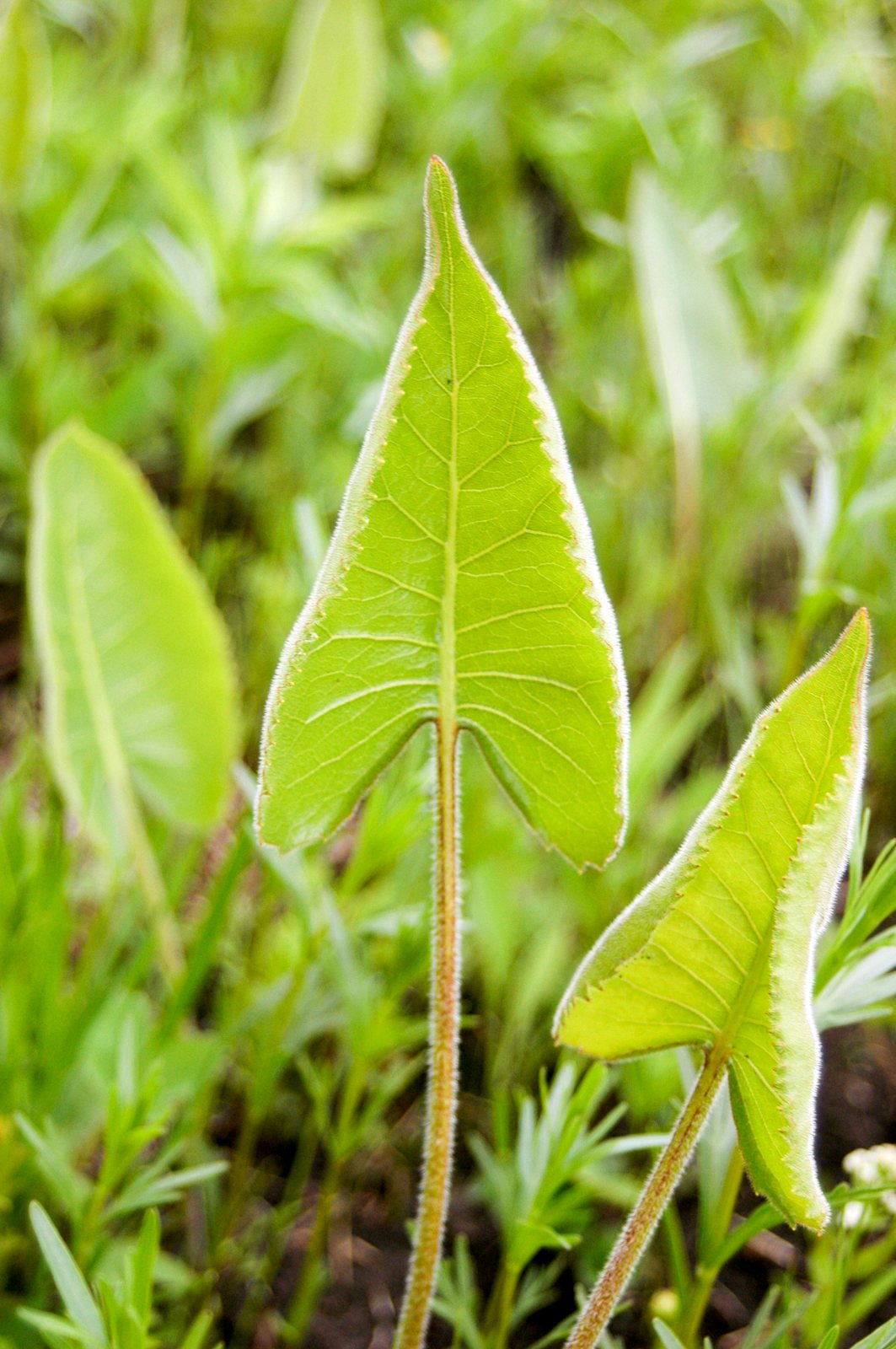
- Large, rough-textured, broadly heart-shaped leaves form a substantial basal clump. Leaves can reach about 2 ft (0.6 m) long and die back in winter.
- Growth
- Slow to establish; moderate growth once rooted, with several years often needed to reach full size.
- Care needed
- Low
The year at a glance
- Pollinators
- Drought tolerant
- Cold hardy
- Heat tolerant
- Wildlife
- Low allergen
| J | F | M | A | M | J | J | A | S | O | N | D | |
|---|---|---|---|---|---|---|---|---|---|---|---|---|
| Flowers | ||||||||||||
| Fruit | ||||||||||||
| Plant |
Northern hemisphere months. In Australia, shift them by six.
- Difficulty
- Easy
- Toughness
- Very tough
Will it suit your garden?
Pick your zone, country, light and whether you have pets.
Full sun is 6 or more hours of direct sun a day, part shade 3 to 6 hours, shade under 3.
How it grows
Planting day
1 ft (0.3 m)
After 1 year
2.8 ft (0.84 m)
After 2 years
5 ft (1.4 m)
After 3 years
6 ft (1.9 m)
After 5 years
8 ft (2.4 m)
full size
About 4 years to full size.
From a typical nursery size, at an average rate for this kind of plant. A rule of thumb, not a forecast.
Good to know
- Cats and dogs
- Safe
- Native to
- the US and Canada
- Growth rate
- Slow
Care
Jobs through the year
- WaterApr–May, Sep, every 21 days
- Water established plants only during prolonged drought; water young plants regularly through their first season.
- WaterJun–Aug, every 14 days
- Give established plants an occasional deep soak during prolonged dry weather.
- PruneFeb–Mar
- Cut old stems near ground level; leave some hollow sections nearby as insect shelter.
- MulchApr
- Apply a light organic mulch, keeping the crown clear.
- ProtectMay–Jun
- Install discreet supports before stems grow tall if the site is exposed.
- Plant in its permanent position while young; the deep taproot makes established plants difficult to transplant.
- Water deeply during the first growing season, allowing the surface soil to dry between waterings.
- Avoid routine feeding, especially nitrogen-rich fertiliser, which can encourage weak, floppy growth.
- Apply a light organic mulch, keeping it clear of the crown.
- Use discreet supports early in the season if stems lean in exposed sites; plants in full sun usually stand without staking.
Pruning. Leave stems and seedheads standing through winter for birds and structure. Cut dead stems close to ground level in late winter or early spring before new growth develops.
Through the year
- Late winter
- Cut down old stems before new leaves emerge, leaving some hollow stem sections nearby as insect shelter.
- Spring
- Plant young plants in a permanent sunny position and water them in thoroughly.
- Late spring
- Weed around the developing leaf clump and install supports if the site is windy.
- Summer
- Water young plants deeply during dry spells; check tall stems after strong winds.
- Autumn
- Leave seedheads for birds, or collect ripe, dry seed before it falls.
- Late autumn
- Sow fresh seed outdoors in pots or a prepared seedbed so it receives natural winter chilling.
In the garden
- Place at the back of a deep sunny border, where the tall flower stems rise above lower planting.
- Combine with big bluestem, switchgrass and coneflowers for a prairie-style planting.
- Use the large basal leaves as a bold contrast to fine grasses and small-leaved perennials.
- Plant in a spacious wildlife garden and retain the seedheads for autumn and winter interest.
Garden styles it suits: Midwest prairie, Native meadow, New perennial (prairie), Wildlife garden, Pollinator garden and Architectural minimal.
Plant it with: Big bluestem, Switchgrass, Purple coneflower, Rattlesnake master, Wild bergamot and New England aster.
Wildlife: Flowers attract native bees and other pollinating insects. Goldfinches and other seed-eating birds use the ripe seedheads, while standing stems provide overwintering shelter for insects.
Problems to watch for
- Flopping stems: provide full sun, avoid rich feeding and support plants early where wind exposure is severe.
- Crown or root rot in wet ground: improve drainage or choose a site that does not remain saturated in winter.
- Powdery mildew: allow good air circulation and avoid crowding; remove badly affected dead foliage at the end of the season.
Safety
Not known to be toxic to people, cats, dogs or horses, but species-specific safety information is limited. No particular part is established as poisonous; do not treat the leaves, roots or seeds as food or livestock fodder.
Easily confused with
Compass plant (Silphium laciniatum)
Compass plant has deeply cut, lobed leaves; prairie dock has broad, undivided basal leaves.
Cup plant (Silphium perfoliatum)
Cup plant has leafy, square stems with opposite leaves joined around the stem to form water-holding cups. Prairie dock carries most of its leaves at ground level.
The name
The name prairie dock refers to its prairie habitat and dock-like leaves, while terebinthinaceum refers to its turpentine-like resin.
Propagation. Usually grown from seed. Sow fresh seed outdoors in autumn, or give stored seed about 60 days of cold, moist stratification before spring sowing. Seedlings may take several years to flower; avoid dividing mature plants because of their deep root system.
Checked against open data
- Accepted botanical name
- Silphium terebinthinaceum
- In the US and Canada
- Native in Canada and the lower 48 states.
- Native range
- Alabama, Arkansas, Georgia, Illinois, Indiana, Iowa, Kentucky, Michigan, Mississippi, Missouri, Nebraska and New York.
- Measured
- Average height 92 cm.
Sources: GBIF (CC BY 4.0), USDA PLANTS and Trefle (CC BY 4.0). The care and design notes are LandscapeGPT's own.
See it in your own yard.
Upload a photo of your yard and see it redesigned with plants that suit your climate, each checked against your zone.