Red elderberry
Sambucus racemosa. Family Viburnaceae. Shrub.
Also called Red-berried elder, Red elder.
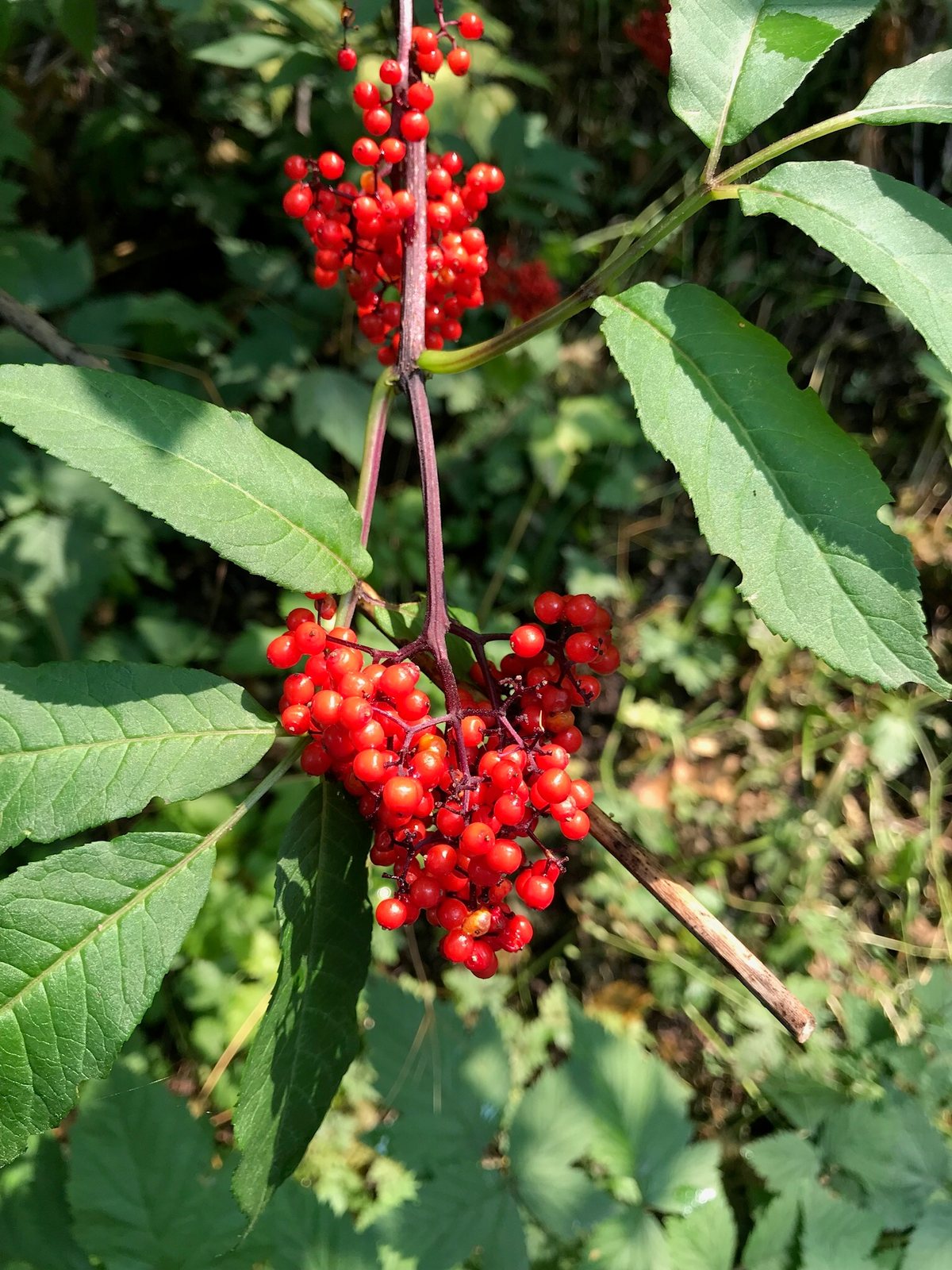
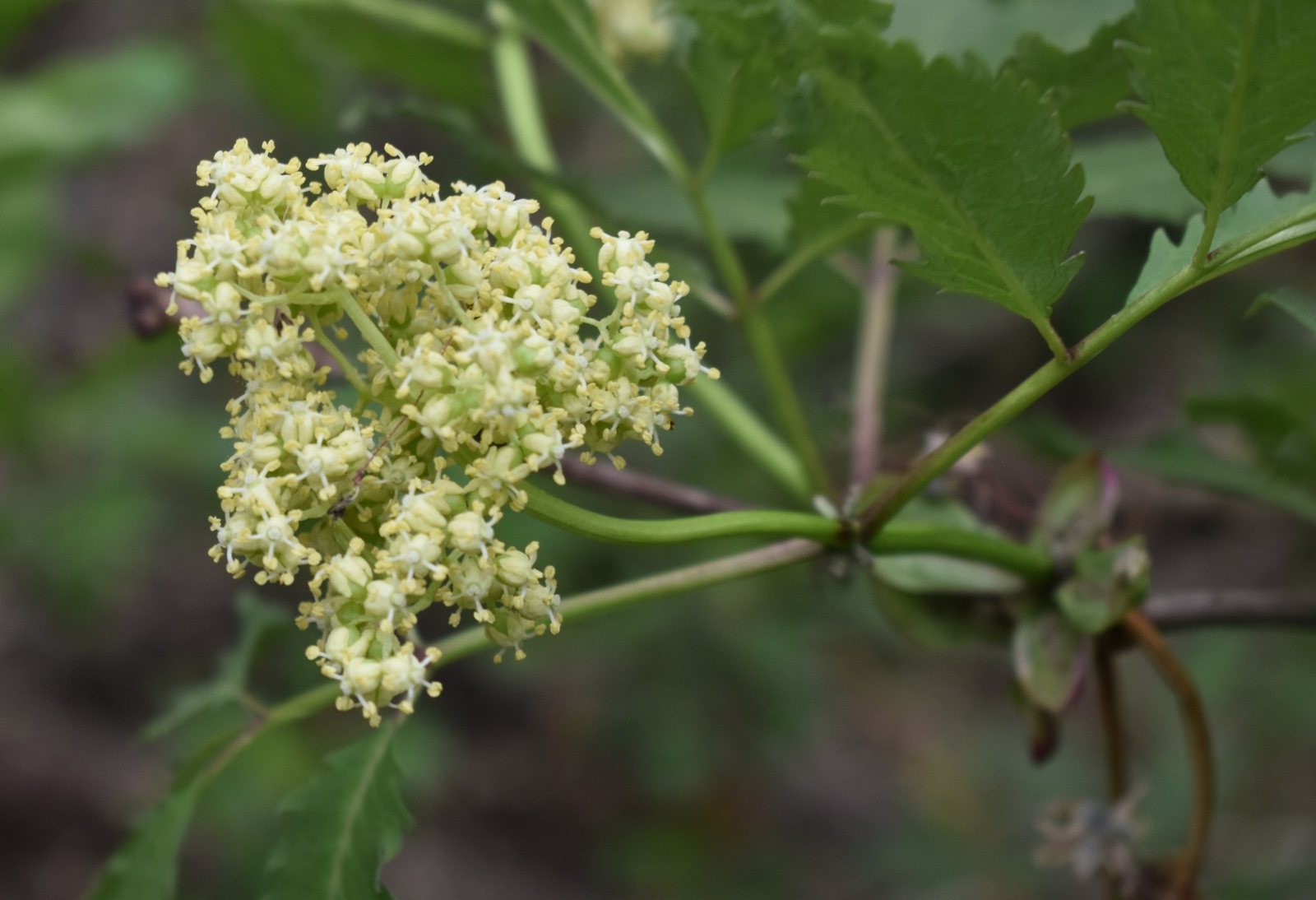
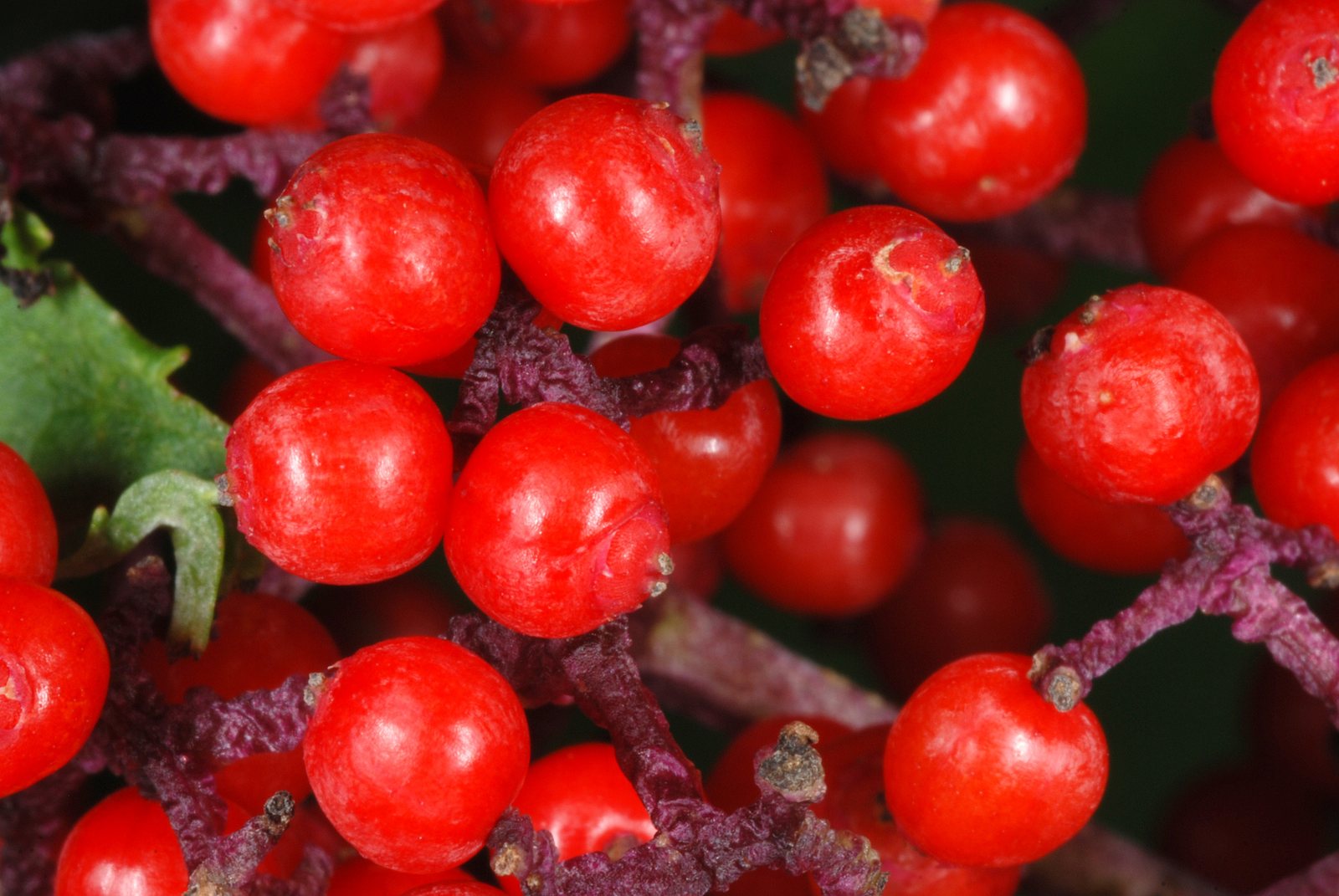
Red elderberry is a fast-growing, deciduous shrub with creamy spring flowers followed by conspicuous clusters of red berries. Grow it for woodland structure, seasonal colour and food for birds, allowing room for its broad growth and occasional suckers. It prefers cool, moist conditions and is not a good choice for hot, dry gardens.
At a glance
- Sun
- Partial shade to full sun; light afternoon shade is helpful in warmer areas.
- Water
- Moderate to high; keep the root zone moist but not waterlogged, especially during establishment and dry summers.
- Soil
- Humus-rich, well-drained soil that holds moisture; tolerates clay if drainage is adequate and a broad range of soil pH.
- Height
- 6-12 ft (1.8-3.7 m), occasionally taller
- Spread
- 6-12 ft (1.8-3.7 m), potentially wider through suckering
- Flowers
- Spring to early summer; small creamy-white flowers in rounded or cone-shaped clusters.
- Foliage
- Opposite, divided leaves, usually with five to seven pointed, toothed green leaflets; crushed foliage has an unpleasant smell. Autumn colour is usually yellow and often modest.
- Growth
- Fast
- Care needed
- Low
The year at a glance
- Pollinators
- Cold hardy
- Wildlife
- Low allergen
| J | F | M | A | M | J | J | A | S | O | N | D | |
|---|---|---|---|---|---|---|---|---|---|---|---|---|
| Flowers | ||||||||||||
| Fruit | ||||||||||||
| Plant |
Northern hemisphere months. In Australia, shift them by six.
- Difficulty
- Easy
- Toughness
- Fairly tough
Will it suit your garden?
Pick your zone, country, light and whether you have pets.
Full sun is 6 or more hours of direct sun a day, part shade 3 to 6 hours, shade under 3.
How it grows
Planting day
1.6 ft (0.5 m)
After 1 year
4 ft (1.2 m)
After 2 years
6 ft (1.9 m)
After 3 years
8 ft (2.6 m)
After 5 years
9 ft (2.8 m)
full size
About 3 years to full size.
From a typical nursery size, at an average rate for this kind of plant. A rule of thumb, not a forecast.
Good to know
- Cats and dogs
- Toxic
- Native to
- the US and Canada
- Growth rate
- Fast
Care
Jobs through the year
- WaterApr–May, Sep–Oct, every 14 days
- Water established shrubs when rain is insufficient; keep young plants consistently moist for two seasons.
- WaterJun–Aug, every 7 days
- Water deeply in dry weather to keep roots moist but not waterlogged.
- MulchMar–Apr
- Apply 5–8 cm of leaf mould or composted bark, keeping it clear of the stems.
- PruneFeb–Mar
- Remove damaged or crossing stems and a few old stems; retain healthy flowering wood.
- PruneMay–Sep, every 30 days
- Remove unwanted suckers at their origin before they form a thicket.
- Water deeply during the first two growing seasons and during prolonged dry spells.
- Apply a 2-3 in (5-8 cm) layer of leaf mould or composted bark each spring, keeping it away from the stems.
- Feed only if growth is weak; a spring top-dressing of compost is usually sufficient.
- Remove unwanted suckers at their point of origin before they form a thicket.
- Allow space for its mature width rather than repeatedly shearing it into a narrow position.
Pruning. In late winter, remove dead, damaged and crossing stems, and cut a few of the oldest stems to ground level if the shrub is congested. Avoid cutting back the whole shrub annually if flowers and berries are wanted, because this removes flowering wood.
Through the year
- Autumn
- Plant while the soil is moist and workable; water thoroughly and mulch.
- Late winter
- Remove damaged stems and selectively thin old growth.
- Spring
- Refresh the mulch and check young shoots for aphids.
- Summer
- Water during dry spells and leave berry clusters for birds.
- Late summer
- Remove suckers that are spreading beyond the intended planting area.
- Late autumn
- Take hardwood cuttings from healthy dormant shoots.
In the garden
- Plant at a woodland edge with ferns and other moisture-loving shade plants.
- Use in an informal mixed hedge where its broad shape and suckering can be accommodated.
- Place behind lower shrubs and perennials to provide a leafy seasonal backdrop.
- Include in a wildlife planting where birds can feed without berries overhanging paths or seating.
Garden styles it suits: Woodland, Wildlife garden, Native hedgerow, Rewilded, Cottage garden and Pacific Northwest woodland.
Plant it with: Lady fern, Male fern, Red-osier dogwood, Vine maple, Foamflower and Wild ginger.
Wildlife: Flowers attract a range of insects, and the berries feed many birds and some mammals. Dense branching offers shelter; in its native range, the foliage also supports insect larvae.
Problems to watch for
- Aphids can distort young shoots: wash small colonies off with water and encourage ladybirds and other predators.
- Powdery mildew may coat leaves in dry, crowded conditions: improve airflow and prevent drought stress.
- Leaf spots can develop in damp weather: collect badly affected fallen leaves and avoid wetting foliage when watering.
- Drought or reflected heat can cause scorched leaves and early leaf drop: mulch, water deeply and choose a cooler position.
Safety
Potentially toxic to people, cats, dogs and horses. Leaves, stems, bark, roots and raw berries, especially their seeds, contain cyanogenic compounds; ingestion can cause vomiting and diarrhoea, and substantial amounts may cause serious poisoning. Do not eat the berries raw or assume that cooking them makes them safe. Keep prunings away from livestock and seek medical or veterinary advice after ingestion.
Easily confused with
Common elder (Sambucus nigra)
Has broad, relatively flat flower clusters followed by purple-black berries; red elderberry has more rounded or cone-shaped flower clusters and red fruit.
Red baneberry (Actaea rubra)
Is a herbaceous perennial rather than a woody shrub, with alternate, repeatedly divided leaves. Red elderberry has woody stems and opposite leaves.
The name
The species name racemosa refers to clustered flowers, while red elderberry describes the ripe fruit.
Propagation. Take softwood cuttings in late spring or early summer, or hardwood cuttings while dormant. Rooted suckers can be separated during dormancy. Seed needs a sequence of warm and cold conditions and may germinate slowly or irregularly.
Checked against open data
- Accepted botanical name
- Sambucus racemosa
- In the US and Canada
- Native in Alaska, Canada and the lower 48 states.
- Native range
- Alaska, Albania, Alberta, Aleutian Is., Arizona, Austria, Baltic States, Belarus, Belgium, British Columbia, Bulgaria and California.
- Measured
- Soil pH 5 to 5.5. Average height 225 cm.
Sources: GBIF (CC BY 4.0), USDA PLANTS and Trefle (CC BY 4.0). The care and design notes are LandscapeGPT's own.
See it in your own yard.
Upload a photo of your yard and see it redesigned with plants that suit your climate, each checked against your zone.