Saguaro
Carnegiea gigantea. Family Cactaceae. Succulent.
Also called Giant cactus.
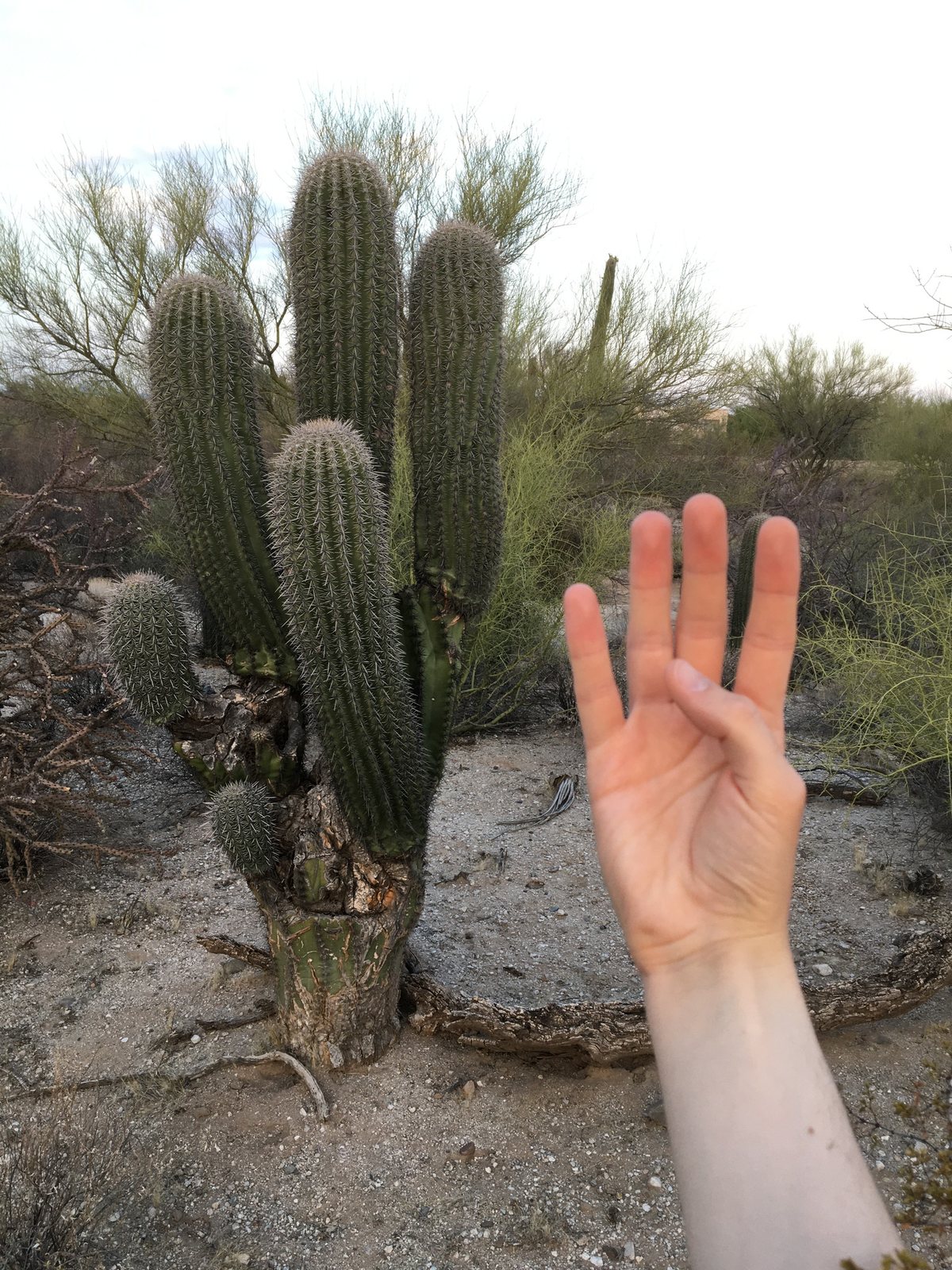
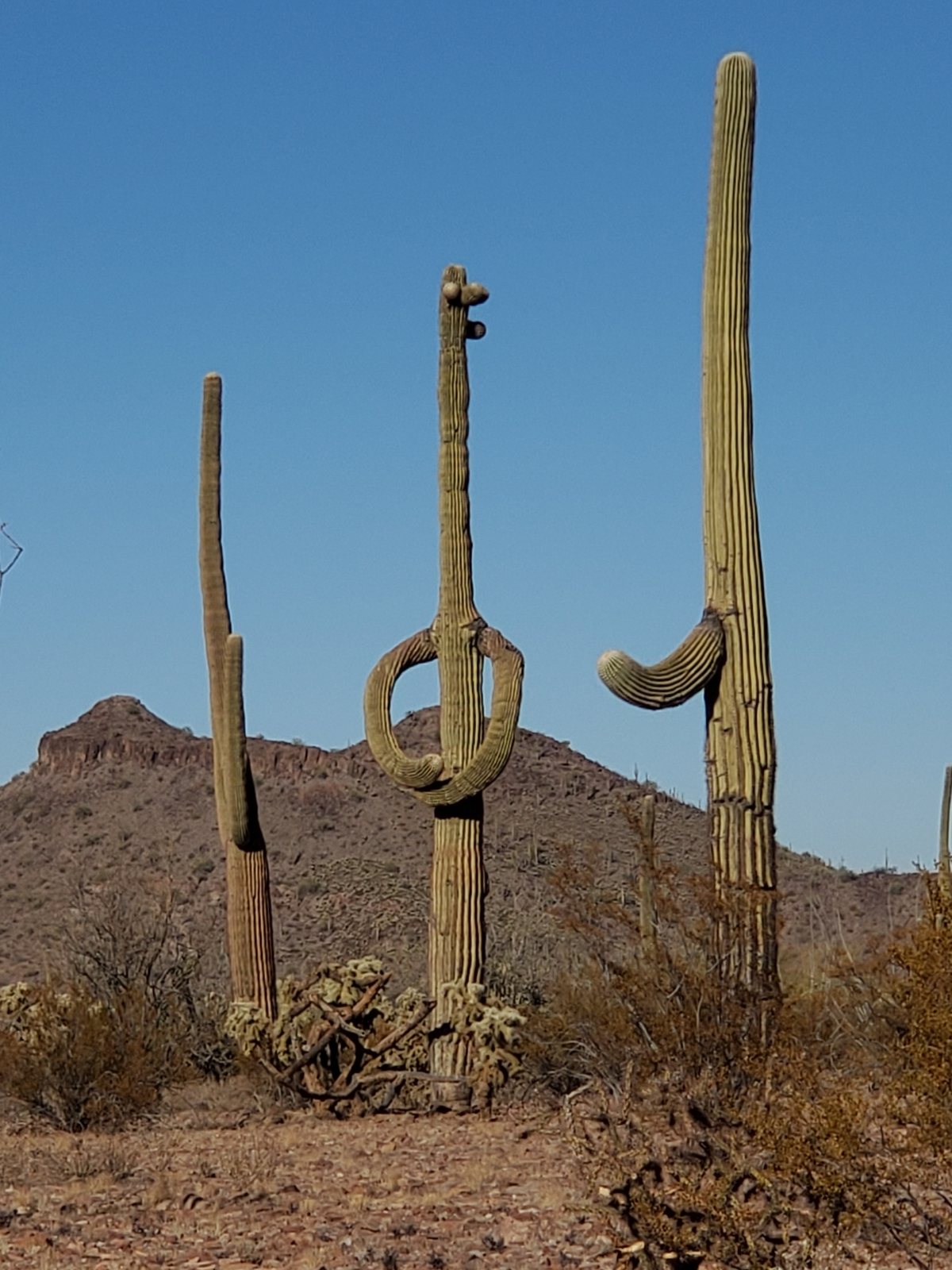
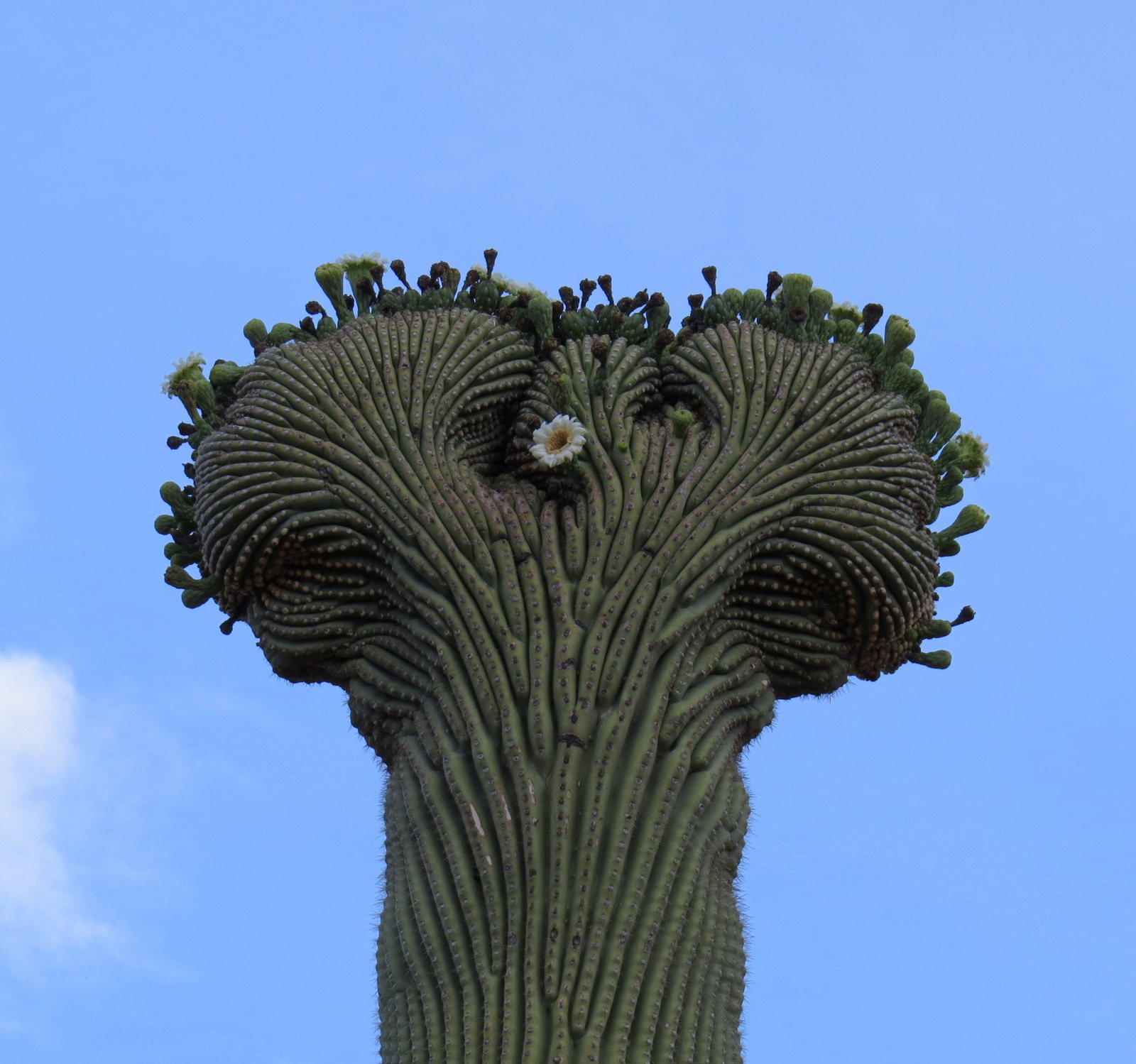
Saguaro is a very slow-growing, tree-sized cactus from the Sonoran Desert, grown for its ribbed green columns, branching arms and white flowers. It suits hot, dry gardens with mild winters; in most of the United Kingdom and Canada, it needs a bright, frost-free greenhouse. Allow space for its eventual size and keep its sharp spines away from paths and play areas.
At a glance
- Sun
- Full sun for established plants; give seedlings and newly moved plants light afternoon shade, then increase exposure gradually.
- Water
- Very low once established. Water young plants occasionally during warm, dry weather, allowing the root zone to dry thoroughly between waterings; keep nearly dry in winter.
- Soil
- Sharply drained, sandy or gravelly soil. Avoid heavy clay, low spots and regularly irrigated beds; use a gritty cactus mix in containers.
- Height
- 30-50 ft (9-15 m)
- Spread
- 10-25 ft (3-7.6 m), depending on branching
- Flowers
- Late spring to early summer: large, creamy-white flowers near the stem tips, opening at night and remaining open into the following day. Only mature plants flower.
- Foliage
- No conspicuous leaves; evergreen green stems have expandable ribs and clusters of stout spines.
- Growth
- Very slow, especially when young; arms may take many decades to develop.
- Care needed
- Low
The year at a glance
- Pollinators
- Drought tolerant
- Heat tolerant
- Wildlife
- Low allergen
| J | F | M | A | M | J | J | A | S | O | N | D | |
|---|---|---|---|---|---|---|---|---|---|---|---|---|
| Flowers | ||||||||||||
| Fruit | ||||||||||||
| Plant |
Northern hemisphere months. In Australia, shift them by six.
- Difficulty
- Hard
- Toughness
- Needs looking after
Will it suit your garden?
Pick your zone, country, light and whether you have pets.
Full sun is 6 or more hours of direct sun a day, part shade 3 to 6 hours, shade under 3.
How it grows
Planting day
5 ft (1.4 m)
After 1 year
8 ft (2.5 m)
After 2 years
12 ft (3.6 m)
After 3 years
16 ft (4.7 m)
After 5 years
23 ft (6.9 m)
About 10 years to full size.
From a typical nursery size, at an average rate for this kind of plant. A rule of thumb, not a forecast.
Good to know
- Cats and dogs
- Safe
- Native to
- the US
- Growth rate
- Slow
Care
Jobs through the year
- WaterMay, Sep, every 30 days
- For established ground plants in suitable climates, water only in warm weather after soil dries completely; pots need individual checks.
- WaterJun–Aug, every 30 days
- Water established ground plants only during extended drought; young plants may need more frequent watering after complete drying.
- FeedMay
- For container plants only, apply a light dose of cactus fertiliser; established ground plants rarely need feeding.
- ProtectMay–Jul
- Acclimatise newly moved plants gradually to full sun, using temporary afternoon shade.
- ProtectJan–Apr, Sep–Dec
- In zones 6–7, provide bright, frost-free shelter and nearly dry winter roots; only mature plants flower.
- Buy nursery-grown plants from a reputable supplier; wild saguaros are legally protected in parts of their native range.
- Plant in warm weather with the root collar at its original level, in a site that drains rapidly.
- Water only when the soil has dried thoroughly; keep lawn irrigation and roof runoff away from the base.
- Use gravel rather than moisture-holding organic mulch around the stem, keeping the crown exposed.
- Feed container plants lightly with cactus fertiliser during active growth; established plants in the ground rarely need feeding.
- Protect young plants from frost with breathable frost cloth; use professional cactus handlers for moving or stabilising large specimens.
Pruning. No routine pruning is needed, and cutting the main stem permanently changes its shape. Have a cactus specialist assess damaged, rotting or unstable arms rather than attempting heavy cuts yourself.
Through the year
- Spring
- Check for winter damage and confirm that the stem base is firm before resuming occasional watering.
- Late spring
- Plant nursery-grown specimens once the soil is warm; gradually acclimatise greenhouse plants to stronger sunlight.
- Summer
- Water young plants only during extended dry spells, letting the root zone dry completely between applications.
- Summer
- Watch mature plants for flowers and fruit; leave some fruit for wildlife.
- Autumn
- Reduce watering as temperatures fall and move portable containers under bright, frost-free cover where needed.
- Winter
- Keep roots nearly dry and protect outdoor young plants during brief frosts; prolonged freezing requires a protected growing space.
In the garden
- Use as a single sculptural focal point in a spacious gravel garden, well back from circulation routes.
- Combine with low agaves and golden barrel cacti for contrasting upright, rosette and rounded forms.
- Plant among creosote bush, palo verde and other Sonoran Desert plants in a dry-climate landscape.
- Grow a young specimen in a substantial, freely draining container for a sunny courtyard or greenhouse.
Garden styles it suits: Desert modern, Southwestern, Desert / xeriscape, Architectural minimal, Dry gravel garden and Wildlife garden.
Plant it with: Blue palo verde, Creosote bush, Brittlebush, Desert marigold, Golden barrel cactus and Parry's agave.
Wildlife: In its native range, flowers feed nectar-feeding bats, birds and insects, while fruits feed many desert animals. Mature stems provide nesting cavities for woodpeckers and other birds; young plants often establish beneath protective nurse shrubs or trees.
Problems to watch for
- Root and crown rot: wet soil, especially in cool weather, causes soft or collapsing tissue. Stop watering, correct drainage and seek specialist advice if the stem base is affected.
- Bacterial soft rot: dark, wet, sometimes foul-smelling patches can spread through the stem. Keep water off wounds and have a cactus specialist assess whether the plant can be saved.
- Frost damage: prolonged cold can scar or kill stems even within its nominal hardiness range. Choose a sheltered site and protect young plants; do not remove damaged tissue until its extent is clear.
- Sunburn: sudden exposure after greenhouse growing or transplanting can cause pale or brown scars. Acclimatise gradually and provide temporary shade.
Safety
Not known to be toxic to people, cats, dogs or horses; the ripe fruit and seeds are edible. The main hazard is physical: sharp spines can cause serious puncture wounds, and heavy stems or arms can injure people or animals if they fall.
Easily confused with
Cardon (Pachycereus pringlei)
Often branches lower down and develops heavier, more massive limbs; mature stems commonly have fewer, broader ribs than saguaro. Young plants can be difficult to distinguish.
Organ pipe cactus (Stenocereus thurberi)
Usually forms a cluster of relatively slender upright stems branching near ground level, rather than a single tall trunk with raised arms.
Mexican fence post cactus (Pachycereus marginatus)
Has fewer, broad ribs edged with conspicuous, closely spaced pale areoles, creating neat vertical lines; its stems are generally slimmer.
The name
Carnegiea honours philanthropist Andrew Carnegie, gigantea refers to its giant size, and saguaro comes through Spanish from an Indigenous name.
Propagation. Grow from seed in a warm, bright position with light shade and a fine, freely draining cactus mix. Keep the surface lightly moist during germination, then gradually allow more drying as seedlings establish; growth is extremely slow. It does not normally produce basal offsets.
Checked against open data
- Accepted botanical name
- Carnegiea gigantea
- In the US and Canada
- Native in the lower 48 states.
- Native range
- Arizona, California, Mexico Northeast and Mexico Northwest.
- Measured
- Soil pH 7 to 9.
Sources: GBIF (CC BY 4.0), USDA PLANTS and Trefle (CC BY 4.0). The care and design notes are LandscapeGPT's own.
See it in your own yard.
Upload a photo of your yard and see it redesigned with plants that suit your climate, each checked against your zone.