Creosote bush
Larrea tridentata. Family Zygophyllaceae. Shrub.
Also called Creosotebush, Chaparral, Greasewood.
Creosote bush is an open, resin-scented evergreen shrub native to the deserts of the southwestern United States and northern Mexico. Gardeners grow it for its fine-textured foliage, yellow flowers and exceptional drought tolerance. It needs strong sun and excellent drainage; cold, wet winters make it an unreliable outdoor choice across much of the United Kingdom and Canada.
At a glance
- Sun
- Full sun.
- Water
- Very low once established; water young plants deeply but let the root zone dry between waterings.
- Soil
- Well-drained sandy, gravelly or rocky soil; tolerates alkaline conditions and poor fertility. Avoid waterlogged ground.
- Height
- 3-10 ft (0.9-3 m)
- Spread
- 4-10 ft (1.2-3 m)
- Flowers
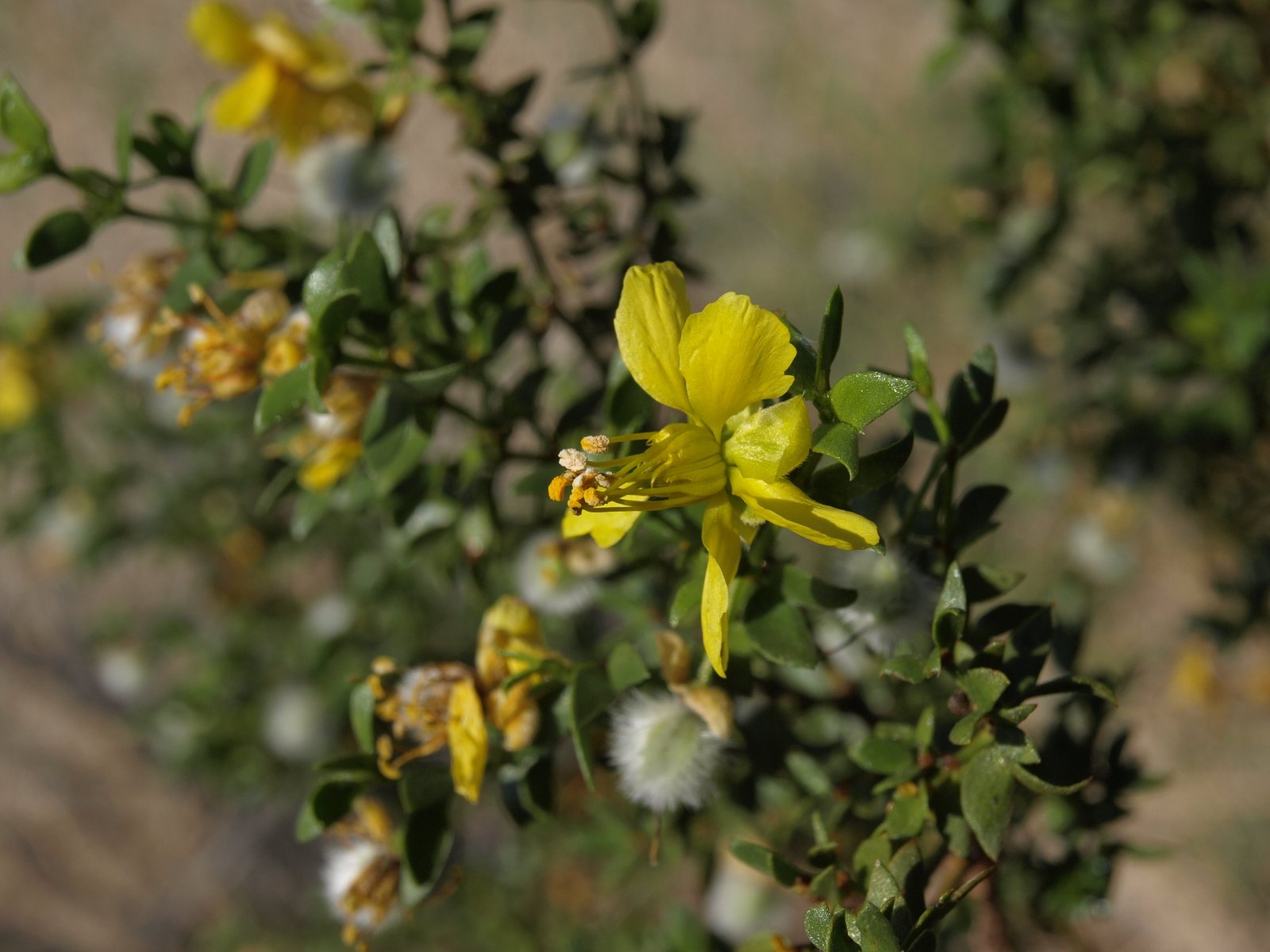
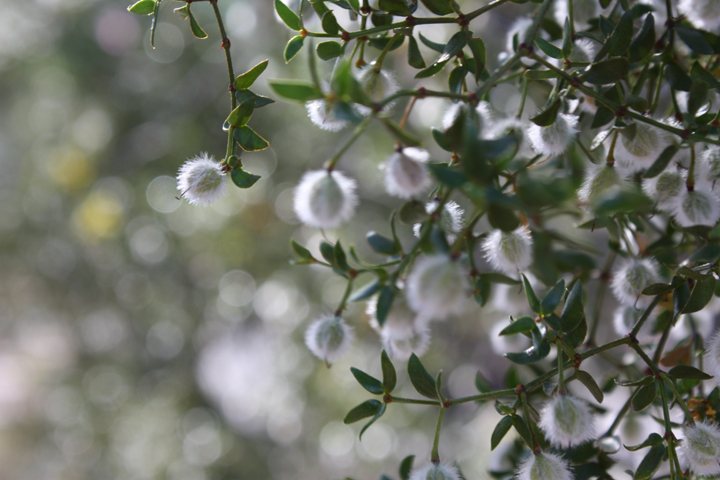
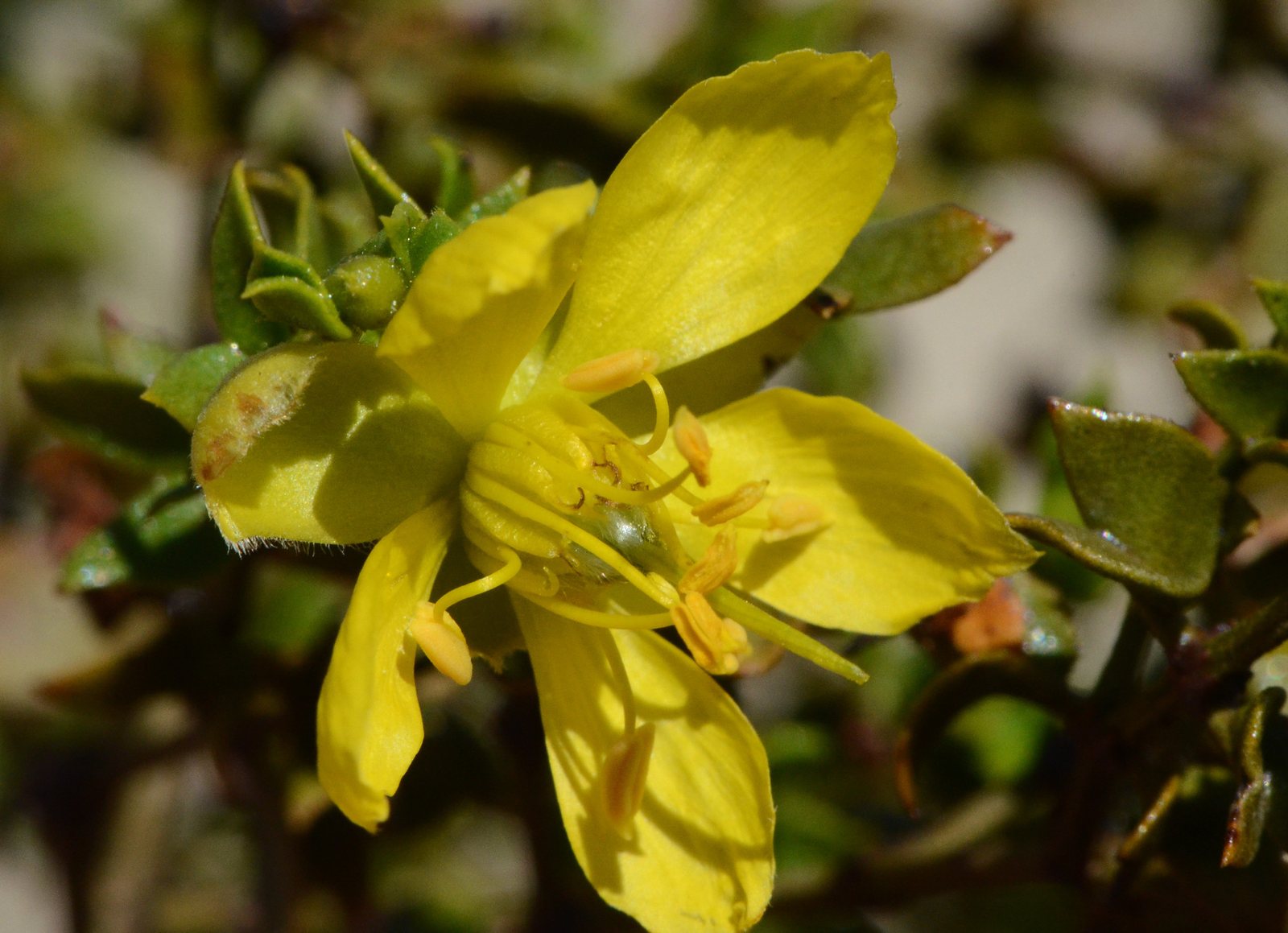
- Small, five-petalled yellow flowers mainly in spring, with further flushes after rain in warm weather; followed by fuzzy white seed heads.
- Foliage
- Evergreen. Small, paired, glossy olive-green leaflets coated with aromatic resin; the scent is particularly noticeable after rain. May shed some foliage during severe drought or cold.
- Growth
- Slow to moderate, depending on warmth and rainfall.
- Care needed
- Low
The year at a glance
- Pollinators
- Deer resistant
- Drought tolerant
- Heat tolerant
- Wildlife
- Low allergen
- Fragrant
| J | F | M | A | M | J | J | A | S | O | N | D | |
|---|---|---|---|---|---|---|---|---|---|---|---|---|
| Flowers | ||||||||||||
| Fruit | ||||||||||||
| Plant |
Northern hemisphere months. In Australia, shift them by six.
- Difficulty
- Hard
- Toughness
- Fairly tough
Will it suit your garden?
Pick your zone, country, light and whether you have pets.
Full sun is 6 or more hours of direct sun a day, part shade 3 to 6 hours, shade under 3.
How it grows
Planting day
1.6 ft (0.5 m)
After 1 year
2.4 ft (0.72 m)
After 2 years
3 ft (0.95 m)
After 3 years
4 ft (1.2 m)
After 5 years
5 ft (1.6 m)
About 7 years to full size.
From a typical nursery size, at an average rate for this kind of plant. A rule of thumb, not a forecast.
Good to know
- Cats and dogs
- Toxic
- Native to
- the US
- Growth rate
- Slow
Care
Jobs through the year
- WaterApr–May, Sep, every 28 days
- In this climate use a gritty, draining container; water only after the root zone dries.
- WaterJun–Aug, every 21 days
- Soak only when dry; young plants need more frequent checks, never constantly damp roots.
- WaterJan–Mar, Oct–Dec, every 42 days
- Under cool, bright, frost-free cover, water sparingly only when the root ball is dry.
- PruneApr–May
- After growth resumes, remove confirmed dead or crossing branches; avoid shearing or hard pruning.
- MulchMay
- If needed, use a light gravel mulch, keeping it clear of the stems.
- ProtectJan–Apr, Oct–Dec
- Overwinter under bright, frost-free cover, sheltered from winter rain; it is not reliably hardy here.
- ProtectMay–Jun
- Move outside after frost risk passes, introduce full sun gradually and avoid disturbing the roots.
- Plant in full sun with enough room for the shrub's natural spread.
- Water deeply during establishment, then allow the soil to dry before watering again.
- Once established, irrigate only during prolonged drought; keep it away from regularly watered lawns and beds.
- Do not routinely fertilize; rich feeding is unnecessary.
- Use a light gravel mulch if wanted, keeping the crown clear and avoiding moisture-retentive mulch against the stems.
Pruning. In late winter or early spring, after severe frost risk has passed, remove dead, damaged or crossing branches. Keep pruning light and avoid shearing or cutting hard into old wood.
Through the year
- Late winter
- Check for frost damage and drainage problems; wait until growth resumes before deciding which branches are dead.
- Spring
- Plant after severe frost risk has passed, disturbing the root ball as little as possible.
- Late spring
- Remove confirmed dead wood and lightly thin crossing branches if necessary.
- Summer
- Check young plants before watering; soak deeply only when the root zone has dried.
- Autumn
- Reduce supplemental watering as temperatures fall and clear debris away from the crown.
- Winter
- Keep irrigation off during wet weather and prevent runoff from collecting around the roots.
In the garden
- Use as a loose structural shrub in a desert garden, leaving open gravel between plants.
- Combine with agaves, yuccas and cacti for contrast between fine foliage and bold architectural forms.
- Plant in informal groups on dry slopes where irrigation will be minimal.
- Place beside a sunny path, allowing for its mature spread, to enjoy its resinous scent after rain.
Garden styles it suits: Desert modern, Desert / xeriscape, Southwestern, Dry gravel garden, Wildlife garden and Low-maintenance.
Plant it with: Banana yucca, Desert spoon, Brittlebush, Blackfoot daisy, Desert marigold and Prickly pear.
Wildlife: Flowers provide pollen and nectar for native bees, including specialist bees associated with creosote bush. The branches shelter desert insects and small animals.
Problems to watch for
- Root rot or decline in wet soil: improve drainage or replant on a raised, freely draining site; stop frequent irrigation.
- Frost-damaged foliage and stems: choose a warm, sheltered position and remove dead growth after spring regrowth shows the extent of injury.
- Transplant failure: start with small nursery-grown plants, keep the root ball intact and avoid moving established shrubs.
- Creosote gall midges can produce clustered leafy galls: usually no treatment is needed; prune out a few conspicuous galls if appearance matters.
Safety
Do not eat the leaves or stems or use them to make chaparral tea or remedies. Ingested chaparral products have caused serious liver injury in people. Toxicity in cats, dogs and horses is less well documented, so treat the resinous foliage and preparations made from it as potentially toxic and prevent chewing or ingestion.
Where it spreads. Can expand into grasslands in parts of the southwestern United States and northern Mexico, where it is considered native woody encroachment rather than an introduced invasive plant.
Easily confused with
Black greasewood (Sarcobatus vermiculatus)
Has narrow, fleshy leaves and often spiny branches, rather than creosote bush's paired leaflets and conspicuous yellow flowers.
Chamise (Adenostoma fasciculatum)
Has tiny needle-like leaves in bundles and clusters of small white flowers, rather than paired broad leaflets and individual yellow flowers.
The name
Larrea honours the Spanish patron of science Juan Antonio Hernández de Larrea, tridentata means three-toothed, and creosote bush refers to its resinous, creosote-like smell.
Propagation. Usually grown from seed sown in a warm, freely draining medium; germination can be variable. Young seedlings transplant more successfully than established plants, which resent root disturbance.
Checked against open data
- Accepted botanical name
- Larrea tridentata
- In the US and Canada
- Native in the lower 48 states.
- Native range
- Arizona, California, Mexico Gulf, Mexico Northeast, Mexico Northwest, Mexico Southwest, Nevada, New Mexico, Texas and Utah.
- Measured
- Average height 194 cm.
Sources: GBIF (CC BY 4.0), USDA PLANTS and Trefle (CC BY 4.0). The care and design notes are LandscapeGPT's own.
See it in your own yard.
Upload a photo of your yard and see it redesigned with plants that suit your climate, each checked against your zone.