Scarlet gilia
Ipomopsis aggregata. Family Polemoniaceae. Perennial.
Also called Skyrocket, Scarlet trumpet, Standing cypress.
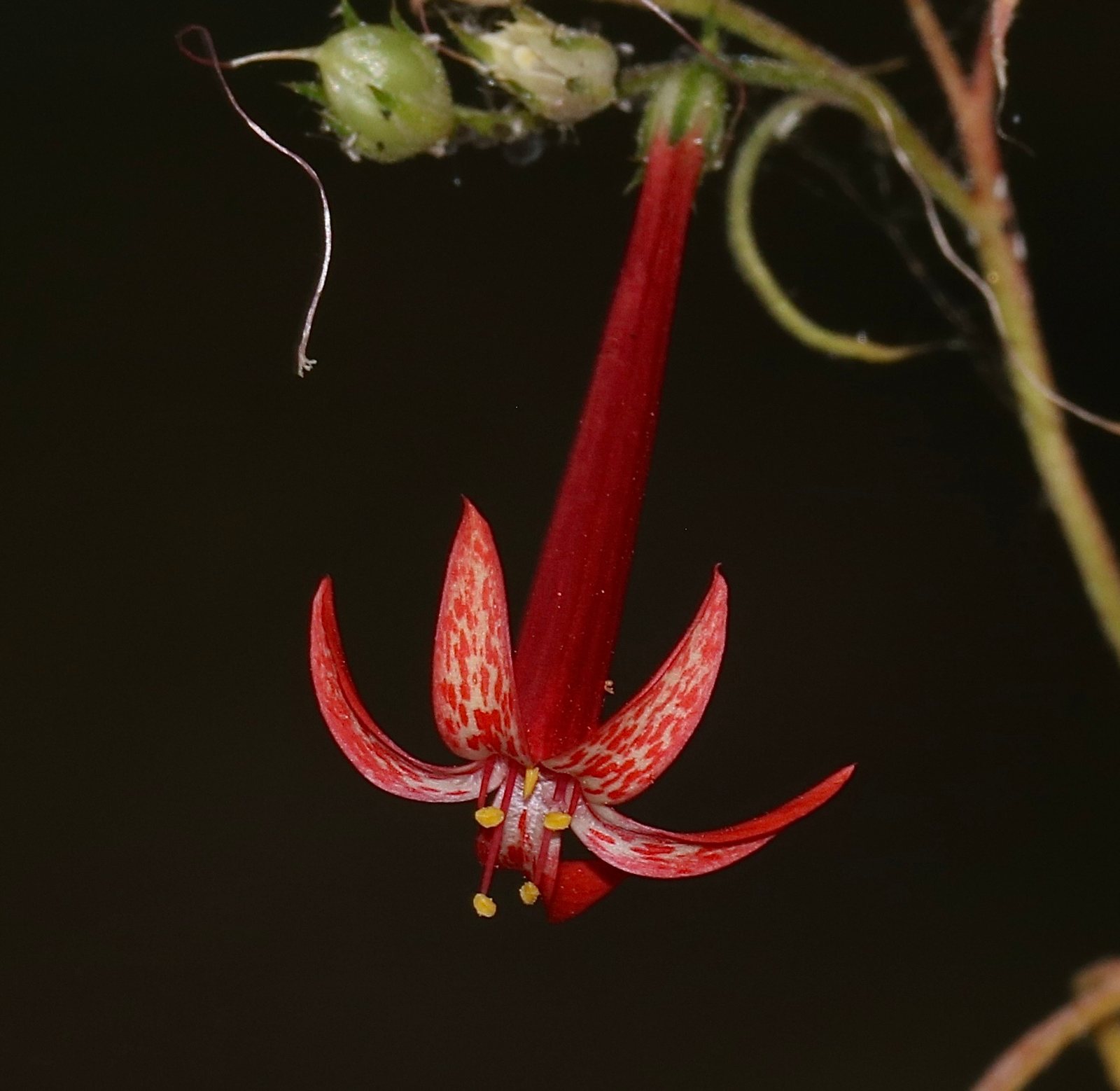
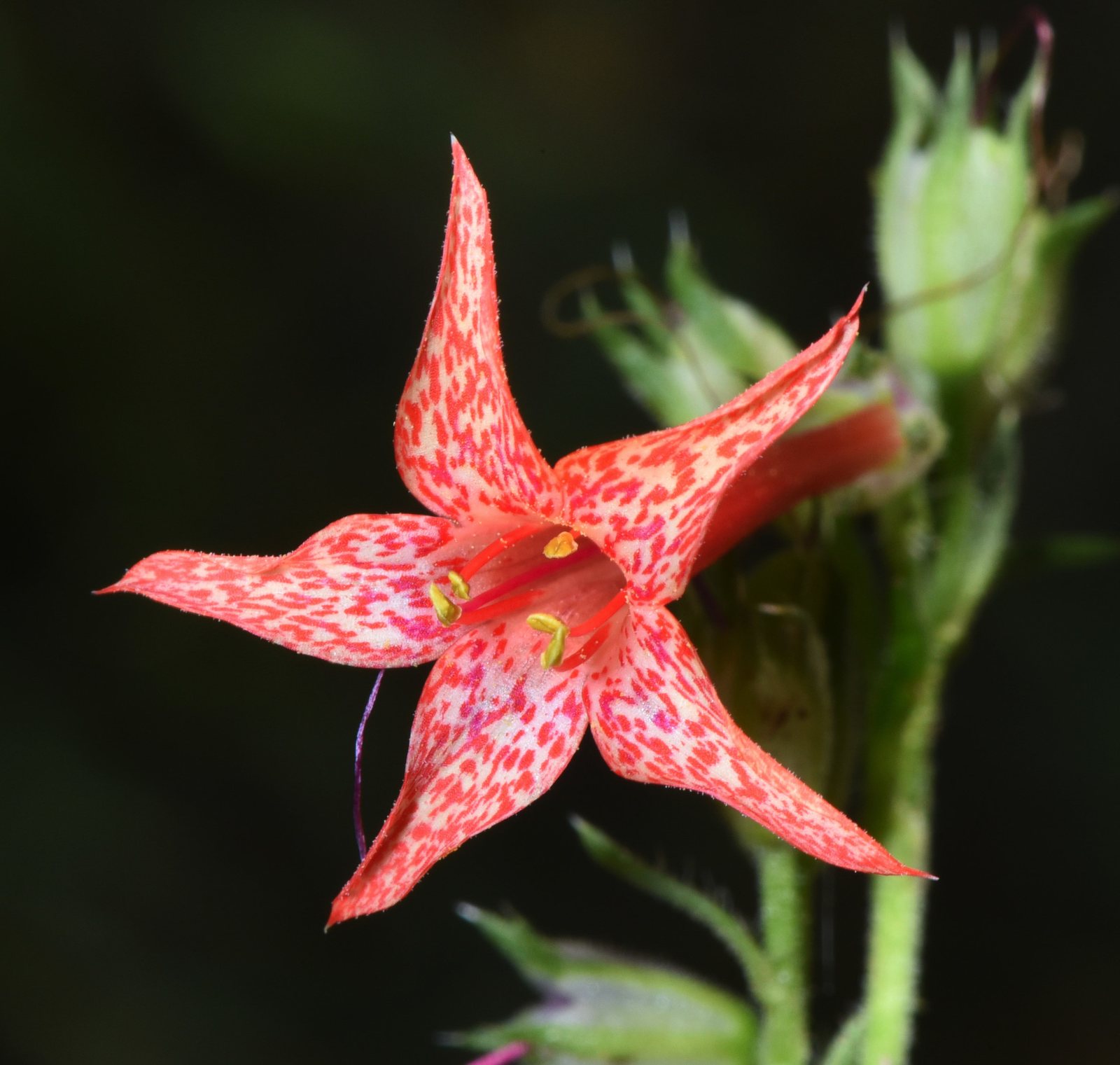
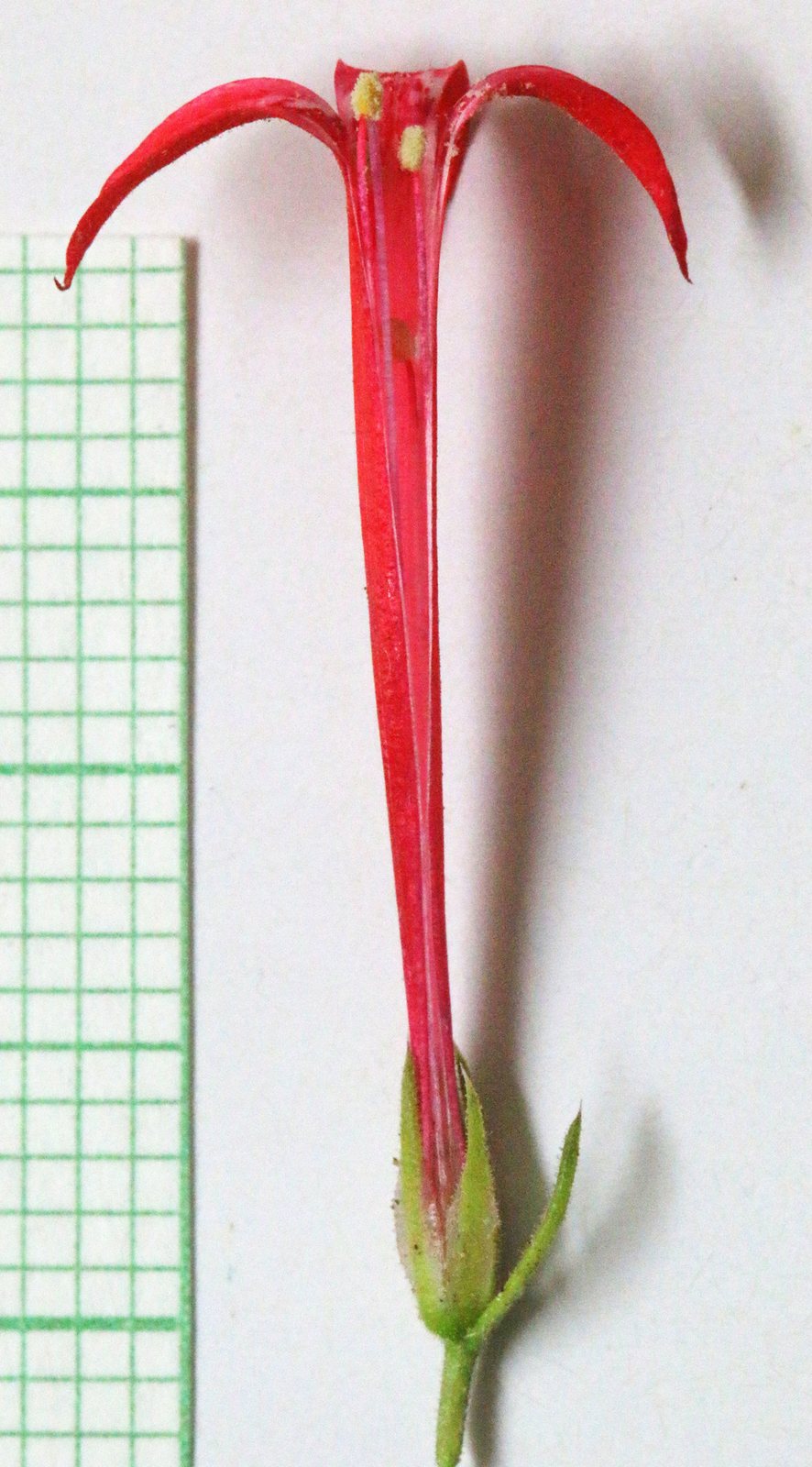
Scarlet gilia is a western North American wildflower with slender stems of red tubular flowers that attract hummingbirds where they occur. Usually a biennial or short-lived perennial, it spends its first season as a leafy rosette, flowers in a later year, then usually dies after setting seed. Grow it in sunny, sharply drained ground and allow seedlings to replace older plants.
At a glance
- Sun
- Full sun; tolerates light afternoon shade in hot inland gardens.
- Water
- Low once established; give seedlings regular moisture, then water established plants occasionally during prolonged drought.
- Soil
- Lean, well-drained sandy, gravelly or rocky soil. Avoid heavy clay, standing water and rich, heavily fertilised beds.
- Height
- 2-4 ft (0.6-1.2 m)
- Spread
- 0.5-1 ft (0.15-0.3 m)
- Flowers
- Late spring through summer, sometimes into early autumn; usually scarlet-red, with orange, pink or pale-flowered forms occurring naturally.
- Foliage
- Finely divided green leaves form a low basal rosette, with smaller leaves along the flowering stems. Rosettes may remain green through mild winters.
- Growth
- Moderate; usually forms a rosette before producing a rapidly elongating flowering stem in its second or a later year.
- Care needed
- Low
The year at a glance
- Pollinators
- Drought tolerant
- Cold hardy
- Heat tolerant
- Low allergen
| J | F | M | A | M | J | J | A | S | O | N | D | |
|---|---|---|---|---|---|---|---|---|---|---|---|---|
| Flowers | ||||||||||||
| Fruit | ||||||||||||
| Plant |
Northern hemisphere months. In Australia, shift them by six.
- Difficulty
- Moderate
- Toughness
- Fairly tough
Will it suit your garden?
Pick your zone, country, light and whether you have pets.
Full sun is 6 or more hours of direct sun a day, part shade 3 to 6 hours, shade under 3.
How it grows
Planting day
1 ft (0.3 m)
After 1 year
1.8 ft (0.55 m)
After 2 years
2.6 ft (0.8 m)
After 3 years
3 ft (0.9 m)
full size
About 2 years to full size.
From a typical nursery size, at an average rate for this kind of plant. A rule of thumb, not a forecast.
Good to know
- Cats and dogs
- Safe
- Native to
- the US and Canada
- Growth rate
- Fast
Care
Jobs through the year
- WaterApr–May, Sep, every 21 days
- Water established ground plants only in dry spells; young rosettes need more regular moisture.
- WaterJun–Aug, every 14 days
- Deeply water established ground plants only during prolonged drought; avoid continuously damp soil.
- MulchApr
- Use sparse gravel if needed, leaving crowns clear and bare patches for self-seeding.
- PruneSep–Oct
- Remove dead flowering stems after seed sheds; flowering plants usually die, so retain replacement rosettes.
- ProtectMar–May
- Protect young rosettes from slugs and snails during damp weather.
- ProtectJan–Feb, Oct–Dec
- Keep rosettes free of wet leaves and ensure water drains away from crowns.
- Water young rosettes during dry spells while their roots establish; avoid keeping the soil continuously wet.
- Do not routinely feed; rich soil encourages weak growth and can shorten the plant's life.
- Use a thin gravel mulch if needed, keeping the crown clear of damp organic mulch.
- Leave small patches of open soil around plants so fallen seed can germinate.
- Avoid moving established plants or dividing them; their taproots resent disturbance.
Pruning. Leave flowering stems standing until seed capsules dry if you want replacement seedlings. Cut spent stems to ground level after seed has shed; the flowering plant usually dies naturally.
Through the year
- Autumn
- Sow seed outdoors in a prepared, freely draining seedbed so it receives natural winter chilling.
- Winter
- Check that rosettes are not buried under wet leaves and that water drains away from their crowns.
- Spring
- Thin crowded seedlings to about 1 ft (0.3 m) apart; transplant only while very young.
- Late spring
- Water establishing plants during dry weather, allowing the soil surface to dry between waterings.
- Summer
- Allow flowering stems to develop without feeding; support only unusually exposed or leaning stems.
- Late summer
- Collect dry seed capsules or let them shed naturally, then remove dead flowering stems.
In the garden
- Scatter through a sunny gravel garden with penstemons and low grasses for upright red accents.
- Use in a western North American native planting with sulphur buckwheat and blue grama.
- Plant in loose groups near a terrace or path where the tubular flowers and visiting hummingbirds can be seen.
- Place among low, drought-tolerant plants on a sunny bank, leaving open ground for replacement seedlings.
Garden styles it suits: Wildflower, Wildlife garden, Dry gravel garden, Desert / xeriscape, Southwestern and Mountain lodge.
Plant it with: Pineleaf penstemon, Sulphur buckwheat, Blue grama, Prairie Junegrass, Blanket flower and Prairie smoke.
Wildlife: The long tubular flowers are especially valuable to hummingbirds in North America. Long-tongued insects also visit; it is not a broadly accessible nectar source for all pollinators.
Problems to watch for
- Crown or root rot in wet soil: improve drainage or grow on a raised gravelly mound; keep mulch away from the crown.
- Slugs and snails eating young rosettes: inspect during damp weather and use barriers or locally approved controls where necessary.
- Tall stems flopping in rich soil or shade: provide more sun, stop feeding and use a discreet support if needed.
- Plants disappearing after flowering: this is usually their natural life cycle; allow seed to ripen and retain young replacement rosettes.
Safety
Not known to be toxic to people, cats, dogs or horses, but reliable species-specific safety information is limited. No particular part is established as poisonous; do not treat the flowers, foliage or seeds as edible.
Easily confused with
Standing cypress (Ipomopsis rubra)
Both have red tubular flowers and finely divided leaves. Standing cypress usually has a denser, more plume-like flowering spike and is native mainly to the south-central and southeastern United States;
Pineleaf penstemon (Penstemon pinifolius)
A low, woody-based perennial with short, needle-like leaves rather than a basal rosette of finely divided foliage. Its red-orange flowers have a more distinctly two-lipped opening.
The name
The epithet aggregata means clustered, referring to the grouped flowers, while scarlet gilia describes their usual colour and preserves the plant's former placement in the genus Gilia.
Propagation. Grow from seed, preferably sown outdoors in autumn. For spring sowing, cold-moist chilling for roughly 4-8 weeks can improve germination, although requirements vary with seed origin. Sow shallowly and move seedlings while small to minimise taproot damage.
Checked against open data
- Accepted botanical name
- Ipomopsis aggregata
- In the US and Canada
- Native in Canada and the lower 48 states.
- Native range
- Arizona, British Columbia, California, Colorado, Idaho, Mexico Northeast, Mexico Northwest, Montana, Nevada, New Mexico, Oklahoma and Oregon.
- Measured
- Average height 43 cm.
Sources: GBIF (CC BY 4.0), USDA PLANTS and Trefle (CC BY 4.0). The care and design notes are LandscapeGPT's own.
See it in your own yard.
Upload a photo of your yard and see it redesigned with plants that suit your climate, each checked against your zone.