Screw pine
Pandanus utilis. Family Pandanaceae. Tree.
Also called Common screw pine.
Screw pine is a tropical evergreen tree with spiralling crowns of long, spiny leaves and conspicuous stilt roots. Gardeners grow it for its architectural shape and tolerance of coastal conditions, not for timber or culinary leaves. It needs a frost-free climate; in the United Kingdom, Canada and colder regions elsewhere, grow it in a container under warm glass.
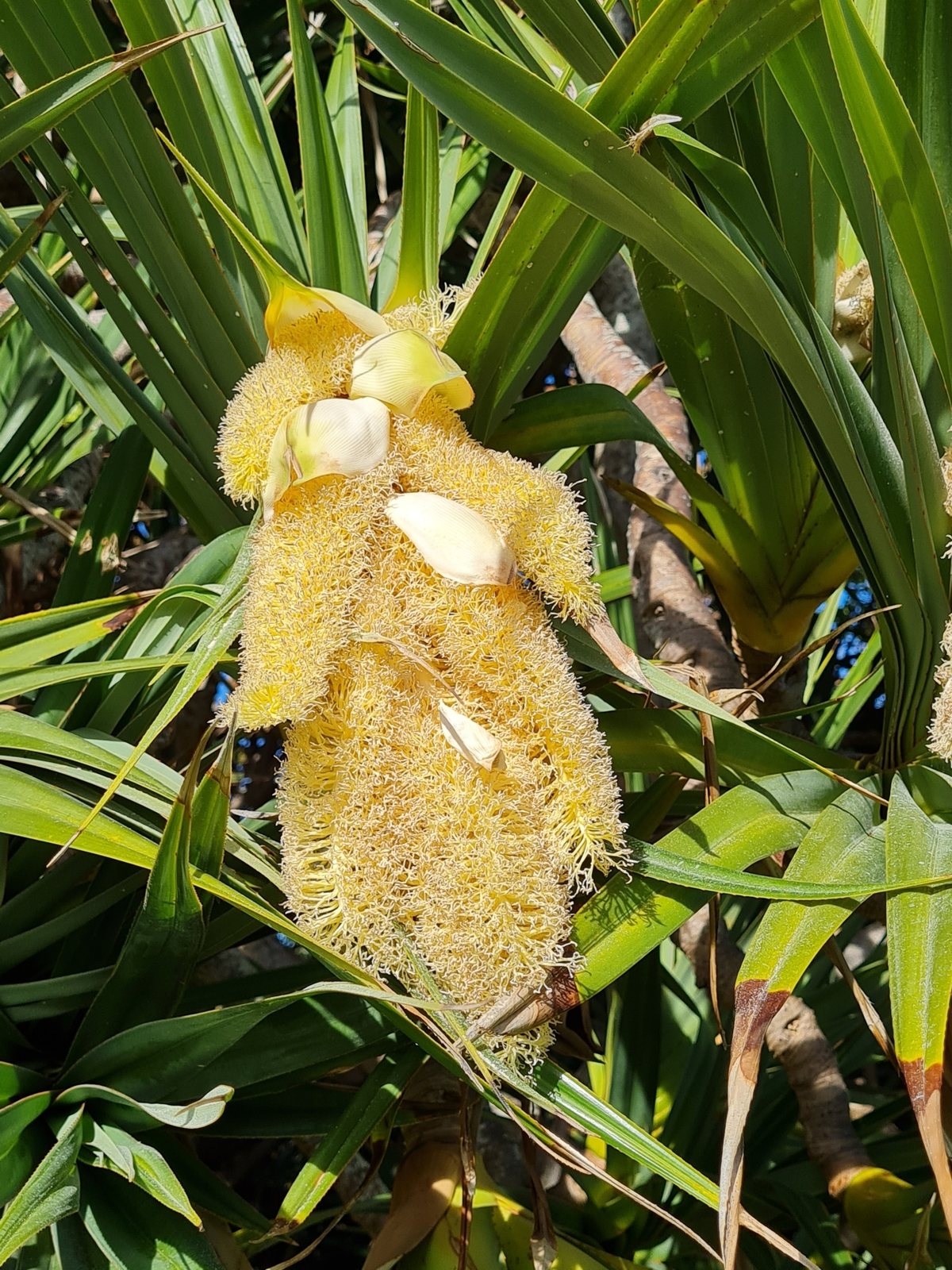
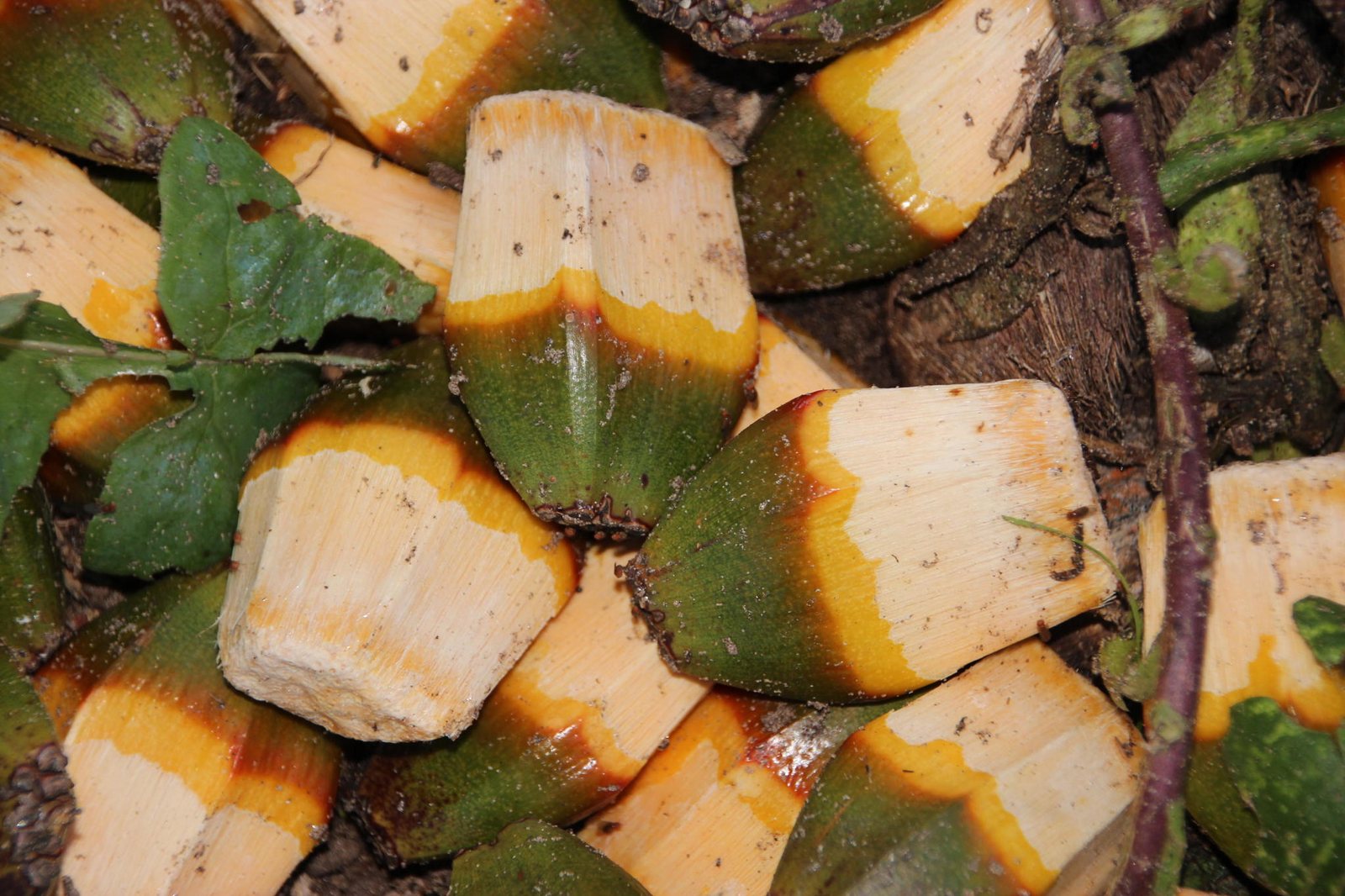
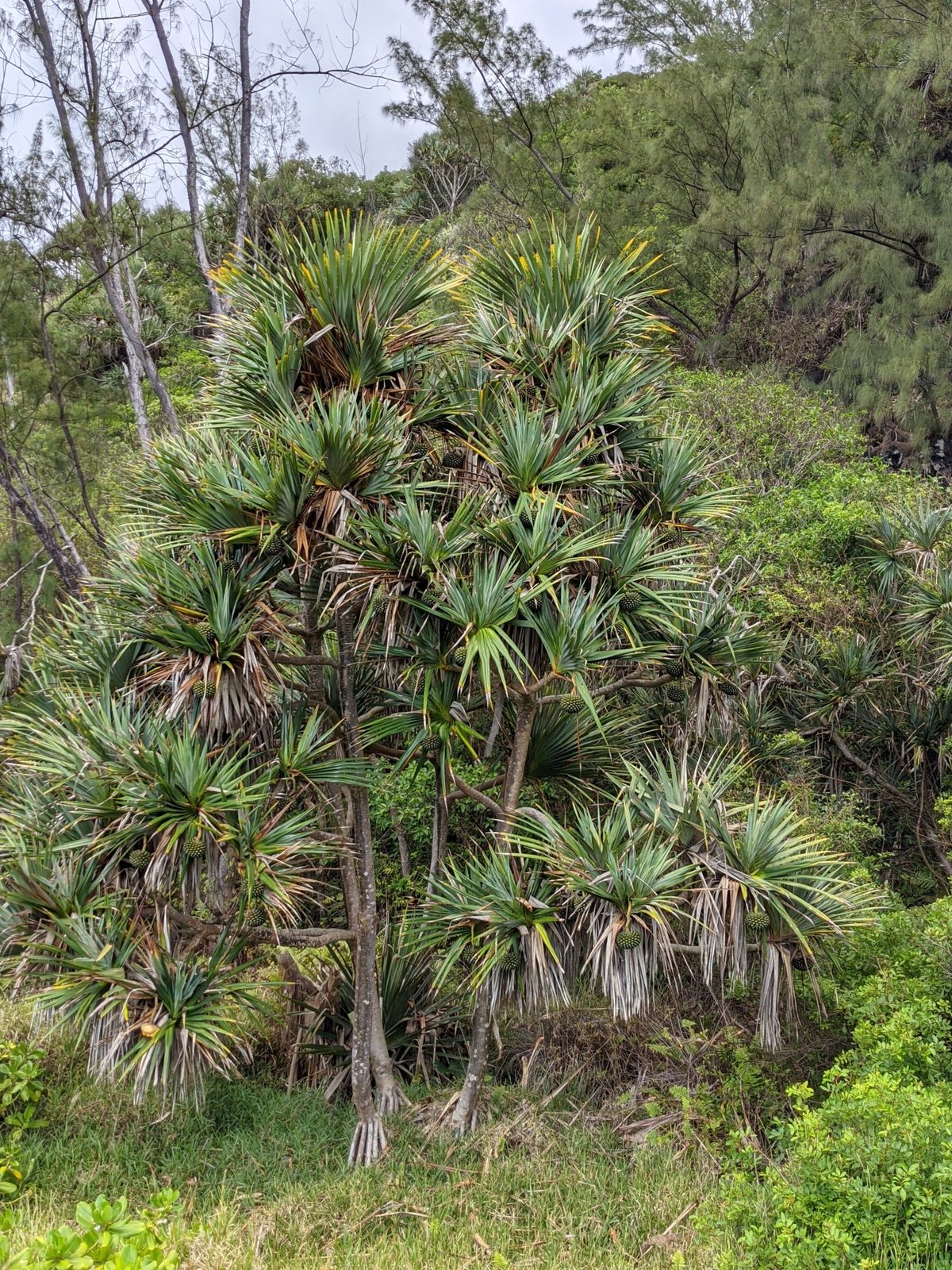
At a glance
- Sun
- Full sun to partial shade; give container plants very bright light indoors.
- Water
- Water regularly while establishing, allowing the surface soil to dry between waterings. Established outdoor trees tolerate short dry spells; container plants need less water in winter.
- Soil
- Well-drained sandy or loamy soil; tolerates salt spray and a range of soil pH, but avoid persistently waterlogged ground.
- Height
- 20-40 ft (6-12 m) outdoors, occasionally taller; much smaller in containers
- Spread
- 12-20 ft (3.7-6 m)
- Foliage
- Evergreen, stiff, strap-shaped green leaves arranged in spirals, with sharp reddish spines along the edges and underside midrib.
- Growth
- Slow to moderate, faster in warm conditions with adequate moisture
- Care needed
- Low
The year at a glance
- Drought tolerant
- Heat tolerant
| J | F | M | A | M | J | J | A | S | O | N | D | |
|---|---|---|---|---|---|---|---|---|---|---|---|---|
| Plant |
Northern hemisphere months. In Australia, shift them by six.
- Difficulty
- Moderate
- Toughness
- Fairly tough
Will it suit your garden?
Pick your zone, country, light and whether you have pets.
Full sun is 6 or more hours of direct sun a day, part shade 3 to 6 hours, shade under 3.
How it grows
Planting day
7 ft (2 m)
After 1 year
8 ft (2.3 m)
After 2 years
9 ft (2.7 m)
After 3 years
10 ft (3.1 m)
After 5 years
12 ft (3.7 m)
About 20 years to full size.
From a typical nursery size, at an average rate for this kind of plant. A rule of thumb, not a forecast.
Good to know
- Cats and dogs
- Safe
- Growth rate
- Moderate
Care
Jobs through the year
- WaterMar–May, Sep–Oct, every 14 days
- Grow in a stable container here; water when the surface dries and drain thoroughly.
- WaterJun–Aug, every 7 days
- Check summer containers regularly; water deeply once the surface dries, more often for young plants.
- WaterJan–Feb, Nov–Dec, every 21 days
- Under warm winter cover, water sparingly when the upper mix dries; avoid persistently wet roots.
- FeedApr–Aug, every 30 days
- Apply balanced container fertilizer at the label rate during active growth.
- PruneApr–Sep
- Remove only fully dead leaves as needed; wear thick gloves and leave stilt roots intact.
- ProtectJan–May, Sep–Dec
- Keep in very bright, warm frost-free shelter away from cold draughts.
- ProtectJun
- Acclimatize outdoors in warm weather; position spiny leaves well away from paths and play areas.
- Plant where the mature crown and stilt roots will have room, well away from paths, doors and play areas.
- Water young trees deeply during dry weather; let excess water drain freely.
- Feed container plants with a balanced fertiliser at the label rate during spring and summer.
- Use a free-draining potting mix and a heavy container that will resist toppling.
- Keep container plants frost-free and away from cold draughts.
- Leave stilt roots intact; they support the trunk.
Pruning. Remove fully dead leaves as needed, cutting close to their bases with clean secateurs while wearing thick gloves and long sleeves. Do not top the tree or cut away its supporting stilt roots.
Through the year
- Spring
- Repot container plants if rootbound, using a stable pot and free-draining mix.
- Spring
- Begin light feeding as active growth resumes.
- Summer
- Check soil moisture regularly and water young trees and containers during dry weather.
- Late summer
- Check leaf bases for mealybugs and scale, especially on sheltered container plants.
- Autumn
- Move container plants under warm cover before nights become cold; reduce watering as growth slows.
- Winter
- Provide the brightest available protected position and keep the root ball from remaining wet.
In the garden
- Use as a specimen in a spacious frost-free lawn where its branching trunk and stilt roots remain visible.
- Plant behind low coastal groundcovers for a strong contrast in height and leaf shape.
- Combine with broad-leaved tropical plants to contrast their soft foliage with its rigid, spiralling leaves.
- Grow in a large, stable container as a conservatory feature, allowing generous clearance around the spiny foliage.
Garden styles it suits: Architectural minimal, Modern tropical, Tropical, Coastal, Luxury resort and Florida subtropical.
Plant it with: Bird of paradise, Hibiscus, Croton, Cast-iron plant and Beach sunflower.
Wildlife: Mature female trees produce large, pineapple-like fruit clusters when pollinated by a male plant. Birds and other fruit-eating animals may visit them in tropical gardens.
Problems to watch for
- Mealybugs and scale: inspect leaf bases and undersides; wipe off small infestations and treat persistent ones with a labelled horticultural oil or insecticidal soap.
- Root rot in wet soil: improve drainage, empty standing water from saucers and let the surface mix dry before watering again.
- Cold damage: protect from frost and cold draughts; wait for new growth before removing damaged foliage.
- Brown leaf tips indoors: check for irregular watering and fertiliser salt buildup; water thoroughly when needed and occasionally flush the pot with fresh water.
Safety
Not known to be poisonous to people, cats, dogs or horses, although species-specific animal safety information is limited. The sharp spines on leaf margins and midribs are the main hazard and can cause painful cuts or eye injuries; keep foliage out of reach of children and animals. Do not treat it as interchangeable with culinary pandan.
Easily confused with
Coastal screw pine (Pandanus tectorius)
Also has spiny spiral leaves and stilt roots, but its green forms are difficult to distinguish reliably without mature fruit and a botanical key; a nursery label is more dependable than overall shape.
Fragrant pandan (Pandanus amaryllifolius)
Usually forms a smaller clump with softer, largely spineless, fragrant leaves used in cooking, rather than a large tree with strongly armed leaves.
Spineless yucca (Yucca gigantea)
Has cane-like trunks and rosettes of sword-shaped leaves, but lacks screw pine's conspicuous stilt roots and rows of reddish leaf-edge spines.
The name
Pandanus comes from the Malay name pandan, utilis means useful in Latin, and screw pine describes the spiralling leaves and superficial resemblance to a pine.
Propagation. Sow fresh seed in a warm, free-draining medium and keep it lightly moist; germination can be slow and uneven. Young basal offsets, when present, may be separated if they have roots.
Checked against open data
- Accepted botanical name
- Pandanus utilis
- In the US and Canada
- Introduced in Puerto Rico.
- Native range
- Mauritius, Rodrigues and Réunion.
Sources: GBIF (CC BY 4.0), USDA PLANTS and Trefle (CC BY 4.0). The care and design notes are LandscapeGPT's own.
See it in your own yard.
Upload a photo of your yard and see it redesigned with plants that suit your climate, each checked against your zone.