Silver buttonwood
Conocarpus erectus 'Sericeus'. Family Combretaceae. Tree.
Also called Silver-leaved buttonwood, Silver button mangrove.
Silver buttonwood is an evergreen small tree or large shrub grown for its densely silvery leaves and tolerance of coastal wind, salt spray and drought once established. It makes a clipped hedge or a spreading specimen in frost-free gardens; in the United Kingdom, Canada and colder parts of the United States and Australia, it needs a container and bright, frost-free winter shelter.
At a glance
- Sun
- Full sun; light shade is tolerated, but growth becomes looser and the silver foliage less striking.
- Water
- Water regularly while establishing, then during prolonged dry spells. Container plants need watering whenever the upper soil begins to dry.
- Soil
- Adaptable to sandy, loamy, alkaline and moderately saline soils. Well-drained soil is best in gardens and essential in containers.
- Height
- 15-25 ft (4.6-7.6 m) if left unclipped; occasionally taller in favorable conditions
- Spread
- 15-20 ft (4.6-6.1 m)
- Foliage
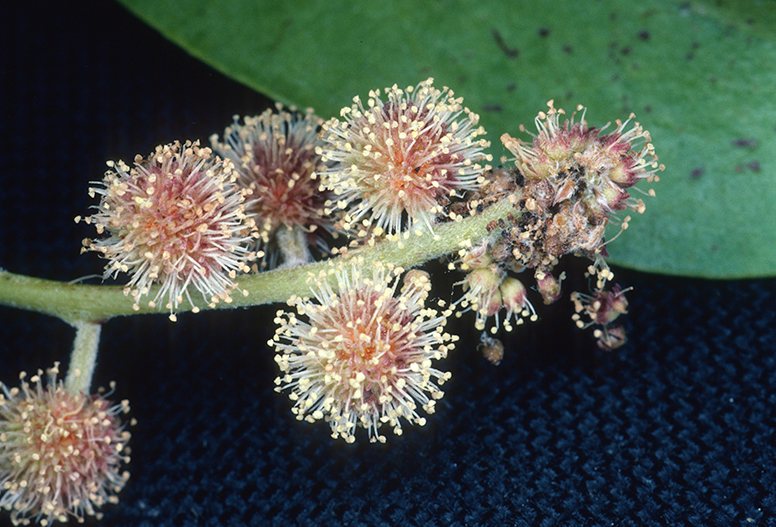
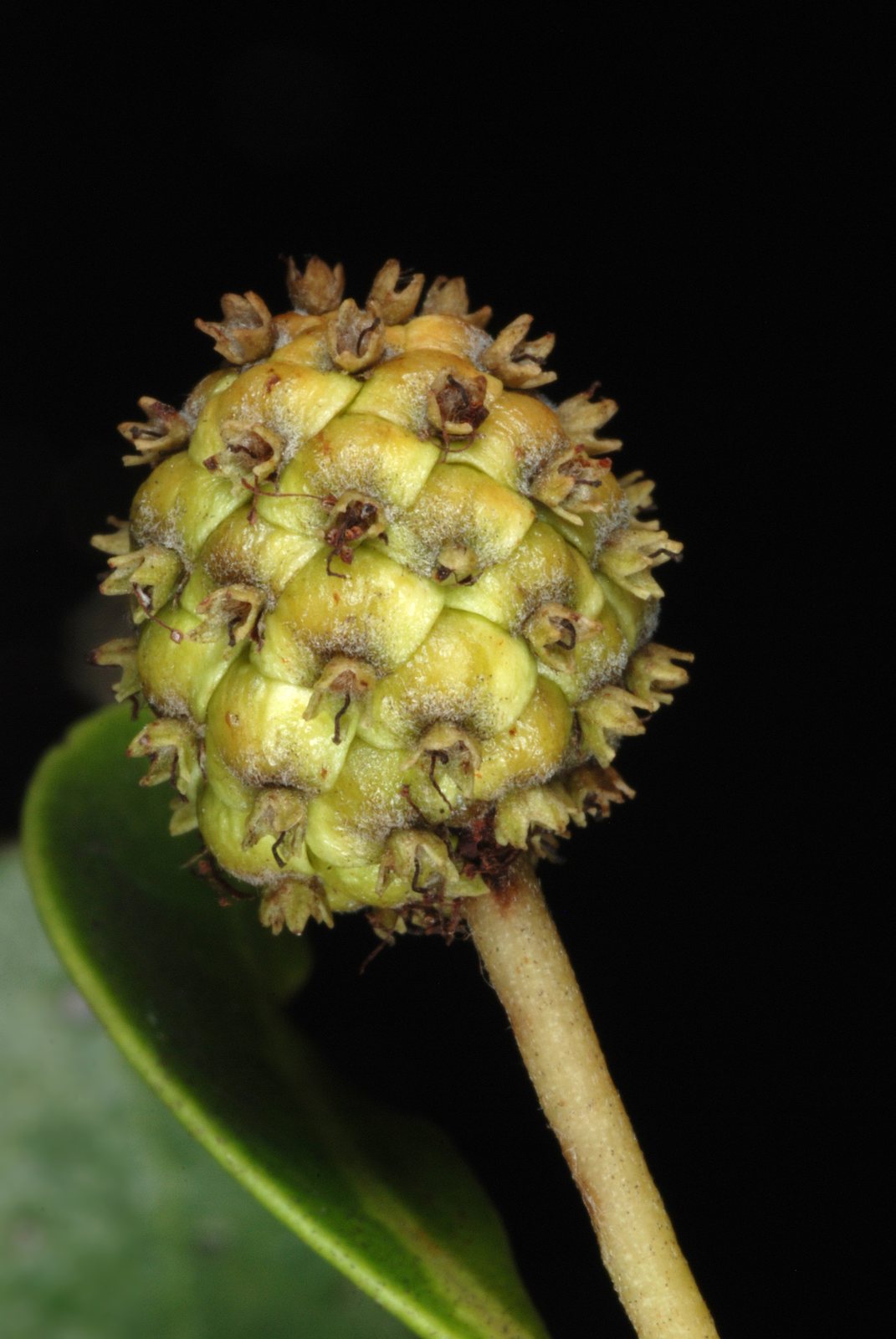
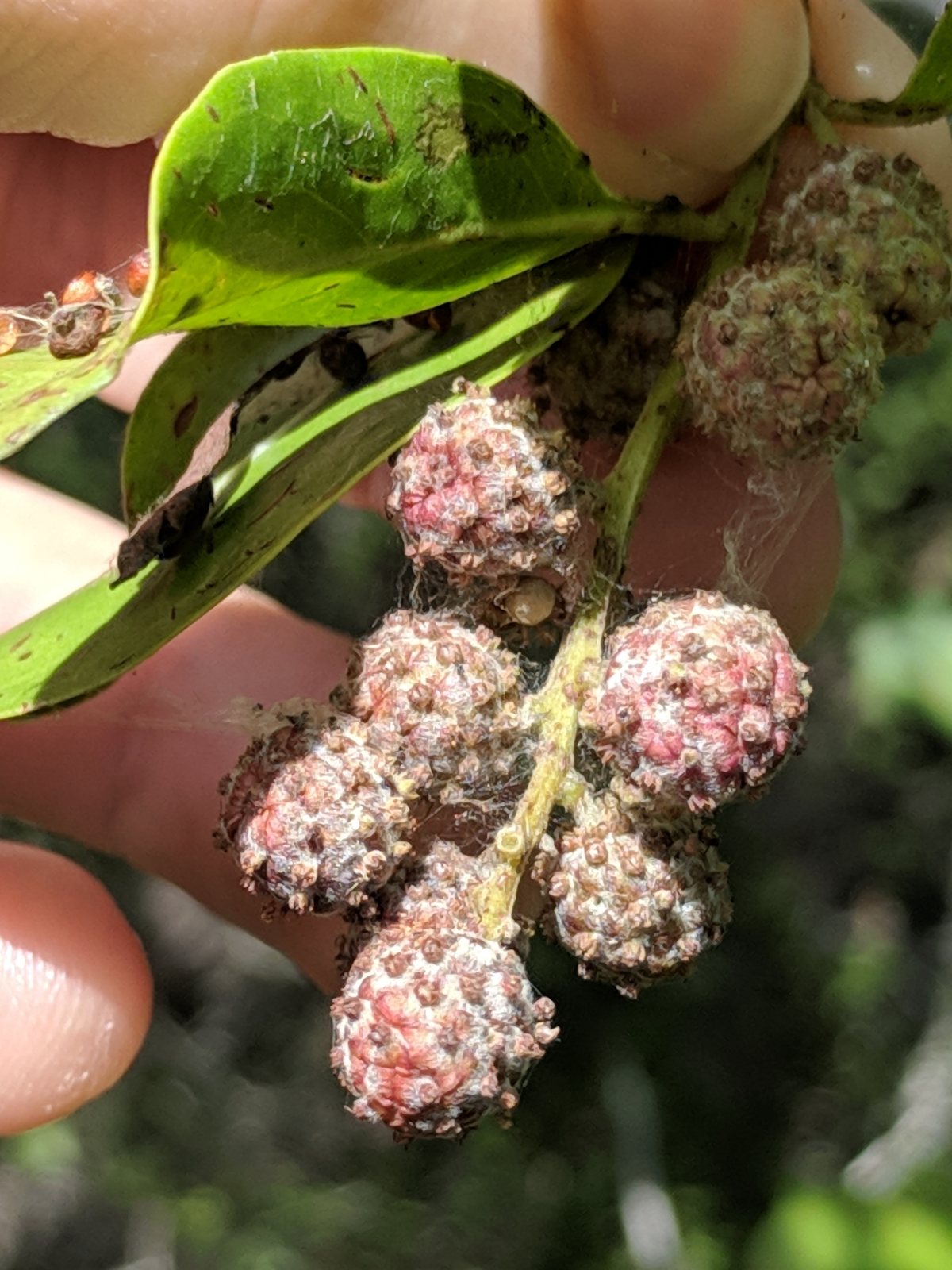
- Evergreen. Oval, leathery leaves covered with fine, silky hairs that give them a silver-gray appearance; small brown, buttonlike fruit clusters follow the inconspicuous flowers.
- Growth
- Moderate to fast in warm conditions
- Care needed
- Medium
The year at a glance
- Pollinators
- Drought tolerant
- Heat tolerant
- Wildlife
- Low allergen
| J | F | M | A | M | J | J | A | S | O | N | D | |
|---|---|---|---|---|---|---|---|---|---|---|---|---|
| Fruit | ||||||||||||
| Plant |
Northern hemisphere months. In Australia, shift them by six.
- Difficulty
- Moderate
- Toughness
- Fairly tough
Will it suit your garden?
Pick your zone, country, light and whether you have pets.
Full sun is 6 or more hours of direct sun a day, part shade 3 to 6 hours, shade under 3.
How it grows
Planting day
7 ft (2 m)
After 1 year
7 ft (2.3 m)
After 2 years
8 ft (2.5 m)
After 3 years
9 ft (2.8 m)
After 5 years
11 ft (3.3 m)
About 16 years to full size.
From a typical nursery size, at an average rate for this kind of plant. A rule of thumb, not a forecast.
Good to know
- Cats and dogs
- Safe
- Native to
- the US
- Growth rate
- Fast
Care
Jobs through the year
- WaterApr–May, Sep–Oct, every 14 days
- Check established plants and water during dry spells; young plants and containers need more frequent checks.
- WaterJun–Aug, every 14 days
- Water established plants deeply during prolonged drought; water pots when upper mix dries.
- WaterJan–Mar, Nov–Dec, every 14 days
- Check sheltered containers; water sparingly without letting the root ball dry completely.
- FeedApr–May
- Feed lightly only for weak growth or poor soil; follow container fertilizer directions.
- MulchMay
- Apply 5–8 cm of organic mulch, keeping it clear of the trunk.
- PruneMay–Jun
- Once growth resumes, remove dead wood and selectively shorten shoots; avoid hard autumn pruning.
- ProtectJan–May, Sep–Dec
- Not winter-hardy locally: use a movable container and bright frost-free winter shelter.
- Water deeply through the first growing season, allowing the surface soil to dry between waterings.
- Apply a 2-3 in (5-8 cm) layer of mulch over the root zone, keeping it clear of the trunk.
- Feed lightly in spring only if growth is weak or the soil is poor; feed container plants according to the fertilizer label.
- Use a pot with drainage holes and a free-draining potting mix for container growing.
- Move container plants into bright, frost-free shelter before cold weather and reduce watering while growth is slow.
Pruning. Prune in spring once the risk of frost has passed, removing dead branches and selectively shortening shoots to shape the crown. Clip hedges lightly during warm weather, but avoid hard pruning just before winter.
Through the year
- Spring
- Plant outdoors once the soil is warm and frost risk has passed; water thoroughly.
- Spring
- Remove cold-damaged growth once new shoots show which branches are alive.
- Early summer
- Lightly trim hedges or train young plants into a single-trunk tree.
- Summer
- Check young plants and containers for drying soil, and inspect stems for scale insects.
- Autumn
- Move container plants under frost-free cover before cold nights arrive.
- Winter
- Keep sheltered plants in strong light and water sparingly without letting the root ball dry out completely.
In the garden
- Clip into a silver hedge or screen in a warm coastal garden.
- Train as a small specimen tree against dark walls or green foliage.
- Combine with agaves and ornamental grasses for contrasting leaf shapes in dry, sunny planting.
- Use a large container as a silver focal point on a sunny terrace, with winter shelter where needed.
Garden styles it suits: Coastal, Modern tropical, Architectural minimal, Desert / xeriscape, Florida subtropical and Caribbean.
Plant it with: Sea grape, Coontie, Pink muhly grass, Dwarf palmetto and Agave.
Wildlife: The small flowers attract bees and other insects. Dense branches provide shelter and nesting cover for birds.
Problems to watch for
- Cold damage: frost can scorch leaves and kill stems; grow under frost-free conditions and wait until spring growth starts before cutting back damaged wood.
- Scale insects: inspect stems and leaf undersides; treat affected areas with horticultural oil labeled for the plant, avoiding hot sun and drought-stressed foliage.
- Sooty mold: black coating can develop on honeydew from sap-feeding insects; control the insects, then let weathering or gentle washing remove the coating.
- Container root decline: persistently wet potting mix can damage roots; provide open drainage and let the upper mix dry before watering again.
Safety
Not known to be toxic to people, cats, dogs or horses, but reliable species-specific safety information is limited. The leaves, bark and fruits are not established foods; discourage chewing or eating them.
Easily confused with
Green buttonwood (Conocarpus erectus)
The ordinary green form has mostly smooth green leaves rather than the dense, silky silver covering of 'Sericeus'.
White mangrove (Laguncularia racemosa)
It has opposite, rounded green leaves with paired glands near the top of each leaf stalk; silver buttonwood has alternate, silvery leaves.
Silverberry (Elaeagnus commutata)
This cold-hardy, deciduous shrub has silvery-scaled leaves, fragrant flowers and fleshy fruits rather than buttonwood's hard, buttonlike fruit clusters.
The name
Buttonwood refers to the rounded, buttonlike fruit clusters, while 'Sericeus' means silky and describes the fine hairs covering the silver leaves.
Propagation. Take semi-ripe cuttings during warm weather and root them in a free-draining medium with warmth and humidity. Use cuttings from a silver-leaved plant to preserve its foliage character; seedlings may vary.
Checked against open data
- Accepted botanical name
- Conocarpus erectus
- In the US and Canada
- Native in the lower 48 states, Puerto Rico and US Virgin Islands. Introduced in Hawaii.
- Native range
- Angola, Aruba, Bahamas, Belize, Benin, Bermuda, Brazil North, Brazil Northeast, Brazil South, Brazil Southeast, Cabinda and Cameroon.
Sources: GBIF (CC BY 4.0), USDA PLANTS and Trefle (CC BY 4.0). The care and design notes are LandscapeGPT's own.
See it in your own yard.
Upload a photo of your yard and see it redesigned with plants that suit your climate, each checked against your zone.