Silvery lupine
Lupinus argenteus. Family Fabaceae. Perennial.
Also called Silver lupine, Silvery lupin.
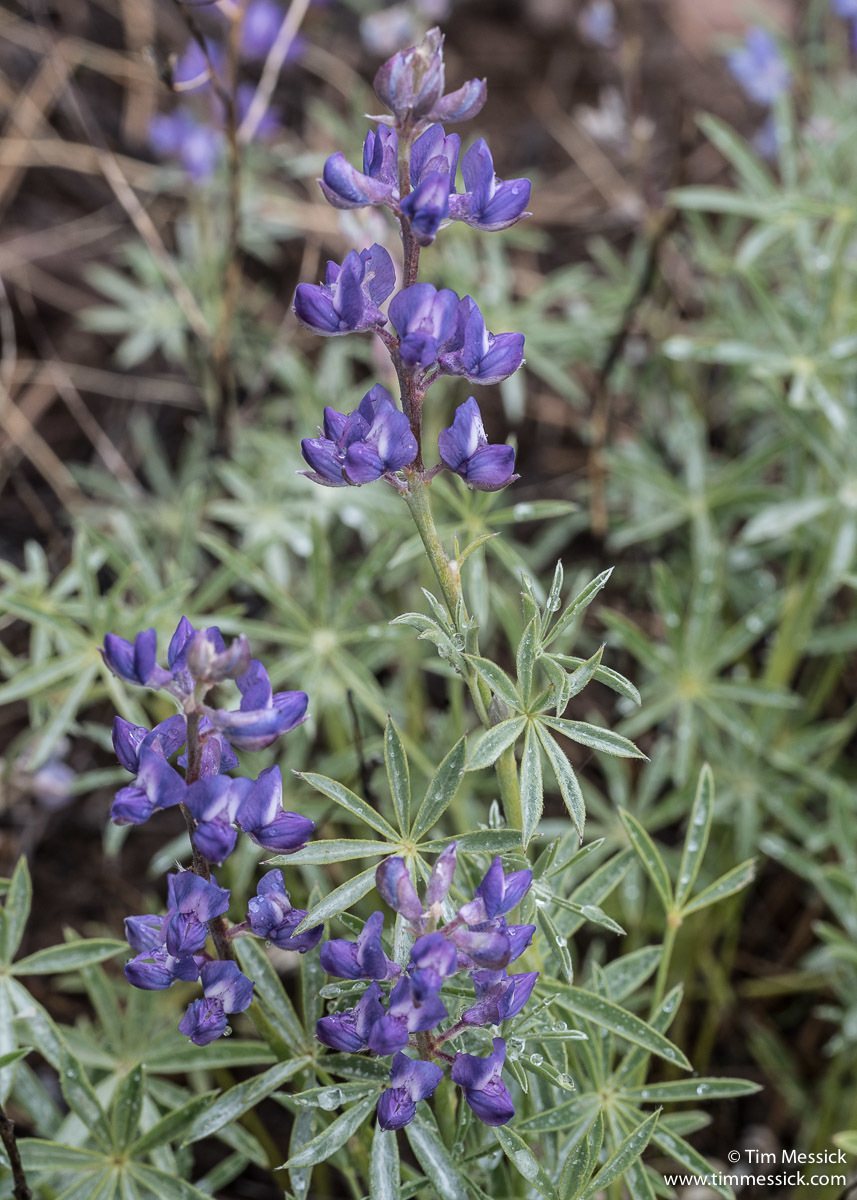
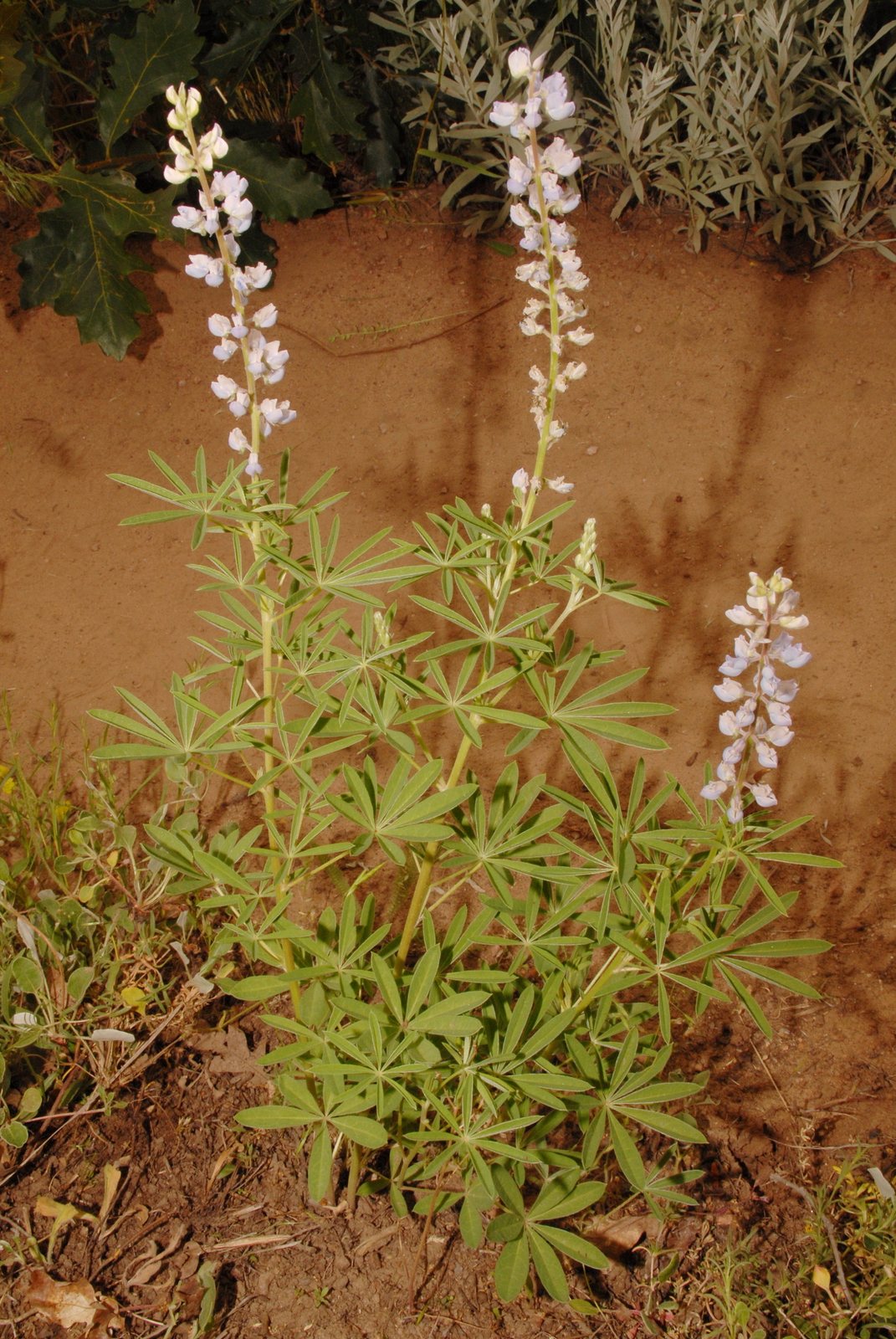
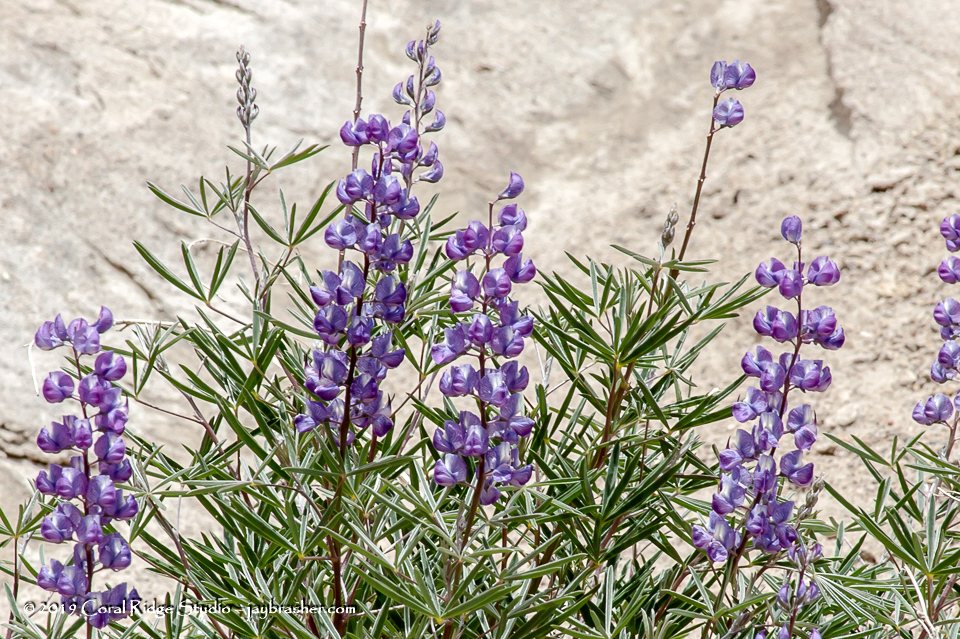
Silvery lupine is a western North American perennial grown for its upright blue-purple flower spikes and softly hairy, finger-like leaflets. It suits sunny, well-drained native plantings and gravel gardens, but is less dependable in humid heat or soil that stays wet through winter.
At a glance
- Sun
- Full sun; tolerates light afternoon shade, especially in warmer inland gardens.
- Water
- Low once established; water young plants regularly, then water deeply during prolonged dry spells rather than keeping the soil constantly moist.
- Soil
- Well-drained sandy, gravelly or light loamy soil of low to moderate fertility; avoid waterlogged ground and heavily enriched beds.
- Height
- 1-3 ft (0.3-0.9 m)
- Spread
- 1-2 ft (0.3-0.6 m)
- Flowers
- Late spring to midsummer, later at high elevations; usually blue to violet, occasionally pale pink or white.
- Foliage
- Palmate leaves with several narrow leaflets, green to silvery grey depending on their covering of fine hairs.
- Growth
- Moderate; seed-grown plants may take until their second year to flower.
- Care needed
- Low
The year at a glance
- Pollinators
- Deer resistant
- Drought tolerant
- Cold hardy
- Wildlife
- Low allergen
| J | F | M | A | M | J | J | A | S | O | N | D | |
|---|---|---|---|---|---|---|---|---|---|---|---|---|
| Flowers | ||||||||||||
| Fruit | ||||||||||||
| Plant |
Northern hemisphere months. In Australia, shift them by six.
- Difficulty
- Moderate
- Toughness
- Fairly tough
Will it suit your garden?
Pick your zone, country, light and whether you have pets.
Full sun is 6 or more hours of direct sun a day, part shade 3 to 6 hours, shade under 3.
How it grows
Planting day
1 ft (0.3 m)
After 1 year
1.3 ft (0.4 m)
After 2 years
1.6 ft (0.5 m)
After 3 years
2 ft (0.6 m)
full size
About 3 years to full size.
From a typical nursery size, at an average rate for this kind of plant. A rule of thumb, not a forecast.
Good to know
- Cats and dogs
- Toxic
- Native to
- the US and Canada
- Growth rate
- Moderate
Care
Jobs through the year
- WaterApr–May, Sep, every 21 days
- Water established plants only if the root zone is dry during prolonged drought; water young plants more often.
- WaterJun–Aug, every 14 days
- During extended drought, water established plants deeply, then let soil dry; avoid routine irrigation.
- PruneFeb–Mar
- Remove dead stems before new growth, keeping the crown clear.
- DeadheadJun–Jul, every 14 days
- Cut faded spikes back to leafy growth, retaining a few pods if seed is wanted.
- MulchApr
- If needed, apply a light gravel mulch without covering the crown.
- ProtectJan–Feb, Nov–Dec
- Keep crowns and seed pots free-draining and clear of wet leaf litter.
- Plant small, young plants in their final positions; the deep root system resents disturbance.
- Water through the first growing season whenever the root zone becomes dry, allowing it to drain between waterings.
- Avoid routine nitrogen feeding and rich manure; this legume can fix nitrogen through root-associated bacteria.
- Use a light gravel mulch where needed, keeping the crown uncovered.
- Do not divide established clumps; raise replacements from seed.
Pruning. Cut spent flower spikes back to the leafy growth after flowering, leaving a few if you want seed. Remove dead stems in late winter or early spring before new growth develops.
Through the year
- Autumn
- Sow seed outdoors in a prepared, free-draining seedbed or deep pots; protect pots from prolonged saturation.
- Late winter
- Remove dead stems and check that fallen leaves or mulch are not covering the crown.
- Spring
- Plant young plants before hot weather and water them in thoroughly.
- Late spring
- Check new shoots and flower spikes for aphids; wash small colonies off with water.
- Summer
- Deadhead fading spikes or retain a few pods for seed; water established plants only during extended drought.
- Late summer
- Collect dry, browning pods before they split. These seasonal timings follow the Northern Hemisphere; shift them by about six months in Australia.
In the garden
- Plant in a western North American meadow with native bunchgrasses for vertical flowers above a loose grassy matrix.
- Repeat small groups through a sunny gravel garden, where the silvery leaves contrast with stone.
- Pair with yellow-flowered drought-tolerant perennials for a blue-and-yellow late-spring display.
- Use on a well-drained sunny bank where its deep roots can develop without later disturbance.
Garden styles it suits: Native meadow, Wildflower, Pollinator garden, Dry gravel garden, Desert / xeriscape and Mountain lodge.
Plant it with: Blue grama, Prairie Junegrass, Sulphur buckwheat, Blanket flower, Yarrow and Rocky Mountain penstemon.
Wildlife: Flowers provide pollen for bees, particularly bumblebees. The foliage can feed butterfly and moth larvae, although the species using it vary by region.
Problems to watch for
- Root or crown rot in wet soil: improve drainage before planting or choose another site; avoid frequent irrigation around established crowns.
- Aphids on young shoots and flower spikes: dislodge with water and encourage ladybirds and other predators.
- Powdery mildew: provide sun and airflow, avoid crowding, and remove badly affected foliage.
- Poor establishment after transplanting: use young plants or sow directly, and avoid breaking or bending the main root.
Safety
Treat as toxic to people, cats, dogs and horses. All parts can contain poisonous quinolizidine alkaloids, with seeds and pods a particular concern; substantial ingestion can cause serious neurological illness and may be fatal. Keep it out of grazing areas and seek urgent medical or veterinary advice after suspected ingestion.
Easily confused with
Large-leaved lupine (Lupinus polyphyllus)
Usually has much larger leaves with more numerous, broader leaflets and taller, denser flower spikes; its foliage is generally greener and less silvery. Silvery lupine is variable, so leaf size alone is not conclusive.
Silky lupine (Lupinus sericeus)
Typically has densely silky hairs on both leaf surfaces, while silvery lupine often has a greener, less hairy upper surface.
The name
The epithet argenteus means silvery in Latin and refers to the fine hairs that give the foliage its pale sheen.
Propagation. Grow from seed, preferably from a source suited to your climate. For spring sowing, lightly nick the hard seed coat away from the embryo or gently abrade it, then soak overnight and sow promptly in deep pots or directly outdoors. Plant seedlings out while young; established plants are difficult to divide or move.
Checked against open data
- Accepted botanical name
- Lupinus argenteus
- In the US and Canada
- Native in Canada and the lower 48 states.
- Native range
- Arizona, British Columbia, California, Colorado, Idaho, Mexico Northeast, Mexico Northwest, Montana, Nebraska, Nevada, New Mexico and North Dakota.
- Measured
- Soil pH 7 to 8. Average height 38 cm.
Sources: GBIF (CC BY 4.0), USDA PLANTS and Trefle (CC BY 4.0). The care and design notes are LandscapeGPT's own.
See it in your own yard.
Upload a photo of your yard and see it redesigned with plants that suit your climate, each checked against your zone.