Soaptree yucca
Yucca elata. Family Asparagaceae. Succulent.
Also called Soap tree, Palmella.
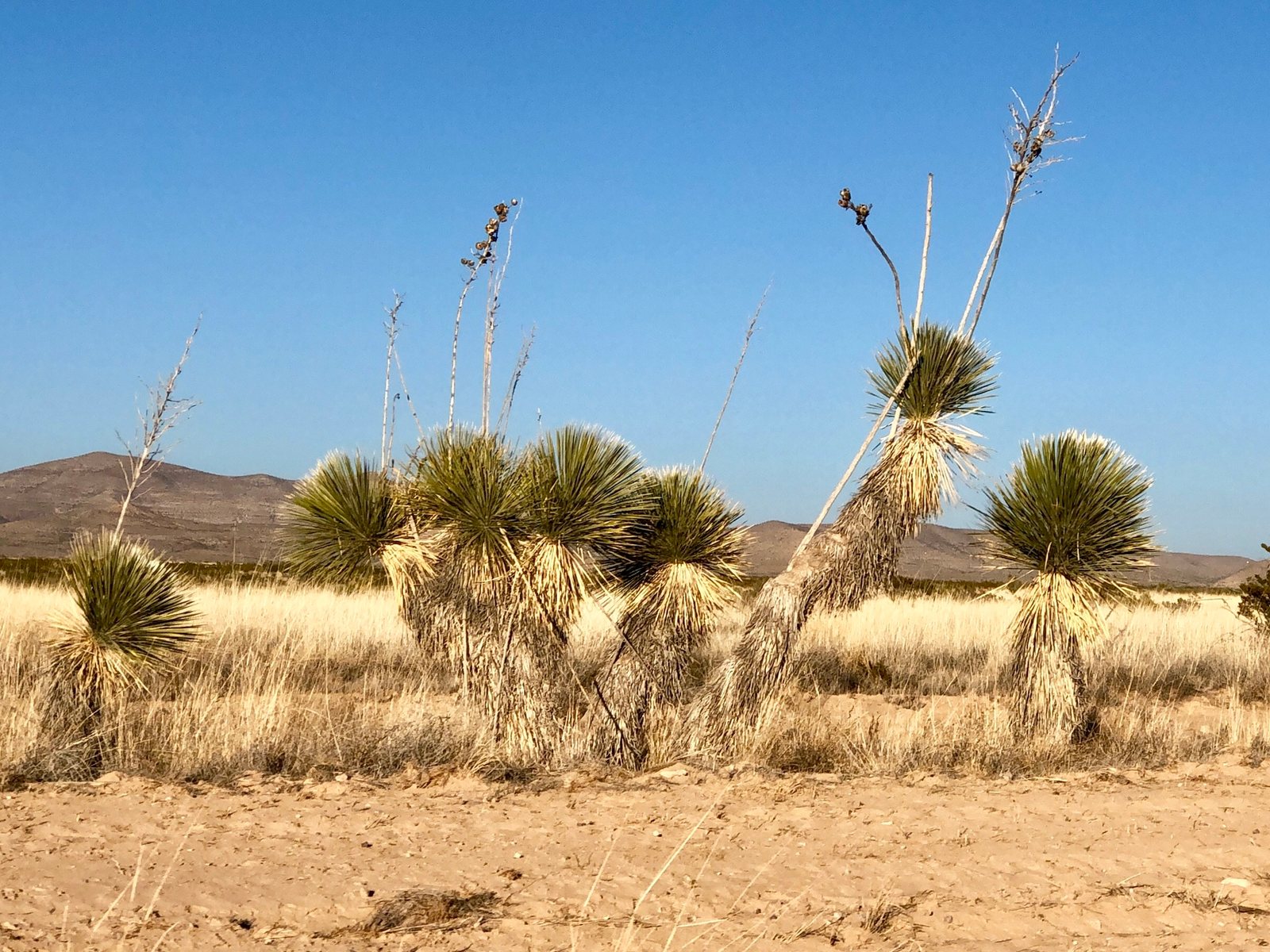
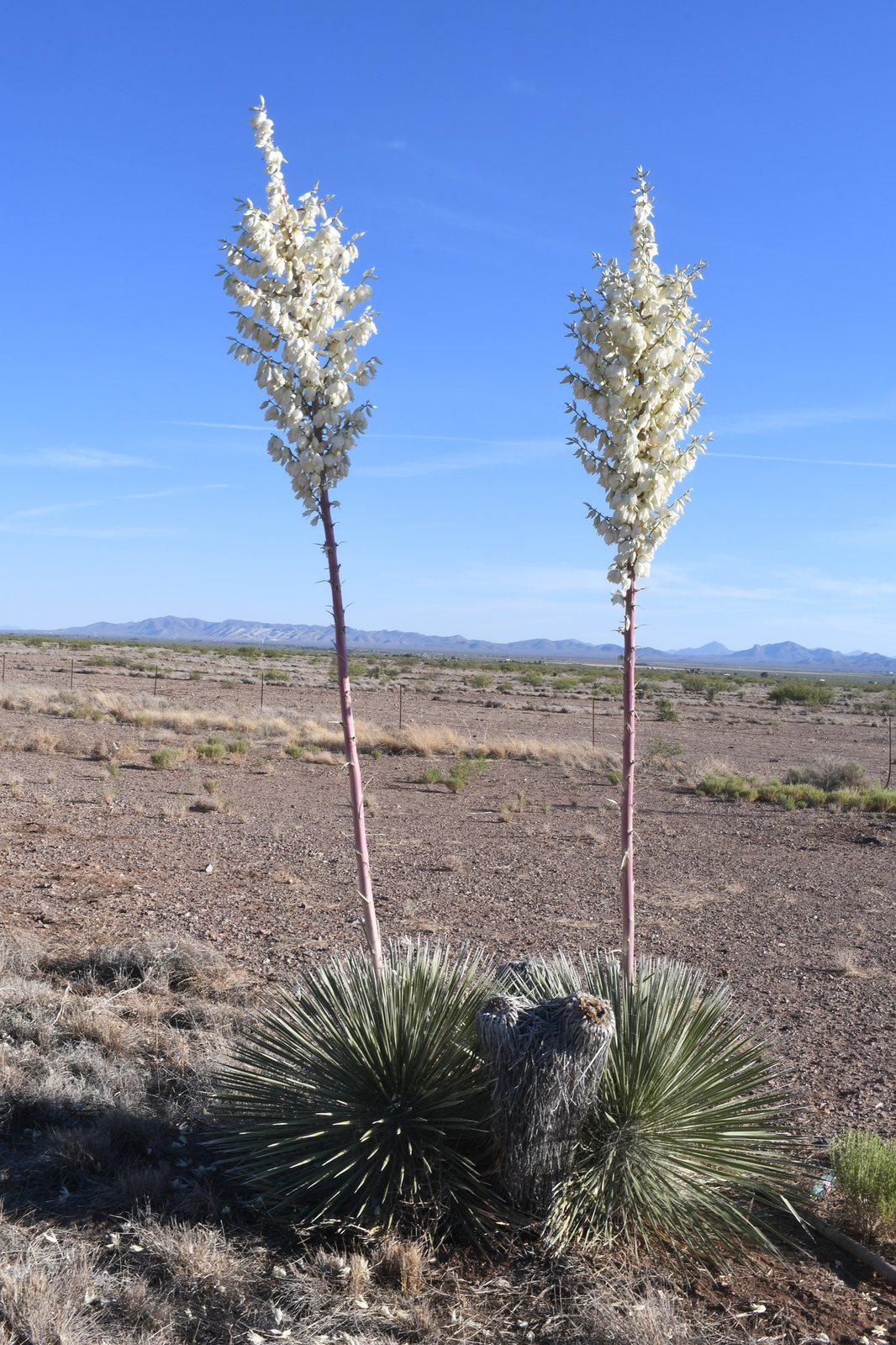
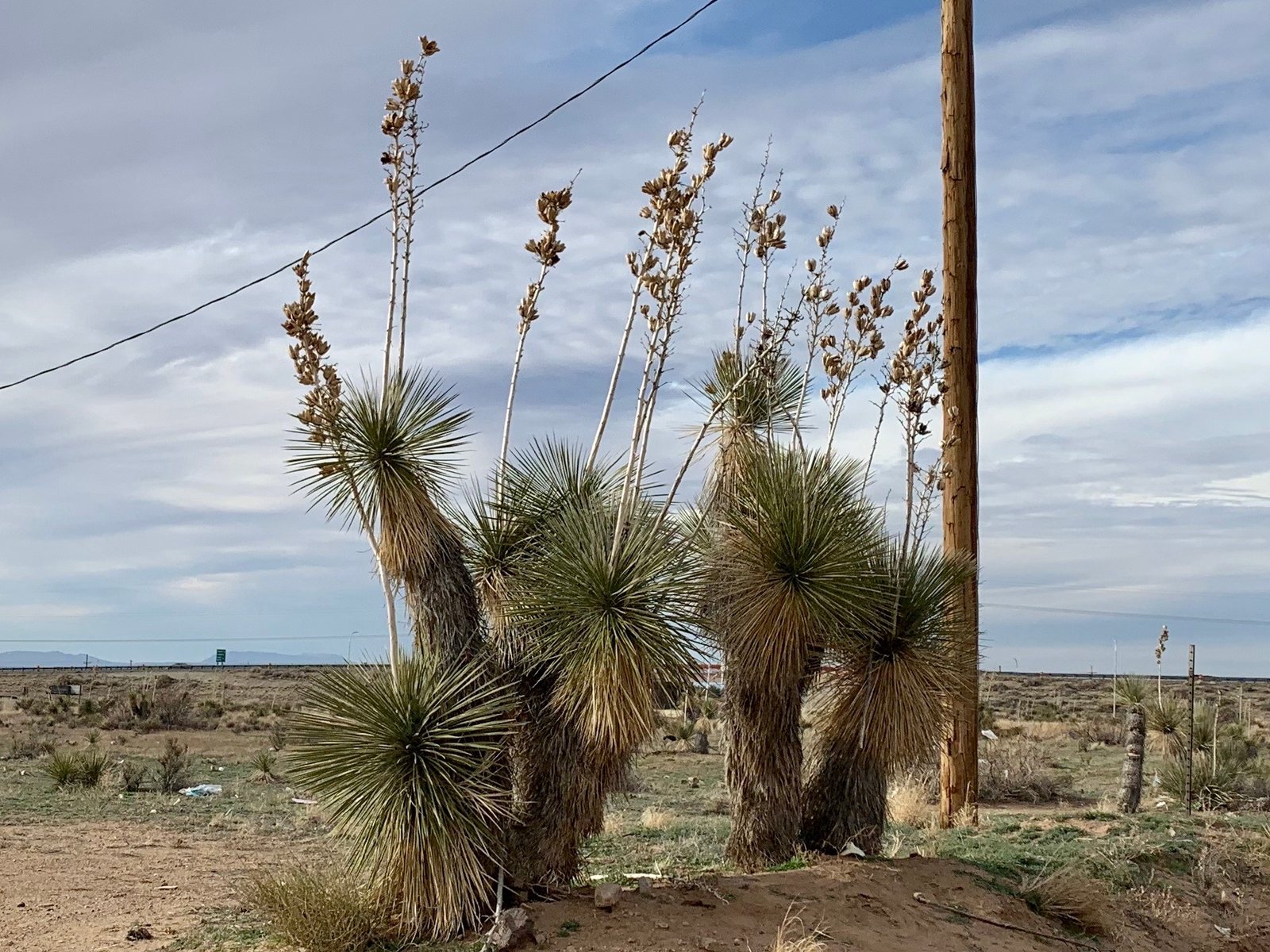
Soaptree yucca is a slow-growing, evergreen desert plant from the southwestern United States and northern Mexico, forming a trunk topped with narrow leaves and tall sprays of creamy-white flowers. Grow it for its tree-like shape and drought tolerance in a sunny, sharply drained position; winter wet is often a greater problem than cold.
At a glance
- Sun
- Full sun.
- Water
- Low once established. Water young plants deeply but infrequently, letting the soil dry between waterings; keep nearly dry in winter.
- Soil
- Sandy, gravelly or rocky soil with excellent drainage. Tolerates alkaline soil; unsuitable for waterlogged ground or heavy clay without substantial drainage improvement.
- Height
- 10-20 ft (3-6 m), with flower stalks extending above the foliage
- Spread
- 6-10 ft (1.8-3 m)
- Flowers
- Tall, branched clusters of creamy-white, bell-shaped flowers in late spring and early summer; flowering can be irregular.
- Foliage
- Evergreen. Dense crowns of narrow, flexible, pale-green leaves with white marginal threads and sharp tips. Dead leaves often remain as a skirt around the trunk.
- Growth
- Slow, especially while young; trunk formation takes years.
- Care needed
- Low
The year at a glance
- Deer resistant
- Drought tolerant
- Heat tolerant
- Low allergen
| J | F | M | A | M | J | J | A | S | O | N | D | |
|---|---|---|---|---|---|---|---|---|---|---|---|---|
| Flowers | ||||||||||||
| Plant |
Northern hemisphere months. In Australia, shift them by six.
- Difficulty
- Moderate
- Toughness
- Very tough
Will it suit your garden?
Pick your zone, country, light and whether you have pets.
Full sun is 6 or more hours of direct sun a day, part shade 3 to 6 hours, shade under 3.
How it grows
Planting day
1.8 ft (0.54 m)
After 1 year
3 ft (0.95 m)
After 2 years
4 ft (1.4 m)
After 3 years
6 ft (1.8 m)
After 5 years
9 ft (2.6 m)
About 10 years to full size.
From a typical nursery size, at an average rate for this kind of plant. A rule of thumb, not a forecast.
Good to know
- Cats and dogs
- Toxic
- Native to
- the US
- Growth rate
- Slow
Care
Jobs through the year
- WaterMay–Sep, every 28 days
- Water established plants only in prolonged drought; water young plants sooner when soil dries fully.
- MulchApr–May
- Apply gravel mulch, keeping the trunk and crown clear of soil and organic material.
- PruneApr–May
- Remove damaged or unwanted dead leaves without cutting the trunk or living crown.
- PruneAug–Sep
- Cut finished flower stalks near their bases; seed capsules rarely form without yucca moths.
- ProtectJan–Feb, Oct–Dec
- Keep the crown clear and drainage open; use an airy rain shelter where winter wet persists.
- Plant in spring on raised, freely draining ground where winters are wet.
- Water deeply during prolonged dry spells in the first growing season, then allow the soil to dry before watering again.
- Use gravel mulch around the base and keep soil, compost and organic mulch away from the trunk.
- Do not routinely fertilise established plants; rich feeding is unnecessary.
- Choose the permanent position carefully: its deep roots make established plants difficult to move.
- Keep sharp leaf tips away from paths, play areas and seating.
Pruning. Remove spent flower stalks near their base after flowering. In spring, cut off unwanted dead leaves close to the trunk without cutting into it or damaging the living crown; retaining the dry leaf skirt is also acceptable.
Through the year
- Spring
- Plant young specimens after severe frost has passed, choosing a sunny site with sharp drainage.
- Spring
- Remove damaged leaves if needed and check that the growing crown remains firm.
- Late spring
- Watch for emerging flower stalks and keep nearby paths clear of foliage.
- Summer
- Water newly planted specimens during long dry spells, allowing the root zone to dry between soakings.
- Late summer
- Cut away finished flower stalks unless you want to retain developing seed capsules.
- Autumn
- Clear fallen leaves from the crown and check that surface water drains away from the base.
- Winter
- Avoid routine watering; in wet climates, protect container plants from persistent rain in a bright, airy position.
In the garden
- Use as a single architectural specimen in a sunny gravel garden.
- Combine with low, drought-tolerant grasses and perennials so its trunk and leaf crowns remain visible.
- Plant against a plain wall to show the outline of its branching stems.
- Use in a spacious desert planting with agaves and other hardy yuccas, well back from paths.
Garden styles it suits: Desert modern, Architectural minimal, Desert / xeriscape, Dry gravel garden, Southwestern and Winter interest.
Plant it with: Red yucca, Parry's agave, Blue grama, Blackfoot daisy, Desert marigold and Pineleaf penstemon.
Wildlife: In its native range, specialised yucca moths pollinate the flowers and lay eggs in the developing ovaries; their larvae eat some of the seeds. Seed production is often absent where these moths do not occur.
Problems to watch for
- Root or crown rot in wet soil: improve drainage before planting, keep the crown clear and avoid winter irrigation; badly rotted plants rarely recover.
- Yucca weevils in regions where they occur: investigate wilting crowns and holes at the leaf bases; remove and dispose of badly infested plants.
- Scale insects: inspect leaves and stems, remove small infestations by hand and use a labelled horticultural oil if needed, avoiding hot sun during treatment.
- Cold damage, especially in damp winters: plant in a sheltered, freely draining site and wait until spring growth starts before removing damaged foliage.
Safety
Yucca tissues contain saponins and should be treated as toxic if eaten by cats, dogs or horses; ingestion can cause gastrointestinal upset, and substantial amounts may cause more serious illness. Raw plant material may also upset people's stomachs. Sharp leaf tips can injure skin and eyes.
Easily confused with
Beaked yucca (Yucca rostrata)
Usually has a denser, rounded crown of stiffer blue-grey leaves, rather than the greener, more flexible, prominently thread-edged leaves of soaptree yucca.
Joshua tree (Yucca brevifolia)
Has much shorter, stiff, dagger-like leaves and a heavier, often irregularly branching framework.
Banana yucca (Yucca baccata)
Usually forms low clumps of broad, thick leaves and produces fleshy, banana-shaped fruit; soaptree yucca has narrow leaves, develops tall trunks and bears dry capsules.
The name
The common name refers to the soap-like lather made from its saponin-rich roots and trunk, while the Latin elata means tall or lofty.
Propagation. Raise from seed in warmth in a sharply drained mix. Offsets can sometimes be separated with attached roots, but disturbance of established plants and their deep roots is risky.
Checked against open data
- Accepted botanical name
- Yucca elata
- In the US and Canada
- Native in the lower 48 states.
- Native range
- Arizona, Mexico Northeast, Mexico Northwest, New Mexico and Texas.
- Measured
- Soil pH 7 to 8.5. Average height 500 cm.
Sources: GBIF (CC BY 4.0), USDA PLANTS and Trefle (CC BY 4.0). The care and design notes are LandscapeGPT's own.
See it in your own yard.
Upload a photo of your yard and see it redesigned with plants that suit your climate, each checked against your zone.