Sulphur cosmos
Cosmos sulphureus. Family Asteraceae. Annual.
Also called Sulfur cosmos, Orange cosmos, Yellow cosmos.
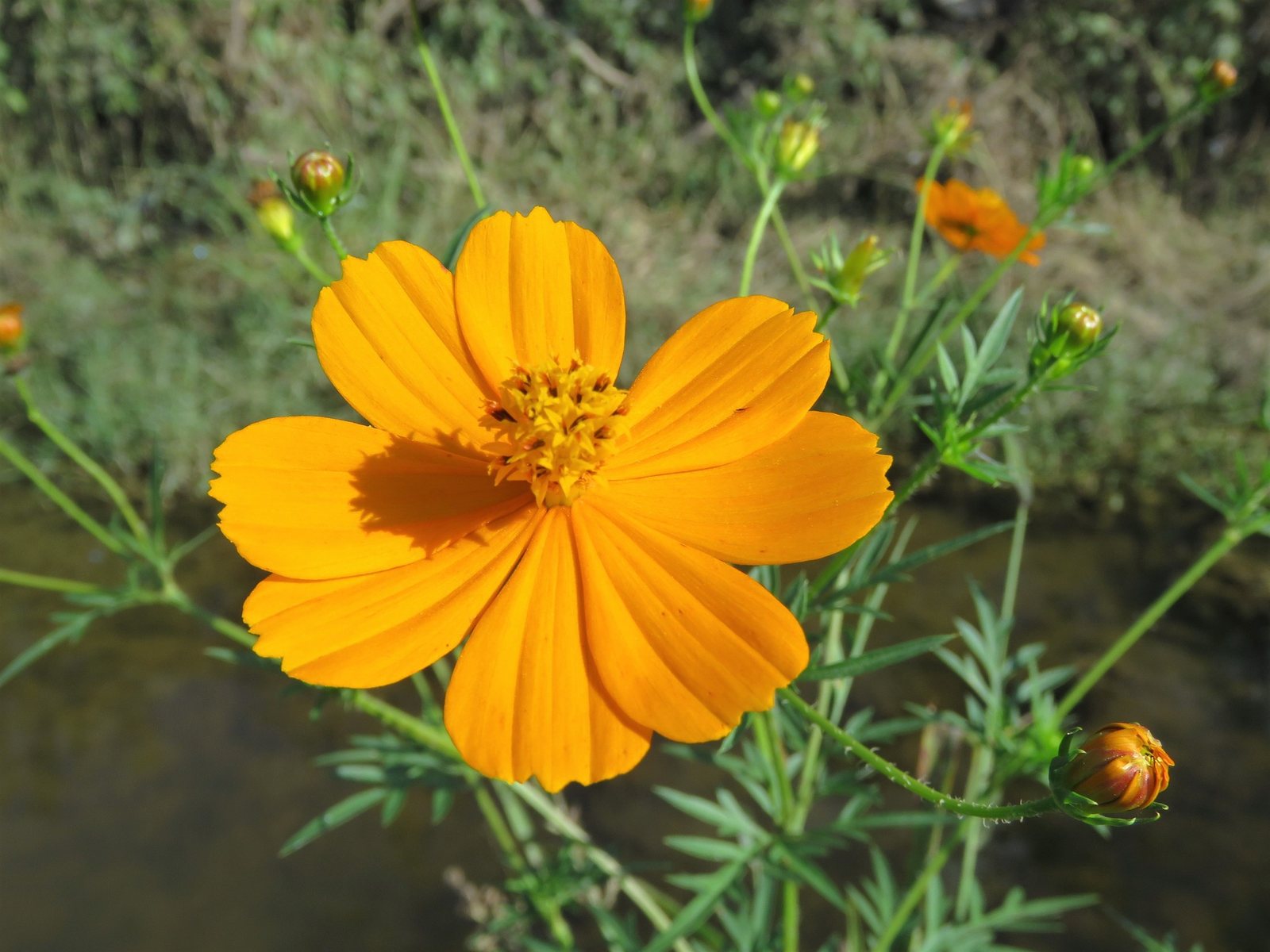
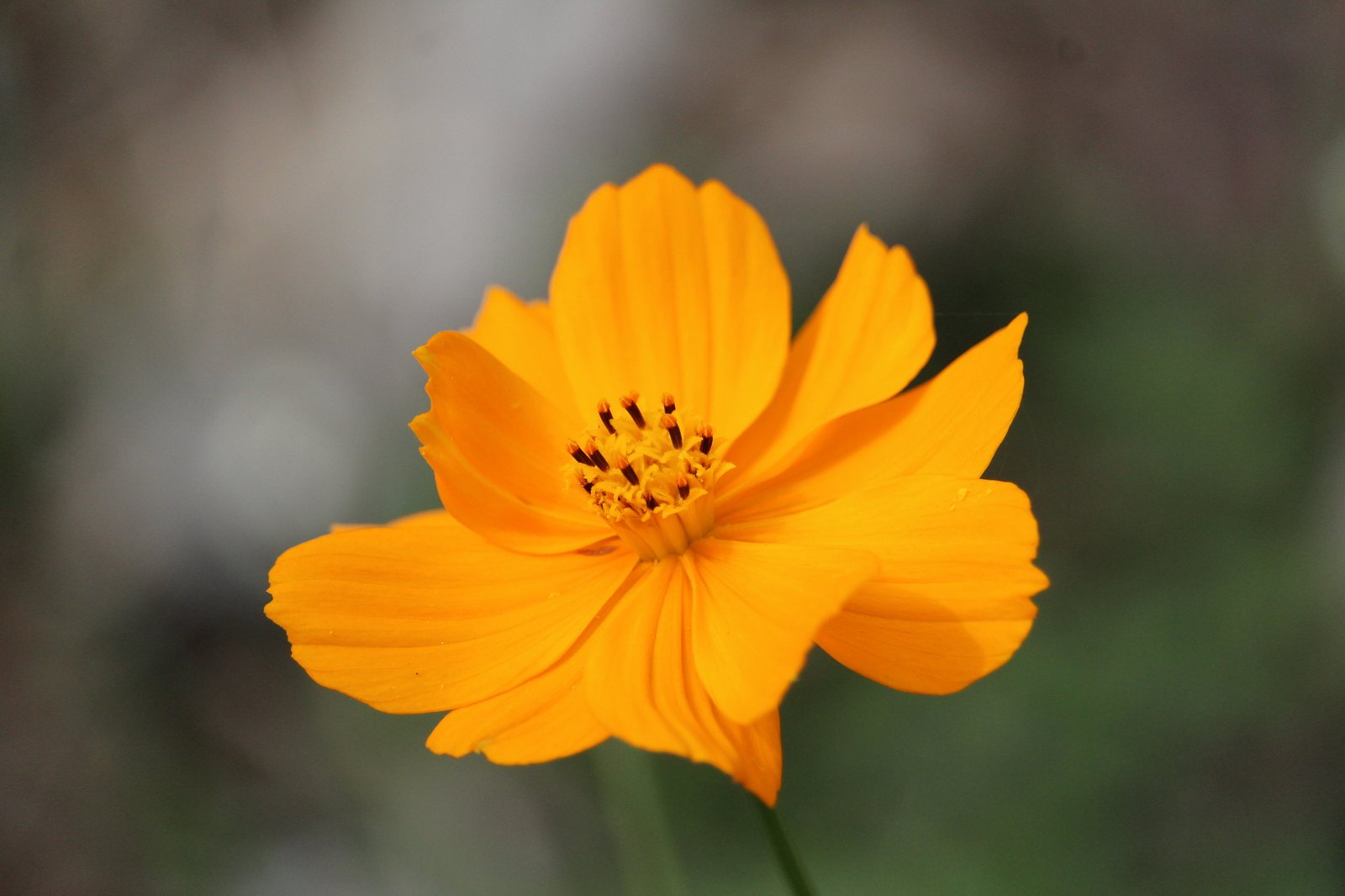
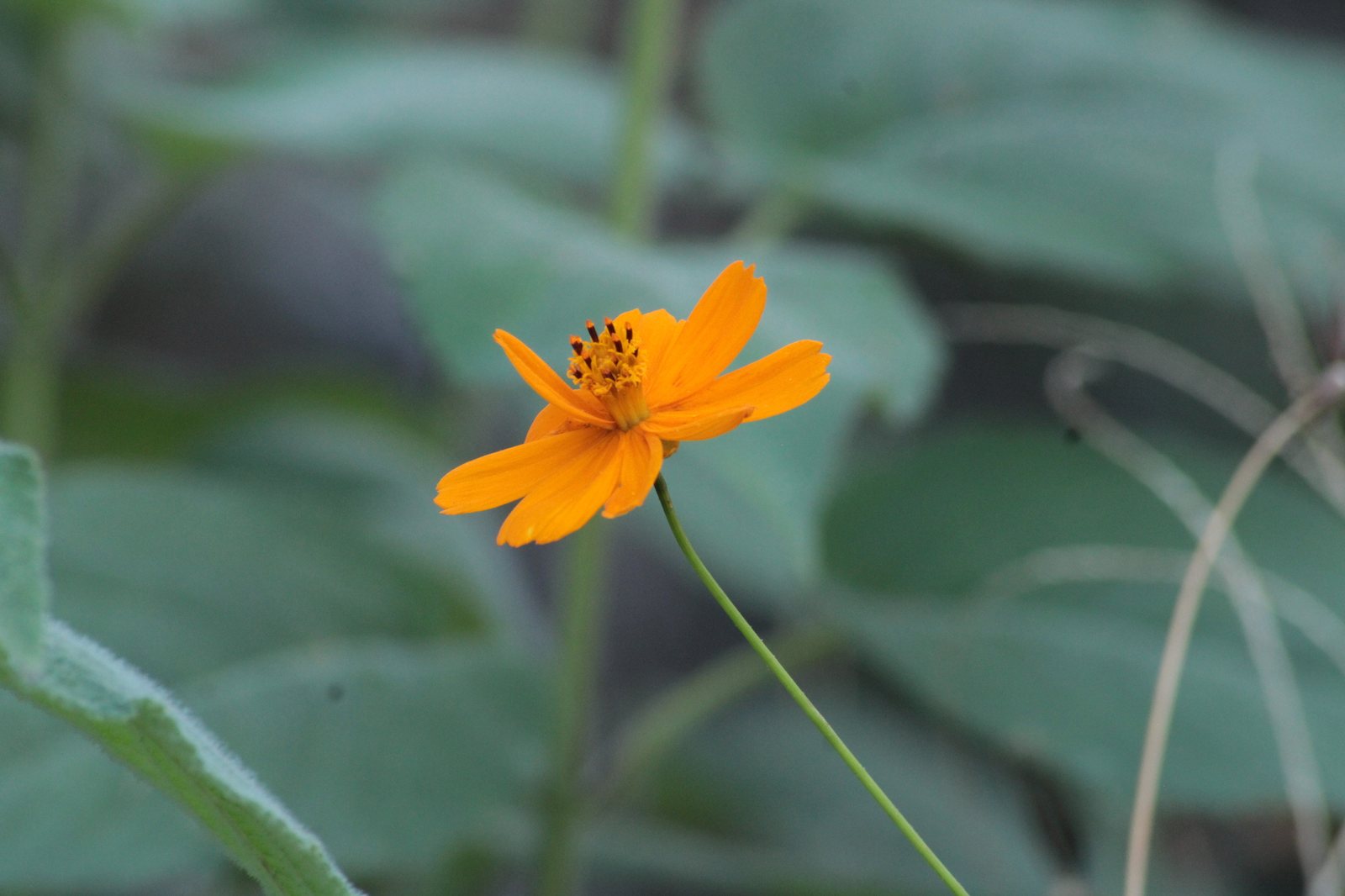
Sulphur cosmos is a fast-growing, warm-season plant grown as an annual for its yellow, orange or orange-red daisy flowers. It flowers through summer into autumn, attracts pollinating insects and suits sunny borders with relatively lean soil.
At a glance
- Sun
- Full sun; flowering is reduced and stems become weaker in shade.
- Water
- Water regularly while establishing, then during prolonged dry spells. Established plants tolerate some drought but flower better with occasional deep watering.
- Soil
- Well-drained sandy, loamy or gravelly soil; poor to moderately fertile soil is preferable to rich, heavily fertilised ground.
- Height
- 2-6 ft (0.6-1.8 m), depending on cultivar; dwarf forms can be shorter
- Spread
- 1-3 ft (0.3-0.9 m)
- Flowers
- Summer to the first autumn frost; yellow, orange and orange-red flowers, with single, semi-double or double forms.
- Foliage
- Green, opposite leaves divided into pointed lobes; coarser and less threadlike than those of common garden cosmos.
- Growth
- Fast; flowers in its first growing season from seed.
- Care needed
- Low
The year at a glance
- Pollinators
- Drought tolerant
- Heat tolerant
- Wildlife
| J | F | M | A | M | J | J | A | S | O | N | D | |
|---|---|---|---|---|---|---|---|---|---|---|---|---|
| Flowers | ||||||||||||
| Fruit | ||||||||||||
| Plant |
Northern hemisphere months. In Australia, shift them by six.
- Difficulty
- Easy
- Toughness
- Very tough
Will it suit your garden?
Pick your zone, country, light and whether you have pets.
Full sun is 6 or more hours of direct sun a day, part shade 3 to 6 hours, shade under 3.
How it grows
Planting day
0.5 ft (0.15 m)
After 1 year
4 ft (1.2 m)
full size
Full size in one season.
From a typical nursery size, at an average rate for this kind of plant. A rule of thumb, not a forecast.
Good to know
- Cats and dogs
- Safe
- Invasive in
- the US and Australia
- In the garden
- Spreads vigorously: plan to contain it.
- Growth rate
- Fast
Care
Jobs through the year
- WaterMay–Jun, every 7 days
- Water established plants only if soil is dry; seedlings need more frequent watering.
- WaterJul–Aug, every 7 days
- Water deeply during dry spells; skip when rainfall keeps the root zone moist.
- WaterSep–Oct, every 14 days
- Water only during prolonged dry weather while plants remain alive.
- PruneMay–Jun
- Optionally pinch young growing tips to encourage bushier plants.
- DeadheadJun–Oct, every 7 days
- Remove faded flowers; leave a few late heads if seeds for birds are wanted.
- ProtectJun
- Stake tall varieties early in exposed positions.
- Plant out only after frost danger has passed and the soil has warmed.
- Space plants about 12-24 in (30-60 cm) apart, allowing more room for tall forms.
- Water at the base when the soil becomes dry; avoid persistently wet soil.
- Avoid routine feeding in garden soil, as excess nitrogen encourages leaves rather than flowers.
- Stake tall plants early in exposed sites, or grow them among sturdy neighbouring plants.
Pruning. Pinch out the growing tip of young plants once they have several pairs of leaves if you want bushier growth. Remove faded flowers regularly to prolong flowering and limit self-seeding.
Through the year
- Early spring
- In short-season areas, sow indoors about four to six weeks before your last expected frost.
- Late spring
- Harden off seedlings and plant out after frost, or sow directly into warm, prepared soil.
- Early summer
- Thin crowded seedlings, pinch young plants if desired and support tall forms before they lean.
- Summer
- Deadhead regularly and water during prolonged dry weather.
- Early autumn
- If seed is wanted, let a few flower heads turn brown and dry before collecting them; otherwise keep deadheading.
- Late autumn
- Remove plants after frost kills them and pull unwanted seedlings where the climate allows continued growth.
In the garden
- Plant in loose groups through a sunny mixed border for sustained warm colour.
- Combine with purple salvias and blue-flowered annuals for a strong colour contrast.
- Use taller forms behind low annuals or among ornamental grasses for an informal, airy screen.
- Grow dwarf forms in sunny containers with drainage holes.
- Include single-flowered forms in pollinator beds for readily accessible pollen and nectar.
Garden styles it suits: Cottage garden, Pollinator garden, Hot border, Low-maintenance, Mexican hacienda and Wildlife garden.
Plant it with: Zinnias, Mealycup sage, French marigolds, Globe amaranth, Verbena and Purple fountain grass.
Wildlife: Single and semi-double flowers attract bees, butterflies and other flower-visiting insects. Seed heads may feed small birds, but leaving them also encourages self-seeding.
Problems to watch for
- Lush leaves but few flowers: stop nitrogen feeding and move future plantings into full sun and leaner soil.
- Aphids on soft shoots: wash off small colonies with water and allow ladybirds and other predators to feed.
- Powdery mildew: improve spacing and airflow, avoid drought stress and remove badly affected foliage.
- Rotting roots or collapsing plants: improve drainage, reduce watering and avoid planting in waterlogged ground.
Safety
Not known to be toxic to people, cats, dogs or horses. No part is recognised as a significant poisoning hazard, though it is best grown as an ornamental rather than offered as animal feed.
Where it spreads. Readily self-seeds in warm climates and can spread beyond gardens. It is naturalised and can behave as a weed in parts of the southeastern United States and eastern Australia, including Queensland; check local weed guidance and remove seed heads where escape is a concern.
Easily confused with
Garden cosmos (Cosmos bipinnatus)
Has much finer, threadlike leaf divisions and usually pink, white or crimson flowers; sulphur cosmos has broader leaf lobes and predominantly yellow to orange flowers.
Plains coreopsis (Coreopsis tinctoria)
Usually has yellow flowers with conspicuous maroon markings around the centre and more finely divided leaves.
Mexican sunflower (Tithonia rotundifolia)
Has broad, rough, often lobed leaves and much sturdier stems, rather than the divided leaves and slender branching stems of sulphur cosmos.
The name
Cosmos comes from the Greek word for order or ornament, while sulphureus means sulphur-yellow, referring to the flower colour.
Propagation. Grow from seed, either sown directly after the last frost into warm soil or started indoors four to six weeks earlier. Cover lightly and keep moist until germination. Saved seed from named cultivars may produce plants that differ from the parent.
Checked against open data
- Accepted botanical name
- Cosmos sulphureus
- In the US and Canada
- Introduced in the lower 48 states, Puerto Rico and US Virgin Islands.
- Native range
- Costa Rica, El Salvador, Guatemala, Honduras, Mexico Central, Mexico Gulf, Mexico Northeast, Mexico Northwest, Mexico Southeast, Mexico Southwest, Nicaragua and Panamá.
Sources: GBIF (CC BY 4.0), USDA PLANTS and Trefle (CC BY 4.0). The care and design notes are LandscapeGPT's own.
See it in your own yard.
Upload a photo of your yard and see it redesigned with plants that suit your climate, each checked against your zone.