Sweetbay magnolia
Magnolia virginiana. Family Magnoliaceae. Tree.
Also called Sweet bay, Swamp magnolia, Laurel magnolia.
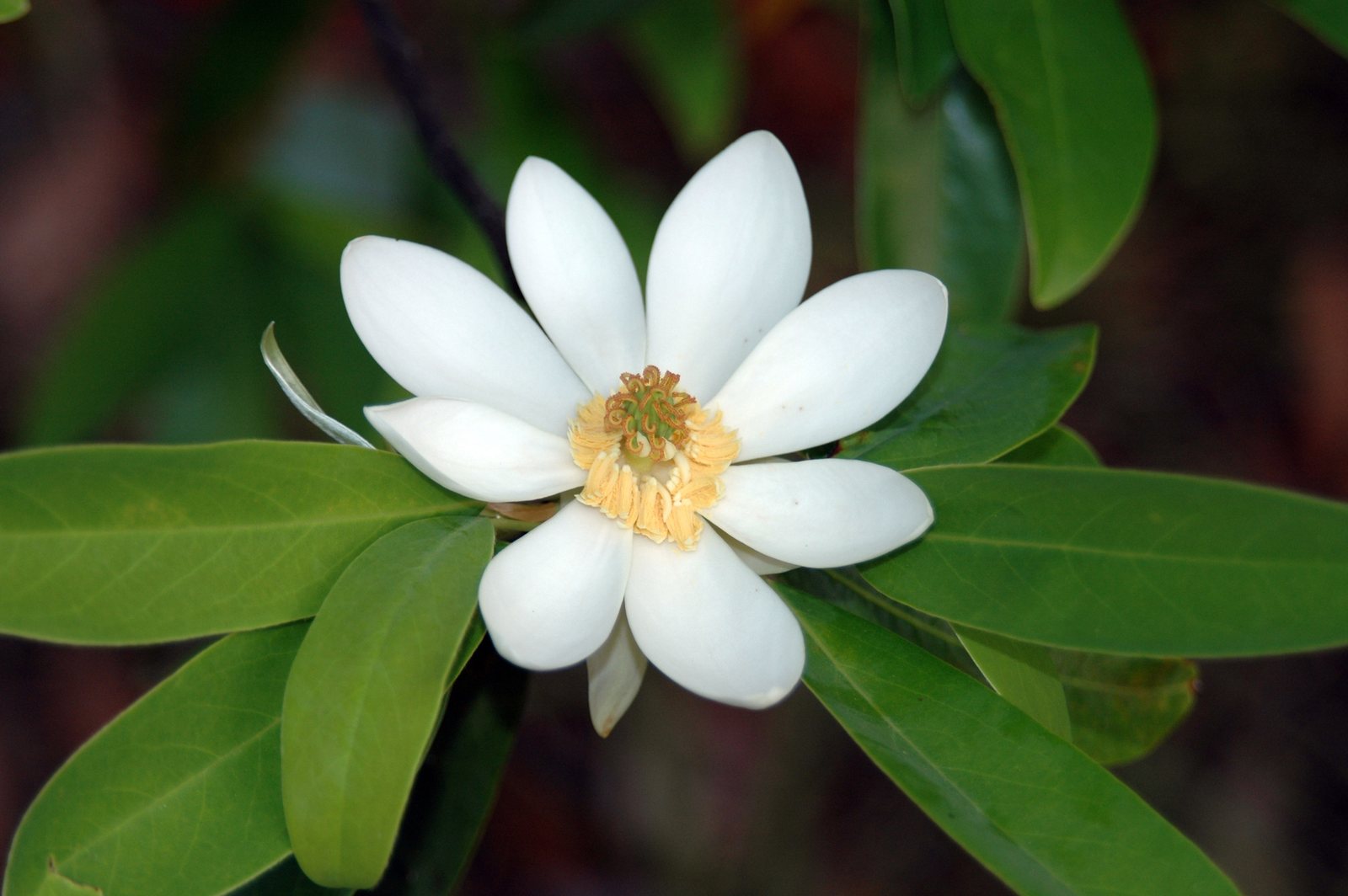
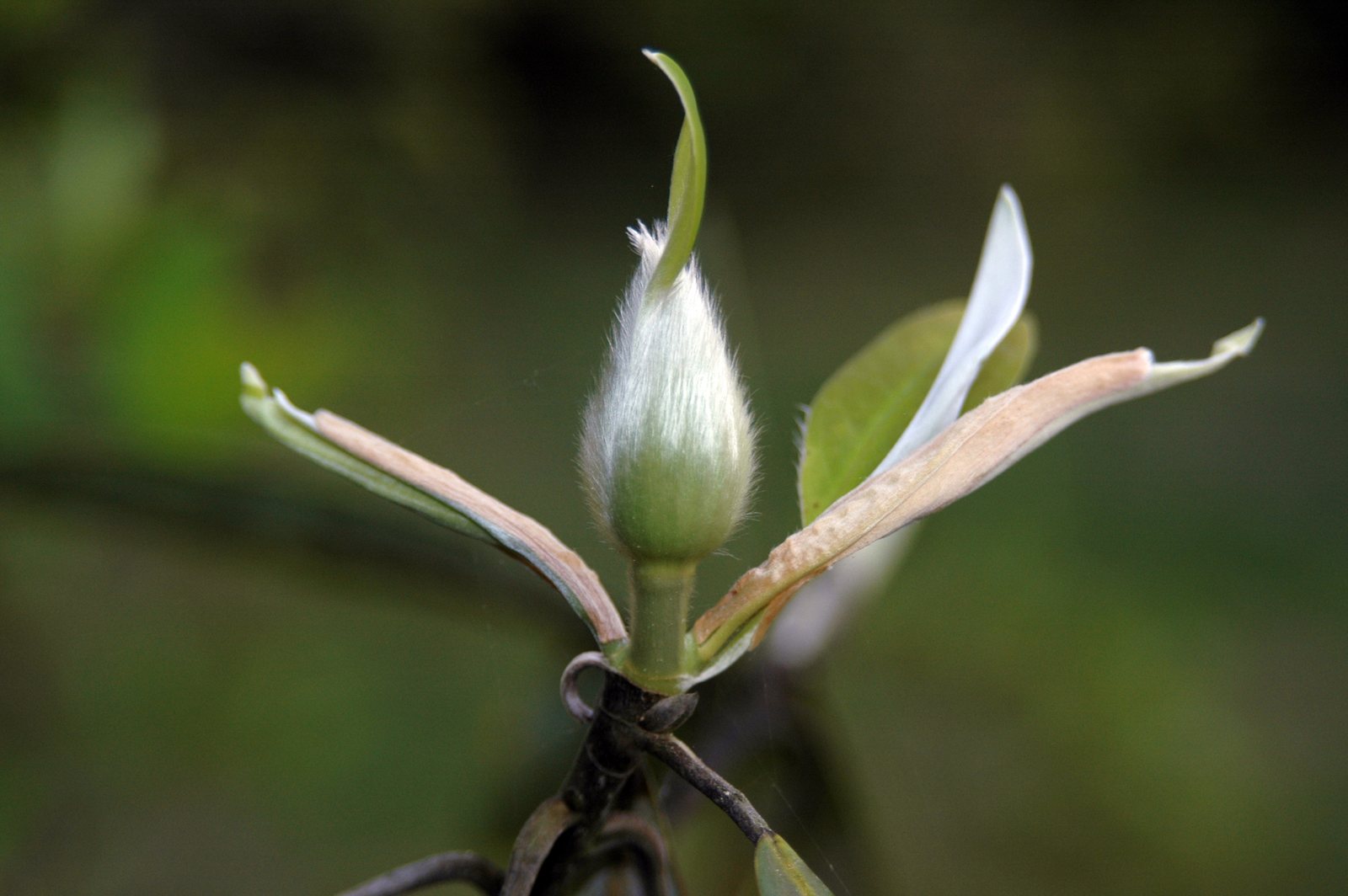
Sweetbay magnolia is a small, often multi-stemmed tree native to the eastern United States, grown for its lemon-scented, creamy-white flowers and leaves with silvery undersides. It is usually deciduous in colder gardens and semi-evergreen to evergreen in mild climates. It suits moist, acidic ground where many other small ornamental trees struggle.
At a glance
- Sun
- Full sun to partial shade; flowering is best with plenty of sun, provided the roots stay moist.
- Water
- Keep the soil consistently moist, especially during establishment. Established trees tolerate wet ground and occasional flooding better than prolonged drought.
- Soil
- Acidic, humus-rich soil; moist loam, sandy soil or clay. Tolerates poor drainage but performs poorly in chalky or alkaline ground.
- Height
- 10-35 ft (3-10.7 m); can reach 60 ft (18.3 m) in warm climates
- Spread
- 10-20 ft (3-6.1 m); sometimes wider in warm climates
- Flowers
- Late spring to early summer, with occasional flowers later in summer; creamy white and lemon-scented.
- Foliage
- Smooth, oval green leaves with conspicuously pale, silvery undersides. Usually deciduous in cold climates, retaining more leaves through winter in mild areas.
- Growth
- Moderate; faster in warm conditions with reliable moisture.
- Care needed
- Low
The year at a glance
- Pollinators
- Heat tolerant
- Wildlife
- Low allergen
- Fragrant
| J | F | M | A | M | J | J | A | S | O | N | D | |
|---|---|---|---|---|---|---|---|---|---|---|---|---|
| Flowers | ||||||||||||
| Fruit | ||||||||||||
| Plant |
Northern hemisphere months. In Australia, shift them by six.
- Difficulty
- Easy
- Toughness
- Fairly tough
Will it suit your garden?
Pick your zone, country, light and whether you have pets.
Full sun is 6 or more hours of direct sun a day, part shade 3 to 6 hours, shade under 3.
How it grows
Planting day
7 ft (2 m)
After 1 year
8 ft (2.3 m)
After 2 years
9 ft (2.6 m)
After 3 years
10 ft (2.9 m)
After 5 years
12 ft (3.5 m)
About 16 years to full size.
From a typical nursery size, at an average rate for this kind of plant. A rule of thumb, not a forecast.
Good to know
- Cats and dogs
- Safe
- Native to
- the US
- Growth rate
- Fast
Care
Jobs through the year
- WaterApr–May, Sep–Oct, every 10 days
- Water established trees when rain fails to keep soil moist; never let a new root ball dry out.
- WaterJun–Aug, every 7 days
- Soak the established root area during dry weather; young trees may need more frequent watering.
- MulchMar–Apr
- Apply 5–8 cm of leaf mould or composted bark without covering the trunk or root flare.
- PruneJul–Aug
- After the main flowering flush, lightly remove crossing branches and unwanted basal shoots.
- ProtectJan–Feb, Nov–Dec
- Shelter young trees from drying winds and check for wind-loosened roots without burying the root flare.
- Water deeply during dry spells for the first two growing seasons; do not let the root ball dry out.
- Spread 2-3 in (5-8 cm) of leaf mould or composted bark over the root area, keeping it clear of the trunk.
- Plant with the root flare at soil level and avoid disturbing the shallow roots afterward.
- Feed lightly in spring only if growth is weak or a soil test shows a deficiency.
- In colder regions, choose a sheltered position away from drying winter winds.
Pruning. Prune lightly in midsummer after the main flowering flush, removing crossing branches and unwanted basal shoots if you want a single trunk. Avoid heavy pruning; remove dead or broken wood when noticed.
Through the year
- Spring
- Plant once the soil is workable, particularly in colder regions, and water the root ball thoroughly.
- Spring
- Renew the mulch and check that it is not touching the trunk.
- Late spring
- Check new leaves for yellowing between green veins, which can indicate unsuitable alkaline soil.
- Summer
- Water during dry weather, soaking the root area rather than giving frequent light sprinklings.
- Midsummer
- After the main flowers fade, make any light shaping cuts and remove unwanted basal shoots.
- Autumn
- Plant in mild climates while the soil is warm; leave developing fruits for birds.
- Winter
- Check newly planted trees after strong winds and firm loosened soil gently without burying the root flare.
In the garden
- Plant beside a path or seating area where you can enjoy the flower scent and see the silvery leaf undersides.
- Use as a multi-stemmed specimen in a moist lawn or open woodland garden.
- Combine with ferns, inkberry and summersweet in an acidic, moisture-retentive border.
- Place on the moist margin of a rain garden, allowing room for its mature canopy.
Garden styles it suits: Woodland, Wildlife garden, Sensory garden, Southern, Bog garden and White garden.
Plant it with: Summersweet, Virginia sweetspire, Inkberry, Cinnamon fern, Royal fern and Cardinal flower.
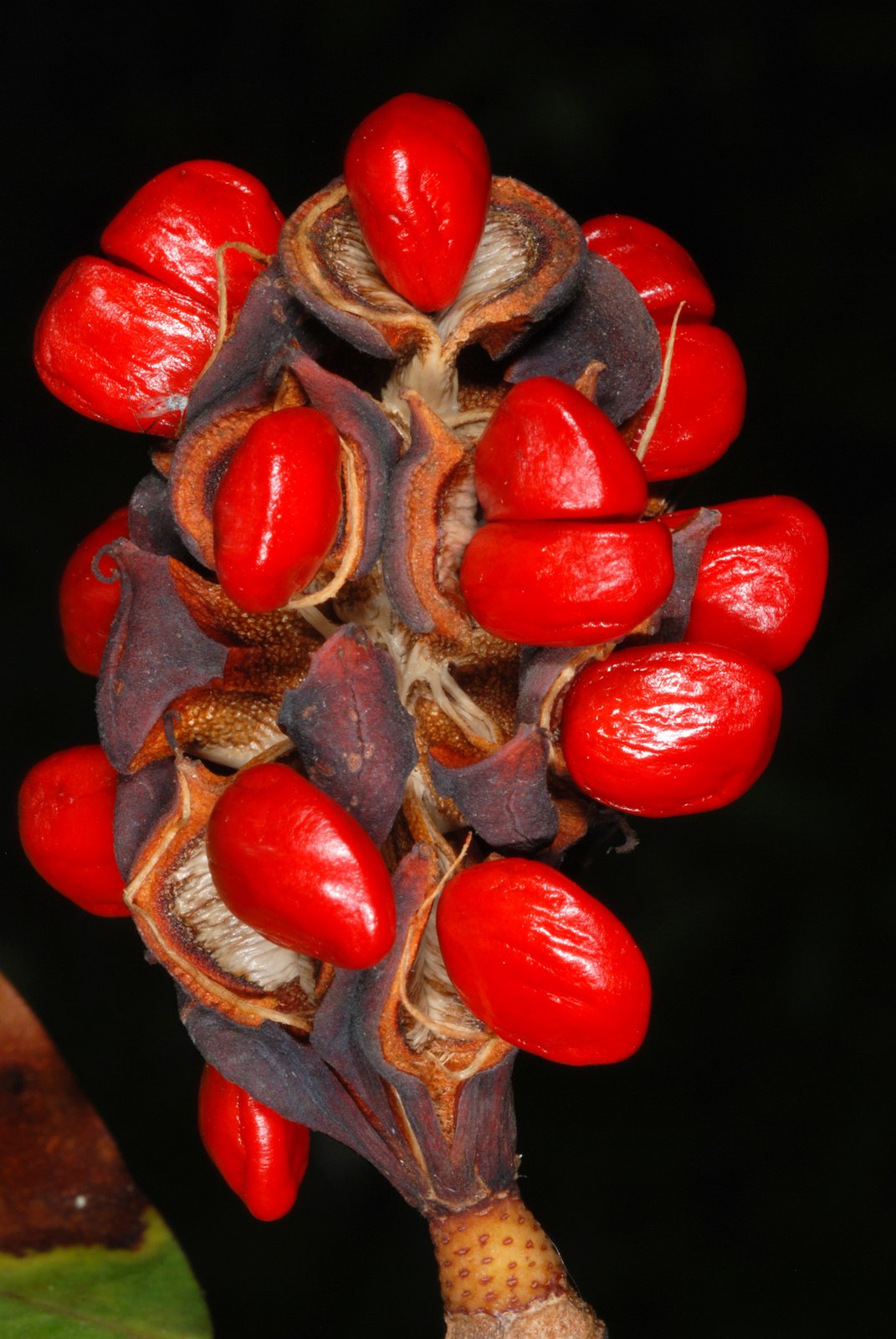
Wildlife: Beetles visit and pollinate the flowers. Birds eat the red-coated seeds, and the foliage supports several moth caterpillars, including sweetbay silkmoth in its native range.
Problems to watch for
- Yellow leaves with green veins: alkaline soil can prevent iron uptake. Test the soil; use chelated iron as a temporary treatment and consider relocating a young tree if the soil is strongly alkaline.
- Leaf scorch or premature leaf drop during drought: water deeply and maintain an organic mulch over the root area.
- Scale insects and sooty mould: inspect twigs and leaf undersides; prune out badly infested small shoots and use a labelled horticultural oil when appropriate.
- Winter leaf burn or shoot dieback: shelter young trees from drying winds, maintain soil moisture before freezing weather and remove dead tips once new growth reveals the damage.
Safety
Not known to be toxic to cats, dogs, horses or people. No part is recognised as a significant poisoning hazard, though eating plant material may cause mild digestive upset; it is not a food plant.
Easily confused with
Southern magnolia (Magnolia grandiflora)
Has much larger flowers and thicker, leathery evergreen leaves, often with rusty-brown felt beneath rather than sweetbay's silvery undersides.
Sweetbay laurel (Laurus nobilis)
Has strongly aromatic culinary bay leaves without silvery undersides, small yellowish flowers and dark berries rather than large white flowers and cone-like fruits.
Swamp bay (Persea palustris)
Has small greenish flowers, dark berry-like fruits and leaves often rusty-hairy beneath; sweetbay magnolia has showy white flowers and red seeds exposed from cone-like fruits.
The name
Magnolia honours the French botanist Pierre Magnol, virginiana refers to Virginia, and sweetbay describes the fragrant flowers and bay-like leaves.
Propagation. Sow fresh, cleaned seed in autumn outdoors, protected from rodents, or provide a period of moist chilling before spring sowing. Seedlings vary; named selections are usually propagated by softwood cuttings under controlled humidity.
Checked against open data
- Accepted botanical name
- Magnolia virginiana
- In the US and Canada
- Native in the lower 48 states.
- Native range
- Alabama, Arkansas, Cuba, Delaware, District of Columbia, Florida, Georgia, Louisiana, Maryland, Masachusettes, Mississippi and New Jersey.
- Measured
- Soil pH 5 to 6.9. Average height 1500 cm.
Sources: GBIF (CC BY 4.0), USDA PLANTS and Trefle (CC BY 4.0). The care and design notes are LandscapeGPT's own.
See it in your own yard.
Upload a photo of your yard and see it redesigned with plants that suit your climate, each checked against your zone.