Texas mountain laurel
Dermatophyllum secundiflorum. Family Fabaceae. Tree.
Also called Mescal bean, Mescalbean, Frijolito, Sophora secundiflora.
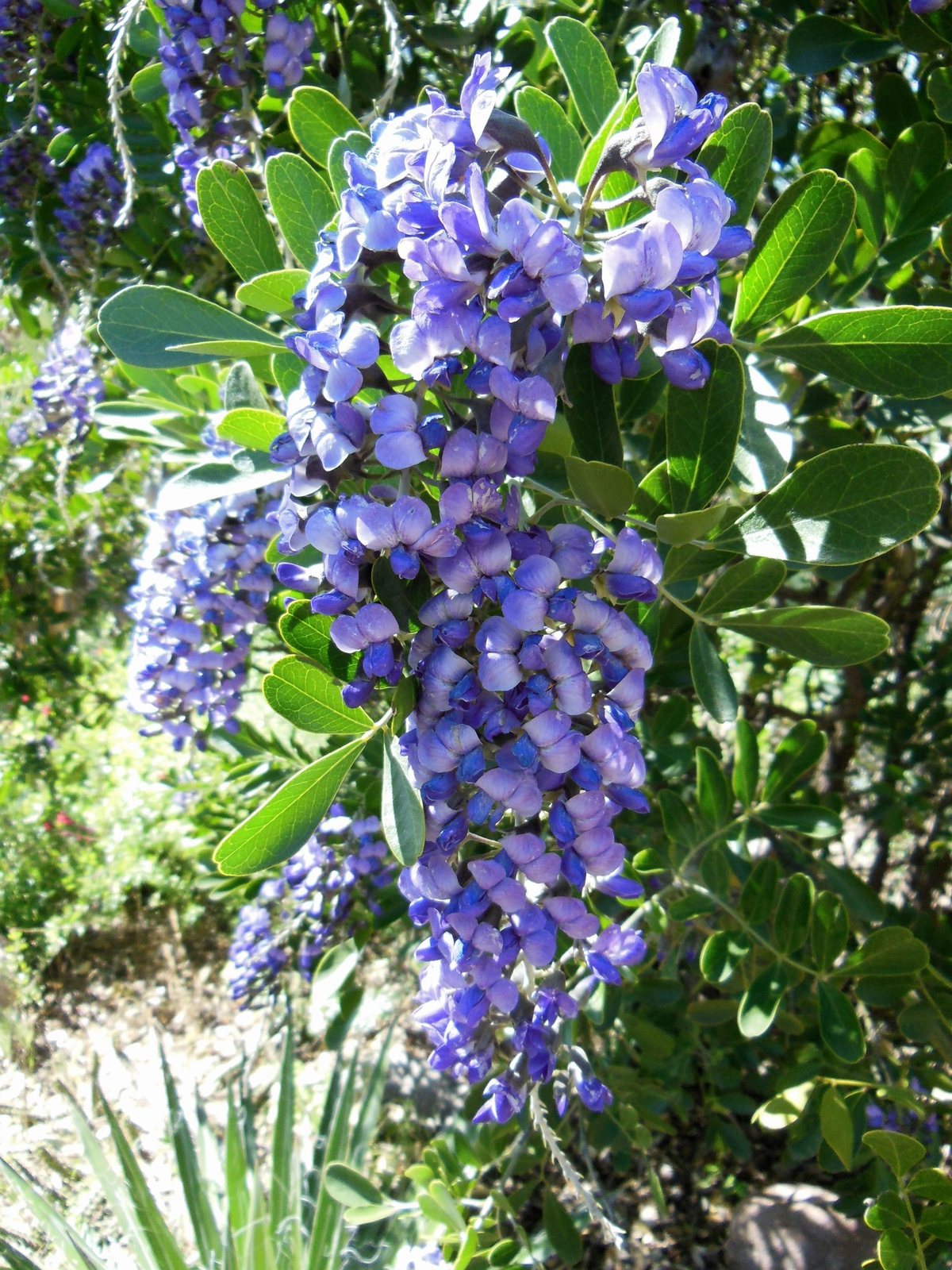
Texas mountain laurel is a slow-growing evergreen shrub or small tree native to the southwestern United States and northern Mexico. Gardeners grow it for its glossy leaves, drought tolerance and hanging clusters of violet-blue flowers with a strong grape-like scent. It needs excellent drainage and summer warmth; its poisonous seeds make it unsuitable beside children's play areas.
At a glance
- Sun
- Full sun for the best flowering; tolerates light partial shade.
- Water
- Low once established. Water deeply during establishment, then mainly during prolonged dry spells; avoid frequent irrigation.
- Soil
- Well-drained sandy, gravelly or rocky soil, including limestone soils. Tolerates alkaline conditions; struggles in waterlogged clay.
- Height
- 15-25 ft (4.6-7.6 m)
- Spread
- 10-15 ft (3-4.6 m)
- Flowers
- Violet-blue to purple, fragrant hanging flower clusters in early to mid-spring; flowering can begin in late winter in warm regions.
- Foliage
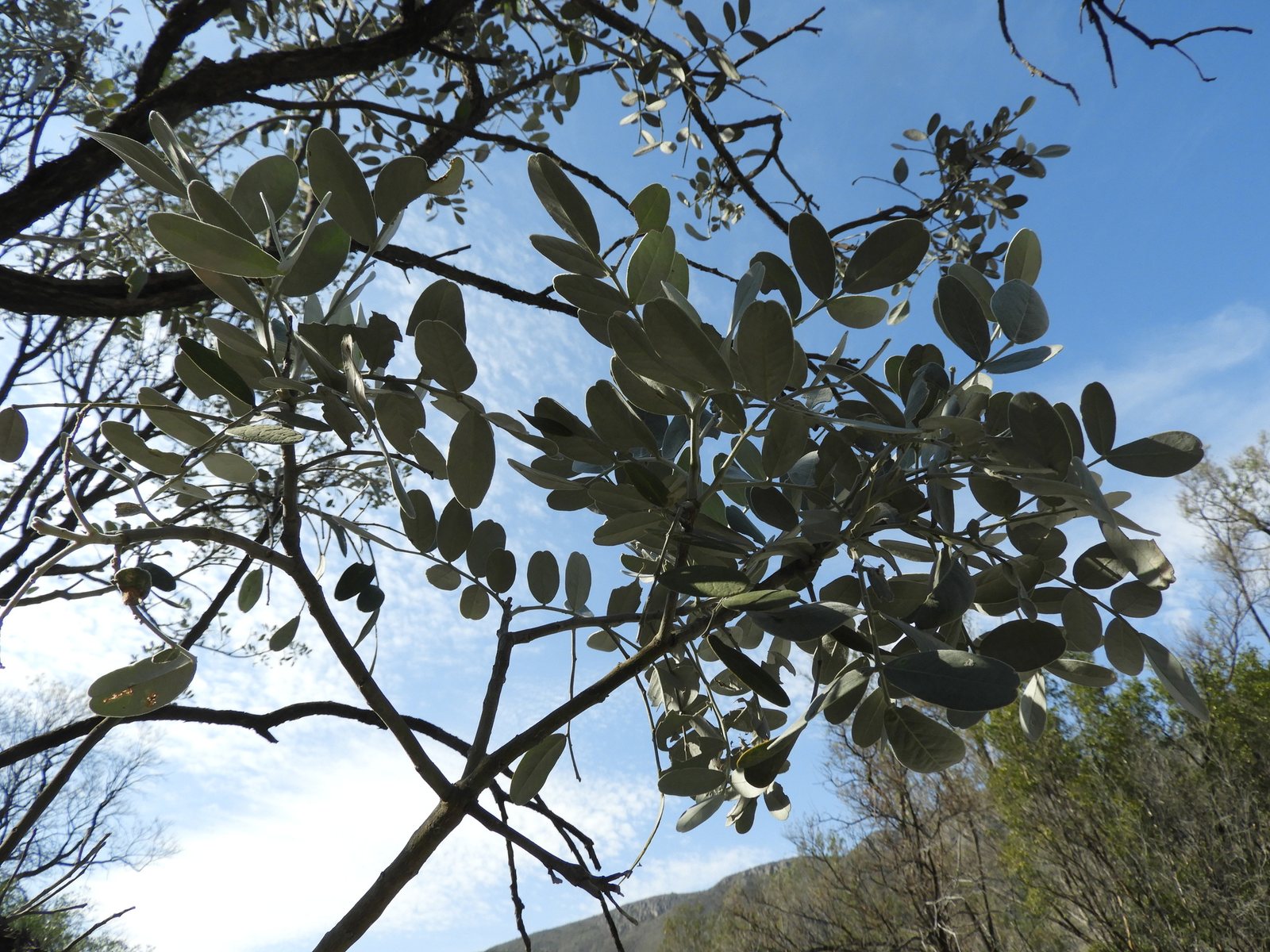
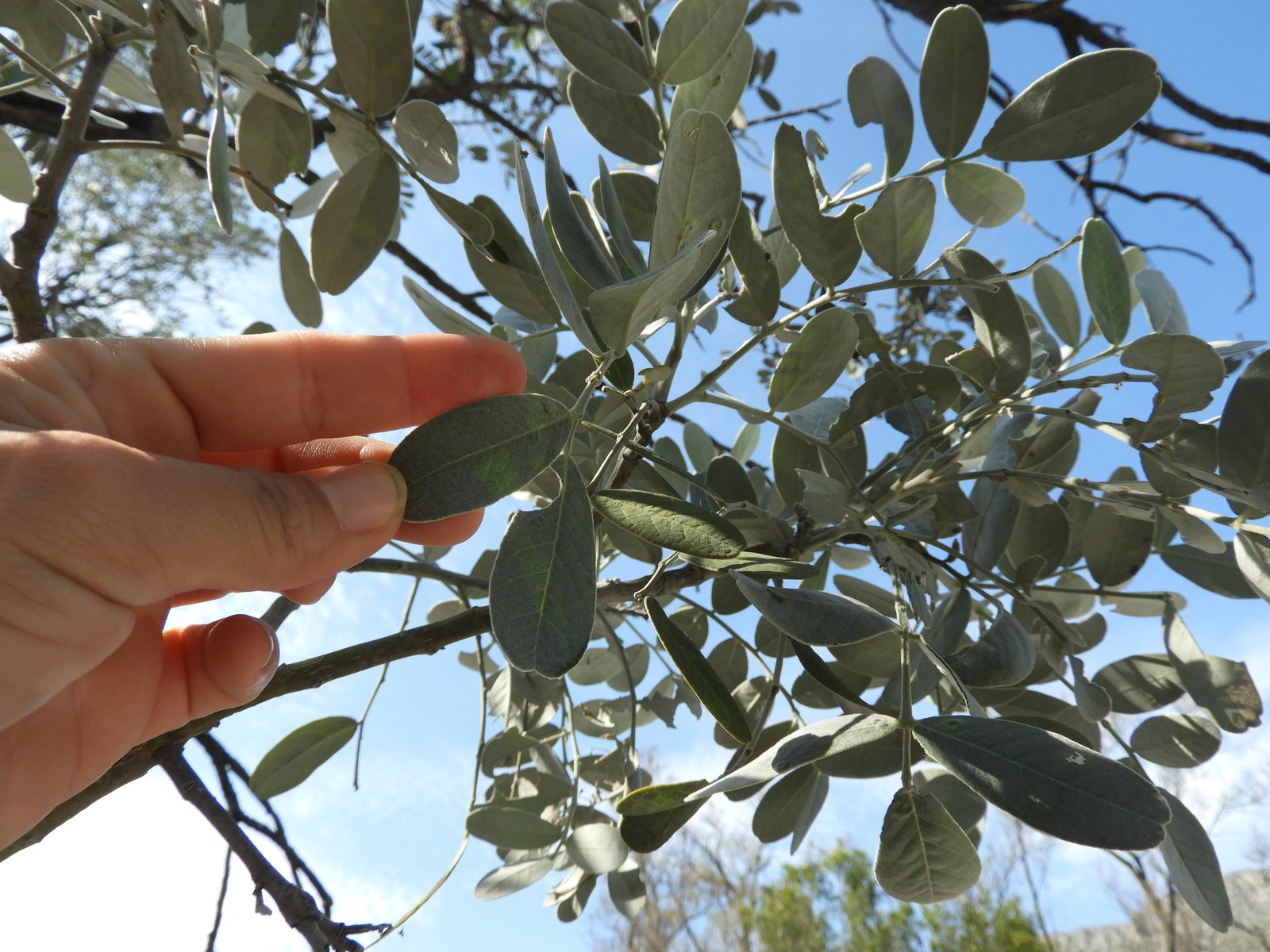
- Evergreen. Glossy, dark green, leathery compound leaves with rounded leaflets.
- Growth
- Slow
- Care needed
- Low
The year at a glance
- Pollinators
- Deer resistant
- Drought tolerant
- Heat tolerant
- Wildlife
- Low allergen
- Fragrant
| J | F | M | A | M | J | J | A | S | O | N | D | |
|---|---|---|---|---|---|---|---|---|---|---|---|---|
| Flowers | ||||||||||||
| Fruit | ||||||||||||
| Plant |
Northern hemisphere months. In Australia, shift them by six.
- Difficulty
- Hard
- Toughness
- Fairly tough
Will it suit your garden?
Pick your zone, country, light and whether you have pets.
Full sun is 6 or more hours of direct sun a day, part shade 3 to 6 hours, shade under 3.
How it grows
Planting day
7 ft (2 m)
After 1 year
7 ft (2.1 m)
After 2 years
7 ft (2.3 m)
After 3 years
8 ft (2.4 m)
After 5 years
9 ft (2.6 m)
About 32 years to full size.
From a typical nursery size, at an average rate for this kind of plant. A rule of thumb, not a forecast.
Good to know
- Cats and dogs
- Toxic
- Growth rate
- Slow
Care
Jobs through the year
- WaterApr–May, Sep, every 28 days
- Water established plants only in prolonged drought; water young plants more often as the root zone dries.
- WaterJun–Aug, every 21 days
- Water established plants deeply only during extended drought; avoid frequent irrigation.
- MulchApr
- Apply a thin mulch layer, keeping the trunk and root collar exposed.
- PruneApr–May
- Lightly shape just after flowering and remove damaged or crossing branches; avoid hard cutting.
- ProtectSep–Nov
- Collect fallen poisonous pods and seeds where children or animals could reach them.
- ProtectJan–Mar, Nov–Dec
- Generally unsuitable outdoors in zones 6–7a; use frost-free shelter there and protect young plants in zone 7b.
- Plant while small, keeping the root ball intact; established plants are difficult to transplant.
- Water deeply when the root zone begins to dry during the first two growing seasons, allowing it to drain between soakings.
- Keep lawn sprinklers and other frequent irrigation away from the root zone.
- Apply a thin mulch layer, keeping it clear of the trunk and root collar.
- Avoid routine feeding, especially high-nitrogen fertilizer; excessive feeding can encourage leafy growth rather than flowers.
Pruning. Prune lightly just after flowering to remove damaged or crossing branches and develop the desired shrub or small-tree shape. Avoid heavy cutting and late-season shaping, which can remove the following spring's flower buds.
Through the year
- Spring
- Plant after severe frost risk has passed, choosing a sunny site with excellent drainage.
- Spring
- After flowering, remove damaged branches and make any light shaping cuts.
- Late spring
- Check new growth for webbing and genista caterpillars; remove small infestations by hand.
- Summer
- Check soil moisture around young plants and water deeply when needed rather than giving frequent light sprinkles.
- Autumn
- Collect fallen pods where children or animals could reach them, and dispose of them securely.
- Winter
- Protect young plants during unusually severe freezes and keep the root zone from staying saturated.
In the garden
- Use as a small specimen tree in a sunny courtyard, leaving room for its mature canopy.
- Plant as an evergreen backdrop to red yucca, salvias and ornamental grasses in a dry border.
- Retain several trunks for an informal screen in a warm, sheltered garden.
- Pair with limestone, gravel and drought-tolerant planting for a Texas Hill Country or southwestern garden.
Garden styles it suits: Texas Hill Country, Southwestern, Desert / xeriscape, Dry gravel garden, Mediterranean and Modern courtyard.
Plant it with: Red yucca, Texas sage, Autumn sage, Blackfoot daisy, Damianita and Lindheimer's muhly.
Wildlife: The flowers attract bees, especially large bees, and the evergreen canopy provides shelter for birds. Genista caterpillars feed on the foliage.
Problems to watch for
- Root rot in wet soil: improve drainage before planting, avoid low spots and reduce irrigation; badly affected plants may not recover.
- Genista caterpillars can web together and strip new leaves: hand-pick small colonies or use a labelled Bacillus thuringiensis var. kurstaki treatment while larvae are young.
- Scale insects can weaken growth: inspect stems and leaf undersides, prune heavily infested shoots and use a labelled horticultural oil when conditions are suitable.
- Poor flowering in shade or cool climates: provide the sunniest, warmest sheltered position available and avoid excess nitrogen; reliable flowering may remain difficult in cool summers.
Safety
Toxic to people, cats, dogs and horses. All parts should be treated as poisonous, especially the bright red seeds, which contain toxic alkaloids including cytisine. Chewed seeds can cause severe, potentially fatal poisoning; seek urgent medical or veterinary advice after ingestion.
Easily confused with
Mountain laurel (Kalmia latifolia)
Has simple leaves and clusters of pink or white cup-shaped flowers, rather than compound leaves and hanging purple pea flowers. It prefers acidic soil.
Kowhai (Sophora microphylla)
Has many smaller leaflets and yellow hanging flowers, rather than the fewer, larger glossy leaflets and violet-blue flowers of Texas mountain laurel.
The name
Dermatophyllum refers to the leathery leaves, while secundiflorum refers to flowers arranged toward one side of the flower cluster.
Propagation. Usually grown from seed. The hard seed coat needs careful scarification, followed by soaking and sowing in a deep pot of free-draining compost; avoid damaging the developing root when planting out. Seeds are highly poisonous, so handle and store them securely away from children and animals.
Checked against open data
- Accepted botanical name
- Dermatophyllum secundiflorum
- Native range
- Mexico Central, Mexico Gulf, Mexico Northeast, Mexico Southwest, New Mexico and Texas.
- Measured
- Average height 457 cm.
Sources: GBIF (CC BY 4.0) and Trefle (CC BY 4.0). The care and design notes are LandscapeGPT's own.
See it in your own yard.
Upload a photo of your yard and see it redesigned with plants that suit your climate, each checked against your zone.