Texas sotol
Dasylirion texanum. Family Asparagaceae. Shrub.
Also called Texas desert spoon, Green sotol.
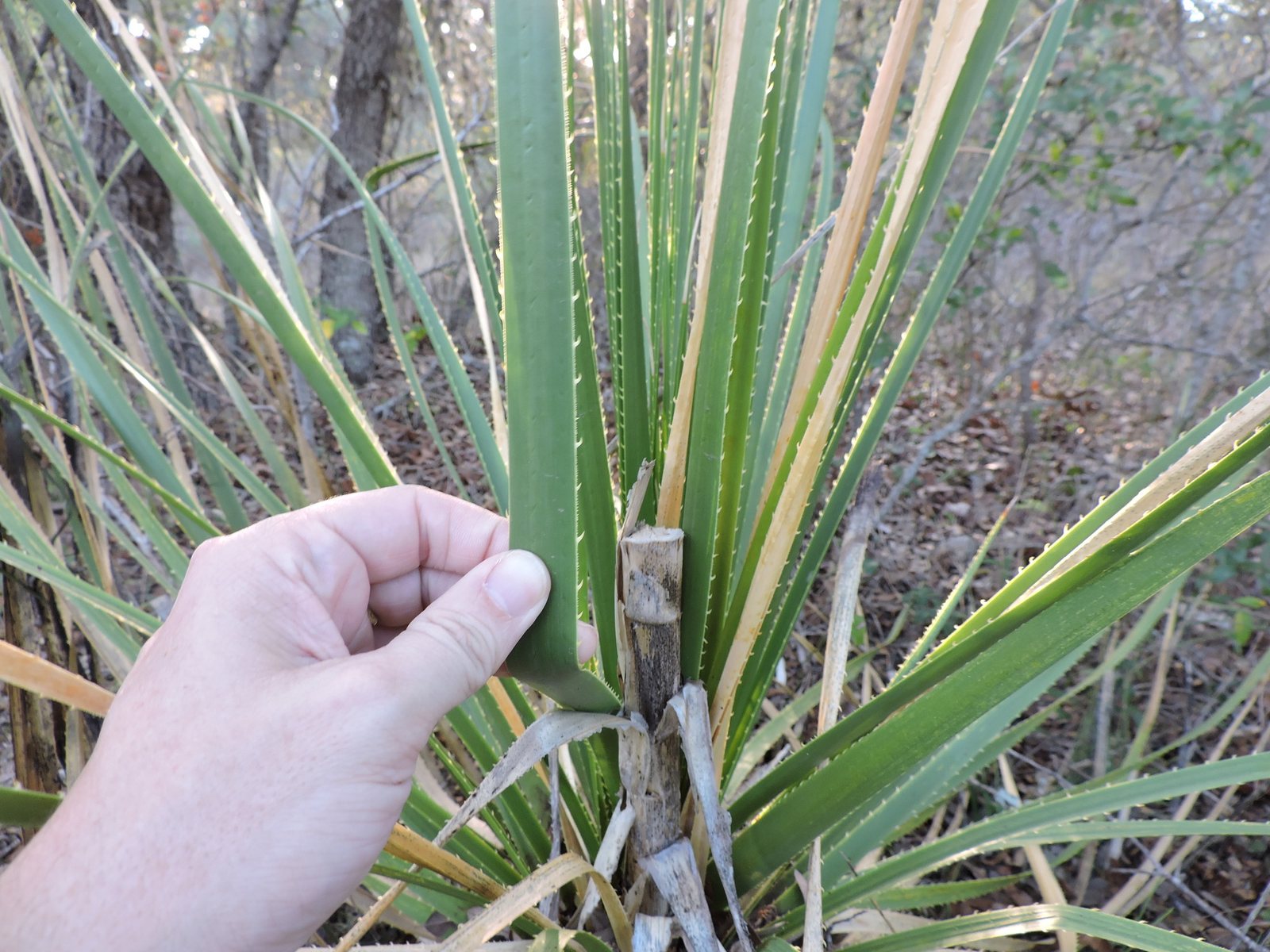
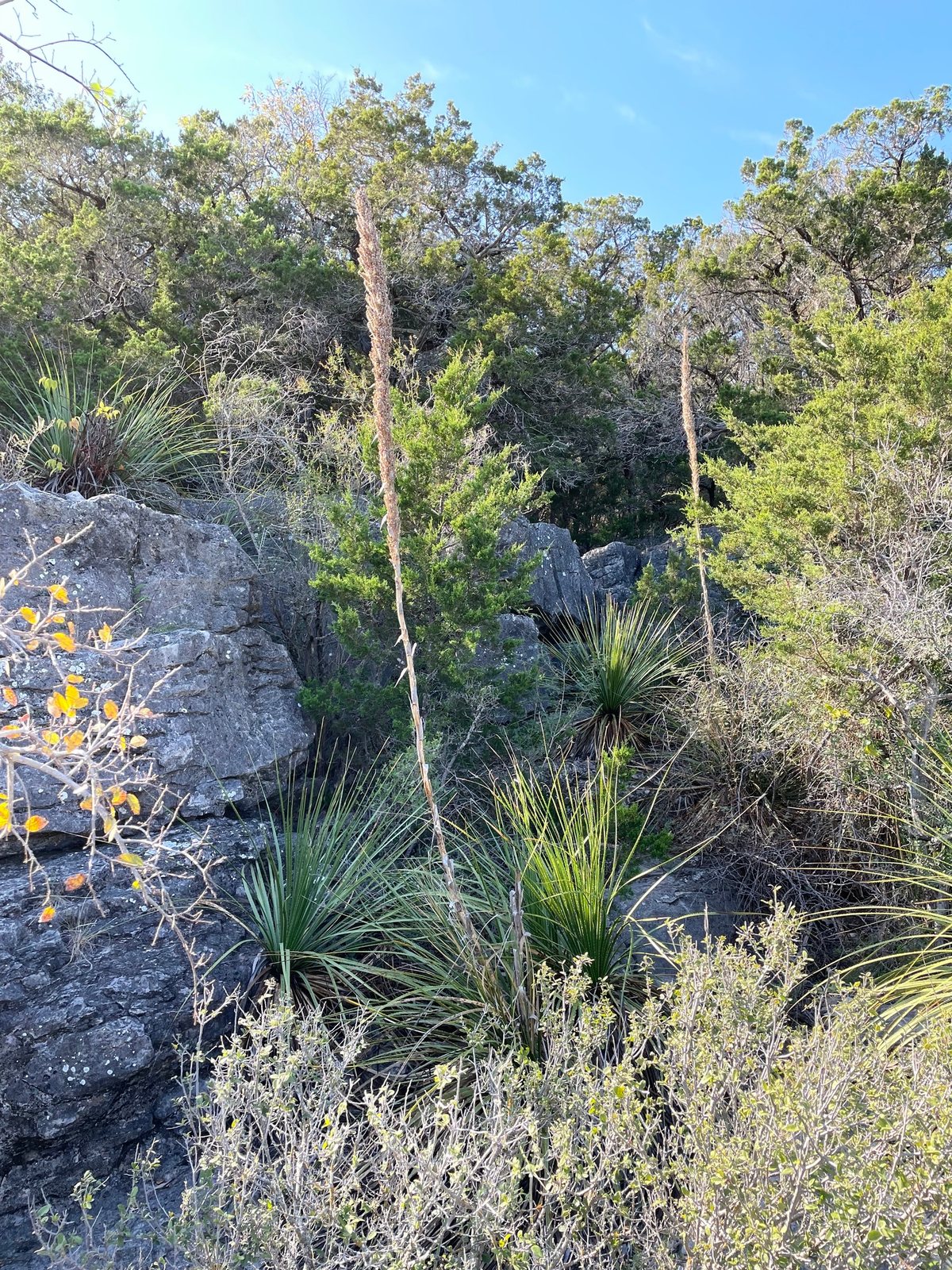
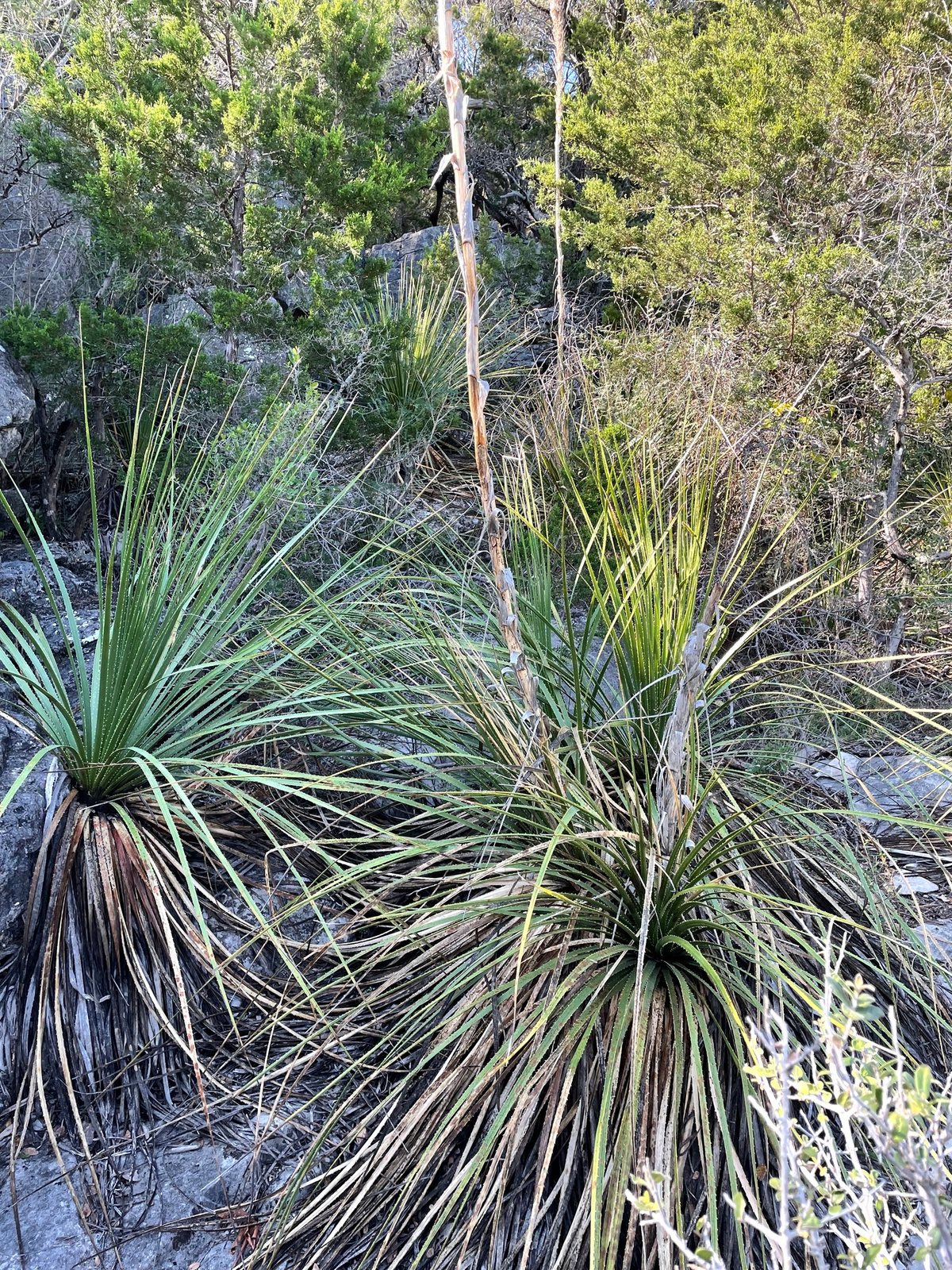
Texas sotol is a slow-growing evergreen shrub native to Texas and northeastern Mexico, forming a dense fountain of narrow, toothed green leaves. Grow it for its strong outline in dry gardens; mature plants occasionally send up tall flower stalks. Its sharp leaf margins make it unsuitable beside narrow paths or play areas.
At a glance
- Sun
- Full sun; tolerates light shade but develops its best shape in strong light.
- Water
- Low once established. Water young plants during dry spells, allowing the soil to dry between waterings; established plants rarely need irrigation outside prolonged drought.
- Soil
- Sharply drained sandy, gritty or rocky soil, including limestone soils. Avoid wet clay and sites that stay damp in winter.
- Height
- 3-5 ft (0.9-1.5 m) in leaf; flower stalks can reach 10-15 ft (3-4.6 m)
- Spread
- 3-5 ft (0.9-1.5 m)
- Flowers
- Late spring to summer; small creamy-white to greenish-white flowers packed along tall stalks. Mature plants do not necessarily flower every year.
- Foliage
- Evergreen. Narrow, firm green leaves arch outward from a dense rosette, with small hooked teeth along their edges and fibrous tips.
- Growth
- Slow
- Care needed
- Low
The year at a glance
- Pollinators
- Deer resistant
- Drought tolerant
- Heat tolerant
- Wildlife
| J | F | M | A | M | J | J | A | S | O | N | D | |
|---|---|---|---|---|---|---|---|---|---|---|---|---|
| Flowers | ||||||||||||
| Fruit | ||||||||||||
| Plant |
Northern hemisphere months. In Australia, shift them by six.
- Difficulty
- Hard
- Toughness
- Fairly tough
Will it suit your garden?
Pick your zone, country, light and whether you have pets.
Full sun is 6 or more hours of direct sun a day, part shade 3 to 6 hours, shade under 3.
How it grows
Planting day
1.6 ft (0.5 m)
After 1 year
1.9 ft (0.59 m)
After 2 years
2.2 ft (0.68 m)
After 3 years
2.5 ft (0.76 m)
After 5 years
3 ft (0.94 m)
About 8 years to full size.
From a typical nursery size, at an average rate for this kind of plant. A rule of thumb, not a forecast.
Good to know
- Cats and dogs
- Safe
- Native to
- the US
- Growth rate
- Slow
Care
Jobs through the year
- WaterMay–Sep, every 28 days
- Water established plants only during prolonged drought; young plants need watering when soil dries.
- MulchMay–Jun
- Use gravel mulch and leave the crown clear of moisture-retentive material.
- PruneApr–May
- Wear protective gear and remove only dead or badly damaged leaves at their bases.
- PruneSep–Oct
- Remove dry flower stalks unless retaining seed; seed needs male and female plants nearby.
- ProtectJan–Mar, Oct–Dec
- In zones 6–7, grow in a movable container and overwinter bright, dry and frost-free.
- Plant after the risk of hard frost has passed, keeping the crown at its original soil level.
- Water deeply during establishment, then let the root zone dry before watering again.
- Use a raised bed or a free-draining container where winter rainfall is heavy.
- Apply gravel mulch rather than moisture-holding organic mulch, keeping the crown clear.
- Avoid routine feeding; rich soil and excess fertiliser are unnecessary.
- Wear thick gloves, long sleeves and eye protection when working among the leaves.
Pruning. In spring, cut away fully dead or badly damaged leaves near their bases without cutting into the crown. Remove spent flower stalks near the base when dry, and do not shear or shorten healthy leaves.
Through the year
- Spring
- Remove winter-damaged leaves and check that the crown is firm and drainage remains clear.
- Late spring
- Plant once the soil has warmed and hard frosts have passed.
- Summer
- Water recently planted specimens during dry spells, letting the soil dry between soakings.
- Late summer
- Leave flower stalks for seed or cut them down once they have dried.
- Autumn
- Clear fallen leaves from the crown and stop supplementary watering as conditions cool.
- Winter
- Keep container plants sheltered from persistent rain and protect them from severe freezes.
In the garden
- Use a single plant as a focal point in a sunny gravel courtyard, well back from seating and paths.
- Repeat widely spaced plants among rocks and low groundcovers for a restrained architectural planting.
- Combine with agaves, yuccas and drought-tolerant grasses in a southwestern dry garden.
- Grow in a large, free-draining container to display its fountain-shaped foliage.
Garden styles it suits: Architectural minimal, Desert modern, Dry gravel garden, Desert / xeriscape, Southwestern and Texas Hill Country.
Plant it with: Red yucca, Texas sage, Blackfoot daisy, Autumn sage, Blue grama and Parry's agave.
Wildlife: Flowers provide food for bees and other insects. Male and female flowers occur on separate plants, so seed production requires both sexes nearby. The dense foliage can shelter small wildlife.
Problems to watch for
- Root or crown rot in wet soil: improve drainage, keep mulch away from the crown and avoid winter irrigation; badly rotted plants may not recover.
- Freeze damage, especially in damp conditions: choose a sheltered, sunny site and protect container roots during severe cold; remove dead foliage in spring.
- Poor shape or weak growth in shade: move young plants to a sunnier position rather than trying to correct growth with fertiliser.
Safety
Not known to be toxic to people, cats, dogs or horses, although species-specific toxicity information is limited. The main hazard is physical: the toothed leaves can cut skin and injure eyes or mouths. Do not treat it as an edible garden plant.
Easily confused with
Desert spoon (Dasylirion wheeleri)
Usually has distinctly blue-grey leaves, while Texas sotol is generally green; both have toothed leaf margins.
Mexican grass tree (Dasylirion longissimum)
Has much narrower, almost wire-like leaves with essentially smooth margins, rather than the flat, toothed leaves of Texas sotol.
Red yucca (Hesperaloe parviflora)
Has thread-like fibres along its leaf margins instead of hooked teeth, and usually bears coral-red tubular flowers on branching stalks.
The name
Dasylirion comes from Greek words meaning 'shaggy lily', referring to the fibrous leaf bases, while texanum means 'of Texas'.
Propagation. Usually grown from seed sown in a warm place in a gritty, free-draining mix. Growth is slow, and seedlings take years to become substantial landscape plants. This is not a plant for routine division.
Checked against open data
- Accepted botanical name
- Dasylirion texanum
- In the US and Canada
- Native in the lower 48 states.
- Native range
- Mexico Northeast and Texas.
Sources: GBIF (CC BY 4.0), USDA PLANTS and Trefle (CC BY 4.0). The care and design notes are LandscapeGPT's own.
See it in your own yard.
Upload a photo of your yard and see it redesigned with plants that suit your climate, each checked against your zone.