Ti plant
Cordyline fruticosa. Family Asparagaceae. Shrub.
Also called Hawaiian ti, Good-luck plant, Cabbage palm.
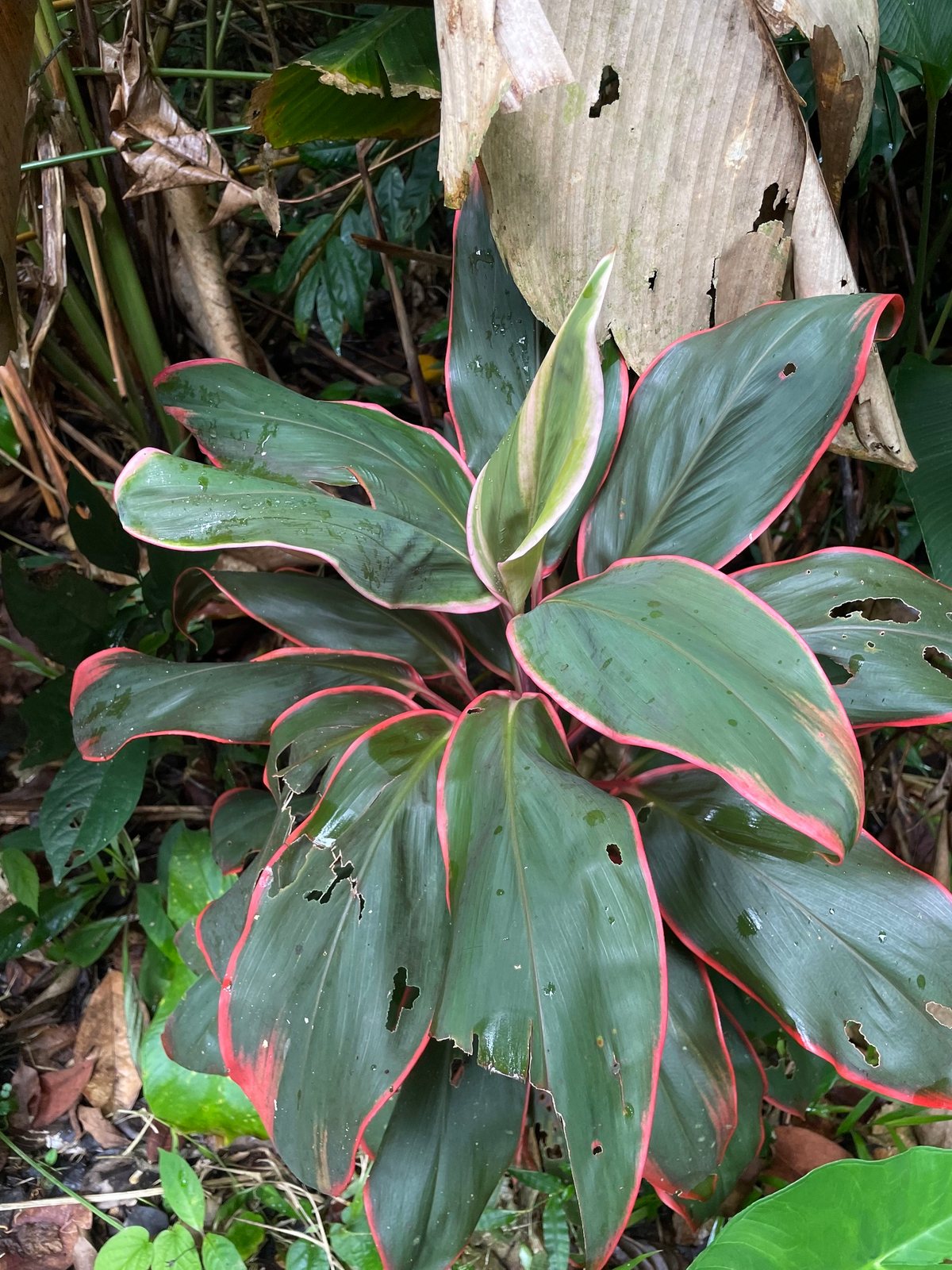
Ti plant is a tropical evergreen shrub grown for broad, upright leaves in green, burgundy, pink or cream. It brings strong foliage colour to sheltered, frost-free gardens and containers; in colder parts of the United States, Canada, the United Kingdom and Australia, grow it indoors or move pots outside only during warm weather.
At a glance
- Sun
- Bright filtered light or partial shade. Gentle morning sun often improves colour, but hot afternoon sun can scorch the leaves; tolerance varies with cultivar.
- Water
- Keep evenly moist during active growth, allowing the surface to dry slightly between waterings. Water less in winter, without letting the root ball dry out completely.
- Soil
- Fertile, humus-rich, well-drained soil, preferably slightly acidic. Use a free-draining potting mix in containers.
- Height
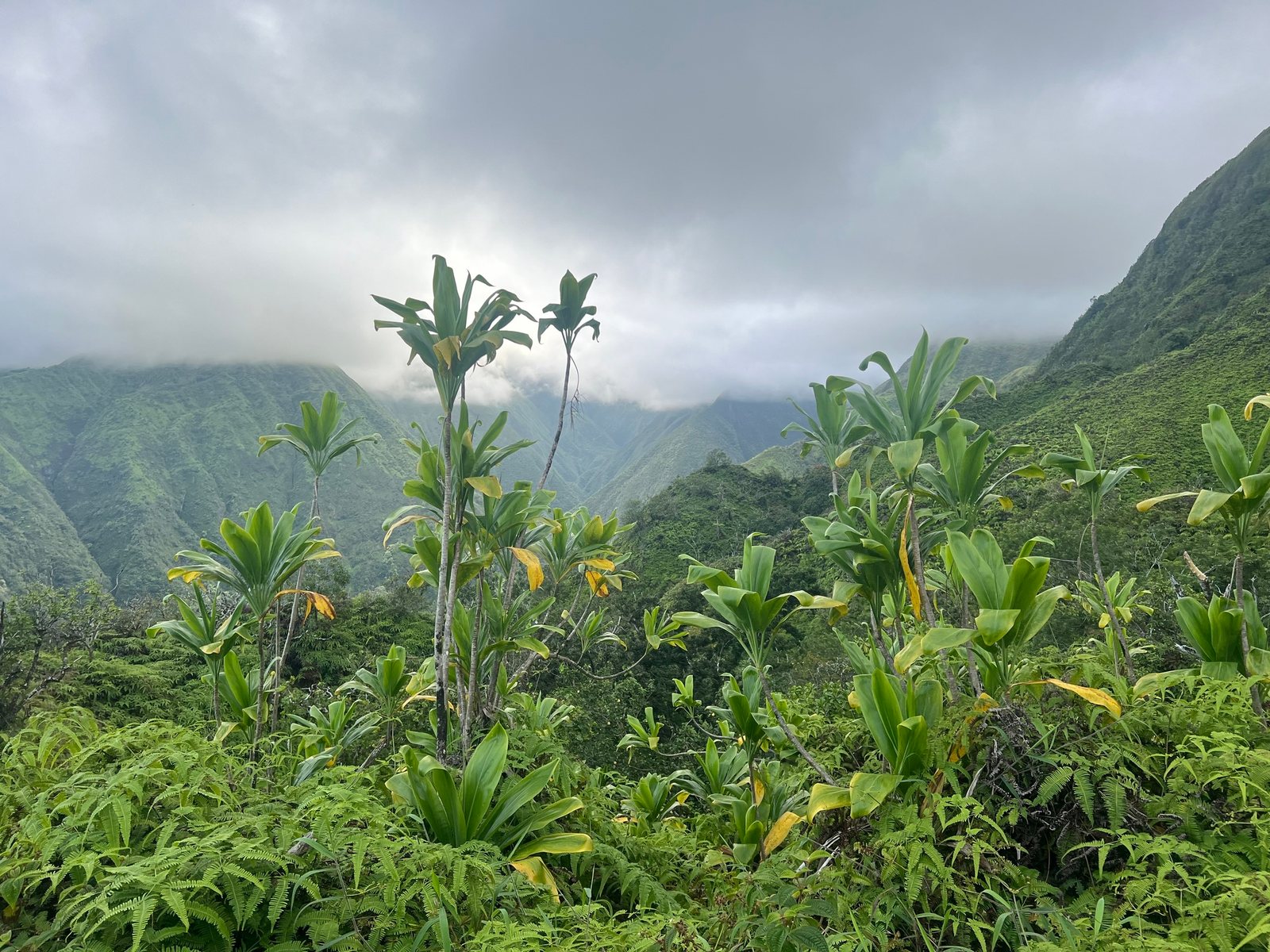
- 3-10 ft (0.9-3 m), occasionally taller in tropical gardens
- Spread
- 2-4 ft (0.6-1.2 m)
- Flowers
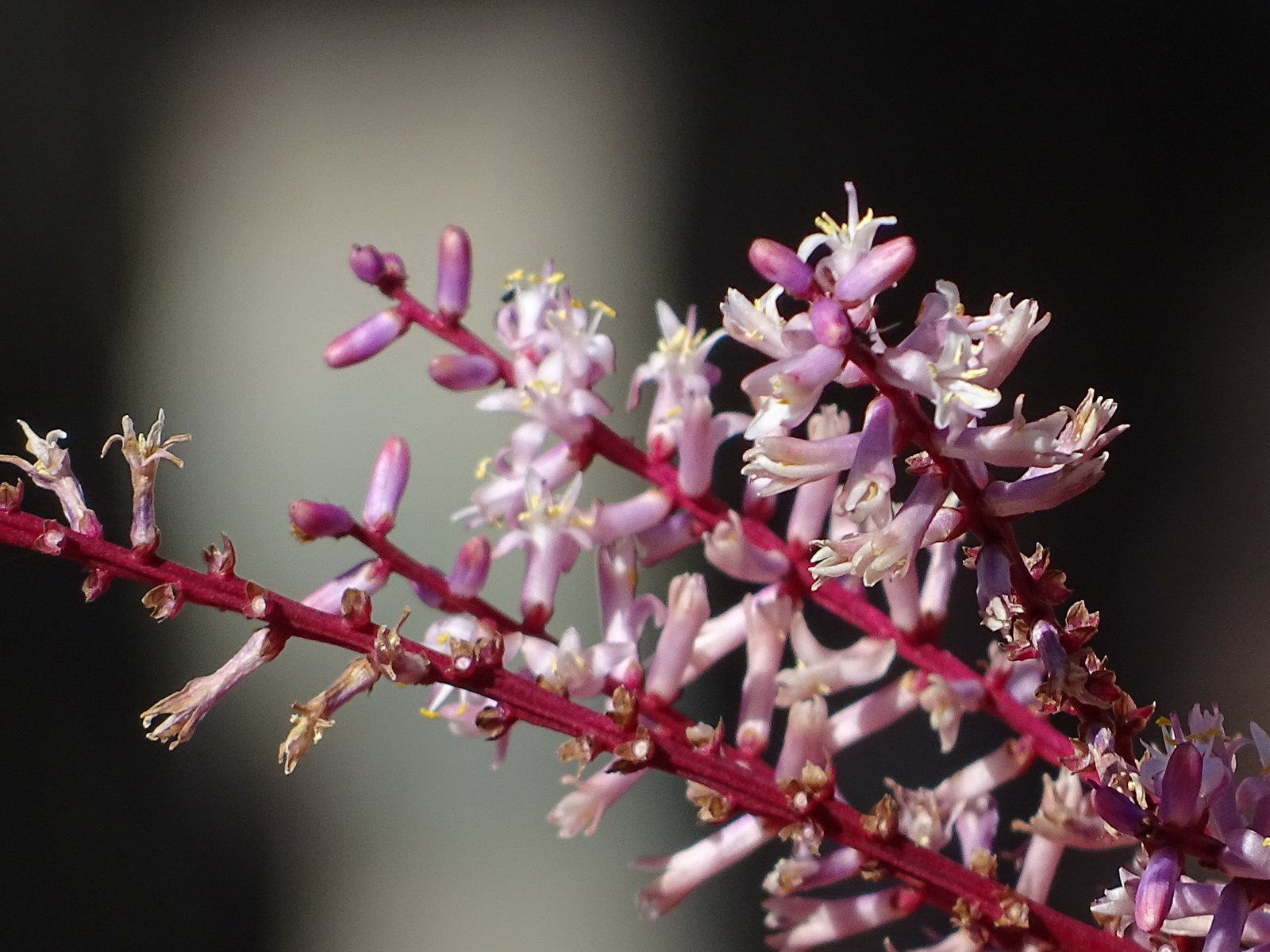
- Small white, pale pink or lilac flowers in branched clusters, usually in spring or summer on mature outdoor plants; flowering indoors is uncommon.
- Foliage
- Evergreen. Broad, pointed, leathery leaves held in clusters along upright, cane-like stems. Colours and markings vary considerably between cultivars.
- Growth
- Moderate in warmth; slow in cool conditions or low indoor light
- Care needed
- Medium
The year at a glance
- Heat tolerant
- Low allergen
| J | F | M | A | M | J | J | A | S | O | N | D | |
|---|---|---|---|---|---|---|---|---|---|---|---|---|
| Plant |
Northern hemisphere months. In Australia, shift them by six.
- Difficulty
- Moderate
- Toughness
- Needs looking after
Will it suit your garden?
Pick your zone, country, light and whether you have pets.
Full sun is 6 or more hours of direct sun a day, part shade 3 to 6 hours, shade under 3.
How it grows
Planting day
1.6 ft (0.5 m)
After 1 year
2.4 ft (0.72 m)
After 2 years
3 ft (0.95 m)
After 3 years
4 ft (1.2 m)
After 5 years
5 ft (1.6 m)
About 7 years to full size.
From a typical nursery size, at an average rate for this kind of plant. A rule of thumb, not a forecast.
Good to know
- Cats and dogs
- Toxic
- Native to
- Australia
- Growth rate
- Slow
Care
Jobs through the year
- WaterMar–May, Sep–Oct, every 7 days
- In this climate grow in a movable pot; water when the surface dries slightly and empty saucers.
- WaterJun–Aug, every 3 days
- Check container moisture frequently; keep evenly moist, never waterlogged, using rainwater if tips brown.
- WaterJan–Feb, Nov–Dec, every 14 days
- Indoors, water sparingly as the surface dries; never let the root ball dry completely.
- FeedApr–Aug, every 30 days
- Apply balanced liquid feed at half strength while actively growing.
- PruneMar–Apr
- Shorten leggy stems just above a leaf node and remove damaged leaves.
- ProtectMay–Jun
- Move pots outside only once nights stay above 10°C; acclimatize gradually in filtered light.
- ProtectSep–Oct
- Inspect for pests and bring indoors before nights fall below 10°C.
- ProtectJan–Feb, Nov–Dec
- Keep in bright indirect light away from heaters, cold windows and draughts.
- Shelter from cold winds and frost; bring containers indoors before nights regularly fall below 50°F (10°C).
- Water thoroughly, then empty saucers so the roots do not stand in water.
- Feed container plants monthly in spring and summer with a balanced liquid fertiliser at half the label strength.
- Mulch outdoor plants to retain moisture, keeping mulch clear of the stems.
- If leaf tips repeatedly brown, try rainwater or low-fluoride water and flush accumulated salts from the pot.
- Indoors, provide bright indirect light and keep away from heaters and cold draughts.
Pruning. Remove dead or badly damaged leaves as needed. In spring, shorten leggy stems with clean secateurs, cutting just above a leaf node to encourage branching below the cut.
Through the year
- Spring
- Repot root-bound plants and shorten leggy stems once active growth resumes.
- Late spring
- Move indoor plants outside only when nights stay above 50°F (10°C), gradually introducing them to brighter light.
- Summer
- Check soil moisture frequently and feed container plants monthly.
- Summer
- Take stem cuttings while warmth supports rooting.
- Early autumn
- In cool climates, inspect for pests and bring pots indoors before chilly nights arrive.
- Winter
- Reduce watering, stop feeding if growth stalls, and keep plants in bright light away from cold windows.
In the garden
- Use a colourful specimen in a large entrance or patio pot for an upright focal point.
- Plant in sheltered tropical borders with ferns, gingers and broad-leaved foliage plants.
- Repeat burgundy-leaved plants through a border to contrast with lime-green foliage.
- Group several plants in a warm courtyard for a leafy screen without the bulk of a large shrub.
Garden styles it suits: Modern tropical, Tropical, Luxury resort, Modern courtyard, Hawaiian and Balinese.
Plant it with: Bird of paradise, Shell ginger, Elephant ears, Bromeliads, Boston fern and Croton.
Wildlife: Flowers may attract insects, and birds may eat the berries where fruit develops. It offers limited wildlife value when kept indoors or grown only for foliage.
Problems to watch for
- Brown leaf tips: check for dry air, erratic watering, fluoride sensitivity or fertiliser salts; improve watering consistency and try rainwater.
- Spider mites: look for fine webbing and stippled leaves, especially indoors; rinse foliage and apply insecticidal soap as labelled, repeating as directed.
- Mealybugs and scale: inspect leaf bases and stems; isolate affected pots and treat with a labelled insecticidal soap or horticultural oil.
- Root rot: yellowing leaves and soft stems can follow waterlogging; improve drainage, remove rotten roots and repot into fresh mix.
Safety
Toxic to cats and dogs if chewed or swallowed; saponins in the foliage and other plant parts can cause drooling, vomiting and loss of appetite. Horse toxicity is not well documented, so keep it away from grazing animals. Human toxicity is less clearly documented; do not eat raw ornamental plant parts, and seek advice after ingestion, particularly by a child.
Easily confused with
New Zealand cabbage tree (Cordyline australis)
Has much narrower, strap-like leaves with little or no distinct leaf stalk and eventually forms a substantial tree. It is considerably more cold-tolerant.
Dragon tree (Dracaena marginata)
Has very narrow, ribbon-like leaves, commonly edged red, rather than the broad, paddle-shaped leaves of ti plant.
Corn plant (Dracaena fragrans)
Usually has long, arching green leaves, sometimes with a yellow central stripe, and lacks the broad pink, red and burgundy foliage typical of many ti cultivars.
The name
Cordyline comes from the Greek word for a club, referring to the thickened underground stems, while fruticosa means shrubby.
Propagation. Take leafy tip cuttings or sections of healthy cane in spring or summer. Root in a moist, airy propagation mix with warmth and high humidity; keep cane sections the same way up as they grew. Separate rooted basal shoots when available.
Checked against open data
- Accepted botanical name
- Cordyline fruticosa
- In the US and Canada
- Native in Pacific Basin. Introduced in Hawaii, Pacific Basin and Puerto Rico.
- Native range
- Bismarck Archipelago, Caroline Is., Fiji, Marianas, Marshall Is., New Guinea, Queensland, Santa Cruz Is., Solomon Is., Vanuatu and Wallis-Futuna Is..
- Measured
- Average height 305 cm.
Sources: GBIF (CC BY 4.0), USDA PLANTS and Trefle (CC BY 4.0). The care and design notes are LandscapeGPT's own.
See it in your own yard.
Upload a photo of your yard and see it redesigned with plants that suit your climate, each checked against your zone.