Walter's viburnum
Viburnum obovatum. Family Viburnaceae. Shrub.
Also called Small-leaf viburnum, Small viburnum.
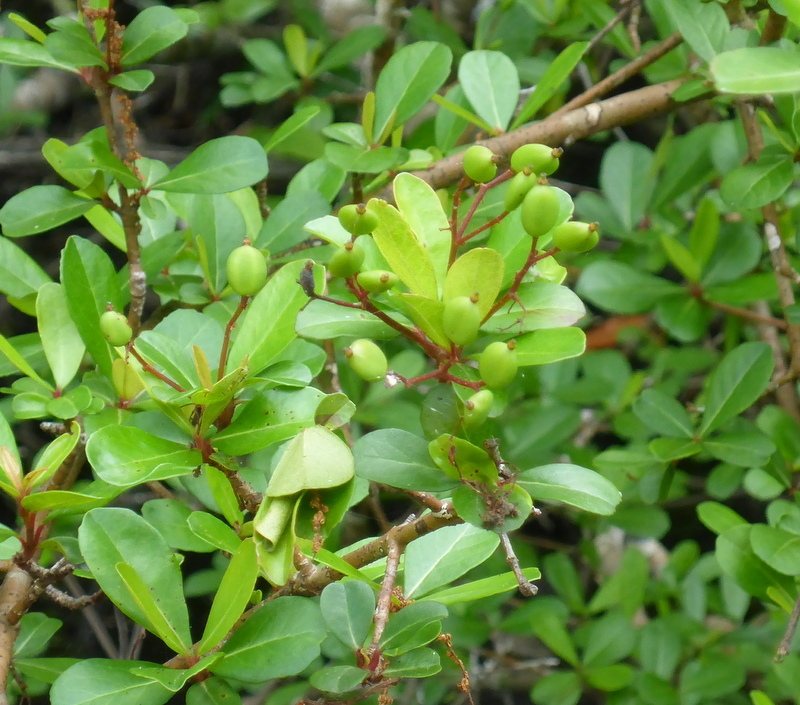
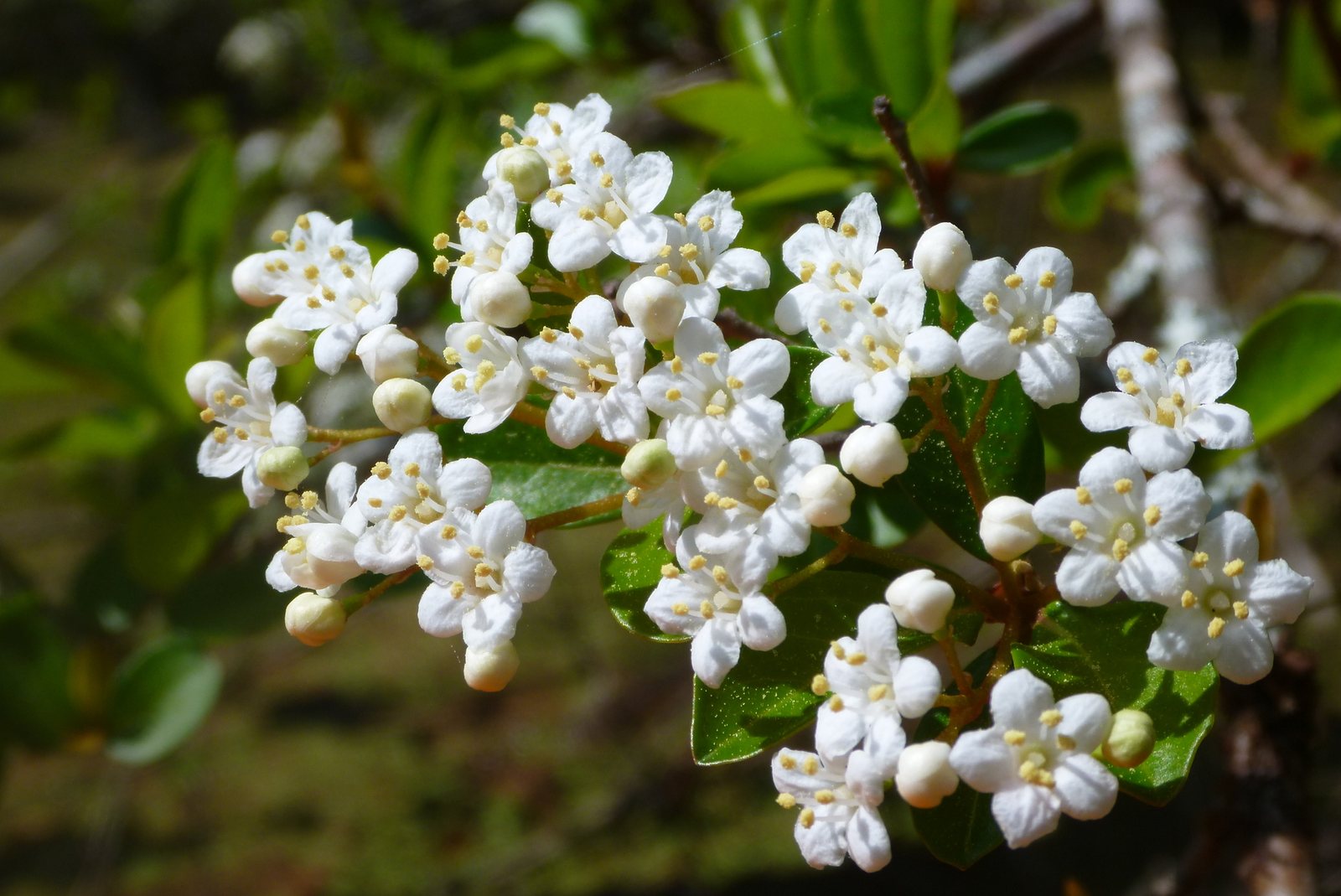
Walter's viburnum is a southeastern US native shrub grown for its small, dense leaves, clusters of white flowers and berries that attract birds. It makes a useful hedge, screen or small multi-stemmed tree, but the species needs considerably more room than its compact cultivars.
At a glance
- Sun
- Full sun to partial shade; flowering and foliage density are usually best with several hours of direct sun.
- Water
- Water regularly while establishing. Established plants tolerate moderate drought, but grow best with consistent moisture.
- Soil
- Adaptable to sandy, loamy or clay soils, from acidic to mildly alkaline. Prefers moist soil and tolerates occasional wetness, though persistently stagnant conditions are unsuitable.
- Height
- 10-20 ft (3-6 m), occasionally taller
- Spread
- 6-12 ft (1.8-3.7 m), potentially wider through suckering
- Flowers
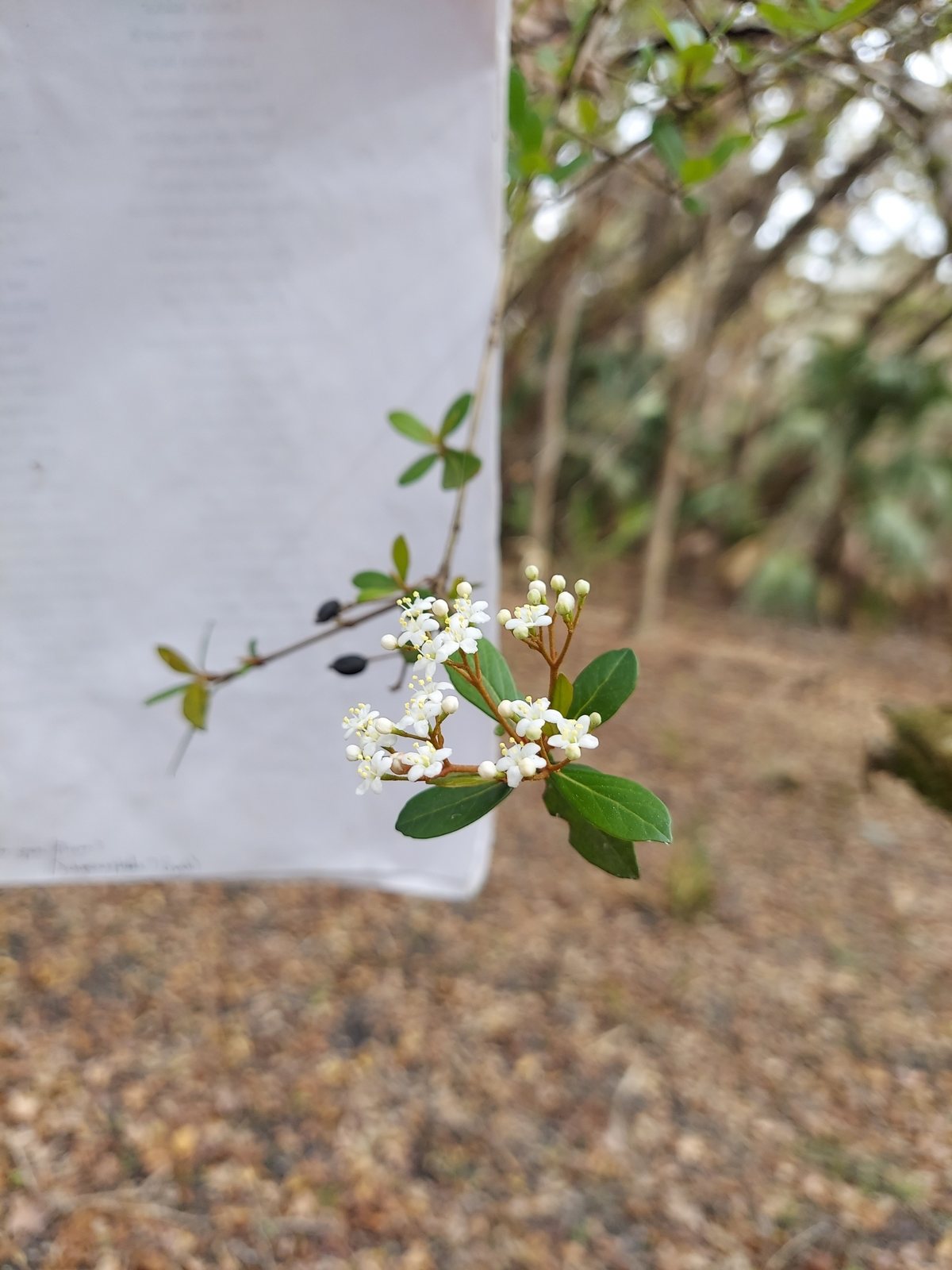
- Small white flowers in rounded clusters in late winter to spring, depending on climate.
- Foliage
- Small, opposite, dark green leaves, usually broadest near the tip, with smooth or lightly toothed edges. Evergreen in warm climates, but partly or fully deciduous near its cold limit.
- Growth
- Moderate to fast once established.
- Care needed
- Low
The year at a glance
- Pollinators
- Drought tolerant
- Heat tolerant
- Wildlife
- Low allergen
| J | F | M | A | M | J | J | A | S | O | N | D | |
|---|---|---|---|---|---|---|---|---|---|---|---|---|
| Flowers | ||||||||||||
| Fruit | ||||||||||||
| Plant |
Northern hemisphere months. In Australia, shift them by six.
- Difficulty
- Easy
- Toughness
- Very tough
Will it suit your garden?
Pick your zone, country, light and whether you have pets.
Full sun is 6 or more hours of direct sun a day, part shade 3 to 6 hours, shade under 3.
How it grows
Planting day
1.8 ft (0.54 m)
After 1 year
5 ft (1.5 m)
After 2 years
8 ft (2.5 m)
After 3 years
12 ft (3.5 m)
After 5 years
15 ft (4.5 m)
full size
About 4 years to full size.
From a typical nursery size, at an average rate for this kind of plant. A rule of thumb, not a forecast.
Good to know
- Cats and dogs
- Safe
- Native to
- the US
- In the garden
- Spreads vigorously: plan to contain it.
- Growth rate
- Fast
Care
Jobs through the year
- WaterApr–May, Sep–Oct, every 14 days
- Water established shrubs if the root zone is drying; young plants need more consistent moisture.
- WaterJun–Aug, every 10 days
- Deeply water established shrubs during dry spells; check young plants more frequently.
- FeedApr
- Feed lightly only if growth is weak or soil is poor; avoid excessive nitrogen.
- PruneMay
- Shape selectively just after flowering, retaining flowered branches for berries and removing unwanted suckers.
- MulchOct–Nov
- Maintain 5–8 cm of organic mulch without covering the stems.
- ProtectJan–Mar, Nov–Dec
- Shelter young plants from severe frost and drying winds; zone 6 sites are outside its reliable hardiness range.
- Water deeply during dry spells through the first growing season; continue until roots are well established.
- Apply 2-3 in (5-8 cm) of organic mulch, keeping it clear of the stems.
- Feed lightly in spring only if growth is weak or the soil is poor; avoid heavy nitrogen feeding.
- Remove unwanted root suckers promptly where you need a defined hedge or specimen.
- Allow room for the full-sized species, or choose a named compact cultivar for a smaller bed.
Pruning. Prune just after flowering, shortening selected branches rather than repeatedly shearing the whole shrub. Remove dead wood and unwanted suckers as needed; heavy pruning after flowering reduces the berry display.
Through the year
- Late winter
- Check for winter damage, but wait for new growth before removing branches whose survival is uncertain.
- Spring
- Plant in colder parts of its range and water thoroughly; enjoy the flowers before doing routine shaping.
- Late spring
- Prune after flowering if necessary, leaving some flowered branches untouched for berries.
- Summer
- Water young plants during dry weather and remove suckers that extend beyond the intended planting area.
- Autumn
- Plant in mild climates while soil is warm, and leave ripening berries for birds.
- Late autumn
- Renew mulch without piling it against the stems; avoid hard pruning before winter.
In the garden
- Plant as an informal hedge or screen, allowing its natural branching to provide dense cover.
- Use at a woodland edge with beautyberry and ferns for layered foliage and wildlife habitat.
- Train a full-sized plant as a small multi-stemmed tree by gradually removing selected lower branches.
- Include in a southeastern US native shrub border with yaupon holly and sweet pepperbush.
- Use a verified compact cultivar near a patio or foundation where the full-sized species would outgrow the space.
Garden styles it suits: Southern, Florida subtropical, Woodland, Wildlife garden, Native hedgerow and Low-maintenance.
Plant it with: American beautyberry, Yaupon holly, Sweet pepperbush, Virginia sweetspire, Coontie and Cinnamon fern.
Wildlife: Flowers provide pollen and nectar for bees and other insects. Birds eat the berries, which change from red to black, and use dense branches for shelter and nesting; planting genetically different individuals can improve fruit set.
Problems to watch for
- Sparse growth or few flowers: move to a brighter position if heavily shaded, and avoid excessive nitrogen fertilizer.
- Scale insects: inspect stems and leaf undersides; prune badly infested shoots and use a labelled horticultural oil when appropriate.
- Leaf spots in humid conditions: improve airflow, water at soil level and remove heavily affected fallen leaves; minor spotting rarely needs treatment.
- Unwanted suckering: cut shoots at their point of origin and inspect the planting edge regularly.
Safety
Not known to be toxic to people, cats, dogs or horses. It is an ornamental rather than a food plant, and the berries should not be eaten; swallowing quantities may cause stomach upset.
Easily confused with
Yaupon holly (Ilex vomitoria)
Yaupon has alternate leaves rather than opposite pairs, tiny inconspicuous flowers and usually red berries; Walter's viburnum has showy white flower clusters and berries that ripen black.
Laurustinus (Viburnum tinus)
Laurustinus generally has much larger, leathery oval leaves, often pink flower buds and metallic blue-black fruit; Walter's viburnum has small leaves commonly broadest near their tips.
The name
Walter's viburnum honours botanist Thomas Walter, while obovatum refers to its leaves being broader toward the tip than at the base.
Propagation. Take softwood cuttings in late spring or semi-ripe cuttings in summer. Rooted suckers can be separated while dormant; seed germination can be slow and irregular, and seedlings do not reliably retain cultivar traits.
Checked against open data
- Accepted botanical name
- Viburnum obovatum
- In the US and Canada
- Native in the lower 48 states.
- Native range
- Alabama, Florida, Georgia and South Carolina.
- Measured
- Soil pH 5 to 7.5. Average height 450 cm.
Sources: GBIF (CC BY 4.0), USDA PLANTS and Trefle (CC BY 4.0). The care and design notes are LandscapeGPT's own.
See it in your own yard.
Upload a photo of your yard and see it redesigned with plants that suit your climate, each checked against your zone.