Weeping lilly pilly
Syzygium floribundum. Family Myrtaceae. Tree.
Also called Weeping satinash, Waterhousea floribunda, Syzygium floribunda.
An evergreen rainforest tree from eastern Australia, grown for its flowing branches, glossy leaves and dense shade. It makes a substantial specimen or tall screening tree in warm, frost-sheltered gardens, but needs regular clipping and plenty of space if used as a hedge. It is not reliably hardy outdoors across most of the United Kingdom or Canada.
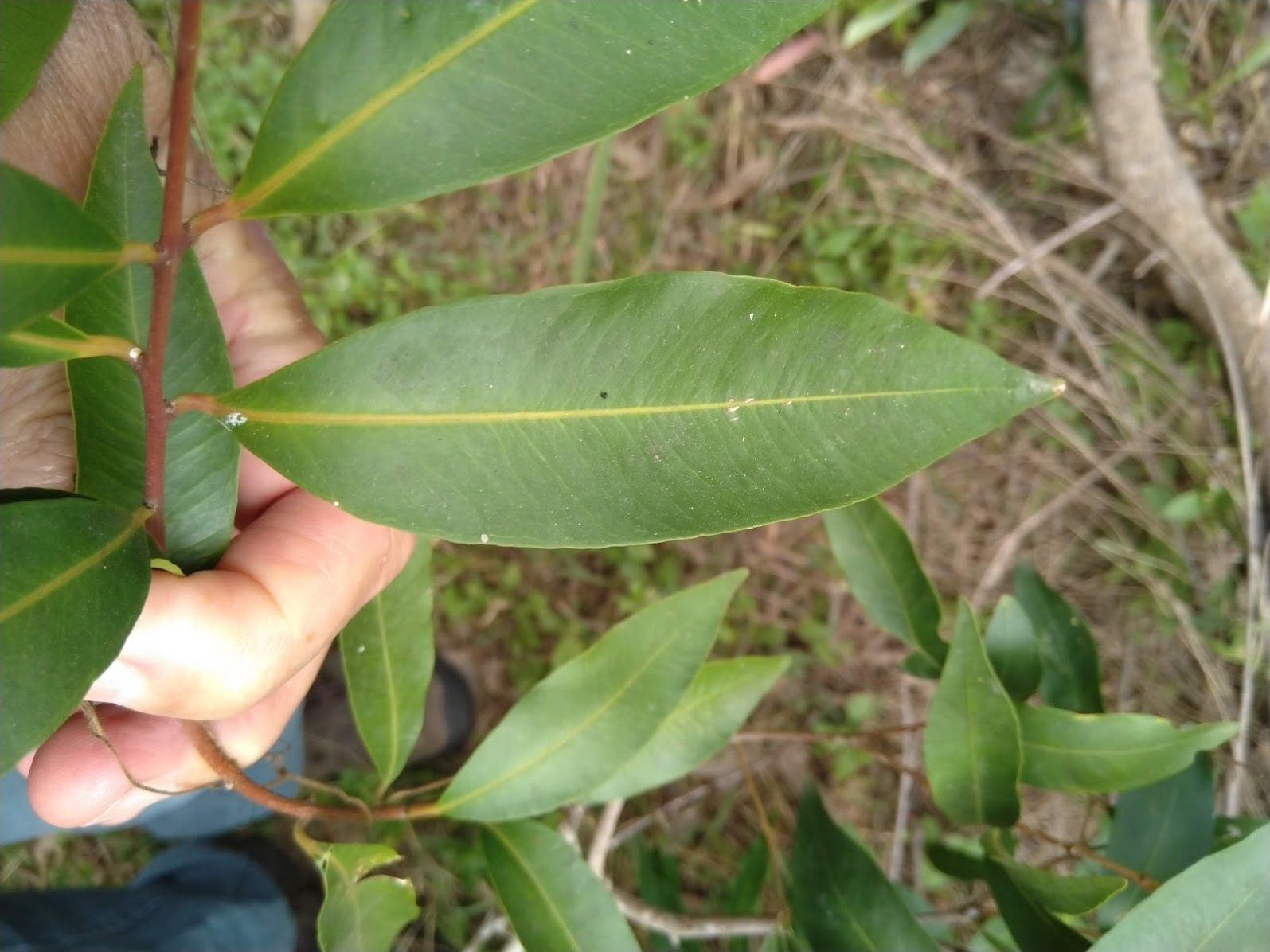
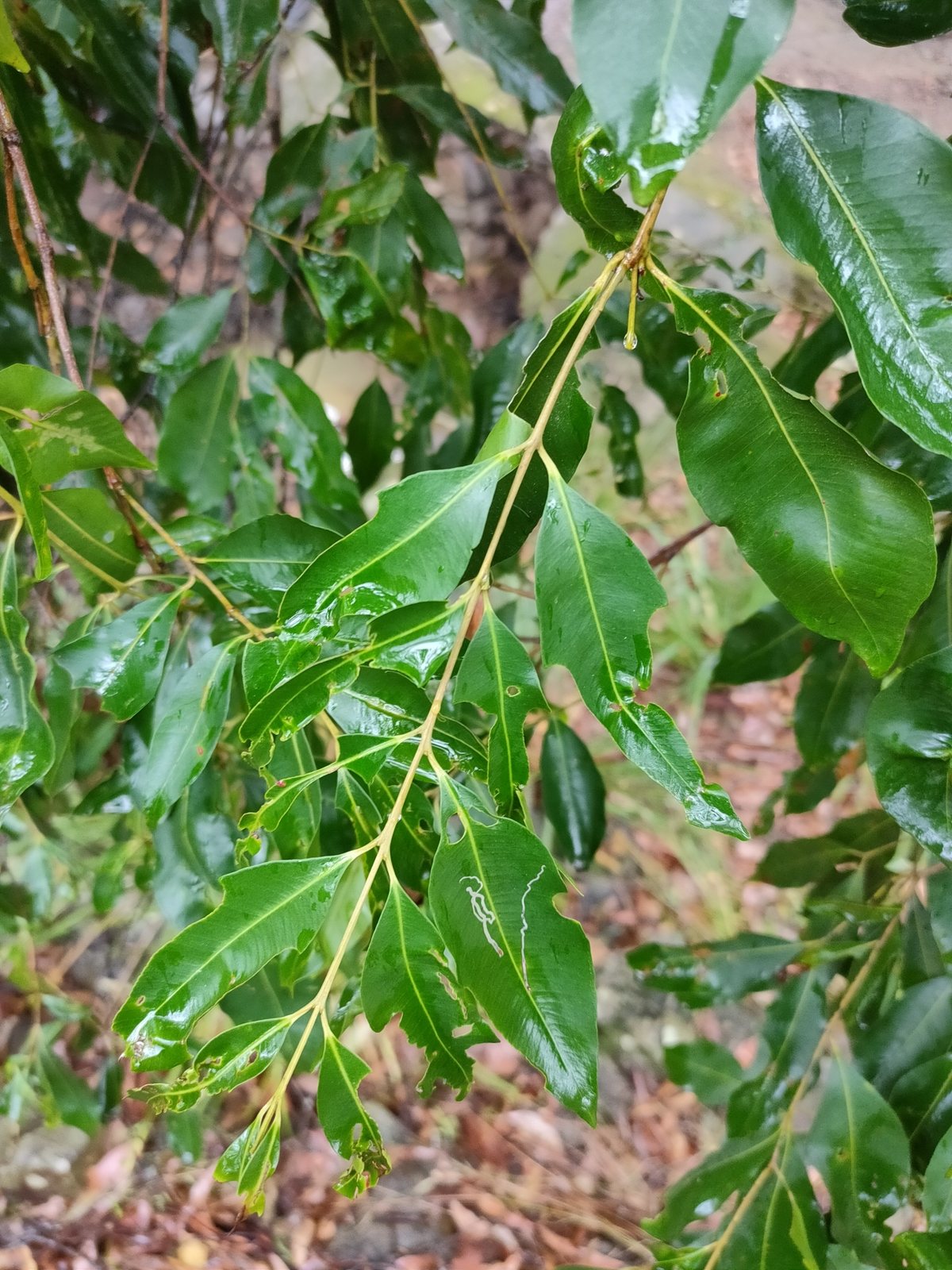
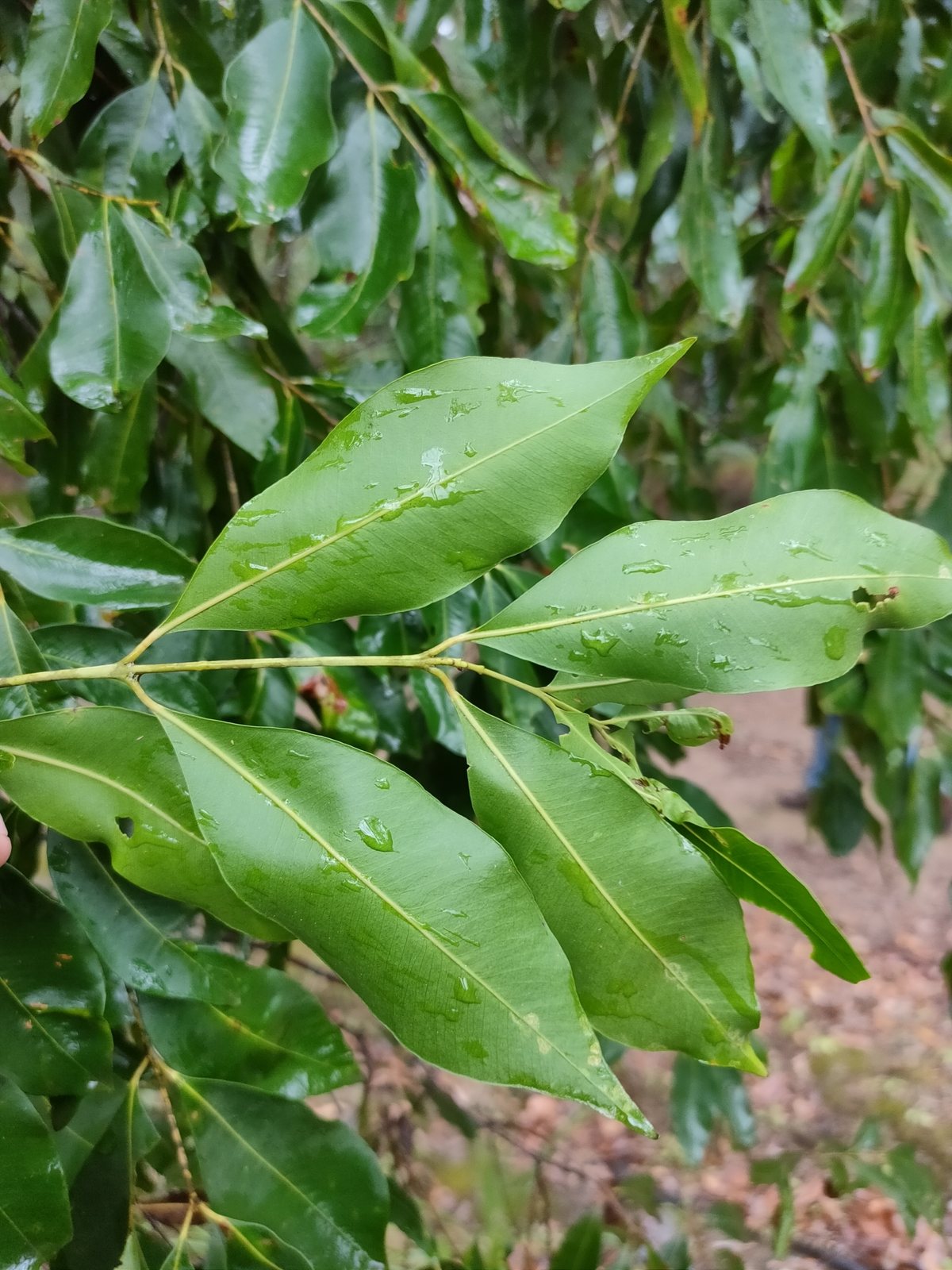
At a glance
- Sun
- Full sun to partial shade; shelter young trees from cold, drying winds.
- Water
- Keep the root zone evenly moist while establishing. Established trees tolerate brief dry spells, but grow best with deep watering during prolonged dry weather.
- Soil
- Moist, well-drained soil enriched with organic matter; tolerates clay where drainage is adequate. Avoid persistently waterlogged ground.
- Height
- 30-60 ft (9-18 m) in gardens; potentially taller in rainforest conditions
- Spread
- 20-40 ft (6-12 m) if left unclipped
- Flowers
- Small, fluffy white to cream flowers in clusters during summer
- Foliage
- Evergreen. Glossy, narrow oval leaves carried on pendulous branchlets; new growth is often bronze or pinkish, and scattered older leaves turn red before falling.
- Growth
- Fast in warm conditions with adequate moisture
- Care needed
- Medium
The year at a glance
- Pollinators
- Heat tolerant
- Wildlife
- Low allergen
| J | F | M | A | M | J | J | A | S | O | N | D | |
|---|---|---|---|---|---|---|---|---|---|---|---|---|
| Flowers | ||||||||||||
| Fruit | ||||||||||||
| Plant |
Northern hemisphere months. In Australia, shift them by six.
- Difficulty
- Hard
- Toughness
- Needs looking after
Will it suit your garden?
Pick your zone, country, light and whether you have pets.
Full sun is 6 or more hours of direct sun a day, part shade 3 to 6 hours, shade under 3.
How it grows
Planting day
7 ft (2 m)
After 1 year
9 ft (2.9 m)
After 2 years
12 ft (3.8 m)
After 3 years
15 ft (4.7 m)
After 5 years
21 ft (6.4 m)
About 13 years to full size.
From a typical nursery size, at an average rate for this kind of plant. A rule of thumb, not a forecast.
Good to know
- Cats and dogs
- Safe
- Native to
- Australia
- Growth rate
- Fast
Care
Jobs through the year
- WaterApr–May, Sep–Oct, every 14 days
- For established trees in suitable mild climates, water deeply if dry; young trees need more.
- WaterJun–Aug, every 7 days
- Water established trees deeply during prolonged dry weather; containers need more frequent checks.
- MulchMay, Oct
- Maintain 5–8 cm of organic mulch over roots, clear of the trunk.
- FeedMay
- Feed lightly with balanced controlled-release fertilizer only if soil is poor or growth is weak.
- PruneMay
- After frost risk passes, remove damaged or crossing branches and establish a sound framework.
- PruneJun–Jul
- Lightly trim only if screening is needed; clipping reduces flowers and fruit.
- ProtectSep–Oct
- Not hardy outdoors in zone 6–7; move container specimens into a bright, frost-free conservatory.
- ProtectMay–Jun
- Return sheltered container plants outdoors only after frost risk passes.
- Plant where the mature canopy has room to develop, away from buildings, paving and underground services.
- Water deeply during the first two growing seasons, allowing the surface soil to begin drying between waterings.
- Apply 2-3 in (5-8 cm) of organic mulch over the root zone, keeping it clear of the trunk.
- Feed lightly in spring with a balanced, controlled-release fertiliser if growth is weak or the soil is poor.
- Stake only if the root ball is unstable, using flexible ties, and remove supports once the tree is anchored.
- Protect young plants from frost and exposed, drying winds.
Pruning. In spring, after frost risk has passed, remove dead, damaged or crossing branches and gradually establish a sound framework. For screening, trim lightly during active growth rather than repeatedly cutting into large old branches; frequent clipping reduces flowers and fruit.
Through the year
- Spring
- Plant after frost risk has passed, water thoroughly and mulch the root zone.
- Spring
- Check branch structure, remove damaged growth and feed lightly if needed.
- Early summer
- Lightly trim screening plants once new growth has extended.
- Summer
- Water deeply during dry spells and inspect leaves and stems for scale insects.
- Autumn
- Refresh mulch and clear fallen fruit from paths where it could become slippery.
- Winter
- Protect young trees during forecast frosts and avoid pruning until warmer weather returns.
In the garden
- Use as a specimen shade tree in a large lawn, allowing the weeping branchlets to remain visible.
- Plant as a tall boundary screen where there is room for a broad canopy and access for trimming.
- Combine with ferns and shade-tolerant groundcovers for a layered rainforest-style garden.
- Use as a leafy backdrop to outdoor seating, set far enough away to keep roots and fallen fruit clear of paving.
Garden styles it suits: Australian native, Modern tropical, Woodland, Wildlife garden, Luxury resort and Tropical.
Plant it with: Lomandra, Blue flax lily, Native violet, Bird's nest fern and Soft tree fern.
Wildlife: Flowers attract bees and other insects. Birds eat the small fruits, and the dense evergreen canopy provides shelter and nesting cover.
Problems to watch for
- Scale insects and sooty mould: check stems and leaf undersides, control ants and treat accessible infestations with horticultural oil according to the label.
- Myrtle rust: yellow-orange powdery pustules and distorted young shoots need prompt attention; seek local advice and avoid moving affected plant material.
- Root decline in waterlogged soil: improve drainage before planting and do not keep an established root zone constantly saturated.
- Frost or wind scorch: shelter young plants, water during dry weather and wait until spring before removing damaged growth.
Safety
Not known to be toxic to people, cats, dogs or horses. The small fruits are generally described as edible, though not usually grown as a food crop; specific veterinary safety information is limited, so discourage pets and livestock from eating large quantities.
Easily confused with
Weeping lilly pilly (Syzygium pendulum)
Also sold under the same common name, but generally has much larger leaves and larger, darker red to purple fruit; check the botanical label.
Creek lilly pilly (Syzygium australe)
Usually has a less strongly weeping outline, broader-looking leaves and conspicuous pink to red, often elongated fruits.
Lilly pilly (Acmena smithii)
Usually has smaller leaves and less pendulous branchlets, with rounded mauve, pink or whitish fruits rather than the typically pale green to pinkish fruits of weeping lilly pilly.
The name
The species name floribundum means abundantly flowering, while 'weeping' describes its drooping branchlets.
Propagation. Sow fresh seed after removing the fruit flesh; seed loses viability in storage. Semi-ripe cuttings taken during the growing season can root with warmth and humidity, though success varies.
Checked against open data
- Accepted botanical name
- Syzygium floribundum
- Native range
- New South Wales and Queensland.
Sources: GBIF (CC BY 4.0) and Trefle (CC BY 4.0). The care and design notes are LandscapeGPT's own.
See it in your own yard.
Upload a photo of your yard and see it redesigned with plants that suit your climate, each checked against your zone.