Western blue-eyed grass
Sisyrinchium bellum. Family Iridaceae. Perennial.
Also called California blue-eyed grass, Blue-eyed grass.
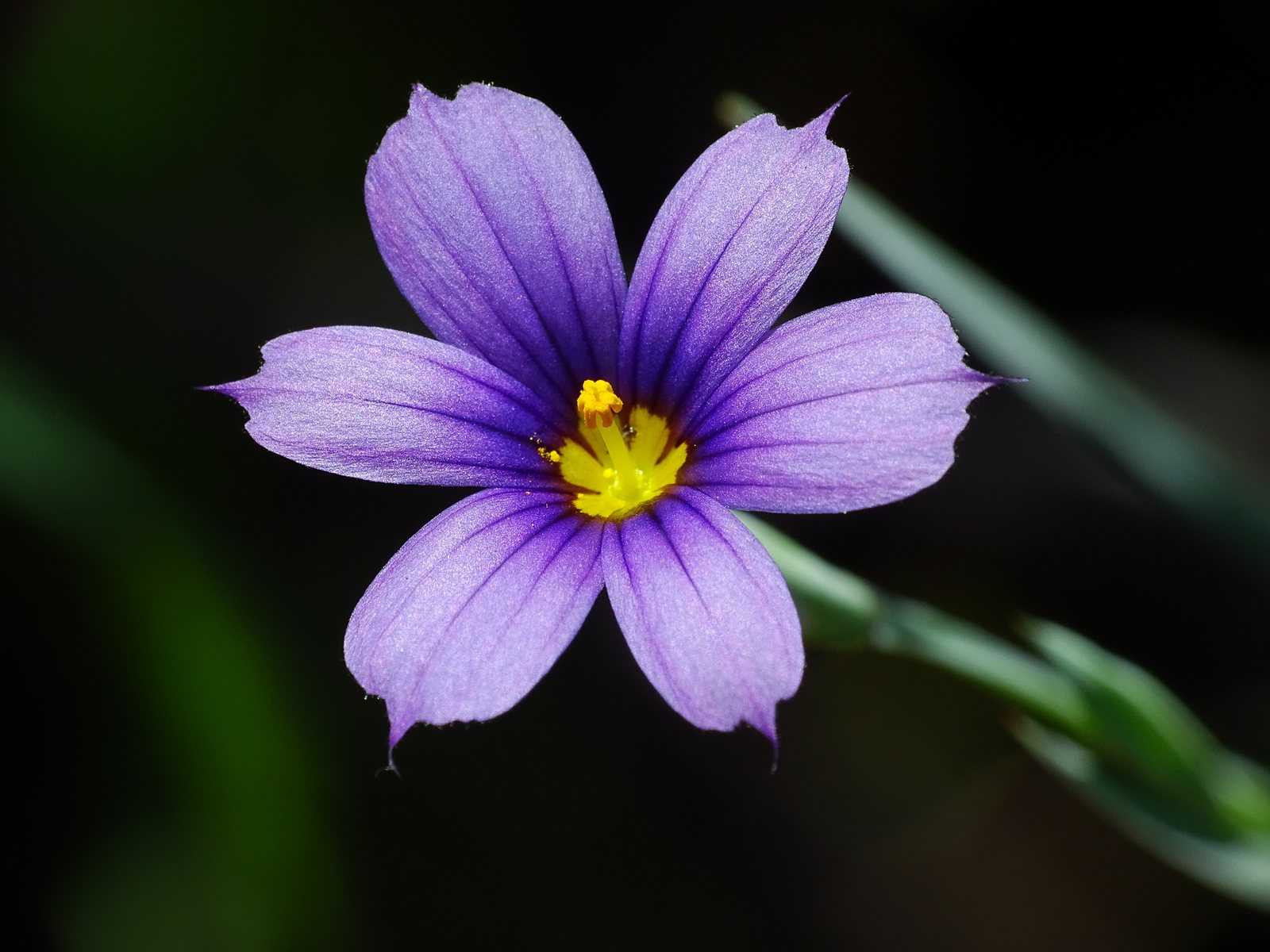
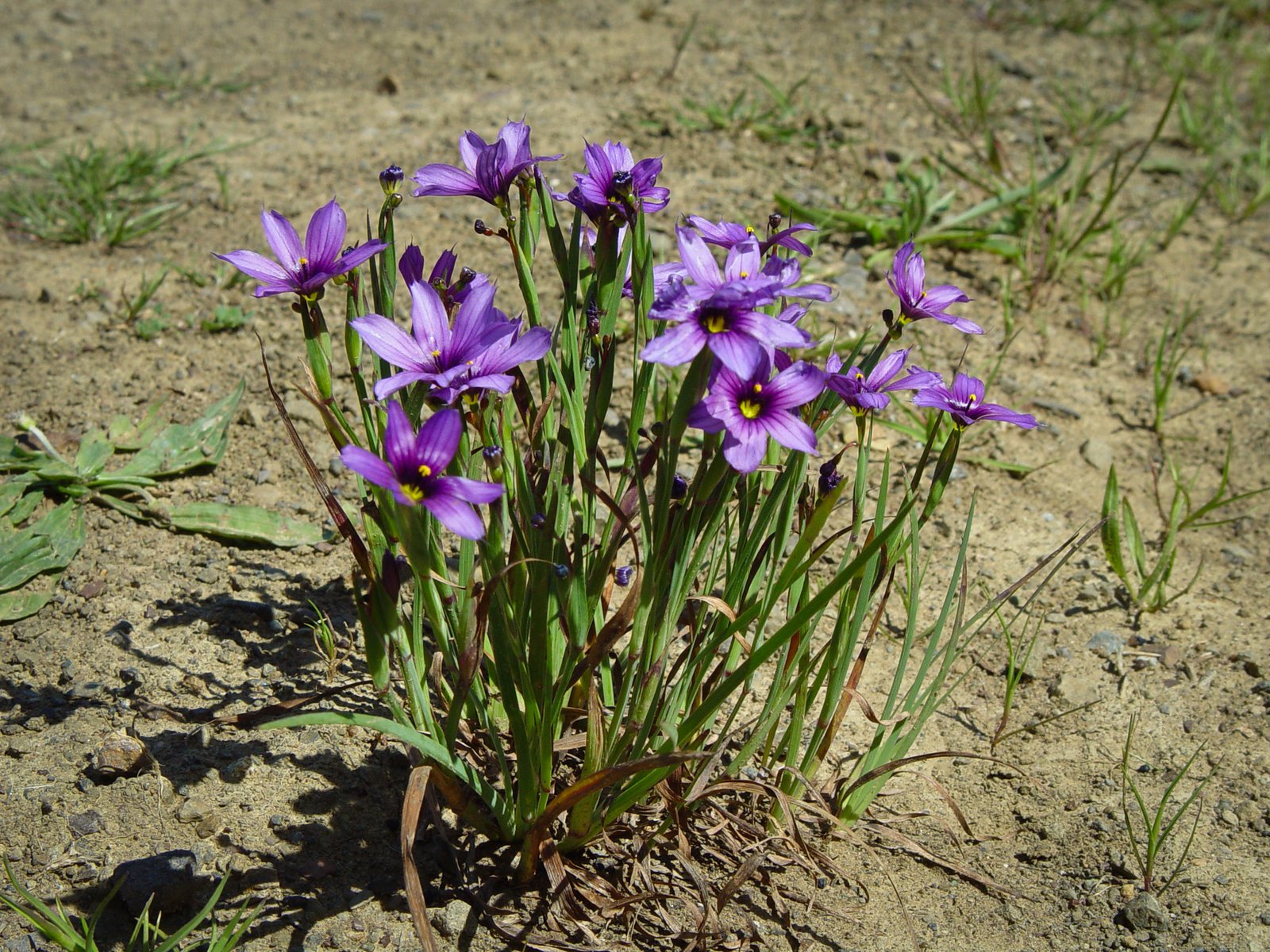
Western blue-eyed grass is a small, clump-forming perennial in the iris family, native to western North America, not a true grass. Gardeners grow it for its narrow leaves and violet-blue, yellow-centred flowers, which suit meadow planting, informal borders and small gardens. It tolerates dry summers once established, but may become dormant rather than stay green.
At a glance
- Sun
- Full sun to light partial shade; give it some afternoon shade in hot inland gardens.
- Water
- Moderate moisture during active growth in autumn through spring; little summer water is needed once established in mild, dry-summer climates.
- Soil
- Well-drained sandy, loamy or clay soil; tolerates heavier soil provided it does not remain waterlogged.
- Height
- 1-2 ft (0.3-0.6 m)
- Spread
- 0.5-1 ft (0.15-0.3 m)
- Flowers
- Spring to early summer; violet-blue to purple flowers with yellow centres, opening most freely in sunshine.
- Foliage
- Narrow, flat, green leaves form upright to arching tufts. Often evergreen in mild, moist conditions, but foliage can die back during summer drought or cold winters.
- Growth
- Moderate; forms small clumps and may self-seed.
- Care needed
- Low
The year at a glance
- Pollinators
- Deer resistant
- Drought tolerant
- Low allergen
| J | F | M | A | M | J | J | A | S | O | N | D | |
|---|---|---|---|---|---|---|---|---|---|---|---|---|
| Flowers | ||||||||||||
| Fruit | ||||||||||||
| Plant |
Northern hemisphere months. In Australia, shift them by six.
- Difficulty
- Moderate
- Toughness
- Fairly tough
Will it suit your garden?
Pick your zone, country, light and whether you have pets.
Full sun is 6 or more hours of direct sun a day, part shade 3 to 6 hours, shade under 3.
How it grows
Planting day
1 ft (0.3 m)
After 1 year
1.1 ft (0.35 m)
After 2 years
1.3 ft (0.4 m)
After 3 years
1.5 ft (0.45 m)
full size
About 3 years to full size.
From a typical nursery size, at an average rate for this kind of plant. A rule of thumb, not a forecast.
Good to know
- Cats and dogs
- Safe
- Native to
- the US
- Growth rate
- Moderate
Care
Jobs through the year
- WaterMar–Jun, every 7 days
- Water established clumps if rain is insufficient; water new plants more often as the surface dries.
- WaterJul–Aug, every 28 days
- Water only if still green and very dry; leave naturally dormant crowns mostly dry.
- WaterSep–Nov, every 14 days
- Water during dry spells as active growth resumes; skip when soil is moist.
- PruneMar, Sep
- Remove dead leaves without cutting away healthy green foliage.
- DivideApr–May
- Divide crowded clumps every few years while soil is moist.
- DeadheadMay–Jul, every 14 days
- Remove spent stems before capsules ripen if seedlings are unwanted.
- MulchApr
- On poor soil, add a thin compost dressing, keeping the crown uncovered.
- ProtectJan–Feb, Nov–Dec
- Shelter from severe frost and winter wet; zone 6 gardens need a protected site or frost-free overwintering.
- Water new plants regularly during their first growing season, allowing the surface soil to dry between waterings.
- Keep the soil moderately moist while plants are growing and flowering; reduce watering during summer dormancy.
- Avoid rich feeding; use only a light spring dressing of compost on poor soil.
- Keep mulch away from the crown, especially in wet climates.
- Divide crowded clumps in spring or autumn when the soil is moist and temperatures are mild.
Pruning. Remove spent flower stems before seed capsules ripen if you want to limit seedlings. Cut away dead leaves after summer dormancy or winter damage, leaving green growth intact.
Through the year
- Early spring
- Remove dead foliage and divide crowded clumps as active growth begins.
- Spring
- Plant in colder or wetter regions once the soil is workable; water thoroughly after planting.
- Spring to early summer
- Water during prolonged dry spells while plants are flowering.
- Early summer
- Remove fading flower stems to prevent self-seeding, or leave a few capsules to collect ripe seed.
- Summer
- Reduce watering if foliage dies back naturally; do not keep dormant crowns constantly wet.
- Autumn
- Plant or divide in mild, dry-summer regions after rain returns, and remove unwanted seedlings.
In the garden
- Plant in loose drifts through a low meadow with fine-textured grasses for a light scattering of spring colour.
- Use along sunny path edges, where the small flowers can be seen close up.
- Combine with California poppies and yarrow in a seasonally dry, western native planting.
- Tuck small groups into an informal gravel garden, allowing room for occasional seedlings.
Garden styles it suits: California native, Native meadow, Wildflower, Pollinator garden, Dry gravel garden and Mediterranean.
Plant it with: California poppy, Yarrow, Purple needlegrass, Blue grama, Douglas iris and California fuchsia.
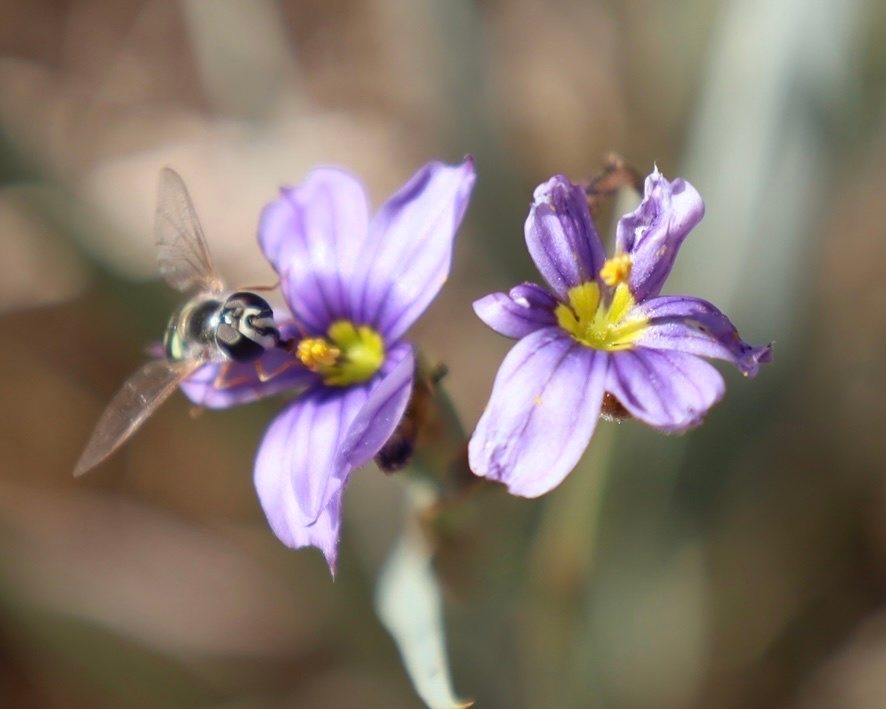
Wildlife: The flowers provide pollen for small native bees and other visiting insects. Leaving some seed heads allows natural regeneration, though this also increases seedlings.
Problems to watch for
- Crown or root rot in persistently wet soil: improve drainage and avoid burying the crown or watering dormant plants heavily.
- Slugs and snails eating young growth: remove hiding places and use barriers or a labelled iron-phosphate bait where needed.
- Unwanted seedlings: cut off flower stems before capsules ripen and pull seedlings while small.
- Brown foliage in summer drought: this can be normal dormancy; remove dead leaves and avoid trying to force growth with constant watering.
Safety
Not known to be toxic to people, cats, dogs or horses, but species-specific safety information is limited. No part is a recognised food; discourage pets and children from eating the leaves, flowers, roots or seeds.
Easily confused with
Narrow-leaved blue-eyed grass (Sisyrinchium angustifolium)
Its flowers are very similar, but it usually has conspicuously flattened, winged flowering stems and commonly branched flower clusters. Identification from flowers alone is unreliable.
Annual blue-eyed grass (Sisyrinchium rosulatum)
Usually a smaller, short-lived plant with tiny pale lilac, pinkish or whitish flowers, often marked by a darker ring around the yellow centre.
Yellow-eyed grass (Sisyrinchium californicum)
Has clear yellow flowers rather than violet-blue flowers and generally prefers wetter ground.
The name
The species name bellum means 'beautiful' in Latin, while 'blue-eyed grass' describes the blue flowers held above grass-like leaves.
Propagation. Divide established clumps in spring or autumn, keeping roots attached to each division. Sow ripe seed in a well-drained seed mix in autumn and leave outdoors in a sheltered position; germination can be uneven, and seedlings may differ from named garden selections.
Checked against open data
- Accepted botanical name
- Sisyrinchium bellum
- In the US and Canada
- Native in the lower 48 states.
- Native range
- California, Mexico Northwest and Oregon.
- Measured
- Average height 16 cm.
Sources: GBIF (CC BY 4.0), USDA PLANTS and Trefle (CC BY 4.0). The care and design notes are LandscapeGPT's own.
See it in your own yard.
Upload a photo of your yard and see it redesigned with plants that suit your climate, each checked against your zone.