White fir
Abies concolor. Family Pinaceae. Tree.
Also called Concolor fir, Colorado white fir.
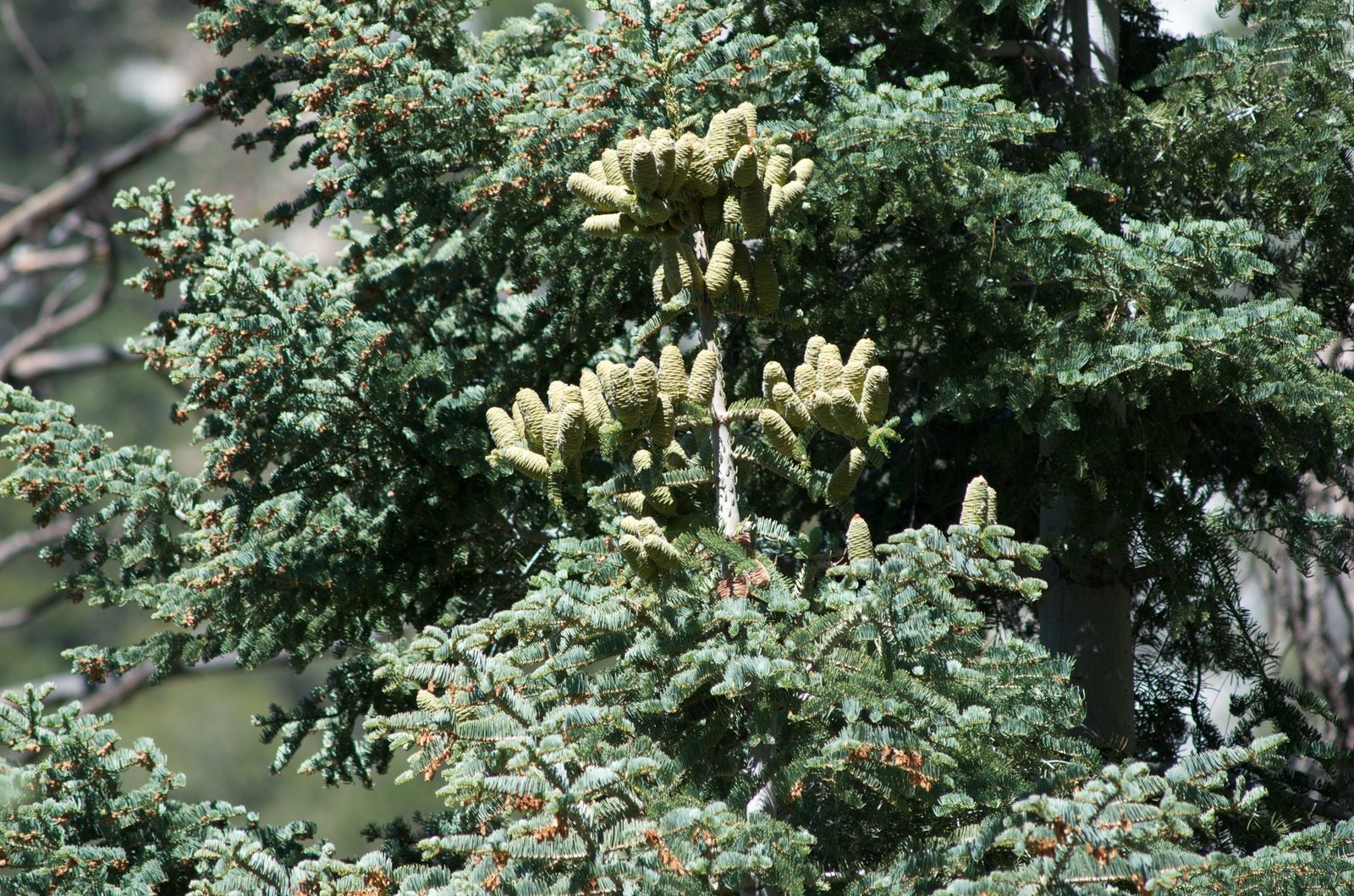
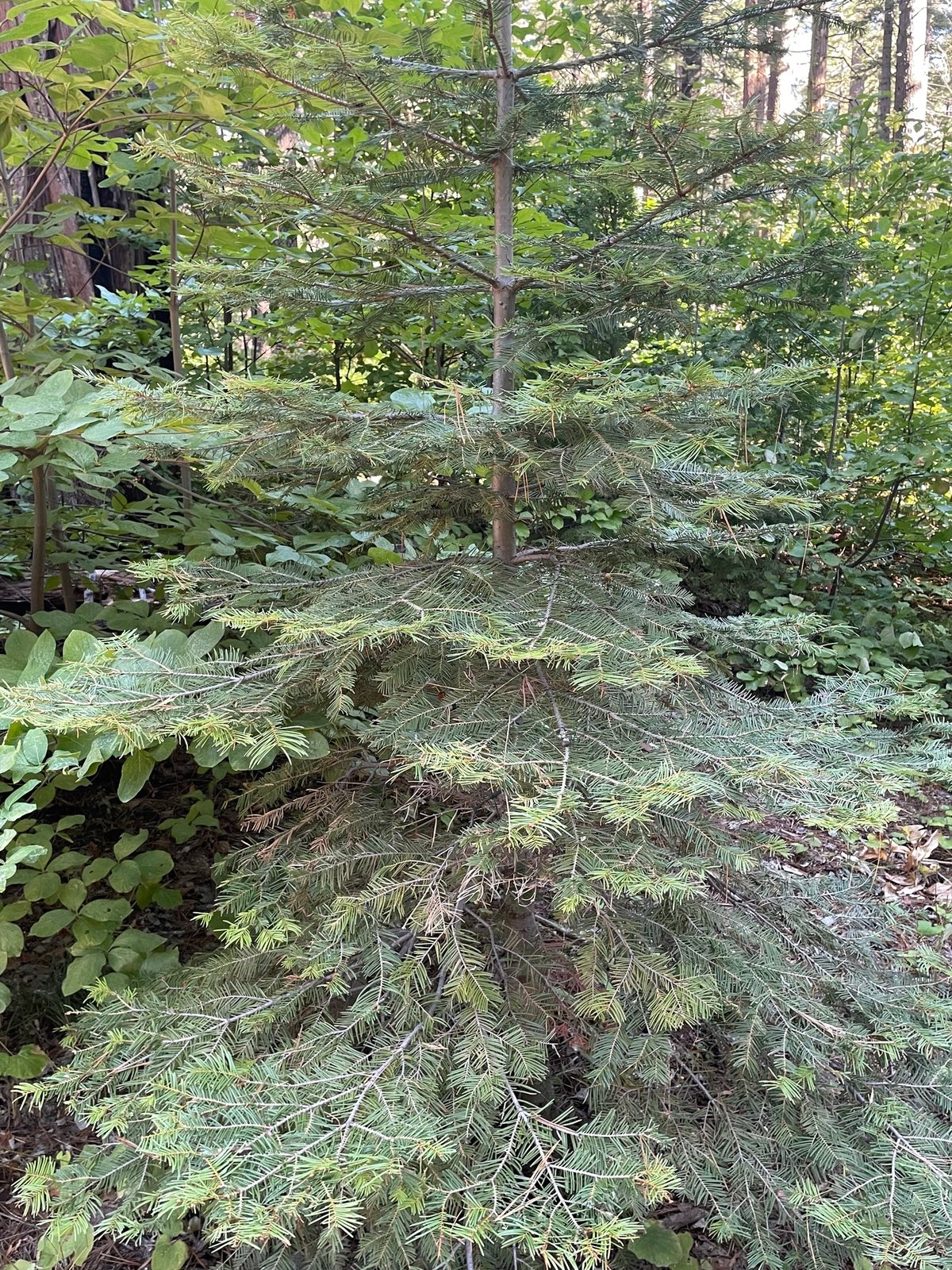
White fir is a large evergreen conifer native to western North America, grown for its soft blue-green needles, regular pyramidal shape and year-round screening. It needs generous space and grows best in cool climates with well-drained soil; hot, humid summers and waterlogged ground can shorten its life.
At a glance
- Sun
- Full sun; tolerates light shade, but develops a denser crown in good light.
- Water
- Water deeply during establishment. Established trees tolerate some drought, but benefit from occasional deep watering during prolonged dry spells.
- Soil
- Deep, well-drained sandy loam or loam, preferably slightly acidic to neutral. Tolerates a range of soils, including some clay, provided drainage is good.
- Height
- 40-70 ft (12-21 m) in gardens; potentially much taller in the wild
- Spread
- 20-30 ft (6-9 m)
- Foliage
- Evergreen. Flat, soft, blue-green to silvery blue needles, usually curved upward and pale on both surfaces; crushed needles have a citrus scent.
- Growth
- Moderate, commonly 12-24 in (30-60 cm) a year once established on a suitable site.
- Care needed
- Low
The year at a glance
- Drought tolerant
- Cold hardy
- Wildlife
- Fragrant
| J | F | M | A | M | J | J | A | S | O | N | D | |
|---|---|---|---|---|---|---|---|---|---|---|---|---|
| Fruit | ||||||||||||
| Plant |
Northern hemisphere months. In Australia, shift them by six.
- Difficulty
- Easy
- Toughness
- Very tough
Will it suit your garden?
Pick your zone, country, light and whether you have pets.
Full sun is 6 or more hours of direct sun a day, part shade 3 to 6 hours, shade under 3.
How it grows
Planting day
7 ft (2 m)
After 1 year
9 ft (2.7 m)
After 2 years
11 ft (3.5 m)
After 3 years
14 ft (4.2 m)
After 5 years
18 ft (5.6 m)
About 20 years to full size.
From a typical nursery size, at an average rate for this kind of plant. A rule of thumb, not a forecast.
Good to know
- Cats and dogs
- Mildly toxic: may upset a stomach
- Growth rate
- Moderate
Care
Jobs through the year
- WaterApr–May, Sep–Nov, every 21 days
- Water established trees only if soil is dry and unfrozen; young trees need more frequent checks.
- WaterJun–Aug, every 14 days
- Water established trees deeply during prolonged dry spells; water young trees whenever roots begin drying.
- MulchApr–May
- Maintain 5–8 cm of organic mulch over roots, leaving the trunk clear.
- PruneFeb–Mar
- Remove dead, broken or competing branches only as needed; retain one leader and avoid topping.
- Plant with the root flare at ground level, allowing enough space for the full-grown crown.
- Water deeply through the first two or three growing seasons whenever the root zone begins to dry.
- Spread 2-3 in (5-8 cm) of organic mulch over the root zone, keeping it clear of the trunk.
- Avoid routine feeding; use a soil test before adding fertiliser where growth is weak.
- Keep lawn equipment, digging and soil compaction away from the trunk and shallow roots.
Pruning. Prune only to remove dead, damaged or competing branches, preferably in late winter or early spring. Preserve the main leader and avoid topping or cutting into bare old wood, which rarely regrows.
Through the year
- Late winter
- Remove broken or dead branches and check that the tree retains one main leader.
- Spring
- Plant while conditions are cool and the soil is workable; water the root ball thoroughly.
- Late spring
- Refresh mulch and inspect new growth for woolly adelgids or distorted shoots.
- Summer
- Check soil moisture during dry spells and water young trees deeply rather than little and often.
- Late summer
- Inspect browning needles for mites or disease before treating; some older inner needles naturally shed.
- Autumn
- Water before the ground freezes if autumn has been dry, especially for recently planted trees.
In the garden
- Use as a specimen in a large lawn, leaving room for the lowest branches to remain.
- Plant in a loose group on a large property for an evergreen screen or windbreak.
- Combine with dark green conifers for a clear contrast in needle colour.
- Use behind sun-loving grasses and perennials, keeping them beyond the densest shade and root competition.
Garden styles it suits: Woodland, Mountain lodge, Grand estate, Winter interest, California native and Low-maintenance.
Plant it with: Ponderosa pine, Creeping juniper, Bearberry, Shrubby cinquefoil, Blue fescue and Yarrow.
Wildlife: Provides evergreen shelter and nesting cover for birds. Birds and small mammals eat the seeds, and deer may browse young trees.
Problems to watch for
- Root rot and decline in wet soil: improve drainage before planting or choose another site; repeated watering will worsen waterlogged roots.
- Spider mites in hot, dry weather: look for fine stippling and webbing, rinse accessible foliage with water and use a labelled horticultural oil if needed.
- Adelgids producing white woolly patches: inspect shoots and bark, maintain tree health and seek local advice if infestations cause dieback.
- Needle cast causing spotted needles and premature shedding: avoid overhead irrigation, improve airflow and have persistent symptoms diagnosed before applying fungicides.
Safety
Not known to be toxic to people, cats, dogs or horses. Needles and resin are not food: chewing them can irritate the mouth or stomach, and resin may irritate sensitive skin.
Easily confused with
Grand fir (Abies grandis)
Grand fir usually has glossy dark green needle tops, two white bands underneath and flatter sprays of needles of noticeably unequal lengths. White fir generally has paler needles on both surfaces, often curving upward.
Colorado blue spruce (Picea pungens)
Blue spruce has stiff, sharply pointed, four-sided needles on small woody pegs. White fir has softer, flat needles and smooth twigs where needles have fallen.
Nordmann fir (Abies nordmanniana)
Nordmann fir has glossy dark green needles with distinct white bands beneath, often with notched tips. White fir is usually blue-green on both surfaces and has longer, upward-curving needles.
The name
The Latin concolor means 'of one colour', referring to the similar colouring of the upper and lower needle surfaces.
Propagation. Usually grown from seed given a period of cold, moist stratification before sowing. Named cultivars are generally grafted by specialist nurseries; cuttings are difficult.
Checked against open data
- Accepted botanical name
- Abies concolor
- Native range
- Arizona, California, Colorado, Idaho, Mexico Northeast, Mexico Northwest, Nevada, New Mexico, Oregon, Utah and Wyoming.
- Measured
- Soil pH 5.5 to 7.8. Average height 2570 cm.
Sources: GBIF (CC BY 4.0) and Trefle (CC BY 4.0). The care and design notes are LandscapeGPT's own.
See it in your own yard.
Upload a photo of your yard and see it redesigned with plants that suit your climate, each checked against your zone.