Wild coffee
Psychotria nervosa. Family Rubiaceae. Shrub.
Also called Shiny-leaved wild coffee.
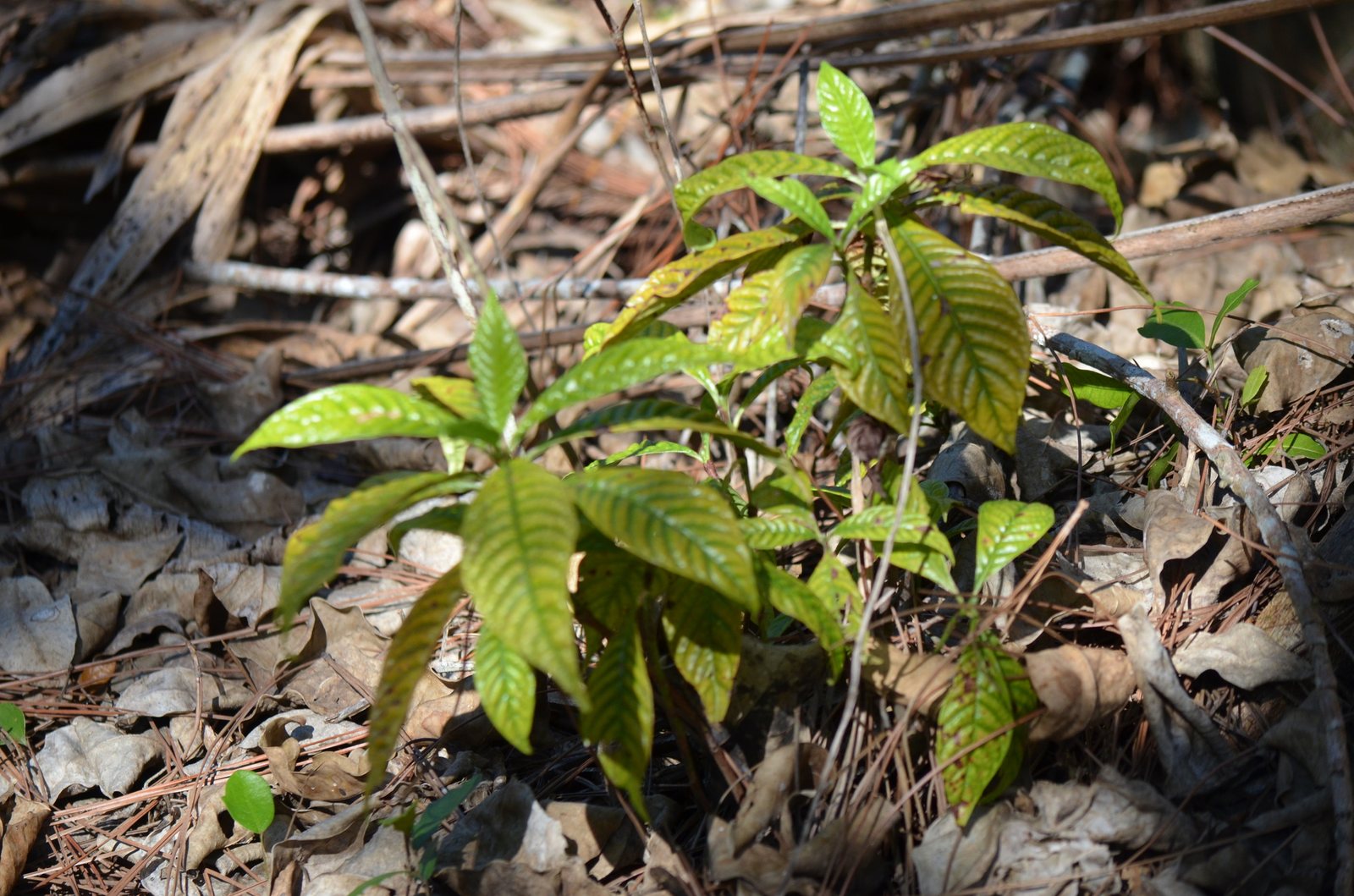
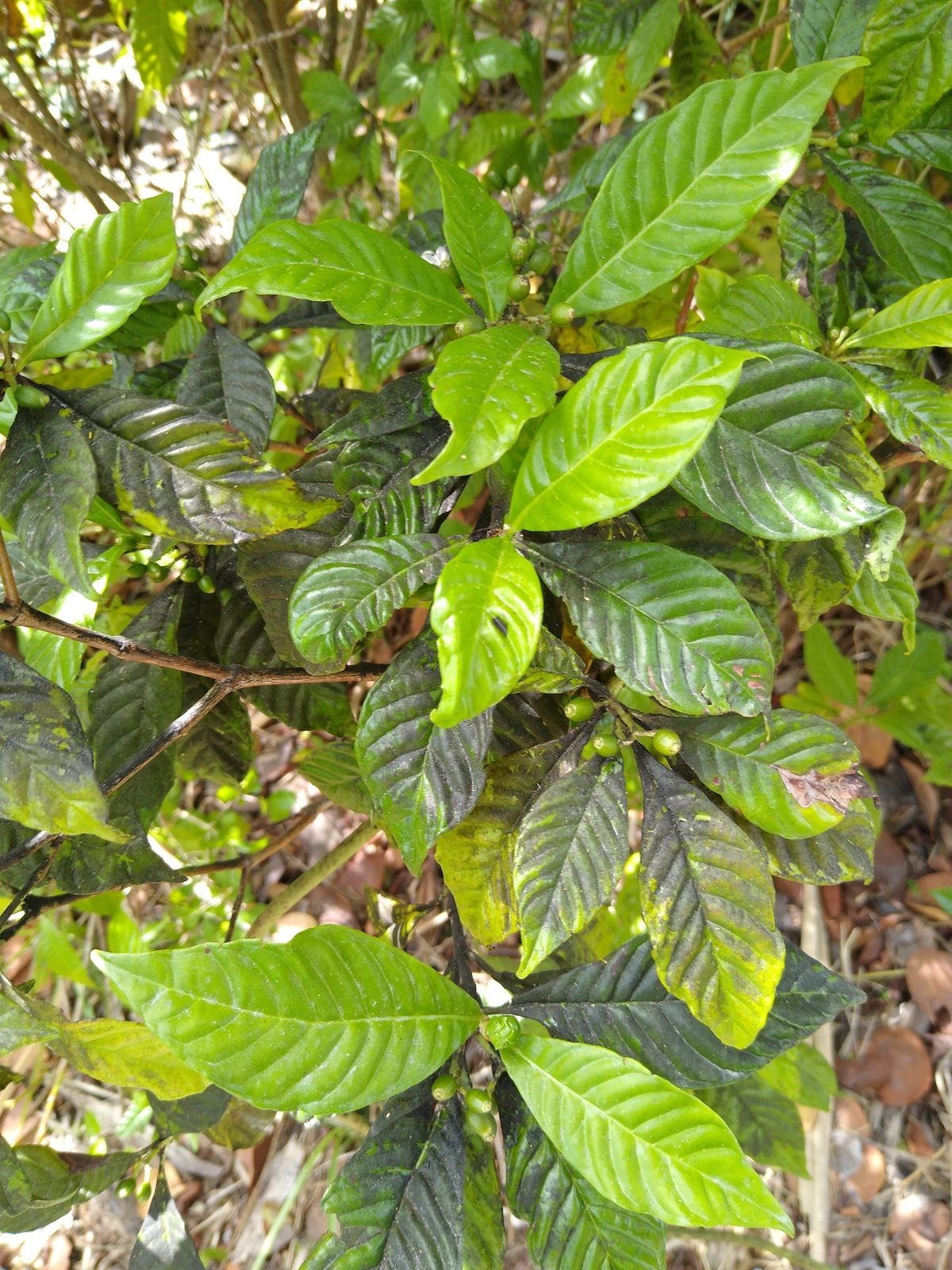
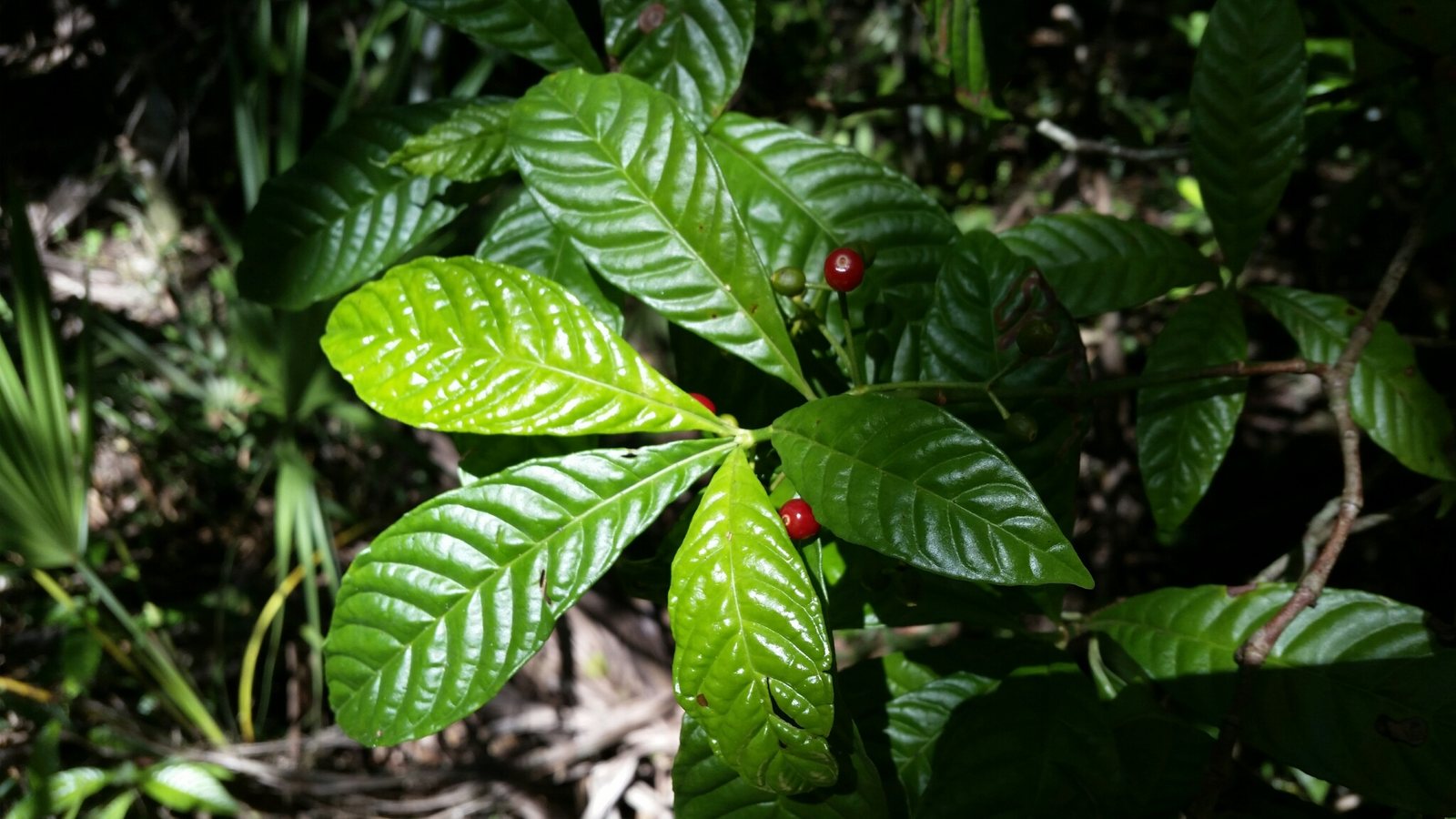
Wild coffee is an evergreen shrub native to Florida, the Caribbean and parts of tropical America, grown for its glossy, deeply veined leaves and red berries that attract birds. It makes a useful understory shrub or informal hedge in frost-free gardens; in colder regions, grow it in a container and overwinter it under glass. Despite its name, it is not the plant used to produce drinking coffee.
At a glance
- Sun
- Partial shade to full shade; tolerates more sun with adequate moisture, but exposed leaves may yellow or scorch.
- Water
- Water regularly while establishing. Once rooted, it tolerates short dry spells in shade, but grows best with moderate, consistent moisture.
- Soil
- Well-drained soil enriched with organic matter; tolerates sandy and limestone-based soils. Avoid persistently waterlogged ground.
- Height
- 4-10 ft (1.2-3 m)
- Spread
- 4-8 ft (1.2-2.4 m)
- Flowers
- Small white flowers in terminal clusters, mainly in spring and summer, with occasional flowering in warm weather.
- Foliage
- Evergreen. Opposite, glossy dark green leaves with prominent, deeply impressed veins and a puckered surface.
- Growth
- Moderate
- Care needed
- Low
The year at a glance
- Pollinators
- Heat tolerant
- Wildlife
- Low allergen
| J | F | M | A | M | J | J | A | S | O | N | D | |
|---|---|---|---|---|---|---|---|---|---|---|---|---|
| Flowers | ||||||||||||
| Fruit | ||||||||||||
| Plant |
Northern hemisphere months. In Australia, shift them by six.
- Difficulty
- Moderate
- Toughness
- Fairly tough
Will it suit your garden?
Pick your zone, country, light and whether you have pets.
Full sun is 6 or more hours of direct sun a day, part shade 3 to 6 hours, shade under 3.
How it grows
Planting day
1.6 ft (0.5 m)
After 1 year
2.7 ft (0.82 m)
After 2 years
4 ft (1.1 m)
After 3 years
5 ft (1.5 m)
After 5 years
7 ft (2.1 m)
full size
About 5 years to full size.
From a typical nursery size, at an average rate for this kind of plant. A rule of thumb, not a forecast.
Good to know
- Cats and dogs
- Safe
- Native to
- the US
- Growth rate
- Moderate
Care
Jobs through the year
- ProtectSep–Oct
- Not hardy in zones 6–7; grow in a container and move to bright, frost-free shelter before frost.
- ProtectMay
- Acclimatize overwintered plants gradually to sheltered shade after the last frost.
- WaterApr–May, Sep–Oct, every 7 days
- For containers, check moisture and water as the surface starts drying; no outdoor overwintering here.
- WaterJun–Aug, every 3 days
- Check outdoor containers frequently and water when the surface begins drying; avoid saturation.
- WaterJan–Mar, Nov–Dec, every 14 days
- Check sheltered containers and water sparingly as the surface dries; adjust for indoor warmth.
- FeedApr–May
- Apply a balanced slow-release container fertilizer at the label rate.
- PruneApr–May
- Once growth resumes, remove cold-damaged wood and shorten stray shoots without shearing.
- MulchMay
- Apply a light organic mulch to large containers, keeping it clear of stems.
- Plant in sheltered partial shade, away from salt spray and drying winds.
- Water deeply during establishment, allowing the soil surface to begin drying between waterings.
- Apply 2-3 in (5-8 cm) of organic mulch, keeping it clear of the stems.
- Feed lightly in spring only if growth is weak; container plants benefit from a balanced slow-release fertilizer at the label rate.
- Move container plants into a bright, frost-free space before cold weather arrives.
Pruning. Prune lightly in spring, after frost risk has passed, to remove damaged wood and shorten stray shoots. Thin selected stems rather than repeatedly shearing, which removes flowers and developing berries.
Through the year
- Spring
- Plant once frost risk has passed, or repot container plants as active growth resumes.
- Spring
- Remove cold-damaged stems and lightly shape established shrubs.
- Summer
- Water during prolonged dry spells and check exposed leaves for sun scorch.
- Late summer
- Take semi-ripe cuttings from healthy, nonflowering shoots.
- Autumn
- Leave ripening berries for birds and remove unwanted seedlings.
- Winter
- Protect outdoor plants during cold snaps; keep overwintering containers frost-free and water less frequently.
In the garden
- Plant beneath open-canopied trees to create a glossy evergreen understory.
- Use as an informal hedge or screen in a sheltered, shaded boundary.
- Combine with coontie and native ferns for layered Florida woodland planting.
- Grow in a large patio container where its textured leaves can be seen closely.
- Include in a wildlife border where flowers feed insects and berries feed birds.
Garden styles it suits: Florida subtropical, Tropical, Woodland, Wildlife garden, Green on green and Modern courtyard.
Plant it with: Coontie, Marlberry, American beautyberry, Saw palmetto, Firebush and Giant leather fern.
Wildlife: The flowers attract bees, butterflies and other small pollinating insects. Birds eat the ripe red berries and may distribute seeds around the garden.
Problems to watch for
- Cold damage: frost can blacken leaves and kill shoots. Provide shelter, protect during cold snaps, and wait until spring growth begins before removing damaged wood.
- Sun scorch: pale or browned leaves can develop in hot, exposed positions. Provide afternoon shade and maintain even moisture.
- Scale insects and sooty mold: inspect stems and leaf undersides; treat infestations with horticultural oil according to the label and manage attendant ants.
- Root decline in wet soil: yellowing and dieback may follow prolonged waterlogging. Improve drainage and reduce watering rather than adding fertilizer.
Safety
Not known to be toxic to people, cats, dogs or horses, but reliable species-specific safety information is limited. Do not treat the berries, seeds or leaves as food or use them as a coffee substitute.
Easily confused with
Dull wild coffee (Psychotria sulzneri)
Its leaves are duller and softly hairy, especially beneath, rather than distinctly glossy like those of wild coffee.
Bahama wild coffee (Psychotria ligustrifolia)
It generally has smaller, narrower leaves with a flatter surface and less conspicuously impressed veins.
Arabian coffee (Coffea arabica)
True coffee bears its flowers and fruit in clusters along the stems at the leaf axils; wild coffee carries branching flower and fruit clusters at the shoot tips.
The name
The species name nervosa refers to the prominent leaf veins, while wild coffee reflects its resemblance and relationship to true coffee in the madder family.
Propagation. Sow cleaned, fresh seed from fully red berries in a warm, moist, free-draining medium; germination can be slow and uneven. Semi-ripe cuttings can be rooted in warm conditions with high humidity.
Checked against open data
- Accepted botanical name
- Psychotria nervosa
- In the US and Canada
- Native in the lower 48 states, Puerto Rico and US Virgin Islands.
- Native range
- Bahamas, Belize, Cayman Is., Colombia, Costa Rica, Cuba, Dominican Republic, Ecuador, El Salvador, Florida, Guatemala and Haiti.
Sources: GBIF (CC BY 4.0), USDA PLANTS and Trefle (CC BY 4.0). The care and design notes are LandscapeGPT's own.
See it in your own yard.
Upload a photo of your yard and see it redesigned with plants that suit your climate, each checked against your zone.