Yellow rattle
Rhinanthus minor. Family Orobanchaceae. Annual.
Also called Little yellow rattle, Hay rattle.
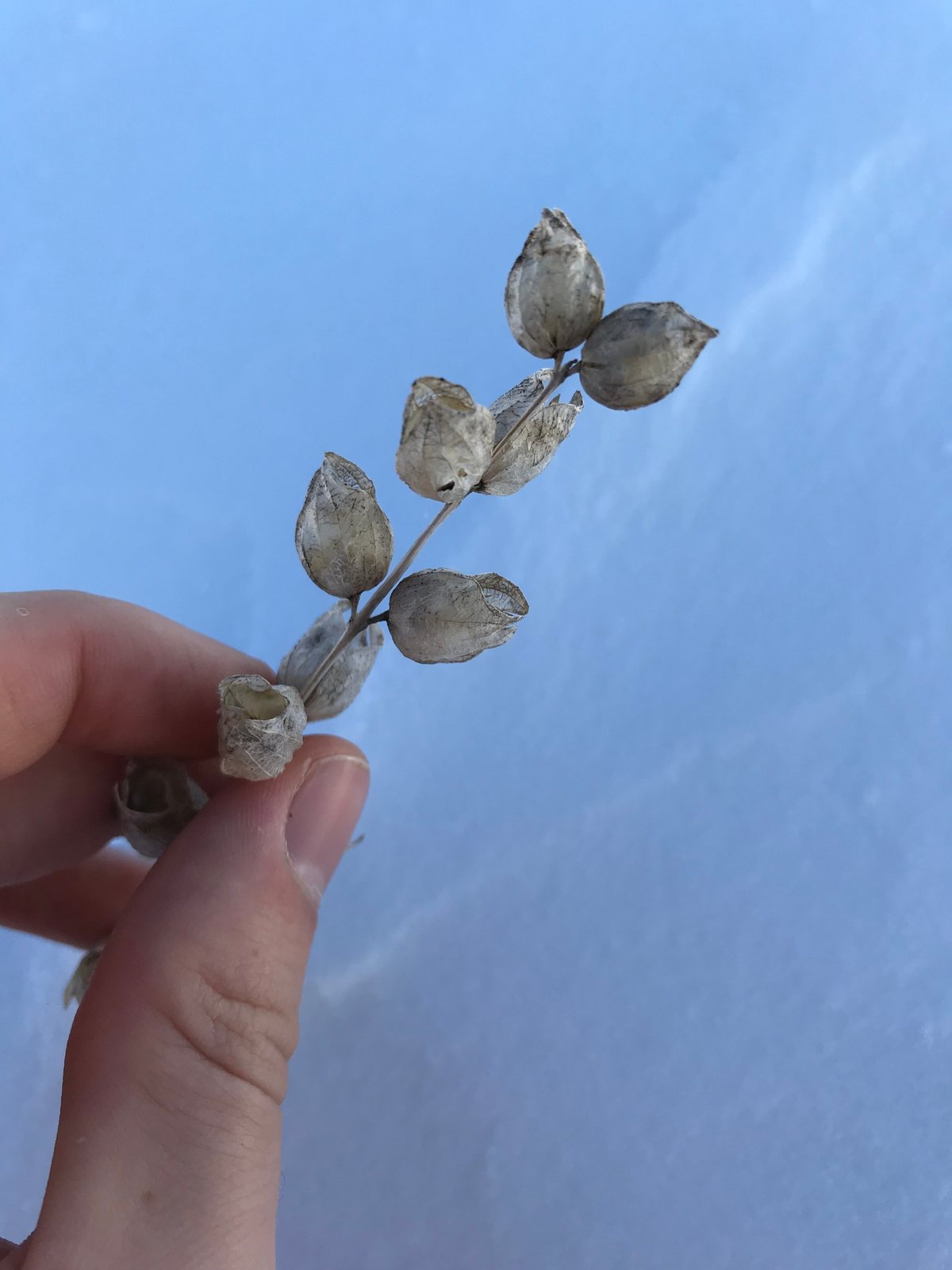
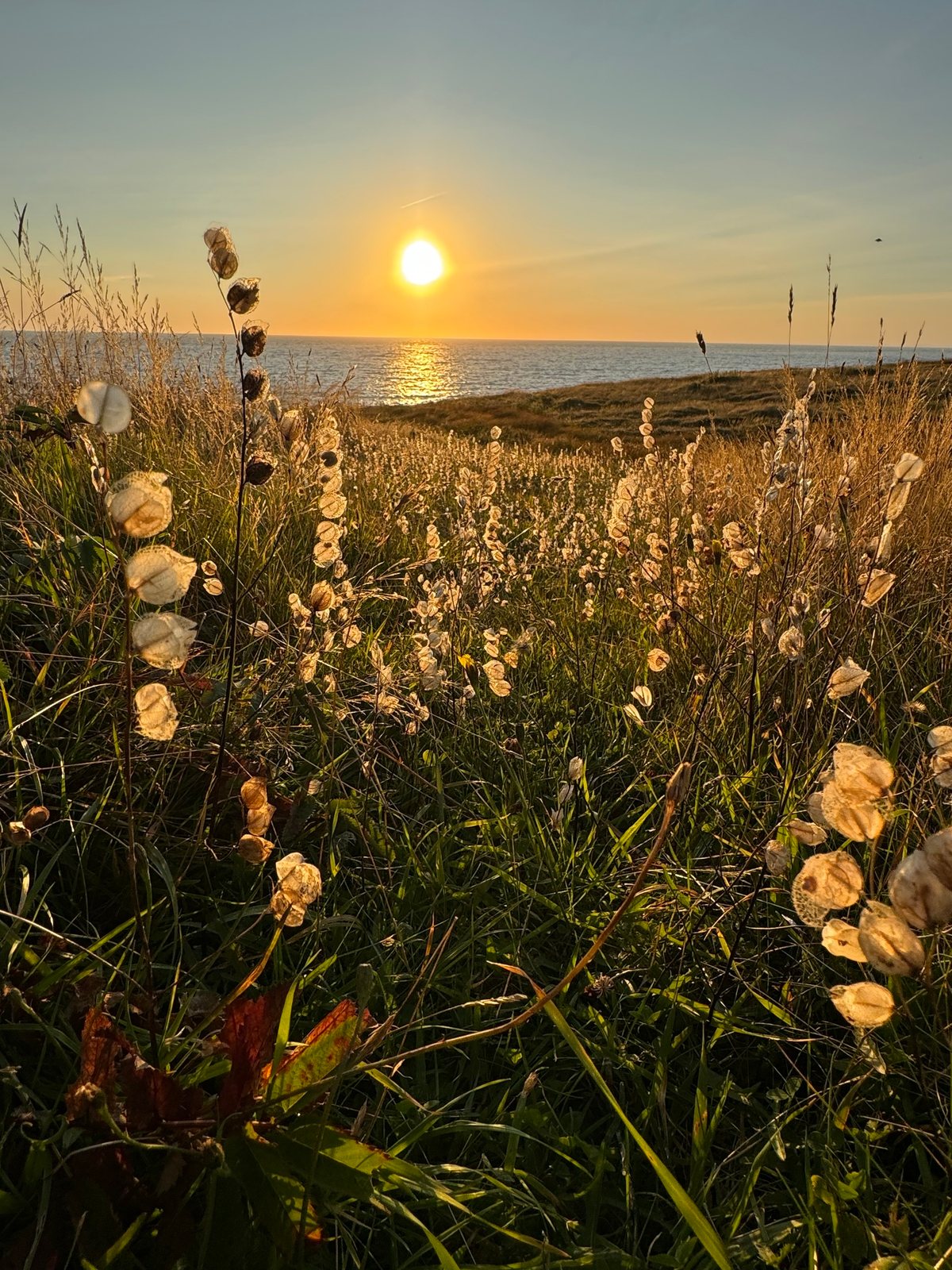
Yellow rattle is grown as an annual meadow wildflower, with yellow flowers followed by inflated seed capsules that rattle when dry. Its roots attach to grasses and take some of their water and nutrients, reducing grass vigour and helping other meadow flowers establish. It needs winter chilling to germinate well, so autumn sowing is usually more reliable than spring sowing.
At a glance
- Sun
- Full sun; tolerates light, open shade but flowers less well.
- Water
- Moderate moisture during germination and early growth; established plants usually need only rainfall in cool climates.
- Soil
- Low- to moderately fertile, well-drained meadow soil with living grasses nearby; avoid waterlogged ground and heavily enriched soil.
- Height
- 0.5-2 ft (0.15-0.6 m)
- Spread
- 0.3-0.7 ft (0.1-0.2 m)
- Flowers
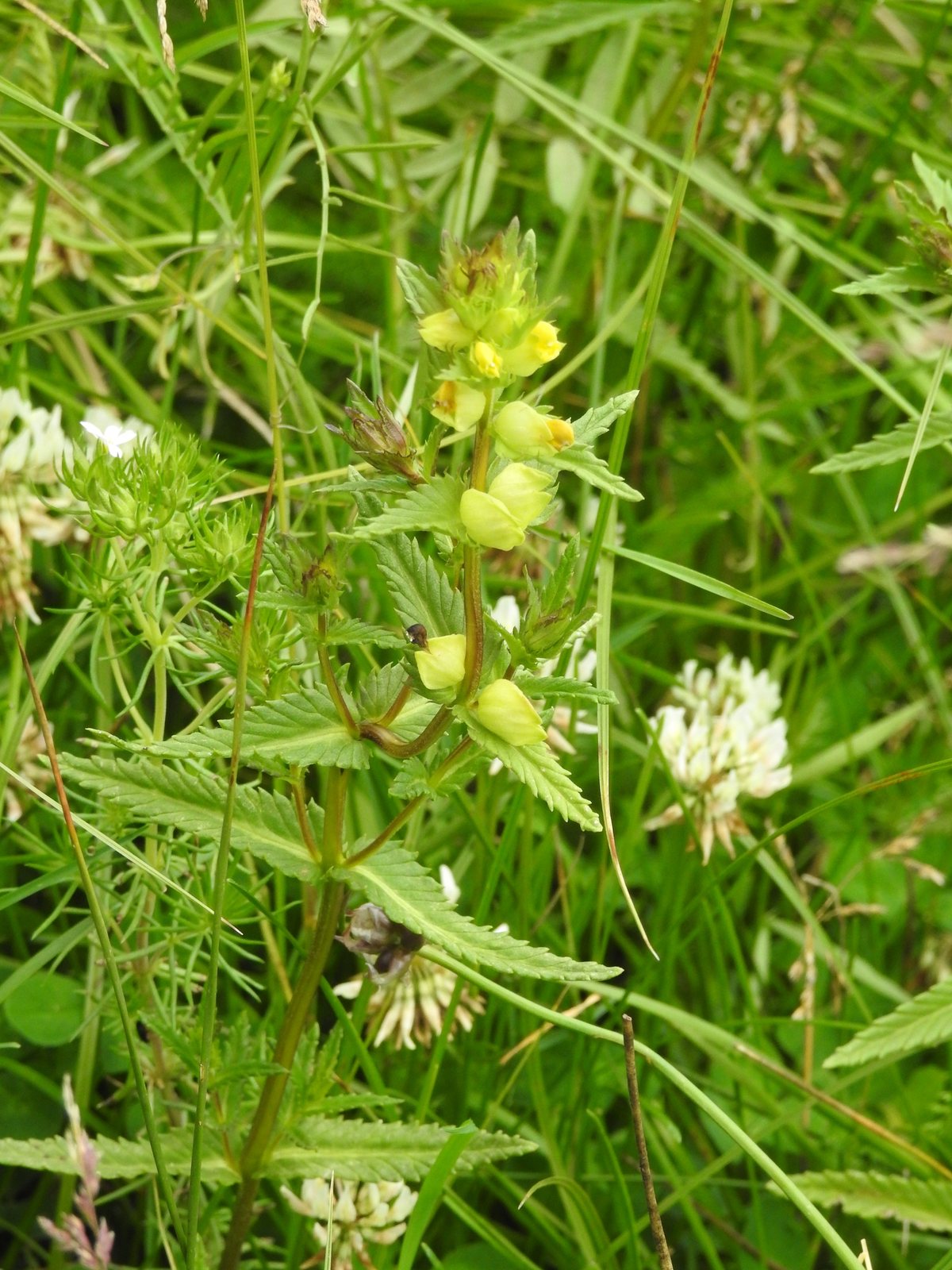
- Late spring to midsummer; yellow, hooded flowers with small purple teeth, held among pale green bracts.
- Foliage
- Opposite pairs of narrow, toothed green leaves on upright stems, sometimes marked with dark streaks.
- Growth
- Fast; germinates, flowers and sets seed within one growing season.
- Care needed
- Medium
The year at a glance
- Pollinators
- Wildlife
- Low allergen
| J | F | M | A | M | J | J | A | S | O | N | D | |
|---|---|---|---|---|---|---|---|---|---|---|---|---|
| Flowers | ||||||||||||
| Fruit | ||||||||||||
| Plant |
Northern hemisphere months. In Australia, shift them by six.
- Difficulty
- Moderate
- Toughness
- Needs looking after
Will it suit your garden?
Pick your zone, country, light and whether you have pets.
Full sun is 6 or more hours of direct sun a day, part shade 3 to 6 hours, shade under 3.
How it grows
Planting day
0.5 ft (0.15 m)
After 1 year
1.2 ft (0.38 m)
full size
Full size in one season.
From a typical nursery size, at an average rate for this kind of plant. A rule of thumb, not a forecast.
Good to know
- Cats and dogs
- Toxic
- Native to
- the US, Canada and the UK
- Growth rate
- Fast
Care
Jobs through the year
- WaterMar–May, every 7 days
- Water during dry spells to keep germinating seedlings moist; avoid saturation.
- WaterJun–Jul, every 7 days
- Established plants normally need only rain; water only during extended drought before seed ripens.
- ProtectMar–Jul
- Avoid mowing or trampling until capsules are brown and seed has fallen; retain living grass hosts.
- PruneJul–Aug
- Cut the meadow only after ripe seed has fallen, and remove all cut material.
- ProtectSep–Nov
- Cut grass short and scarify bare patches before surface-sowing fresh seed; do not feed or mulch.
- In autumn, cut existing grass short, remove the clippings and rake patches of bare soil before sowing.
- Use fresh seed from the current season; press it onto the soil surface rather than burying it deeply.
- Keep the seedbed moist during germination, but avoid prolonged saturation.
- Do not apply fertiliser, manure or thick mulch; these encourage competing grass or prevent seedlings emerging.
- Retain some living fine grasses as hosts, and leave plants standing until their seed capsules ripen.
Pruning. Do not mow or cut flowering plants before their capsules turn brown and the seeds rattle inside. After seed has fallen, cut the meadow and remove the cut material to keep fertility low.
Through the year
- Early autumn
- Cut grass short, remove clippings and scarify to expose soil between the grasses.
- Autumn
- Sow fresh seed thinly onto exposed soil and tread or press it into contact with the surface.
- Winter
- Leave seed outdoors for natural cold, moist chilling; avoid covering the area with mulch.
- Spring
- Watch for paired, toothed seedling leaves and avoid mowing or trampling emerging plants.
- Late spring
- Water during extended dry spells while plants are establishing; do not feed.
- Summer
- Allow capsules to brown and release seed, then cut the meadow and remove the clippings.
In the garden
- Introduce into a sunny meadow to reduce grass competition and create room for flowering species.
- Sow through fine grasses beneath widely spaced orchard trees where enough sunlight reaches the ground.
- Use in a small meadow panel beside a closely mown path for a clear contrast between managed and informal planting.
- Combine with oxeye daisies, field scabious and bird's-foot trefoil for a long-season, pollinator-friendly meadow.
Garden styles it suits: Wildflower, Cottage garden, Wildlife garden, Pollinator garden, Rewilded and Backyard orchard.
Plant it with: Red fescue, Crested dog's-tail, Common bent, Oxeye daisy, Field scabious and Bird's-foot trefoil.
Wildlife: The flowers are visited particularly by bumblebees. By reducing dominant grasses, yellow rattle can indirectly increase the variety of flowers and insect habitat in a meadow.
Problems to watch for
- Poor germination: use fresh seed and autumn sowing; seed normally needs a prolonged period of cold, moist conditions, which mild winters may not provide.
- Seedlings disappear beneath dense grass: scarify more thoroughly before sowing, remove cuttings and stop feeding the meadow.
- Plants remain weak or die without suitable hosts: sow among living meadow grasses rather than in a bare flowerbed or pot on its own.
- Plants fail to return: delay mowing until seed is ripe and has fallen, then expose small patches of soil for the next generation.
Safety
Treat as potentially harmful if eaten, particularly the seeds. It contains iridoid glycosides, but reliable information on the severity of poisoning in people, cats, dogs and horses is limited; do not use it as food or deliberately feed it to animals, and seek medical or veterinary advice after significant ingestion.
Easily confused with
Greater yellow rattle (Rhinanthus angustifolius)
Usually has larger flowers with longer violet teeth on the upper lip and a more curved flower tube. The species can be difficult to separate, so use a regional botanical key rather than judging by height alone.
Common cow-wheat (Melampyrum pratense)
Has longer, slender, pale yellow tubular flowers and narrower leaves; it does not develop yellow rattle's broad, inflated, papery calyces.
The name
Yellow rattle refers to the yellow flowers and the sound of ripe seeds shaking inside the dry capsules; Rhinanthus comes from Greek words for nose and flower, referring to the projecting upper flower lip, and minor means smaller.
Propagation. Propagate by fresh seed sown outdoors in autumn among suitable grasses. Seed is short-lived and generally needs about 6-12 weeks of cold, moist conditions before spring germination.
Checked against open data
- Accepted botanical name
- Rhinanthus minor
- In the US and Canada
- Native in Alaska, Canada, Greenland and the lower 48 states. Introduced in Canada, Greenland and St. Pierre and Miquelon.
- Native range
- Albania, Altay, Austria, Baltic States, Belarus, Belgium, Bulgaria, Central European Rus, Czechoslovakia, Denmark, East European Russia and Finland.
- Measured
- Soil pH 7 to 7.5. Average height 21 cm.
Sources: GBIF (CC BY 4.0), USDA PLANTS and Trefle (CC BY 4.0). The care and design notes are LandscapeGPT's own.
See it in your own yard.
Upload a photo of your yard and see it redesigned with plants that suit your climate, each checked against your zone.