Bird's-foot trefoil
Lotus corniculatus. Family Fabaceae. Perennial.
Also called Common bird's-foot trefoil, Birdsfoot trefoil, Eggs and bacon.
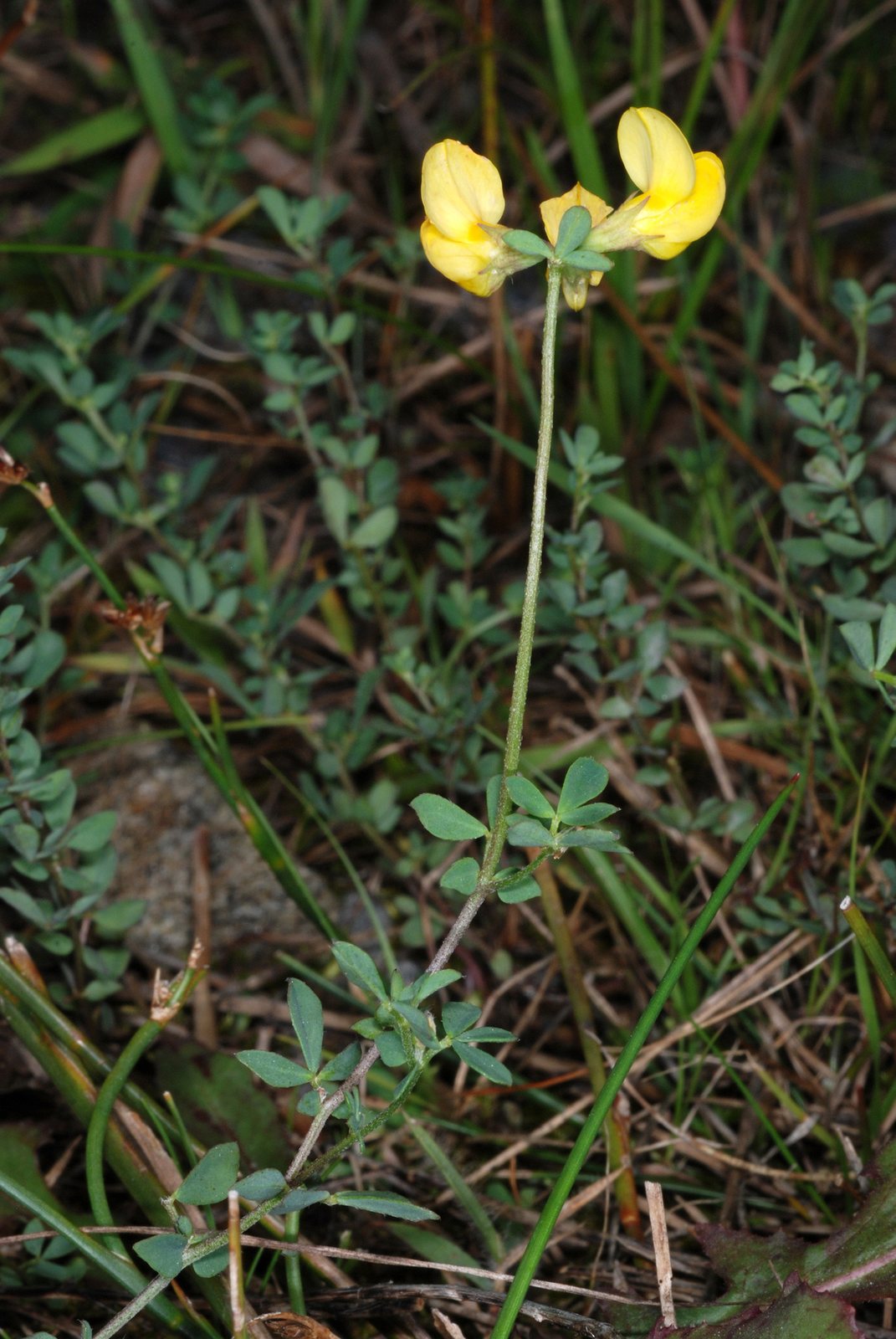
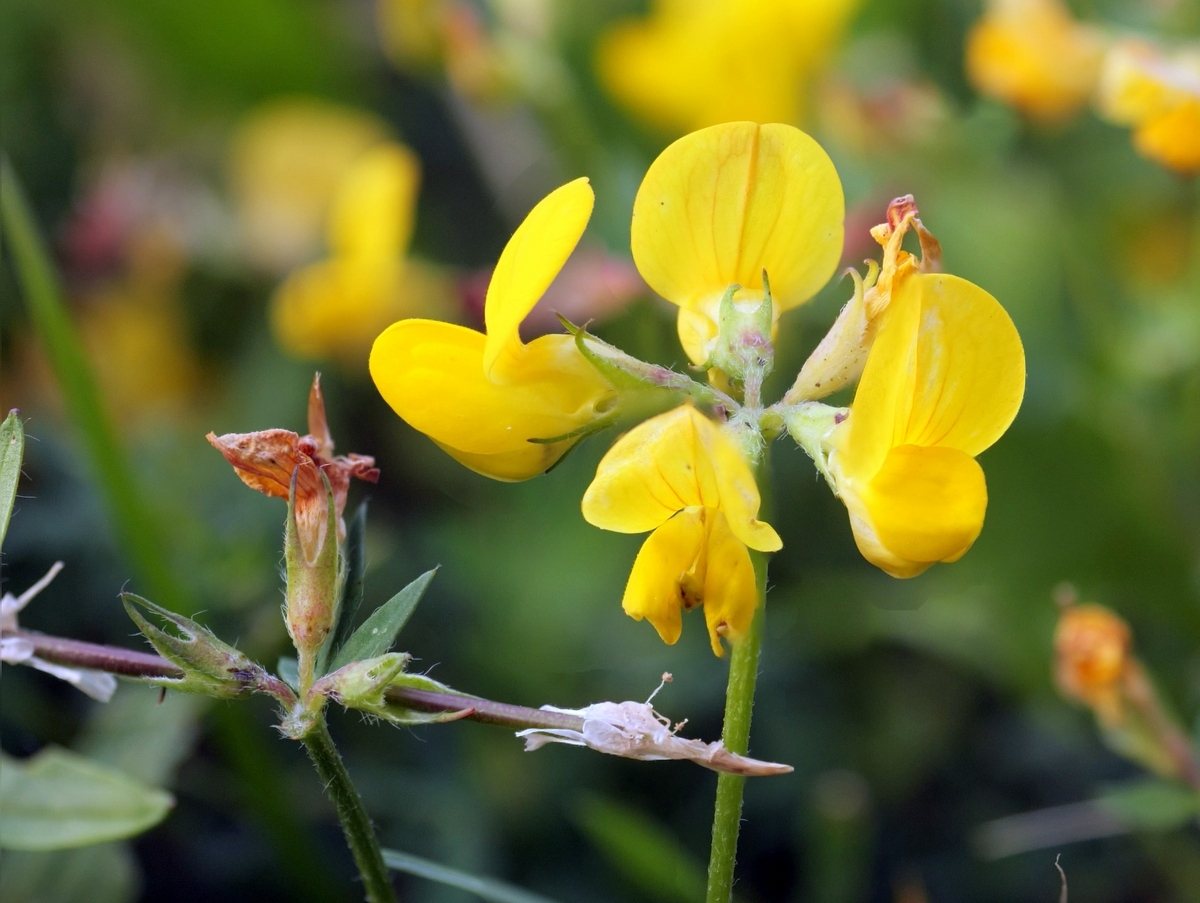
Bird's-foot trefoil is a low, spreading perennial with yellow pea flowers, often flushed orange or red. Gardeners grow it in sunny wildflower lawns and meadow plantings for its long flowering season and value to insects. It is native to Britain and much of Europe and Asia, but can displace native vegetation in parts of its introduced range.
At a glance
- Sun
- Full sun; tolerates light shade but flowers less freely.
- Water
- Water during establishment; established plants tolerate dry spells but flower better with occasional water during prolonged drought.
- Soil
- Well-drained, poor to moderately fertile soil, including sandy, chalky and clay soils that do not stay waterlogged. Tolerates a broad pH range.
- Height
- 0.5-1.5 ft (0.15-0.45 m)
- Spread
- 1-2 ft (0.3-0.6 m)
- Flowers
- Late spring to early autumn; yellow pea flowers, often tinged orange or red, in small clusters.
- Foliage
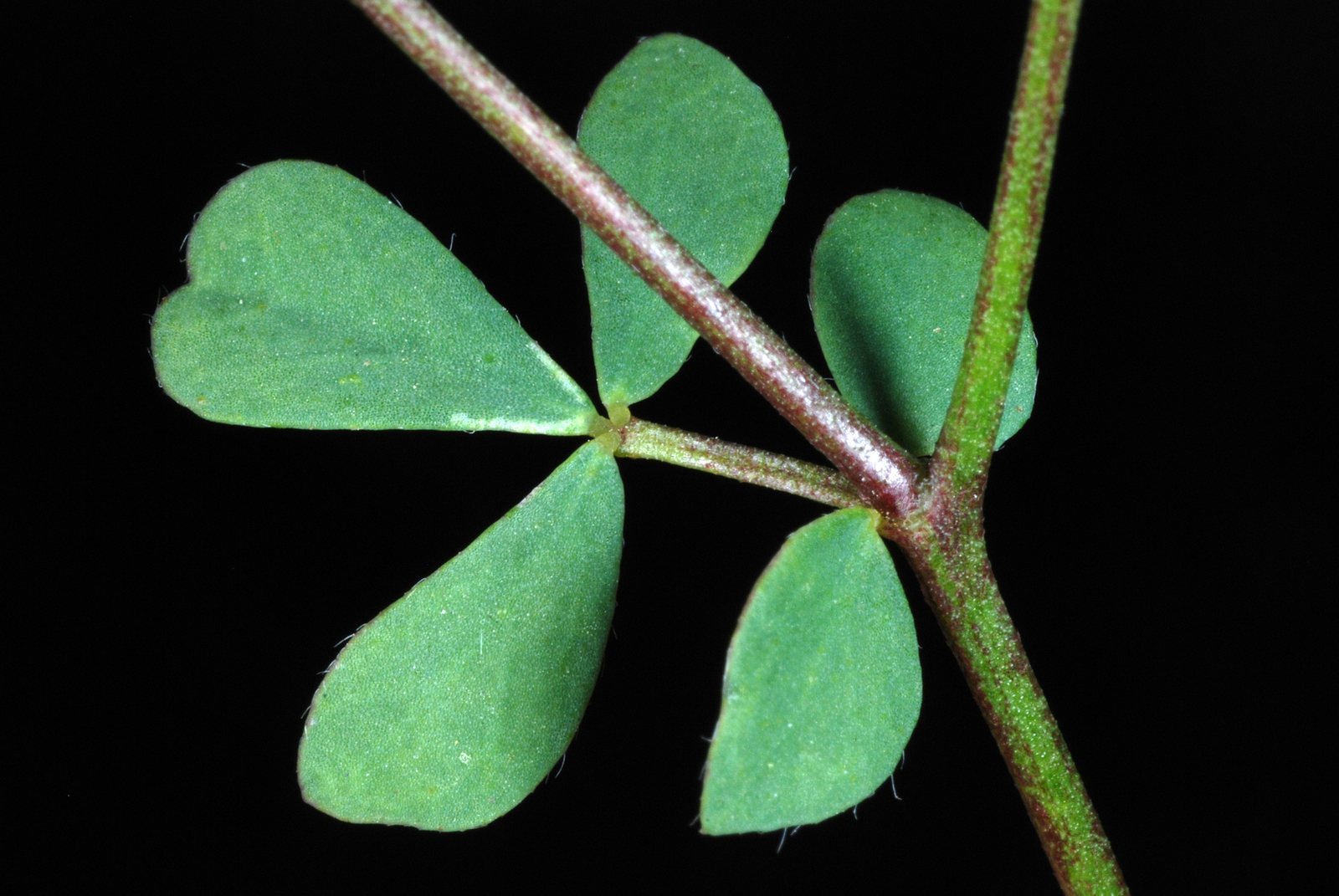
- Small green leaves appear to have five leaflets: three at the tip and two near the leaf base. Stems trail or rise loosely through surrounding grasses.
- Growth
- Moderate; can spread quickly by seed where conditions suit it.
- Care needed
- Low
The year at a glance
- Pollinators
- Drought tolerant
- Cold hardy
- Heat tolerant
- Wildlife
- Low allergen
| J | F | M | A | M | J | J | A | S | O | N | D | |
|---|---|---|---|---|---|---|---|---|---|---|---|---|
| Flowers | ||||||||||||
| Fruit | ||||||||||||
| Plant |
Northern hemisphere months. In Australia, shift them by six.
- Difficulty
- Easy
- Toughness
- Very tough
Will it suit your garden?
Pick your zone, country, light and whether you have pets.
Full sun is 6 or more hours of direct sun a day, part shade 3 to 6 hours, shade under 3.
How it grows
Planting day
1 ft (0.3 m)
full size
About 3 years to full size.
From a typical nursery size, at an average rate for this kind of plant. A rule of thumb, not a forecast.
Good to know
- Cats and dogs
- Toxic
- Native to
- the UK
- Invasive in
- the US, Canada and Australia
- In the garden
- Spreads vigorously: plan to contain it.
- Growth rate
- Moderate
Care
Jobs through the year
- WaterApr–May, Sep–Oct, every 21 days
- Water established plants only during prolonged drought; water new plugs more often until rooted.
- WaterJun–Aug, every 14 days
- Give established plants a deep watering during prolonged drought to support flowering.
- ProtectMar–May
- Clear smothering debris, weeds and vigorous grass around emerging plants and new plugs.
- ProtectMay–Jul
- Reduce mowing so flowering stems can develop; avoid scalping plants.
- DeadheadJun–Sep, every 7 days
- Remove developing pods before they split wherever self-seeding is unwanted.
- PruneAug–Sep
- Cut meadow growth after the main flowering flush and remove cuttings; delay for ripe seed only where spreading is acceptable.
- Water newly planted plugs until rooted, then water only during prolonged dry spells.
- Do not apply nitrogen fertiliser; this legume fixes nitrogen and grows well in relatively poor soil.
- Keep young plants clear of vigorous grasses and weeds until established.
- Avoid deep mulch around stems and seedlings; leave open soil if you want it to self-seed.
- Remove developing seed pods where spread needs controlling.
Pruning. In a meadow, cut after the main flowering period and remove the cut material; delay cutting until pods ripen only where self-seeding is wanted. In a flowering lawn, mow less often and avoid repeatedly scalping the plants.
Through the year
- Early spring
- Clear heavy debris and check that emerging plants are not being smothered by grass.
- Spring
- Sow scarified seed or plant plugs into prepared, weed-free ground; water during establishment.
- Late spring
- Reduce mowing to let flower stems develop.
- Summer
- Watch for ripening pods and remove them before they split if seedlings are unwanted.
- Late summer
- Cut meadow growth after the main flowering flush and remove the cuttings.
- Autumn
- Sow seed where autumn establishment is suitable, and remove seedlings that have spread beyond the planting area.
In the garden
- Mix into a sunny flowering lawn with fine grasses and selfheal for low yellow flowers between mowings.
- Use in a British native meadow with oxeye daisy and meadow grasses to provide flowers over a long season.
- Plant along sunny, informal path edges where loose stems can soften the boundary.
- Use in lean-soil pollinator plantings within its native range, rather than fertilised flower beds where taller plants can overwhelm it.
Garden styles it suits: Wildflower, Wildlife garden, Pollinator garden, Cottage garden, Low-maintenance and Dry gravel garden.
Plant it with: Selfheal, Oxeye daisy, Common knapweed, Lady's bedstraw, Sheep's fescue and Wild thyme.
Wildlife: Flowers provide pollen and nectar for bees. In Britain it is an important larval food plant for common blue butterflies and several moths, including burnet moths; insect use differs elsewhere.
Problems to watch for
- Grass competition: vigorous turf can smother seedlings; establish in open patches and remove cuttings to keep fertility low.
- Root and crown rot: plants decline in persistently wet soil; improve drainage or move them to a better-drained site.
- Powdery mildew: whitish growth may develop in crowded plantings; improve airflow and avoid excessive feeding.
- Unwanted seedlings: pods scatter seed as they split; cut before pods ripen and pull seedlings while small.
Safety
Leaves and other green tissues can contain cyanogenic glycosides, with amounts varying between plants and growing conditions. It is widely used as livestock forage, including for horses, but that does not make unrestricted consumption safe: sufficiently high intake of cyanogenic material can cause serious poisoning. It is not a culinary plant; prevent deliberate eating by people, cats or dogs, for which species-specific toxicity information is limited.
Where it spreads. Introduced and invasive in parts of North America, particularly the northeastern United States, Great Lakes region and Midwest, where it can invade prairies and other open habitats. It also spreads into natural vegetation in parts of southern Canada and southeastern Australia. Check local invasive-plant guidance before sowing, and do not plant beside native grassland outside its native range.
Easily confused with
Greater bird's-foot trefoil (Lotus pedunculatus)
Usually taller and more upright, with hollow stems and larger clusters of flowers; it favours wetter ground. Bird's-foot trefoil generally has solid stems and smaller flower clusters.
Narrow-leaved bird's-foot trefoil (Lotus tenuis)
Has much narrower, nearly linear leaflets and is often found in damp or somewhat saline grassland; ordinary bird's-foot trefoil has broader leaflets.
Black medick (Medicago lupulina)
Has tiny yellow flowers packed into rounded heads and small black, coiled seed pods, rather than larger pea flowers followed by long, straight pods.
The name
The common name refers to the slender seed pods radiating like a bird's toes, while corniculatus means 'small-horned', also referring to the pods.
Propagation. Usually grown from seed sown in spring or autumn. Hard seed germinates more reliably after gentle scarification; follow the seed supplier's treatment instructions. Keep the seedbed moist until seedlings establish, and use a species-appropriate rhizobial inoculant if recommended for your soil.
Checked against open data
- Accepted botanical name
- Lotus corniculatus
- In the US and Canada
- Introduced in Canada, the lower 48 states and St. Pierre and Miquelon.
- Native range
- Afghanistan, Albania, Algeria, Austria, Azores, Baleares, Baltic States, Belarus, Belgium, Bulgaria, Central European Rus and Corse.
- Measured
- Soil pH 5.5 to 7.5. Average height 20 cm.
Sources: GBIF (CC BY 4.0), USDA PLANTS and Trefle (CC BY 4.0). The care and design notes are LandscapeGPT's own.
See it in your own yard.
Upload a photo of your yard and see it redesigned with plants that suit your climate, each checked against your zone.