Selfheal
Prunella vulgaris. Family Lamiaceae. Perennial.
Also called Common selfheal, Self-heal, Heal-all.
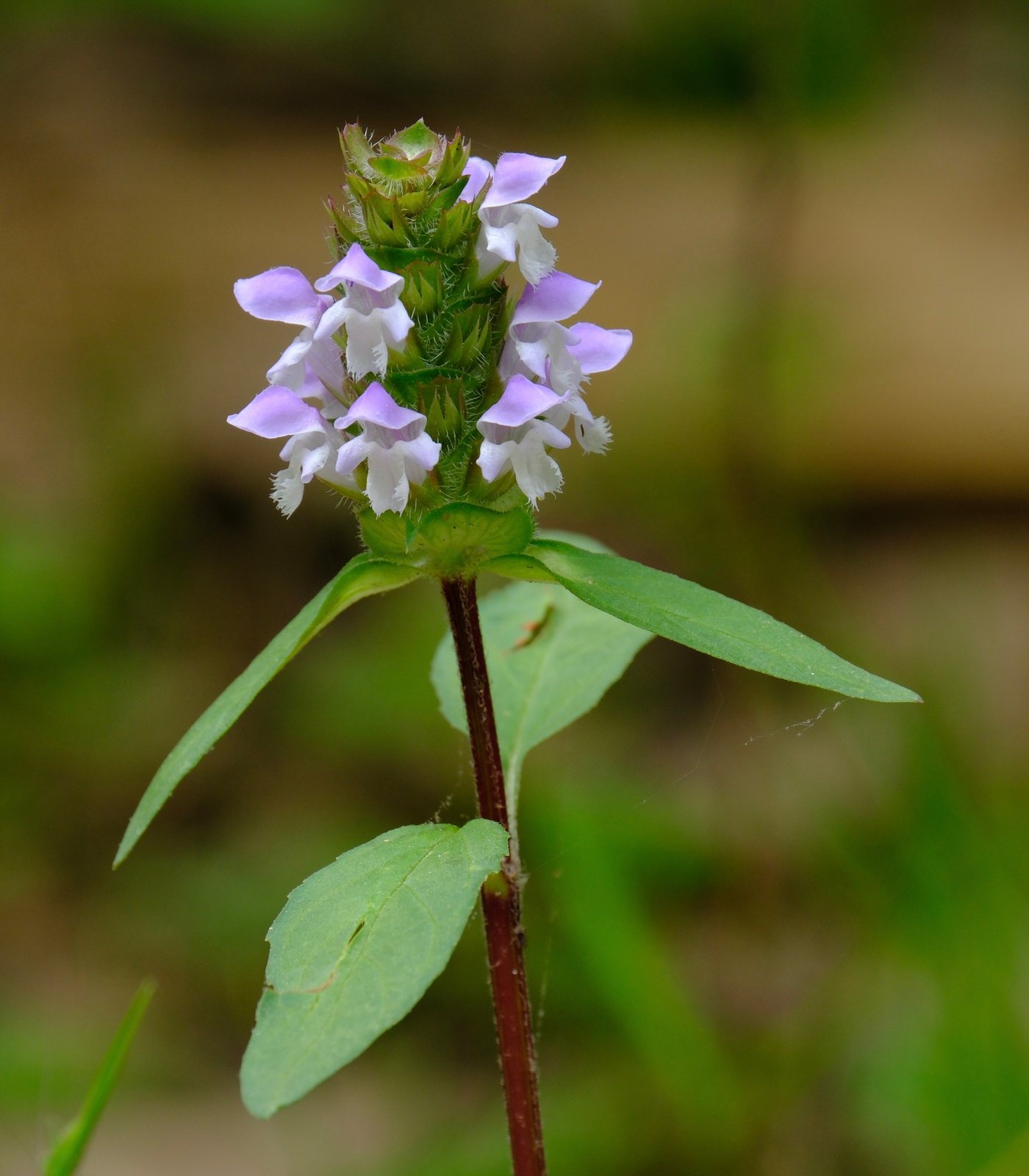
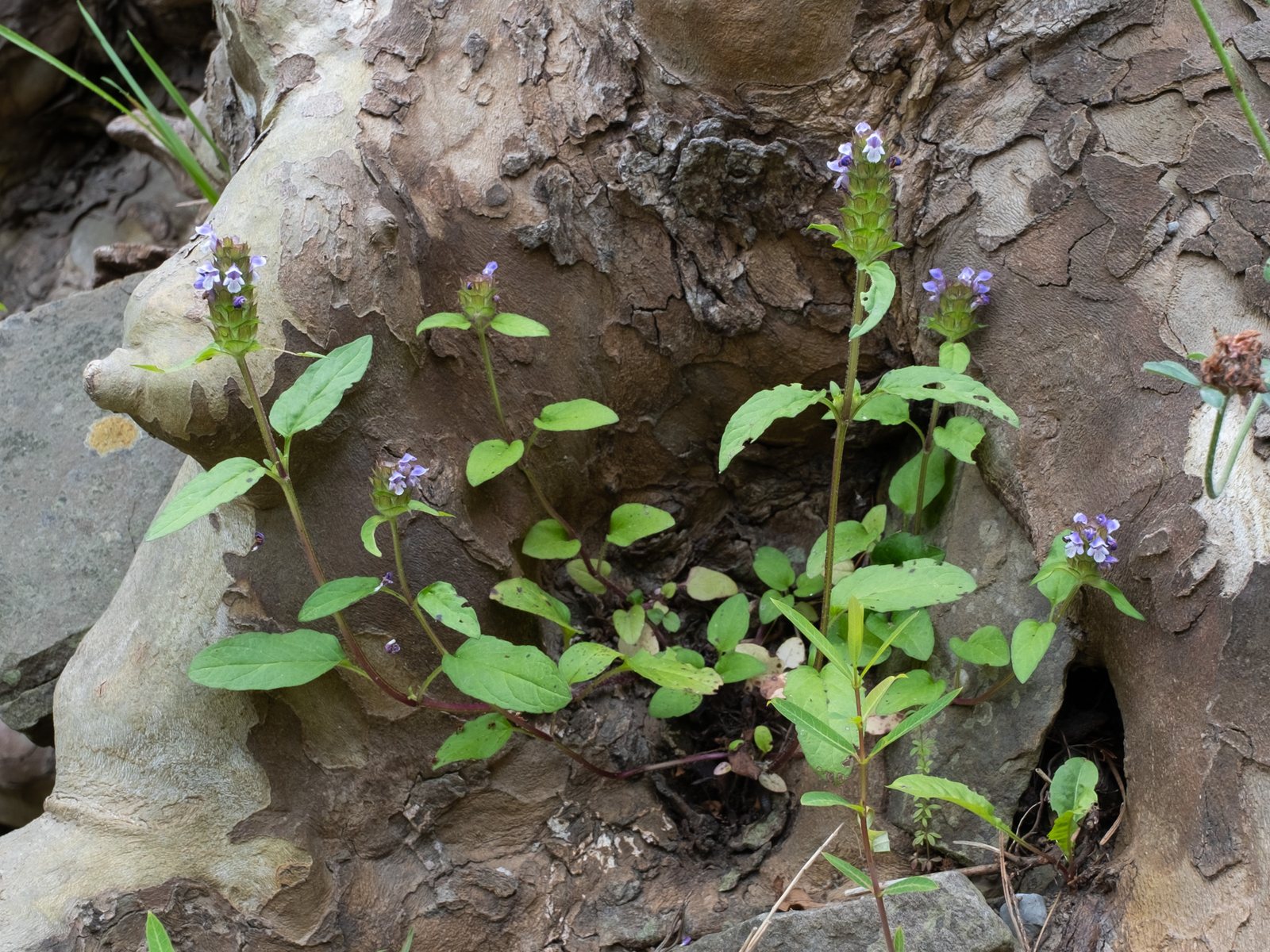
Selfheal is a low, creeping perennial with short spikes of purple flowers that attract bees. Grow it in a flowering lawn, meadow edge or informal groundcover where its spreading stems are welcome; it tolerates mowing but flowers best when left uncut through summer.
At a glance
- Sun
- Full sun to partial shade; some afternoon shade helps in hot summers.
- Water
- Moderate; prefers evenly moist ground but tolerates short dry spells once established.
- Soil
- Most reasonably drained soils, including clay and loam; tolerates a broad pH range. Avoid persistently waterlogged ground.
- Height
- 0.5-1 ft (0.15-0.3 m)
- Spread
- 1-2 ft (0.3-0.6 m), spreading farther over time
- Flowers
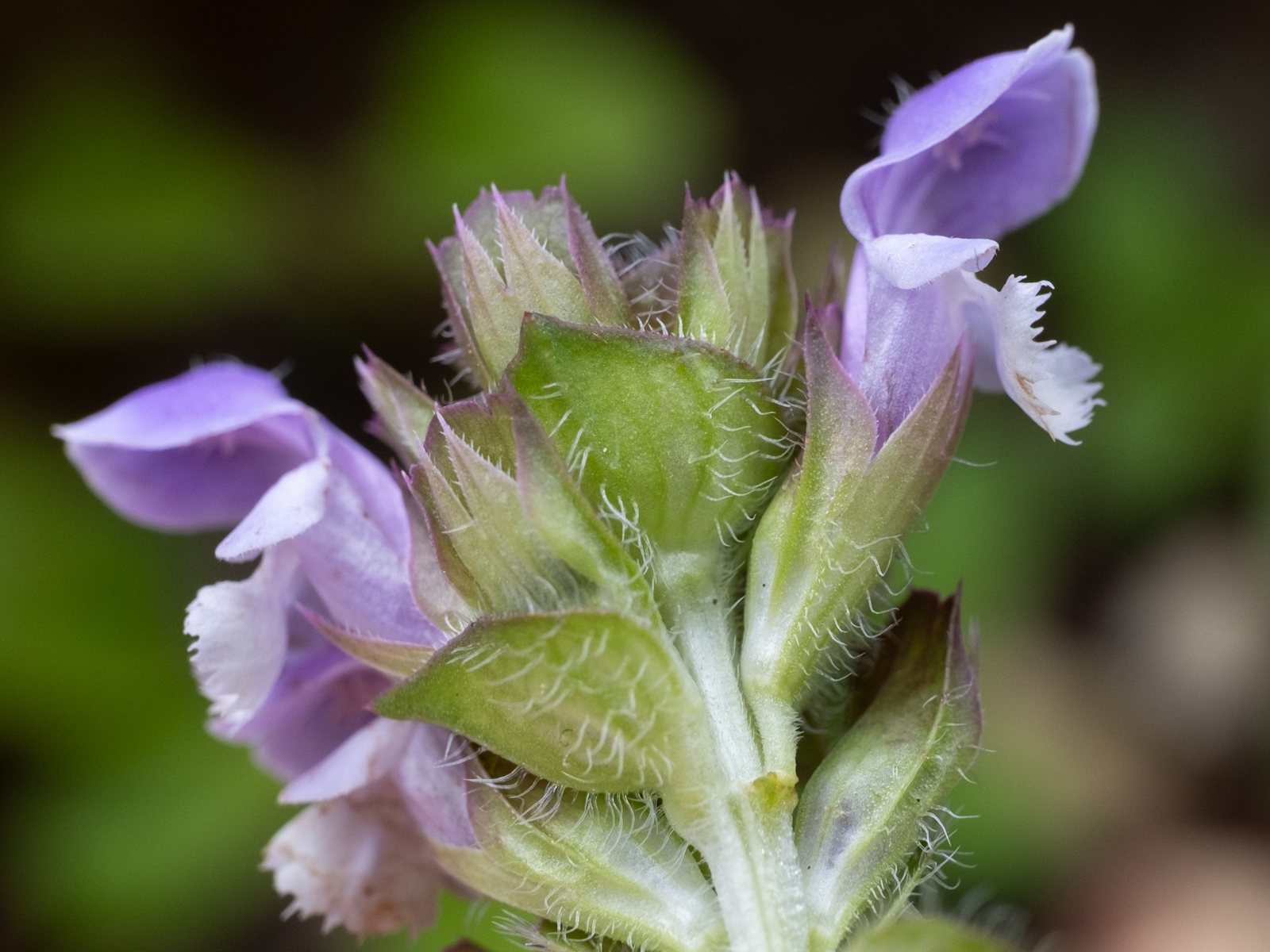
- Late spring to early autumn, mainly summer; violet-purple, two-lipped flowers in dense, short spikes.
- Foliage
- Opposite pairs of green, oval to lance-shaped leaves on square stems; often semi-evergreen in mild winters but dies back in colder regions.
- Growth
- Moderate to fast where soil stays moist
- Care needed
- Low
The year at a glance
- Pollinators
- Cold hardy
- Wildlife
- Low allergen
| J | F | M | A | M | J | J | A | S | O | N | D | |
|---|---|---|---|---|---|---|---|---|---|---|---|---|
| Flowers | ||||||||||||
| Plant |
Northern hemisphere months. In Australia, shift them by six.
- Difficulty
- Easy
- Toughness
- Very tough
Will it suit your garden?
Pick your zone, country, light and whether you have pets.
Full sun is 6 or more hours of direct sun a day, part shade 3 to 6 hours, shade under 3.
How it grows
Planting day
0.7 ft (0.22 m)
full size
About 2 years to full size.
From a typical nursery size, at an average rate for this kind of plant. A rule of thumb, not a forecast.
Good to know
- Cats and dogs
- Safe
- Native to
- the US, Canada and the UK
- In the garden
- Spreads vigorously: plan to contain it.
- Growth rate
- Fast
Care
Jobs through the year
- WaterApr–May, Sep–Oct, every 21 days
- Water established patches only during extended dry weather; keep new plugs moist until rooted.
- WaterJun–Aug, every 14 days
- Water established patches deeply during prolonged drought, rather than routinely in rainy weather.
- PruneJul–Sep
- Shear or mow faded spikes after the main flowering flush, before seed ripens if spread is unwanted.
- PruneApr–Sep
- Lift rooted runners that spread into neighbouring plants.
- DivideMar–Apr, Sep–Oct
- Divide crowded patches in moist, workable soil and water divisions in well.
- ProtectMay–Jul
- Leave flowering lawn patches unmown through the main bloom period.
- ProtectJan–Feb, Nov–Dec
- Avoid heavy foot traffic when the soil is wet.
- Water new plants during dry weather until rooted; established patches need watering mainly during prolonged drought.
- Avoid routine feeding, especially in flowering lawns, where fertiliser encourages competing grasses.
- Keep creeping stems away from small, slow-growing neighbours by lifting rooted runners.
- Divide crowded patches in spring or autumn and replant into moist soil.
- Leave flowering patches unmown until the main flush finishes.
Pruning. After the main summer flowering, shear or mow back spent spikes to encourage fresh growth and sometimes more flowers. Remove flower heads before seed ripens if you want to limit spread.
Through the year
- Spring
- Plant plugs or divisions and water them in well.
- Late spring
- Stop mowing selected patches so flower stems can develop.
- Summer
- Water during prolonged drought and remove runners that reach neighbouring plants.
- Late summer
- Cut back faded flower spikes, or leave some to seed where spreading is acceptable.
- Autumn
- Divide established patches while soil is moist and workable.
- Winter
- Avoid heavy foot traffic on wet planting areas to prevent compaction.
In the garden
- Include in a flowering lawn with daisies and clover, allowing intervals between mowing for flowers.
- Use as a low groundcover at sunny or lightly shaded meadow edges.
- Plant between widely spaced stepping stones where foot traffic is light.
- Combine with fine grasses and low wildflowers for an informal, bee-friendly border edge.
Garden styles it suits: Cottage garden, Wildflower, Native meadow, Wildlife garden, Pollinator garden and Low-maintenance.
Plant it with: Common daisy, Bird's-foot trefoil, Fine fescue, Cowslip, Yarrow and Wild geranium.
Wildlife: Flowers provide nectar and pollen for bumblebees and other bees, with visits from butterflies and other insects. In the United States and Canada, choose locally native stock where possible; native and introduced forms occur, and their identification can be difficult.
Problems to watch for
- Unwanted spread: stems root where they touch soil, and plants self-seed; lift runners and cut flower heads before seed ripens.
- Few flowers in lawns: frequent mowing removes developing spikes; leave patches uncut through the flowering period.
- Powdery mildew: improve air circulation, avoid overcrowding and remove badly affected foliage.
- Poor growth in deep shade or drought: move to a brighter position and water during extended dry spells.
Safety
Not known to be toxic to people, cats, dogs or horses. No part is recognised as a serious poisoning hazard, although animal-specific safety information is limited; discourage pets from eating large quantities.
Where it spreads. Can spread aggressively through moist lawns and garden beds by rooting stems and seed. It is widely naturalised in temperate Australia, including New South Wales, Victoria and Tasmania, and can be weedy in pasture and disturbed ground. In the United States and Canada, both native and introduced forms occur; check local guidance before adding it to natural areas.
Easily confused with
Large-flowered selfheal (Prunella grandiflora)
Has noticeably larger flowers, usually on taller stalks with a clear gap between the flower head and the uppermost pair of leaves; common selfheal usually has leaves close beneath the head.
Bugle (Ajuga reptans)
Usually forms conspicuous basal rosettes and taller spikes with flowers arranged in separated tiers, rather than selfheal's compact, blunt-ended heads.
Ground ivy (Glechoma hederacea)
Has rounded, scalloped, strongly aromatic leaves and flowers arising from leaf axils along trailing stems, rather than dense terminal flower heads.
The name
The common names selfheal and heal-all refer to its historical use as a medicinal herb, while vulgaris means common.
Propagation. Divide rooted patches in spring or autumn, or detach rooted runners and replant promptly. Sow seed shallowly in autumn or spring, keeping the seedbed moist; seed-grown plants can vary.
Checked against open data
- Accepted botanical name
- Prunella vulgaris
- In the US and Canada
- Native in Alaska, Canada, the lower 48 states and St. Pierre and Miquelon. Introduced in Canada and Hawaii.
- Native range
- Afghanistan, Alabama, Alaska, Albania, Alberta, Aleutian Is., Algeria, Altay, Amur, Arizona, Arkansas and Assam.
- Measured
- Soil pH 5.4 to 8. Average height 11 cm.
Sources: GBIF (CC BY 4.0), USDA PLANTS and Trefle (CC BY 4.0). The care and design notes are LandscapeGPT's own.
See it in your own yard.
Upload a photo of your yard and see it redesigned with plants that suit your climate, each checked against your zone.