Arizona beargrass
Nolina microcarpa. Family Asparagaceae. Perennial.
Also called Beargrass, Sacahuista.
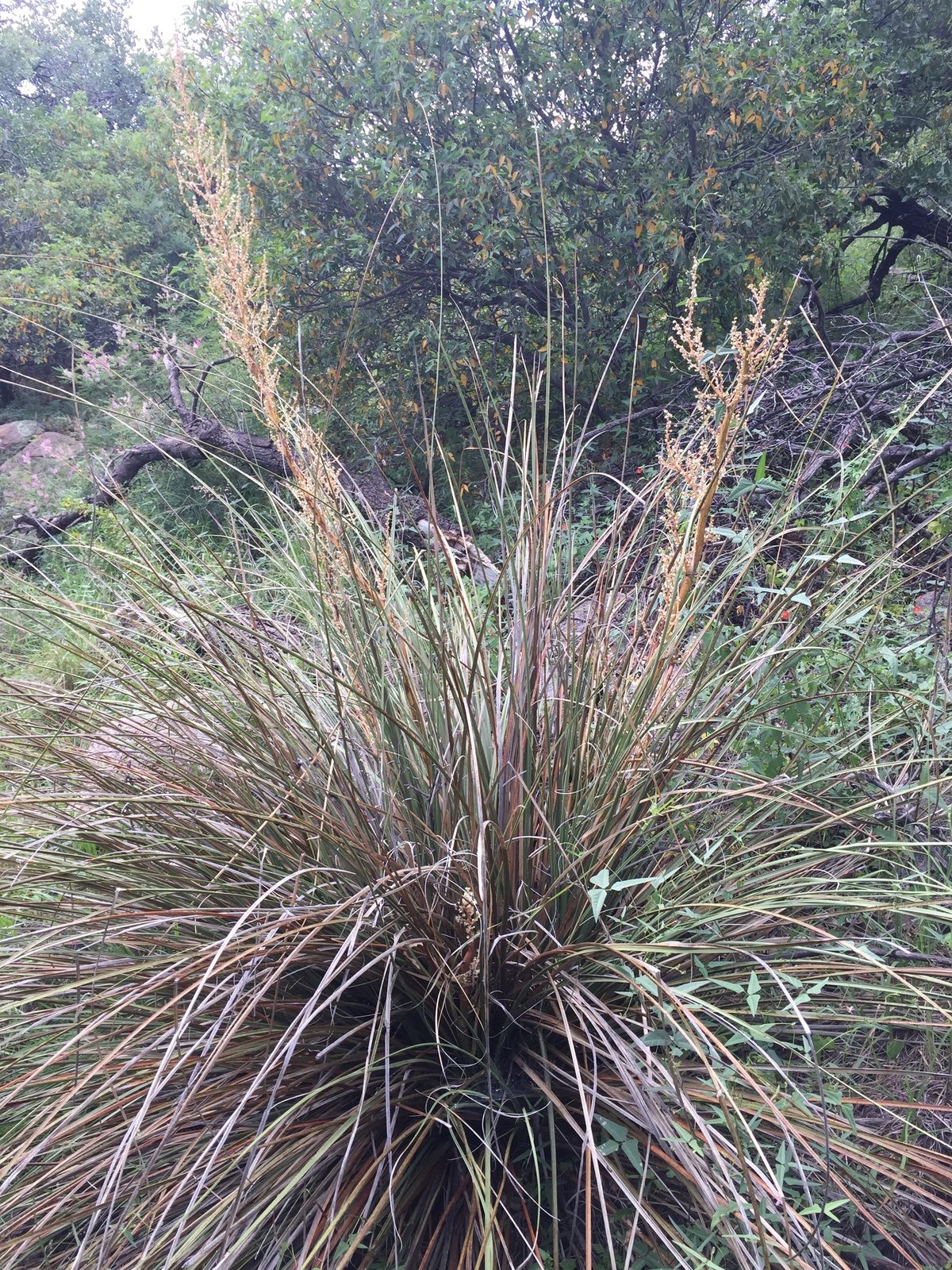
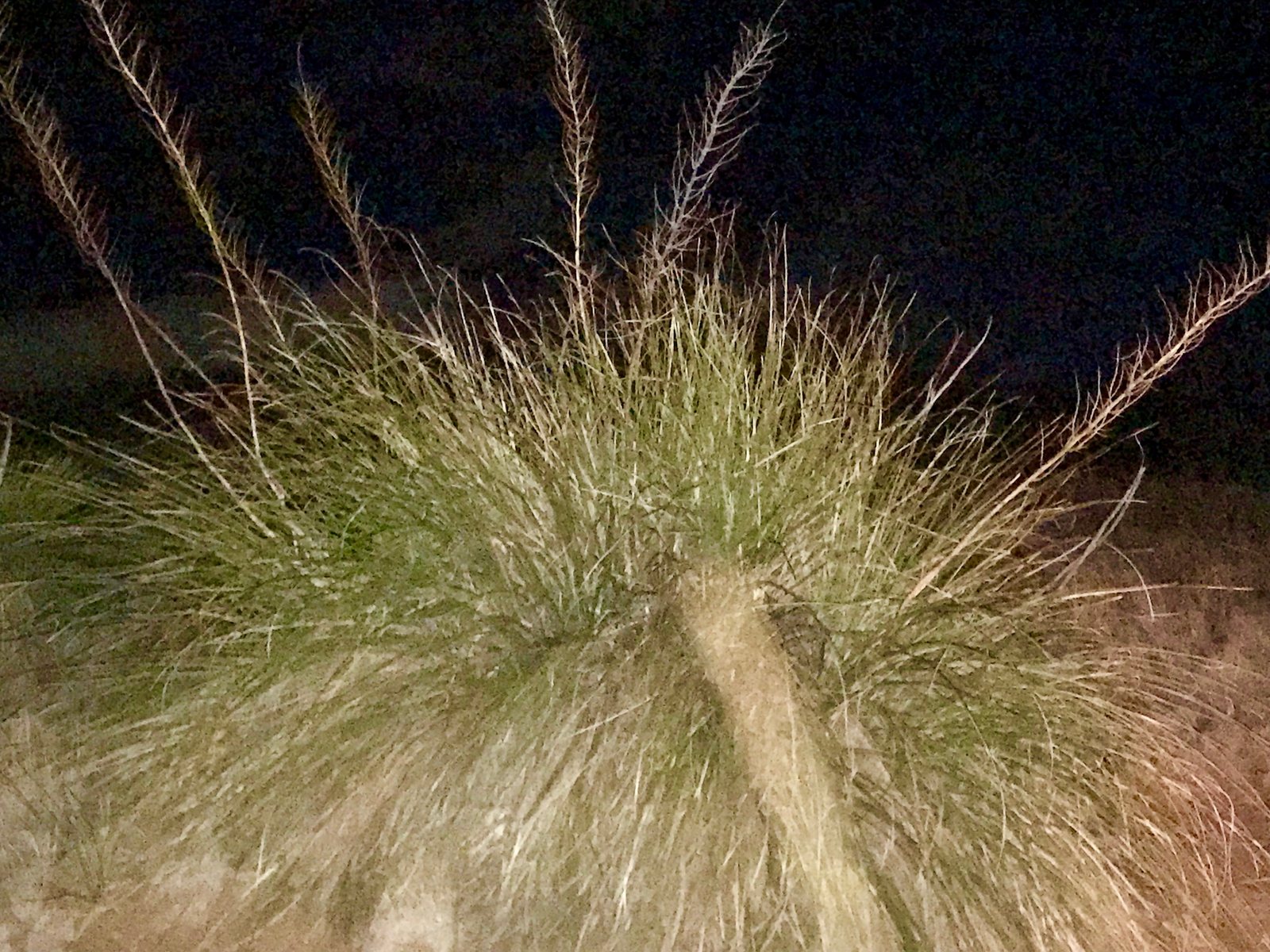
Arizona beargrass is an evergreen, clump-forming perennial from the southwestern United States and northern Mexico, with long, narrow leaves that arch into a fountain shape. Gardeners grow it for its strong outline, drought tolerance and occasional tall sprays of creamy flowers; despite its name, it is not a true grass.
At a glance
- Sun
- Full sun; tolerates light shade, especially in hot inland gardens.
- Water
- Low once established. Water young plants during dry spells; established plants usually need supplementary water only during prolonged drought.
- Soil
- Sharply drained sandy, gravelly or rocky soil. Tolerates poor soil, but dislikes heavy clay and persistent winter wet.
- Height
- 3-4 ft (0.9-1.2 m) in leaf; flower stalks can reach 6-8 ft (1.8-2.4 m)
- Spread
- 4-6 ft (1.2-1.8 m)
- Flowers
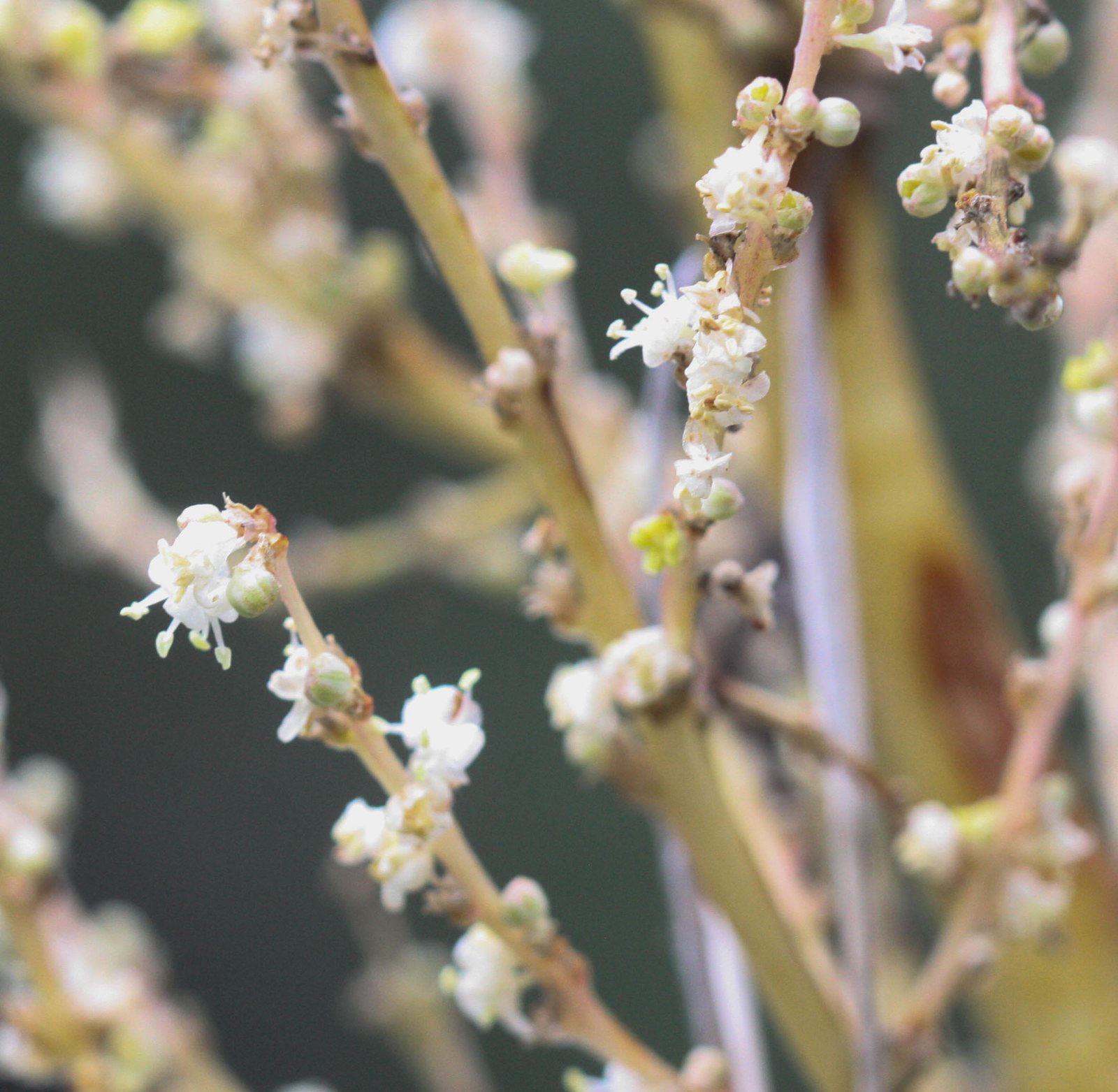
- Late spring to summer; small creamy-white flowers in tall, branched sprays. Mature plants may not flower every year.
- Foliage
- Evergreen. Long, narrow, leathery green leaves with finely toothed edges, arching from dense basal rosettes. Older leaves turn tan and can remain around the base.
- Growth
- Slow to moderate
- Care needed
- Low
The year at a glance
- Pollinators
- Deer resistant
- Drought tolerant
- Heat tolerant
- Wildlife
| J | F | M | A | M | J | J | A | S | O | N | D | |
|---|---|---|---|---|---|---|---|---|---|---|---|---|
| Flowers | ||||||||||||
| Fruit | ||||||||||||
| Plant |
Northern hemisphere months. In Australia, shift them by six.
- Difficulty
- Easy
- Toughness
- Very tough
Will it suit your garden?
Pick your zone, country, light and whether you have pets.
Full sun is 6 or more hours of direct sun a day, part shade 3 to 6 hours, shade under 3.
How it grows
Planting day
1 ft (0.3 m)
After 1 year
1.6 ft (0.49 m)
After 2 years
2.2 ft (0.68 m)
After 3 years
2.9 ft (0.88 m)
After 5 years
3 ft (1.1 m)
full size
About 4 years to full size.
From a typical nursery size, at an average rate for this kind of plant. A rule of thumb, not a forecast.
Good to know
- Cats and dogs
- Safe
- Native to
- the US
- Growth rate
- Slow
Care
Jobs through the year
- WaterApr–May, Sep, every 30 days
- Water established clumps only in prolonged drought; young plants need watering as soil dries.
- WaterJun–Aug, every 21 days
- During prolonged drought only, water deeply and allow soil to dry before watering again.
- MulchApr–May
- Use a thin gravel mulch and keep the crown exposed.
- PruneMar–Apr
- Wearing gloves and long sleeves, remove individual dead or damaged leaves; never shear the clump.
- PruneSep–Oct
- Cut dried flower stalks at the base once seed interest has finished.
- ProtectOct–Nov
- Clear fallen leaves from the crown and ensure winter rain drains away freely.
- Plant in spring in colder regions, keeping the crown at its original soil level.
- Water deeply during establishment, then let the soil dry before watering again.
- Use gravel mulch around the crown rather than moisture-retaining organic mulch.
- Avoid routine feeding; rich soil and frequent watering are unnecessary.
- Allow room for the mature clump, and keep its sharp-edged leaves away from narrow paths.
- In cool, wet climates, use a raised bed or slope with excellent winter drainage.
Pruning. In spring, remove damaged or completely dead leaves individually, wearing gloves and long sleeves; do not shear the whole clump. Cut spent flower stalks close to the base when they have dried, unless you want seed.
Through the year
- Spring
- Plant into warming, well-drained soil and water thoroughly.
- Spring
- Remove winter-damaged leaves and check that mulch has not buried the crown.
- Late spring
- Watch for emerging flower stalks and keep nearby plants from crowding them.
- Summer
- Water newly planted clumps during dry weather; let established plants dry between occasional deep waterings.
- Late summer
- Collect ripe seed as the dry capsules begin to open, or remove dried flower stalks.
- Autumn
- Clear fallen leaves from the crown and check drainage before winter rain.
In the garden
- Use as a fountain-shaped focal plant in a gravel garden with boulders and low succulents.
- Repeat loose groups along a sunny slope for erosion-resistant planting once established.
- Pair with upright yuccas and rounded cacti to contrast leaf shapes in a dry garden.
- Set behind low flowering perennials, allowing space for its arching leaves and tall flower stalks.
Garden styles it suits: Desert modern, Southwestern, Desert / xeriscape, Dry gravel garden, Architectural minimal and Low-maintenance.
Plant it with: Red yucca, Banana yucca, Parry's agave, Blue grama, Firecracker penstemon and Desert marigold.
Wildlife: Flowers attract bees and other insects. Dense foliage provides shelter for small animals.
Problems to watch for
- Crown or root rot in wet soil: improve drainage, keep the crown exposed and stop frequent irrigation; badly rotted plants may need replacing.
- Winter leaf damage in exposed or cold sites: choose a sheltered, sunny position and remove dead foliage in spring.
- Scale insects on leaves: inspect dense clumps and remove small infestations by hand; use a labelled horticultural oil if needed, avoiding hot sunshine.
- Poor flowering: young plants and shaded plants may flower little; provide full sun and allow time for the clump to mature rather than adding fertiliser.
Safety
Flowers and developing fruits can poison livestock, particularly sheep and goats, causing liver injury and photosensitivity. Toxicity to horses, cats, dogs and people is not well documented for this species; keep grazing animals away and do not eat it. The finely toothed leaf edges can cut skin and mouths.
Easily confused with
Texas beargrass (Nolina texana)
Usually smaller, with narrower leaves and shorter flower clusters that often remain within or only slightly above the foliage; Arizona beargrass typically carries its flowers well above the leaves.
Common sotol (Dasylirion wheeleri)
Has stiffer, usually blue-grey leaves with conspicuous hooked teeth and spoon-shaped leaf bases; Arizona beargrass has greener, more flexible leaves with much finer teeth.
Beargrass (Xerophyllum tenax)
A plant of cooler mountain habitats, with a dense, rounded or tapered cluster of white flowers at the stalk tip rather than the open, branched flower sprays of Arizona beargrass.
The name
Nolina honours the French horticulturist Pierre Charles Nolin, while microcarpa means small-fruited.
Propagation. Grow from ripe seed sown in a freely draining mix with warmth. Rooted offsets can sometimes be separated in spring, but established clumps are tough to divide and slow to recover.
Checked against open data
- Accepted botanical name
- Nolina microcarpa
- In the US and Canada
- Native in the lower 48 states.
- Native range
- Arizona, Mexico Northeast, Mexico Northwest and New Mexico.
- Measured
- Soil pH 6.5 to 9.5.
Sources: GBIF (CC BY 4.0), USDA PLANTS and Trefle (CC BY 4.0). The care and design notes are LandscapeGPT's own.
See it in your own yard.
Upload a photo of your yard and see it redesigned with plants that suit your climate, each checked against your zone.