California bay laurel
Umbellularia californica. Family Lauraceae. Tree.
Also called Oregon myrtle, California laurel, Pepperwood, Headache tree.
An evergreen tree native to California and southwestern Oregon, California bay laurel has leathery, strongly aromatic leaves and a dense, rounded crown. Grow it for screening, shade or a woodland backdrop where it has room to develop; it is not a good choice for a small garden.
At a glance
- Sun
- Full sun to partial shade; tolerates deeper shade but develops a more open crown.
- Water
- Water regularly while establishing. Established trees tolerate dry summers, but grow better with occasional deep watering on dry sites.
- Soil
- Adaptable to clay, loam and sandy soils, provided drainage is adequate; prefers deep soil and tolerates acidic to alkaline conditions.
- Height
- 40-80 ft (12-24 m), sometimes taller in favourable woodland conditions
- Spread
- 30-60 ft (9-18 m)
- Flowers
- Small yellow-green flowers in clusters from late winter into spring.
- Foliage
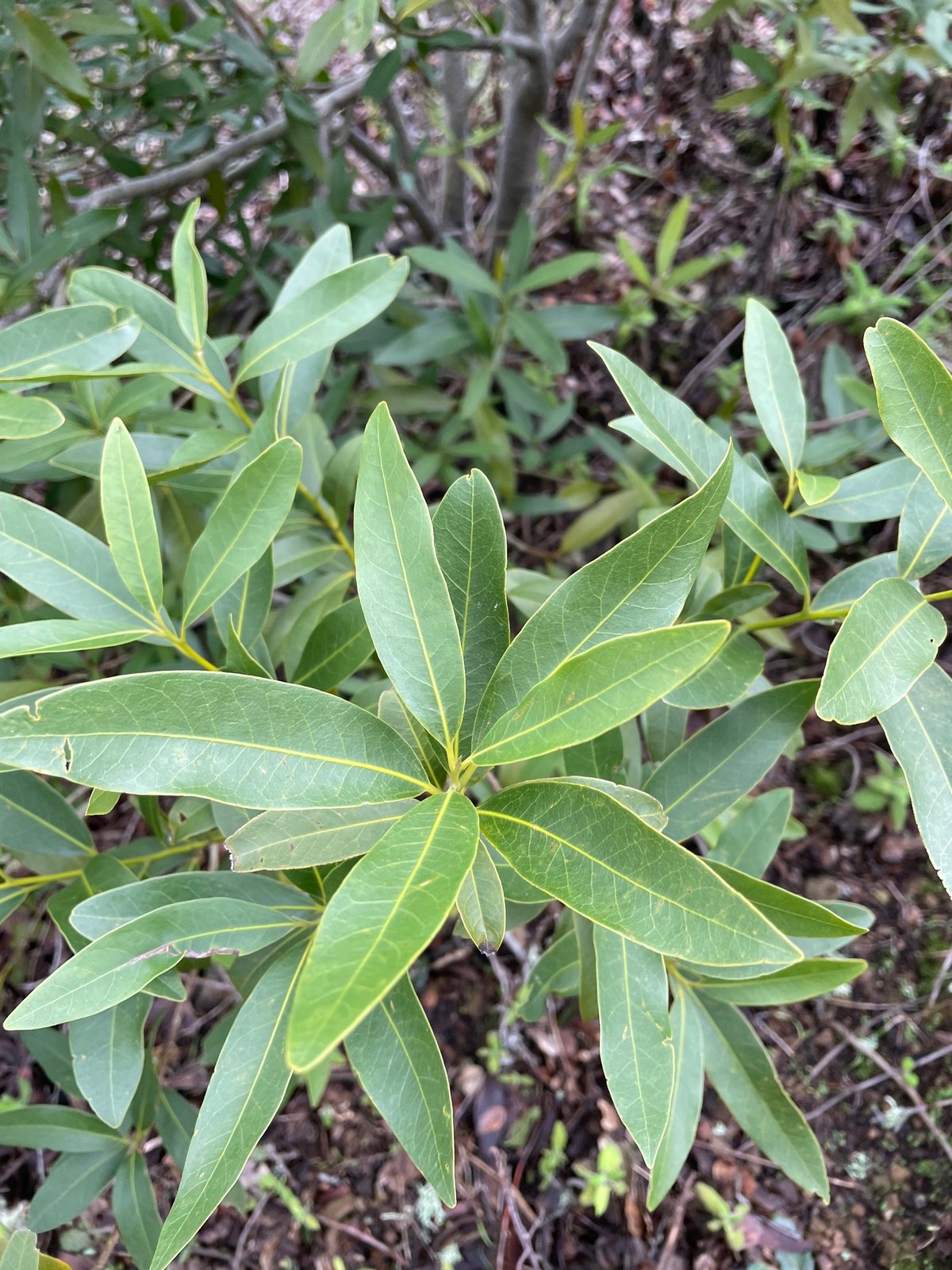
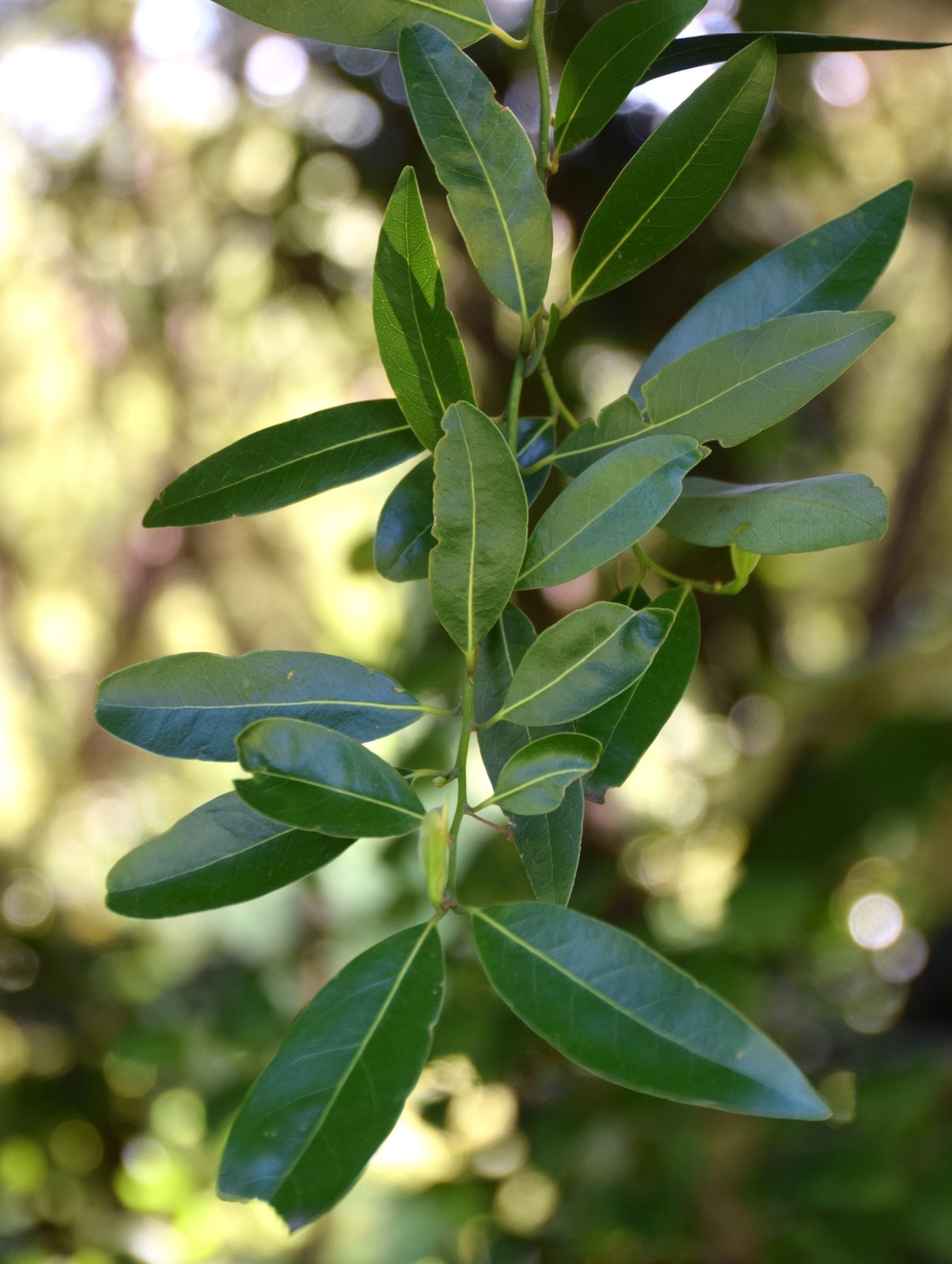
- Evergreen. Glossy, leathery, narrow oval leaves, dark green above and paler beneath, with a powerful spicy scent when crushed.
- Growth
- Moderate; faster with moisture and deep soil, slower on dry sites.
- Care needed
- Low
The year at a glance
- Pollinators
- Deer resistant
- Drought tolerant
- Heat tolerant
- Wildlife
- Low allergen
- Fragrant
- Edible
| J | F | M | A | M | J | J | A | S | O | N | D | |
|---|---|---|---|---|---|---|---|---|---|---|---|---|
| Flowers | ||||||||||||
| Fruit | ||||||||||||
| Plant |
Northern hemisphere months. In Australia, shift them by six.
- Difficulty
- Moderate
- Toughness
- Fairly tough
Will it suit your garden?
Pick your zone, country, light and whether you have pets.
Full sun is 6 or more hours of direct sun a day, part shade 3 to 6 hours, shade under 3.
How it grows
Planting day
7 ft (2.2 m)
After 1 year
10 ft (3 m)
After 2 years
12 ft (3.7 m)
After 3 years
15 ft (4.5 m)
After 5 years
20 ft (6.1 m)
About 20 years to full size.
From a typical nursery size, at an average rate for this kind of plant. A rule of thumb, not a forecast.
Good to know
- Cats and dogs
- Mildly toxic: may upset a stomach
- Native to
- the US
- Growth rate
- Moderate
Care
Jobs through the year
- WaterApr–May, Sep–Oct, every 28 days
- Deep-water established trees only in prolonged dry weather; young trees need more frequent watering.
- WaterJun–Aug, every 21 days
- Water established trees deeply during drought; water regularly through the first two or three summers.
- MulchApr
- Spread 5–8 cm of organic mulch over the roots, keeping the trunk and root flare clear.
- PruneMar–Apr
- After severe frosts, remove small dead or crossing branches; do not top the tree.
- HarvestJan–Dec, every 14 days
- Pick mature leaves as needed; use sparingly because they are stronger than culinary bay, and remove before serving.
- ProtectJan–Mar, Nov–Dec
- Shelter young trees from frost and drying winds; unsuitable for reliable unprotected planting in zone 6.
- Water deeply through the first two or three summers, allowing the surface soil to dry between waterings.
- Mulch the root area with 2-3 in (5-8 cm) of organic material, keeping it clear of the trunk.
- Avoid routine feeding; apply fertiliser only if poor growth and a soil test indicate a deficiency.
- Allow space for the mature crown and keep the tree well away from paving and buildings.
- In colder districts, plant in spring in a position sheltered from drying winds.
Pruning. Prune in late winter or early spring, after severe frost risk has passed, to remove dead, damaged or crossing branches and establish a sound framework. Avoid topping; use a qualified arborist for large limbs.
Harvest
Pick healthy mature leaves as needed once the tree is established, using them fresh or drying them in an airy place. They are much stronger than ordinary culinary bay, so use a small amount and remove the whole leaf before serving.
Through the year
- Late winter
- Check for storm damage and remove small dead or damaged branches when severe frost is unlikely.
- Spring
- Plant in colder areas, water thoroughly and mulch without covering the root flare.
- Late spring
- Inspect leaves and shoots for scale insects, sticky honeydew and unusual leaf lesions.
- Summer
- Deep-water young trees during dry spells; give established trees occasional water during prolonged drought if needed.
- Summer
- Pick mature leaves for drying, avoiding damaged or diseased foliage.
- Autumn
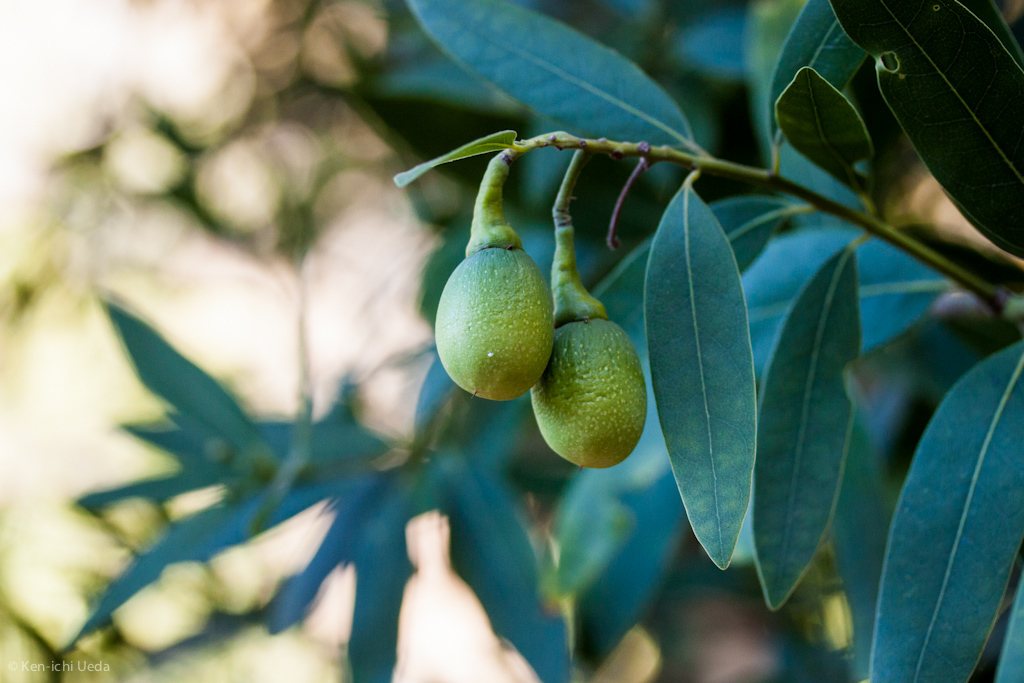
- Plant in mild climates and clear fallen fruits from paths where they could become slippery.
In the garden
- Use as a large evergreen shade tree in a spacious garden, allowing for its broad mature crown.
- Plant as a woodland backdrop with native shrubs and ferns beneath the outer canopy.
- Use several trees as an informal screen where there is room for their eventual width.
- Retain a multi-stemmed specimen as a sculptural focal point in a California-native landscape.
Garden styles it suits: California native, Pacific Northwest woodland, Woodland, Wildlife garden, Mediterranean and Green on green.
Plant it with: Toyon, Coffeeberry, Western sword fern, Evergreen huckleberry, Douglas iris and California wild rose.
Wildlife: Flowers provide food for early-season insects. Birds and small mammals eat the fruits, and the dense evergreen canopy offers shelter and nesting cover.
Problems to watch for
- Sudden oak death pathogen: California bay can carry Phytophthora ramorum on its leaves and spread infection to susceptible oaks. In affected parts of California and Oregon, seek local guidance before planting near oaks; do not move suspect leaves, soil or nursery plants.
- Root rot in poorly drained soil: avoid sites that remain waterlogged and do not keep the trunk base wet.
- Scale insects and sooty mould: inspect stems and leaf undersides; encourage natural predators and use a labelled horticultural oil on accessible infestations if necessary.
- Frost and drying-wind damage: shelter young trees, avoid frost pockets and wait until new growth shows the extent of injury before cutting back.
Safety
The leaves are used sparingly as a culinary seasoning, but their concentrated aromatic oils can irritate people; crushing and closely inhaling the leaves can cause headaches. Do not swallow whole leaves or use the essential oil internally. Reliable species-specific toxicity information for cats, dogs and horses is limited, so do not assume it is safe for browsing animals; prevent them from eating leaves or fruits and seek veterinary advice after a substantial ingestion.
Easily confused with
Bay laurel (Laurus nobilis)
Ordinary culinary bay usually has more noticeably wavy leaf margins and a gentler bay scent; California bay has flatter margins and a much sharper, penetrating aroma.
Cherry laurel (Prunus laurocerasus)
Cherry laurel has broader, finely toothed leaves and upright spikes of white flowers, rather than small yellow-green flower clusters. Its leaves are poisonous and must not be substituted in cooking.
Oregon myrtlewood sold as myrtle (Myrtus communis)
True common myrtle has small leaves arranged in opposite pairs and conspicuous white flowers with many stamens; California bay has alternate leaves.
The name
Umbellularia refers to the small umbrella-like flower clusters, while californica means 'of California'.
Propagation. Sow fresh, cleaned seed in autumn in a protected outdoor seedbed or pots; do not let it dry out, and expect slow or uneven germination. Semi-ripe cuttings can be tried in summer, but rooting is often difficult.
Checked against open data
- Accepted botanical name
- Umbellularia californica
- In the US and Canada
- Native in the lower 48 states.
- Native range
- California, Mexico Northwest and Oregon.
- Measured
- Soil pH 5.7 to 7.4. Average height 2499 cm.
Sources: GBIF (CC BY 4.0), USDA PLANTS and Trefle (CC BY 4.0). The care and design notes are LandscapeGPT's own.
See it in your own yard.
Upload a photo of your yard and see it redesigned with plants that suit your climate, each checked against your zone.