California gray rush
Juncus patens. Family Juncaceae. Perennial.
Also called California grey rush, Spreading rush.
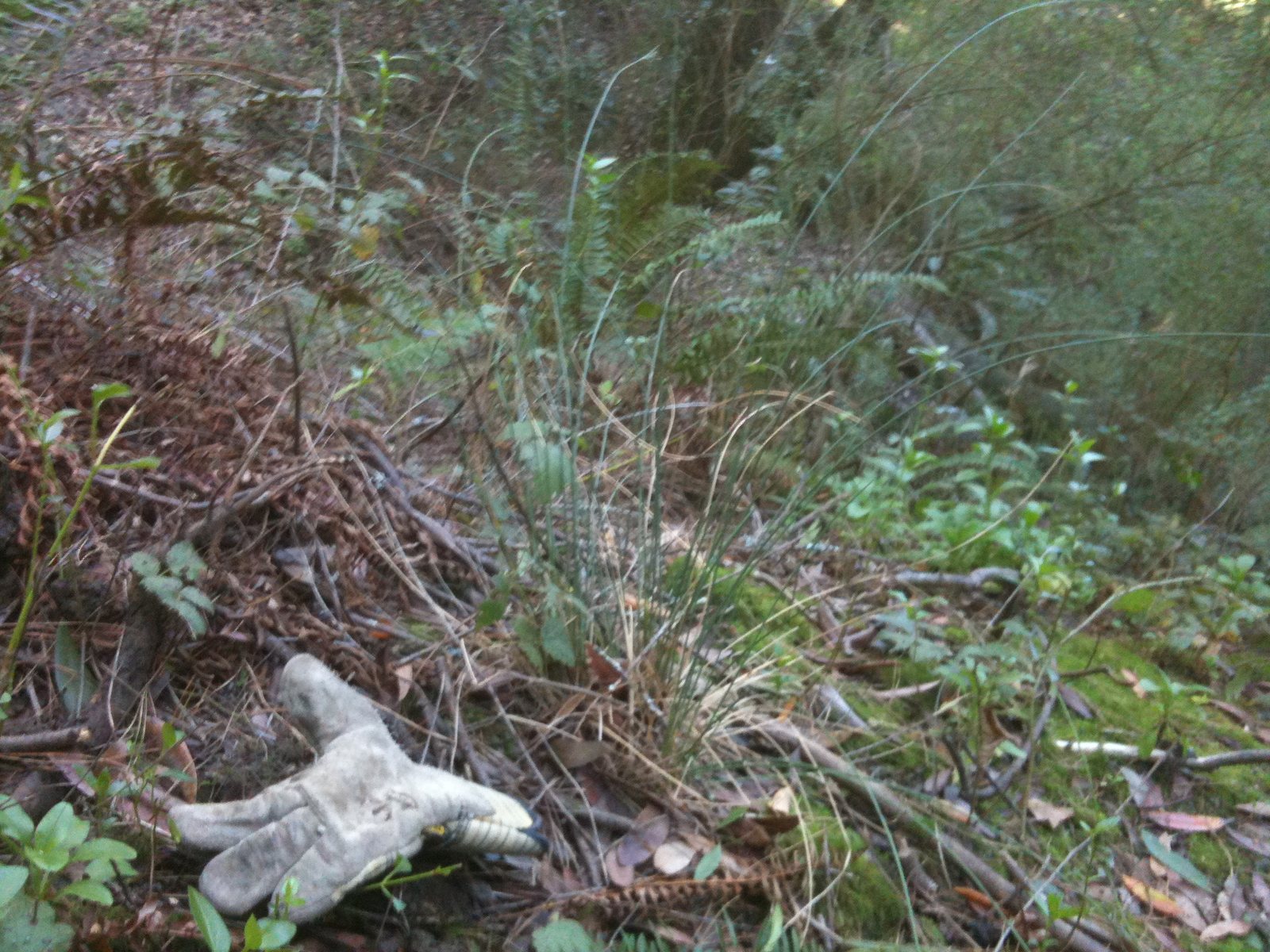
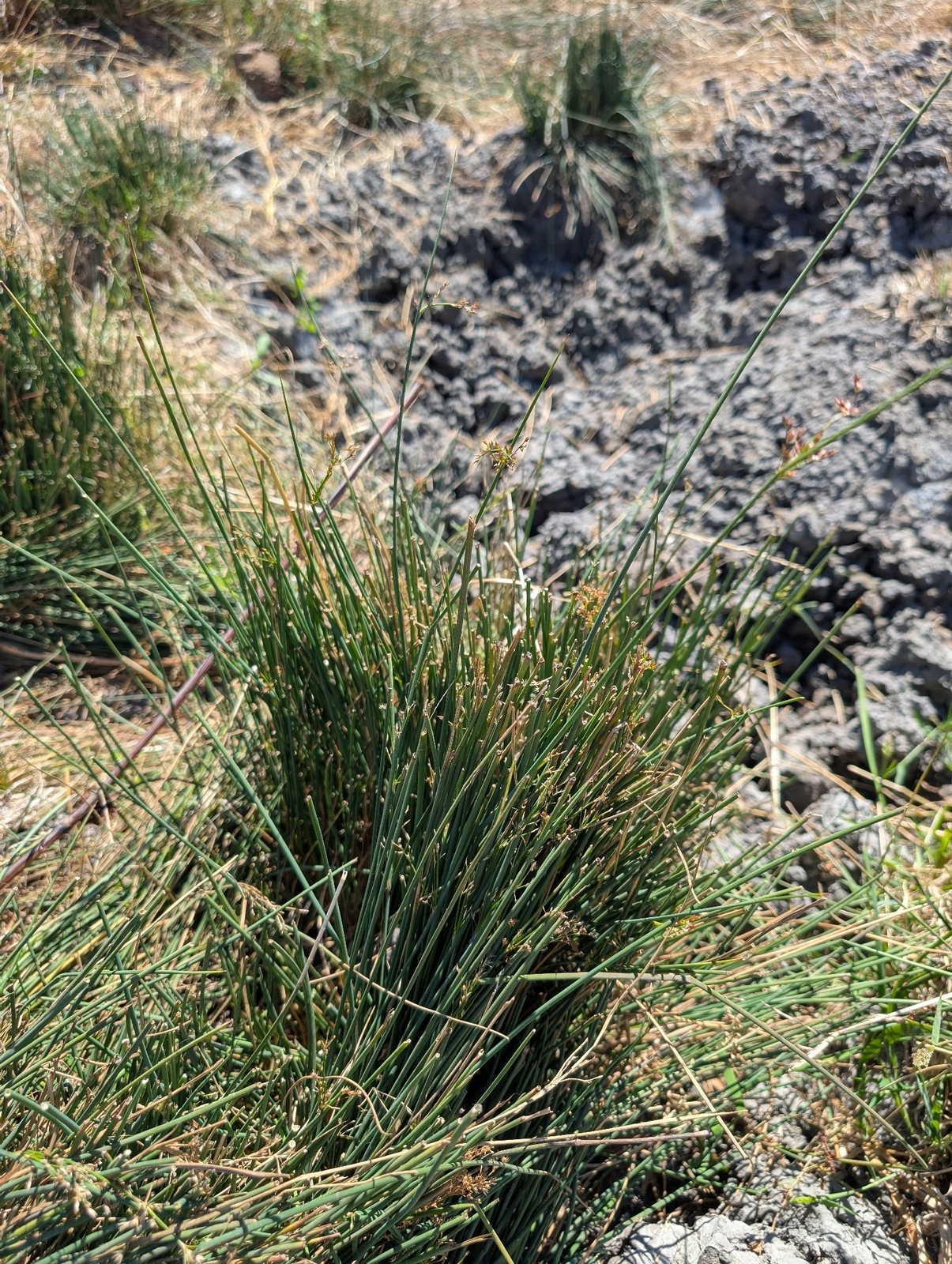
California gray rush is a clump-forming, evergreen rush native to western North America, grown for its upright gray-green to blue-green stems. It adds fine texture and year-round structure beside ponds, in rain gardens and in irrigated borders, while tolerating some summer dryness once established.
At a glance
- Sun
- Full sun to partial shade; the strongest upright growth and bluest coloring usually develop in sun.
- Water
- Prefers consistently moist soil and tolerates seasonal saturation. Established plants withstand some dry periods, but look better with occasional deep watering during prolonged summer drought.
- Soil
- Adaptable to clay, loam and sandy soil if moisture is adequate; tolerates poor drainage and seasonally waterlogged ground.
- Height
- 1-3 ft (0.3-0.9 m)
- Spread
- 1-3 ft (0.3-0.9 m), gradually widening by short rhizomes
- Flowers
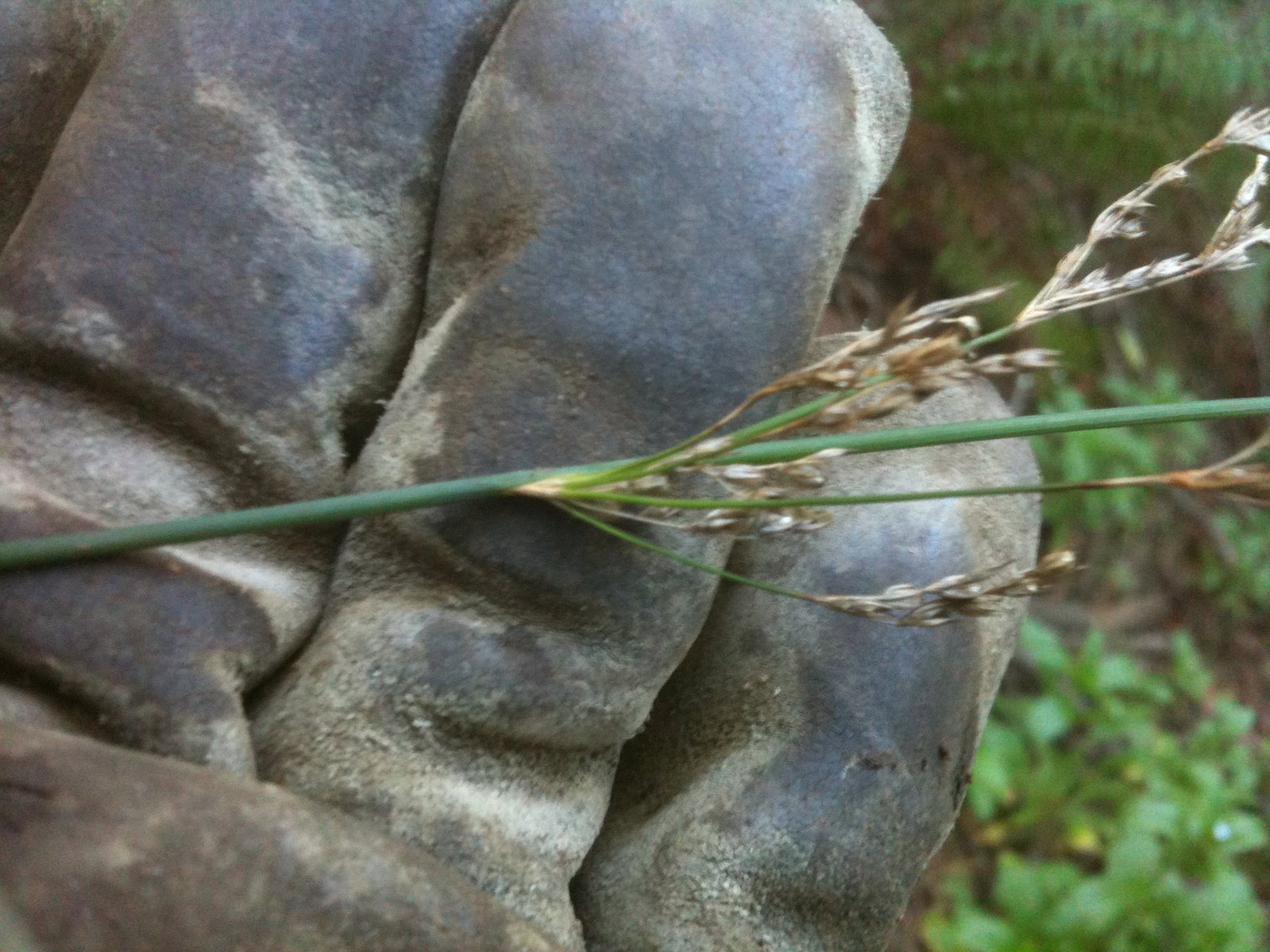
- Small, inconspicuous greenish-brown flower clusters in spring and summer, emerging from the sides of stems near their tips.
- Foliage
- Evergreen. Slender, upright, cylindrical gray-green to blue-green stems with fine lengthwise ridges; true leaves are reduced mainly to sheaths at the base.
- Growth
- Moderate
- Care needed
- Low
The year at a glance
- Deer resistant
- Drought tolerant
- Heat tolerant
- Wildlife
| J | F | M | A | M | J | J | A | S | O | N | D | |
|---|---|---|---|---|---|---|---|---|---|---|---|---|
| Flowers | ||||||||||||
| Fruit | ||||||||||||
| Plant |
Northern hemisphere months. In Australia, shift them by six.
- Difficulty
- Moderate
- Toughness
- Fairly tough
Will it suit your garden?
Pick your zone, country, light and whether you have pets.
Full sun is 6 or more hours of direct sun a day, part shade 3 to 6 hours, shade under 3.
How it grows
Planting day
1 ft (0.3 m)
After 1 year
1.3 ft (0.4 m)
After 2 years
1.6 ft (0.5 m)
After 3 years
2 ft (0.6 m)
full size
About 3 years to full size.
From a typical nursery size, at an average rate for this kind of plant. A rule of thumb, not a forecast.
Good to know
- Cats and dogs
- Safe
- Native to
- the US
- Growth rate
- Moderate
Care
Jobs through the year
- WaterApr–May, Sep–Oct, every 7 days
- Water established outdoor clumps if soil is drying; keep first-year plants consistently moist.
- WaterJun–Aug, every 7 days
- Deep-water established clumps during dry weather; skip watering if soil remains moist.
- WaterJan–Mar, Nov–Dec, every 14 days
- For plants overwintering under cover, check moisture and water enough to prevent complete drying.
- PruneMar–Apr
- Remove dead stems at the base; cut back the whole clump only if badly weathered.
- DivideApr–May
- Divide congested clumps and replant healthy outer sections, keeping them moist.
- MulchMay
- Refresh moisture-conserving mulch without covering the crown; use compost on very poor soil.
- ProtectOct–Nov
- Not reliably hardy in zones 6–7; move container plants into a bright, cool, frost-free shelter.
- ProtectMay
- Return overwintered plants outdoors gradually after the danger of frost has passed.
- DeadheadJun–Jul
- Remove flower clusters before seeds ripen if unwanted seedlings are a concern.
- Water regularly through the first growing season so the root ball does not dry out.
- Once established, water deeply during long dry spells if stems begin browning or losing vigor.
- Avoid routine feeding; on very poor soil, apply a thin layer of compost in spring.
- Mulch around new plants to conserve moisture, keeping mulch clear of the crown.
- Divide crowded clumps in spring when the center becomes congested or loses vigor.
Pruning. In late winter or early spring, cut dead and damaged stems out at the base. Avoid routine shearing; if the whole clump is badly weathered, cut it back just before active spring growth.
Through the year
- Late winter
- Remove dead stems and check whether older clumps need dividing.
- Spring
- Plant or divide clumps, then water thoroughly and keep them moist while they establish.
- Late spring
- Refresh mulch around plants without covering their crowns.
- Summer
- Check soil moisture during dry weather and water deeply if stems begin to brown.
- Autumn
- Remove unwanted seedlings and leave healthy stems standing for winter structure.
In the garden
- Plant in repeated groups along a rain-garden edge to create a consistent upright texture.
- Use beside a pond or seasonal swale, placing the crown near the waterline rather than in deep water.
- Pair with broad-leaved perennials to contrast their foliage with its narrow vertical stems.
- Grow in large containers with reliable watering for a restrained, architectural accent.
Garden styles it suits: California native, Modern, Bog garden, Coastal, Low-maintenance and Winter interest.
Plant it with: Tufted hair grass, California field sedge, Western blue-eyed grass, Seep monkeyflower, Western columbine and Douglas iris.
Wildlife: Dense clumps provide shelter for small invertebrates and cover at wetland margins. Flowers are wind-pollinated rather than a significant nectar source.
Problems to watch for
- Brown tips or extensive summer browning: check for dry soil and water deeply; dead stems will not turn green again.
- Weak, leaning growth in deep shade: move to a brighter position and avoid excessive fertilizer.
- Thin or dead clump centers: divide in spring and replant healthy outer sections.
- Unwanted seedlings in moist bare soil: remove seedlings promptly or cut off flower clusters before seed ripens.
Safety
Not known to be toxic to people, cats, dogs or horses. Species-specific safety information is limited, so do not treat any part as edible; stiff stem tips can also irritate eyes or mouths.
Easily confused with
Soft rush (Juncus effusus)
Usually has smoother, brighter green stems and a softer appearance; California gray rush typically has grayer stems with more noticeable lengthwise ridges.
Grassland sedge (Carex divulsa)
Has obvious flat, arching leaf blades and triangular flowering stems, rather than the mostly leafless, round upright stems of California gray rush.
The name
The Latin species name patens means spreading or open, referring to the spreading flower clusters.
Propagation. Divide established clumps in spring, keeping roots and several healthy stems on each section. It can also be raised from seed sown on the surface of moist compost; seedlings may vary in stem color.
Checked against open data
- Accepted botanical name
- Juncus patens
- In the US and Canada
- Native in the lower 48 states.
- Native range
- California, Mexico Central, Mexico Northwest, Oregon and Washington.
Sources: GBIF (CC BY 4.0), USDA PLANTS and Trefle (CC BY 4.0). The care and design notes are LandscapeGPT's own.
See it in your own yard.
Upload a photo of your yard and see it redesigned with plants that suit your climate, each checked against your zone.