Desert agave
Agave deserti. Family Asparagaceae. Succulent.
Also called Desert century plant.
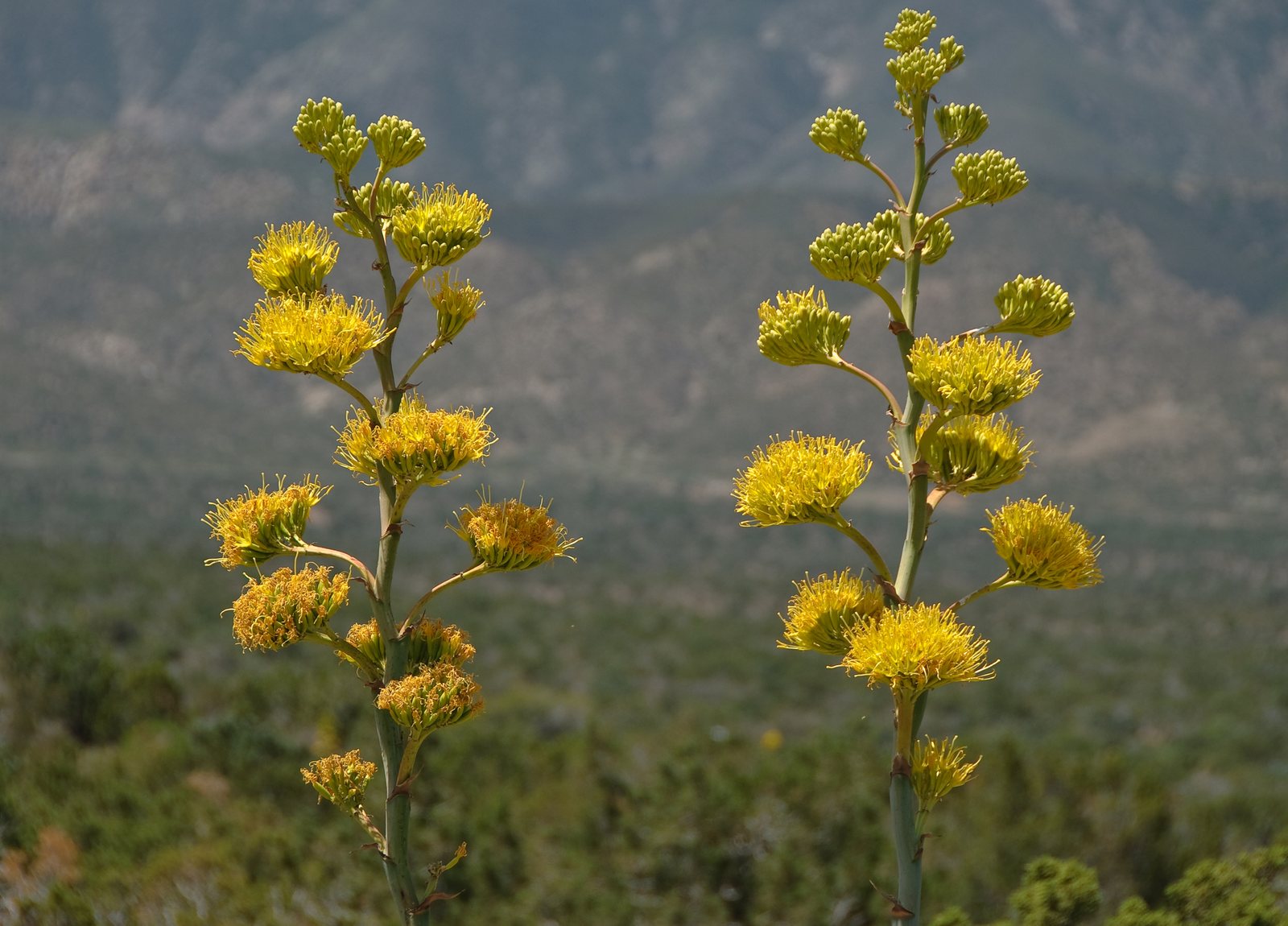
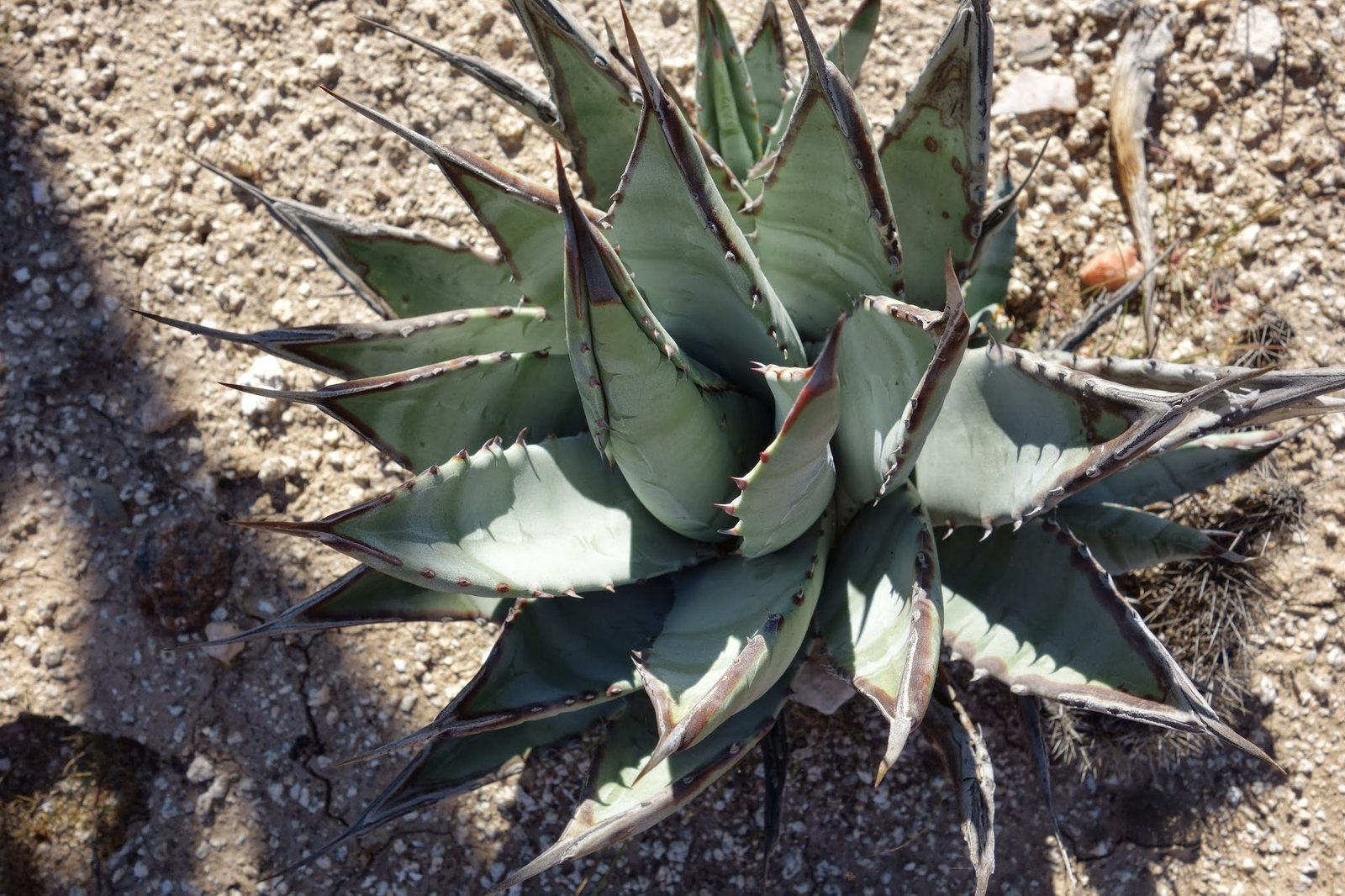
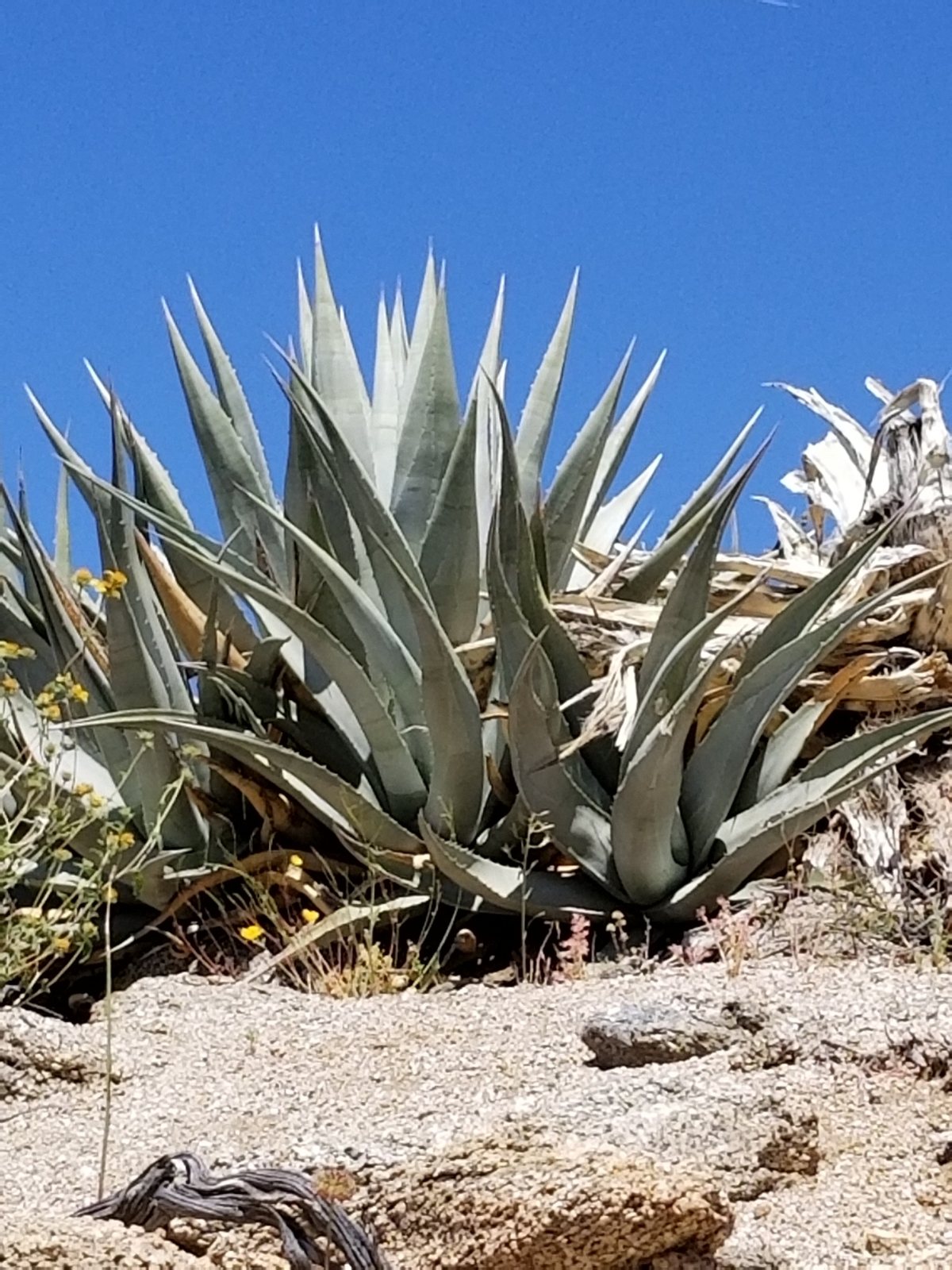
Desert agave is a slow-growing succulent native to desert regions of the southwestern United States and northwestern Mexico. Its compact rosettes of blue-grey, sharply armed leaves suit dry gravel gardens and rocky slopes. Each rosette flowers once, usually after many years, then dies; offsets often survive around it.
At a glance
- Sun
- Full sun; light afternoon shade is helpful in exceptionally hot sites.
- Water
- Very low once established. Water occasionally during prolonged warm-weather drought, allowing the soil to dry completely between waterings; keep nearly dry in winter.
- Soil
- Sharply drained, sandy or gravelly soil. Avoid heavy clay, wet planting pockets and moisture-retentive compost.
- Height
- 1-2 ft (0.3-0.6 m); flower stalk 6-15 ft (1.8-4.6 m)
- Spread
- 2-3 ft (0.6-0.9 m) per rosette; offsetting clumps can spread farther
- Flowers
- Mature rosettes produce yellow flowers on a tall, branched stalk in late spring or summer; flowering is a once-only event for each rosette.
- Foliage
- Evergreen rosettes of thick, blue-grey to grey-green leaves with toothed margins and a sharp terminal spine.
- Growth
- Slow
- Care needed
- Low
The year at a glance
- Pollinators
- Deer resistant
- Drought tolerant
- Heat tolerant
- Low allergen
| J | F | M | A | M | J | J | A | S | O | N | D | |
|---|---|---|---|---|---|---|---|---|---|---|---|---|
| Flowers | ||||||||||||
| Fruit | ||||||||||||
| Plant |
Northern hemisphere months. In Australia, shift them by six.
- Difficulty
- Moderate
- Toughness
- Fairly tough
Will it suit your garden?
Pick your zone, country, light and whether you have pets.
Full sun is 6 or more hours of direct sun a day, part shade 3 to 6 hours, shade under 3.
How it grows
Planting day
0.8 ft (0.25 m)
After 1 year
0.9 ft (0.27 m)
After 2 years
1 ft (0.29 m)
After 3 years
1 ft (0.31 m)
After 5 years
1.2 ft (0.35 m)
About 10 years to full size.
From a typical nursery size, at an average rate for this kind of plant. A rule of thumb, not a forecast.
Good to know
- Cats and dogs
- Toxic
- Native to
- the US
- Growth rate
- Slow
Care
Jobs through the year
- WaterMay, Sep, every 30 days
- Water established plants only if thoroughly dry; young plants and pots need closer checks.
- WaterJun–Aug, every 21 days
- Water only during prolonged drought after soil dries completely; never water routinely into moist soil.
- MulchMay
- Use gravel mulch and keep the crown above surrounding soil.
- FeedMay
- Feed pots lightly with dilute cactus fertiliser; do not routinely feed plants in the ground.
- PruneApr–May
- Remove fully dead leaves with protective equipment; never shorten healthy leaves.
- PruneSep–Oct
- After an infrequent flowering year, remove the dried dead rosette and stalk, retaining healthy offsets.
- DivideMay–Jun
- Separate unwanted rooted offsets if needed; let cut surfaces dry before potting.
- ProtectJan–Apr, Oct–Dec
- Grow in a movable pot here; overwinter bright, frost-free and nearly dry, protected from rain.
- Plant on a raised mound or slope where winter rain drains away quickly.
- Water newly planted specimens sparingly during warm weather; let the root zone dry before watering again.
- Use gravel mulch rather than bark, keeping the crown clear.
- Do not routinely feed plants in the ground; feed container plants lightly once in spring with a dilute cactus fertiliser.
- In cold or wet climates, grow in a drainage-holed pot and move under bright, frost-free cover for winter.
- Wear sturdy gloves and eye protection, and keep the pointed leaves away from paths and play areas.
Pruning. Remove completely dead leaves at the base in spring using long-handled tools; do not shear or shorten healthy leaves. After flowering, remove the dead stalk and rosette once they have dried, leaving healthy offsets intact.
Through the year
- Spring
- Plant or repot into a sharply drained mix once freezing weather has passed.
- Late spring
- Separate unwanted rooted offsets, allowing any cut surfaces to dry before potting.
- Summer
- Water only after the soil has dried thoroughly; check for sudden wilting or a loose crown.
- Autumn
- Reduce watering and move containers under cover before frost or persistent rain.
- Winter
- Keep sheltered plants bright and nearly dry; check outdoor crowns for trapped wet debris.
In the garden
- Use as a sculptural focal point in a sunny gravel garden, surrounded by open space.
- Plant on a dry, rocky bank with desert marigolds and penstemons for contrasting foliage and seasonal colour.
- Repeat individual rosettes beside contemporary paving, set well back from walking routes.
- Grow in a broad, heavy container for a courtyard where winter shelter is available.
Garden styles it suits: Desert modern, Desert / xeriscape, Dry gravel garden, Southwestern, California native and Architectural minimal.
Plant it with: Desert marigold, Brittlebush, Red yucca, Desert spoon, Blackfoot daisy and Firecracker penstemon.
Wildlife: The flowers provide nectar and pollen for insects, including bees, and may attract nectar-feeding birds. Flowering is infrequent, so it is not a dependable annual nectar source.
Problems to watch for
- Root and crown rot: prevent standing water, keep the crown above surrounding soil and avoid winter watering; discard plants with a soft, collapsing crown.
- Agave snout weevil: sudden collapse, a loose centre or foul-smelling decay can indicate attack; remove and dispose of infested plants promptly and inspect nearby agaves.
- Scale insects: inspect leaf bases and remove small infestations by hand; use a product labelled for scale on succulents if needed.
- Cold and wet damage: leaves may blacken or collapse after freezing in damp conditions; improve rain protection and move container plants under cover before winter.
Safety
Agave sap can cause significant skin and eye irritation in people; chewing the leaves may irritate the mouth and digestive tract. Treat the leaves and sap as harmful to cats and dogs, and keep horses from browsing them; species-specific poisoning information for Agave deserti, especially in horses, is limited. The leaf teeth and terminal spines can cause serious puncture injuries.
Easily confused with
Parry's agave (Agave parryi)
Usually forms a denser, more rounded rosette with broader, shorter leaves; desert agave generally has a more open rosette of narrower leaves.
Shaw's agave (Agave shawii)
Usually has broader, greener leaves with conspicuous hooked marginal teeth; desert agave is generally narrower-leaved and more blue-grey.
Century plant (Agave americana)
Mature plants are much larger, with long, often arching leaves; desert agave remains a relatively compact rosette.
The name
Agave comes from the Greek for noble or admirable, while deserti means of the desert.
Propagation. Separate rooted offsets in spring or early summer with clean tools. Let cut surfaces dry and callus for several days before potting into a gritty mix, then water sparingly. Seed can also be sown warm in a free-draining medium.
Checked against open data
- Accepted botanical name
- Agave deserti
- In the US and Canada
- Native in the lower 48 states.
- Native range
- California and Mexico Northwest.
- Measured
- Average height 100 cm.
Sources: GBIF (CC BY 4.0), USDA PLANTS and Trefle (CC BY 4.0). The care and design notes are LandscapeGPT's own.
See it in your own yard.
Upload a photo of your yard and see it redesigned with plants that suit your climate, each checked against your zone.