Desert four o'clock
Mirabilis multiflora. Family Nyctaginaceae. Perennial.
Also called Colorado four o'clock, Showy four o'clock.
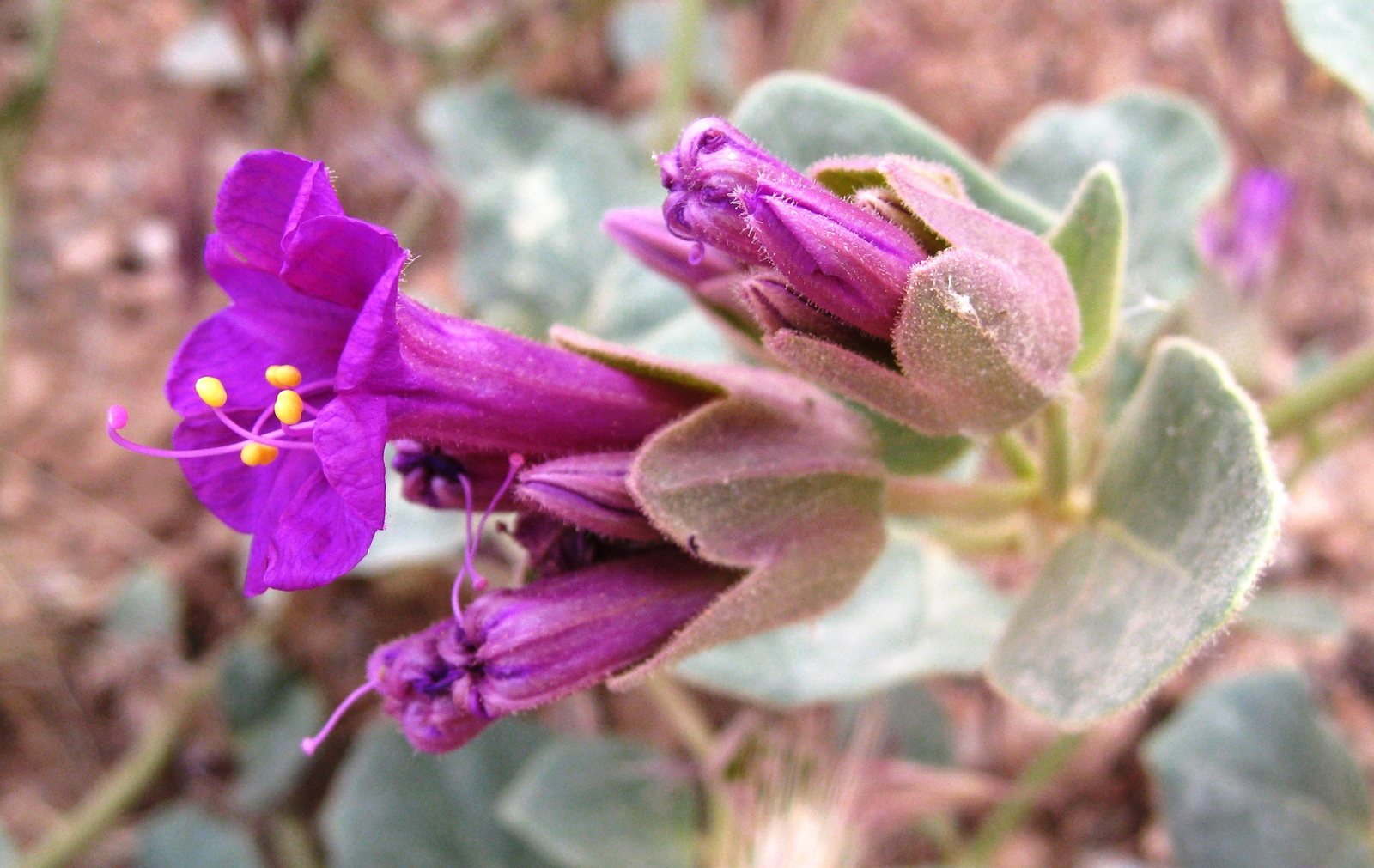
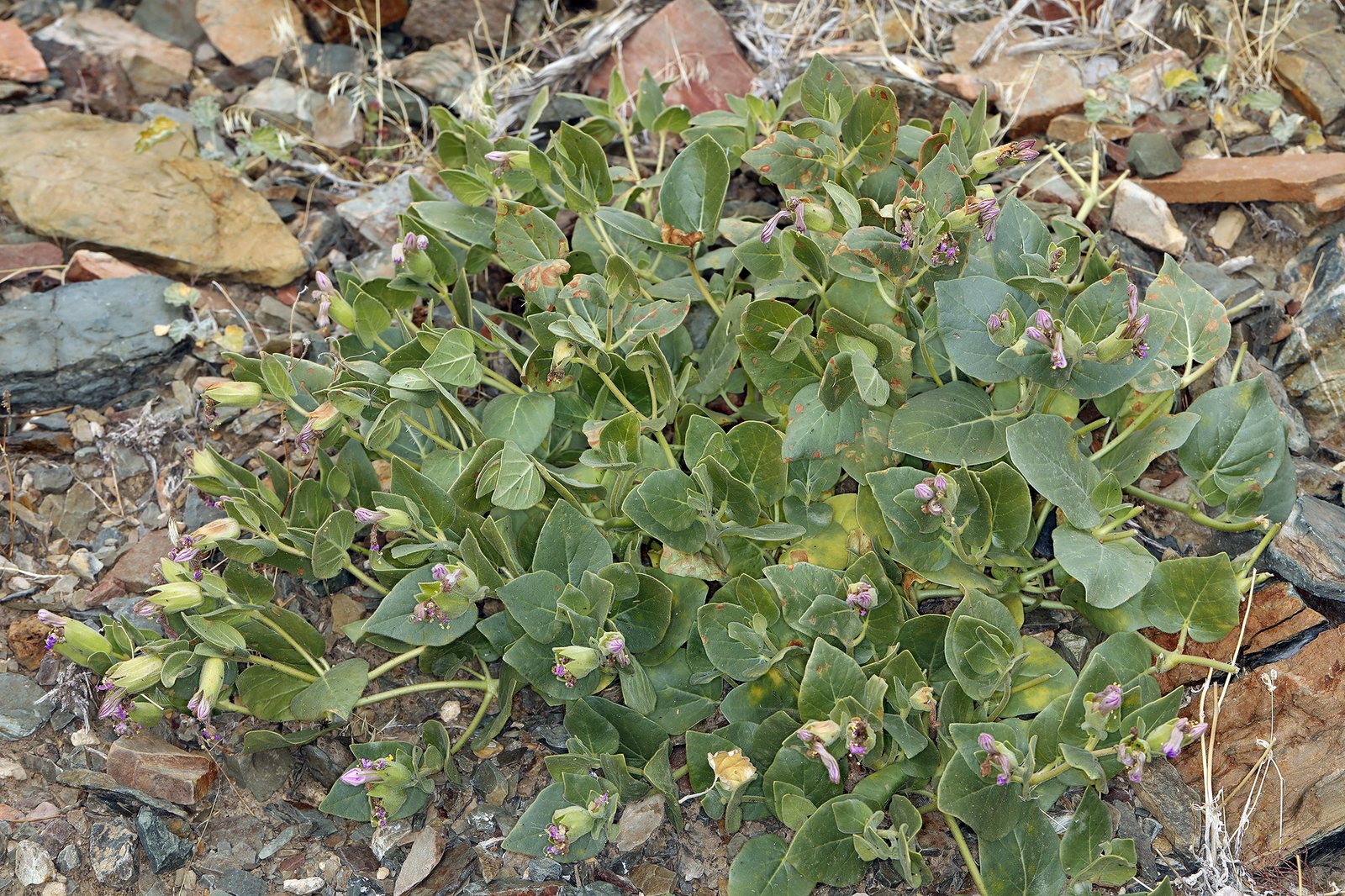
Desert four o'clock is a spreading, drought-tolerant perennial native to the southwestern United States and northern Mexico. Gardeners grow it for its broad mound of foliage and magenta-pink flowers, which open in late afternoon and attract night-flying pollinators. It thrives in sunny, dry gardens but is less reliable where winters are wet or summers are cool.
At a glance
- Sun
- Full sun; tolerates light afternoon shade in very hot climates.
- Water
- Low once established. Water young plants regularly while they root, then water deeply only during prolonged drought.
- Soil
- Well-drained sandy, gravelly or rocky soil; tolerates lean and alkaline ground. Avoid persistently wet soil, especially in winter.
- Height
- 1-2 ft (0.3-0.6 m)
- Spread
- 3-6 ft (0.9-1.8 m)
- Flowers
- Late spring or summer into autumn, depending on climate; magenta to purplish-pink funnel-shaped flowers open in late afternoon and close the following morning.
- Foliage
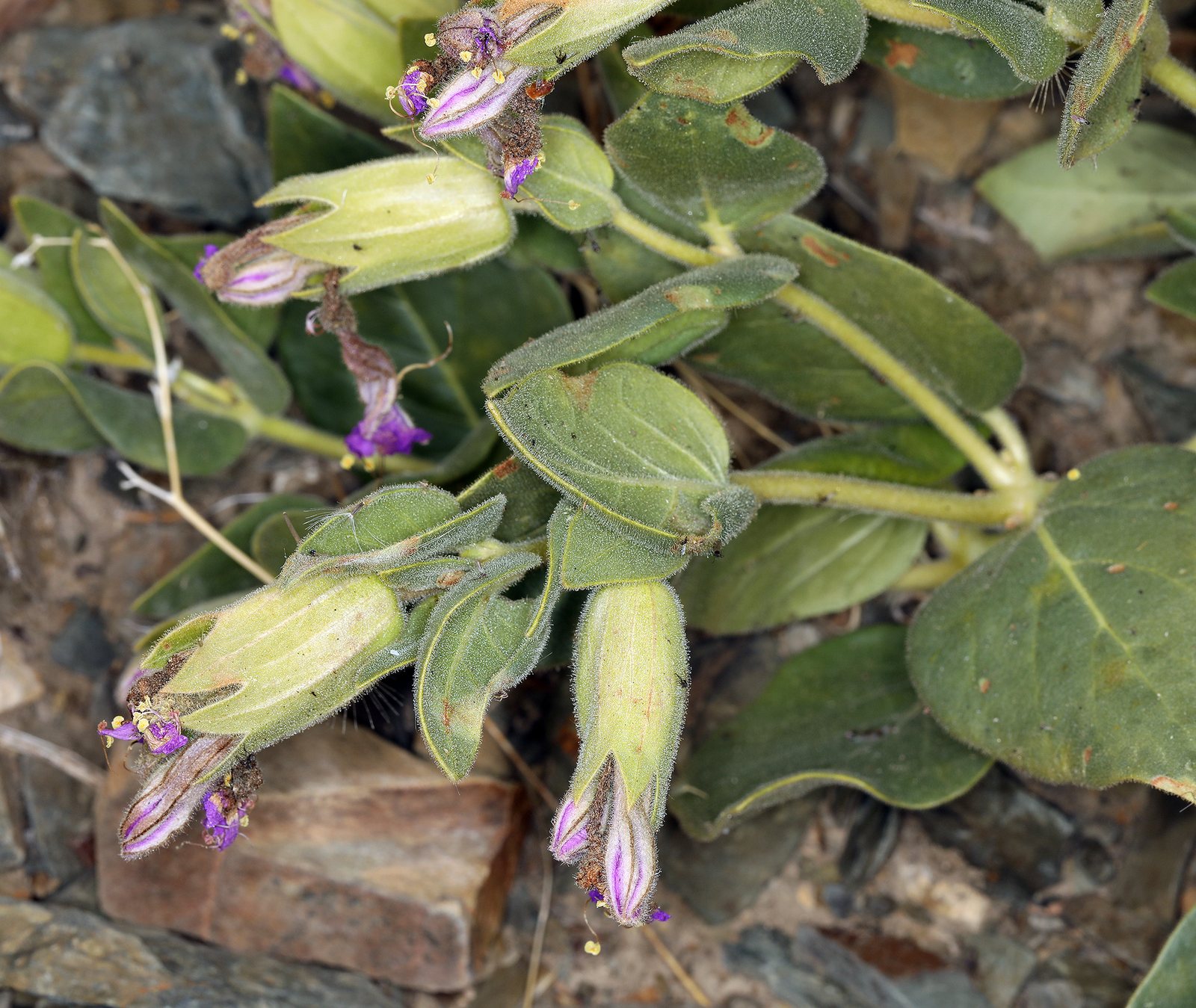
- Opposite, broad oval to somewhat heart-shaped green leaves on branching stems; growth dies back for winter.
- Growth
- Moderate; established plants make a broad mound each growing season.
- Care needed
- Low
The year at a glance
- Pollinators
- Deer resistant
- Drought tolerant
- Heat tolerant
- Low allergen
| J | F | M | A | M | J | J | A | S | O | N | D | |
|---|---|---|---|---|---|---|---|---|---|---|---|---|
| Flowers | ||||||||||||
| Fruit | ||||||||||||
| Plant |
Northern hemisphere months. In Australia, shift them by six.
- Difficulty
- Easy
- Toughness
- Very tough
Will it suit your garden?
Pick your zone, country, light and whether you have pets.
Full sun is 6 or more hours of direct sun a day, part shade 3 to 6 hours, shade under 3.
How it grows
Planting day
1 ft (0.3 m)
After 1 year
1.1 ft (0.35 m)
After 2 years
1.3 ft (0.4 m)
After 3 years
1.5 ft (0.45 m)
full size
About 3 years to full size.
From a typical nursery size, at an average rate for this kind of plant. A rule of thumb, not a forecast.
Good to know
- Cats and dogs
- Toxic
- Native to
- the US
- Growth rate
- Moderate
Care
Jobs through the year
- WaterApr–May, Sep, every 30 days
- Water established ground plants only in prolonged drought; water young plants more often while rooting.
- WaterJun–Aug, every 21 days
- Give established ground plants an occasional deep soak only during extended drought.
- PruneFeb–Mar
- Cut dead stems close to ground level before new growth appears.
- MulchApr–May
- Use a thin gravel mulch, keeping the crown clear.
- ProtectJan–Feb, Oct–Dec
- Clear wet debris from the crown and prevent winter waterlogging.
- Plant in spring in a sunny position with excellent drainage.
- Water during establishment, allowing the surface soil to dry between waterings; reduce watering once rooted.
- Avoid routine feeding and rich compost, which encourage excessive leafy growth.
- Use a thin gravel mulch rather than moisture-retentive mulch around the crown.
- Allow room for the spreading stems and avoid moving established plants, which develop a large, deep root.
Pruning. Cut dead stems back close to ground level in late winter or early spring before new growth appears. Routine summer pruning and deadheading are unnecessary.
Through the year
- Late winter
- Remove dead stems and check that water is not collecting around the crown.
- Spring
- Plant young plants once the soil is workable and warming; choose their permanent position carefully.
- Late spring
- Watch for new shoots before disturbing apparently empty ground; plants can emerge late.
- Summer
- Water new plants as needed, but let established plants dry between occasional deep soakings.
- Late summer
- Collect mature, dark seeds if you want to raise more plants.
- Autumn
- Reduce supplemental watering as growth dies back and clear wet debris from around the crown.
In the garden
- Use as a broad flowering mound among boulders in a dry gravel garden.
- Plant beside a terrace or seating area where the late-opening flowers can be enjoyed.
- Combine with upright penstemons and fine-textured grasses for contrast with its broad leaves.
- Place on a sunny bank where its spreading stems can cover open ground without frequent irrigation.
Garden styles it suits: Desert / xeriscape, Southwestern, Desert modern, Dry gravel garden, Pollinator garden and Evening garden.
Plant it with: Pineleaf penstemon, Firecracker penstemon, Blue grama, Indian ricegrass, Chocolate flower and Banana yucca.
Wildlife: Flowers provide nectar for hawkmoths and other visiting insects; bees also visit while flowers are open. Its late-opening flowers are particularly useful to dusk-active pollinators.
Problems to watch for
- Root or crown rot in wet soil: improve drainage or move young plants to a raised, gravelly position; avoid winter irrigation.
- Weak growth and sparse flowering in shade: provide more direct sun.
- Excessive leafy growth after feeding or frequent watering: stop fertilising and reduce irrigation once established.
- Failure after transplanting: use young nursery plants or sow seed in place rather than moving a mature, deep-rooted plant.
Safety
Species-specific toxicity to people, cats, dogs and horses is not well documented. Related four o'clocks contain harmful compounds, particularly in roots and seeds, so do not eat this plant or allow pets or livestock to chew it. The severity of poisoning from this species is uncertain.
Easily confused with
Garden four o'clock (Mirabilis jalapa)
Usually grows more upright and has flowers in a wider range of colours, including white, yellow and red. Each green, cup-like involucre surrounds one flower, whereas desert four o'clock has several flowers within each i…
Wild four o'clock (Mirabilis nyctaginea)
Has more upright growth, distinctly heart-shaped leaves and much smaller pink to purplish flowers, rather than the large, showy trumpets of desert four o'clock.
The name
Mirabilis means 'wonderful' in Latin, multiflora means 'many-flowered', and four o'clock refers to the flowers opening late in the day.
Propagation. Grow from seed sown in spring, preferably in its final position or in deep pots for planting out while young. Lightly nick the hard seed coat and soak overnight before sowing. Division is not recommended because of the large, deep root.
Checked against open data
- Accepted botanical name
- Mirabilis multiflora
- In the US and Canada
- Native in the lower 48 states.
- Native range
- Arizona, California, Colorado, Mexico Northeast, Mexico Northwest, Nevada, New Mexico, Texas and Utah.
- Measured
- Soil pH 6.5 to 8.5.
Sources: GBIF (CC BY 4.0), USDA PLANTS and Trefle (CC BY 4.0). The care and design notes are LandscapeGPT's own.
See it in your own yard.
Upload a photo of your yard and see it redesigned with plants that suit your climate, each checked against your zone.