Douglas fir
Pseudotsuga menziesii. Family Pinaceae. Tree.
Also called Douglas-fir, Oregon pine, Douglas spruce.
A large evergreen conifer native to western North America, Douglas fir has soft needles, a straight trunk and hanging cones with distinctive three-pointed bracts. It makes a substantial specimen or woodland tree for a large property, but its eventual size makes it unsuitable for most small gardens. Seed origin matters: coastal forms generally need milder conditions than interior mountain forms.
At a glance
- Sun
- Full sun; tolerates light shade when young.
- Water
- Moderate; water young trees deeply during dry spells. Established trees tolerate some seasonal drought, but prolonged heat and dry soil can cause decline.
- Soil
- Deep, well-drained, slightly acidic to neutral soil. Avoid waterlogged ground, shallow compacted soil and strongly alkaline sites.
- Height
- 60-100 ft (18-30 m) in cultivation; potentially much taller with age
- Spread
- 20-30 ft (6-9 m), sometimes wider on old, open-grown trees
- Foliage
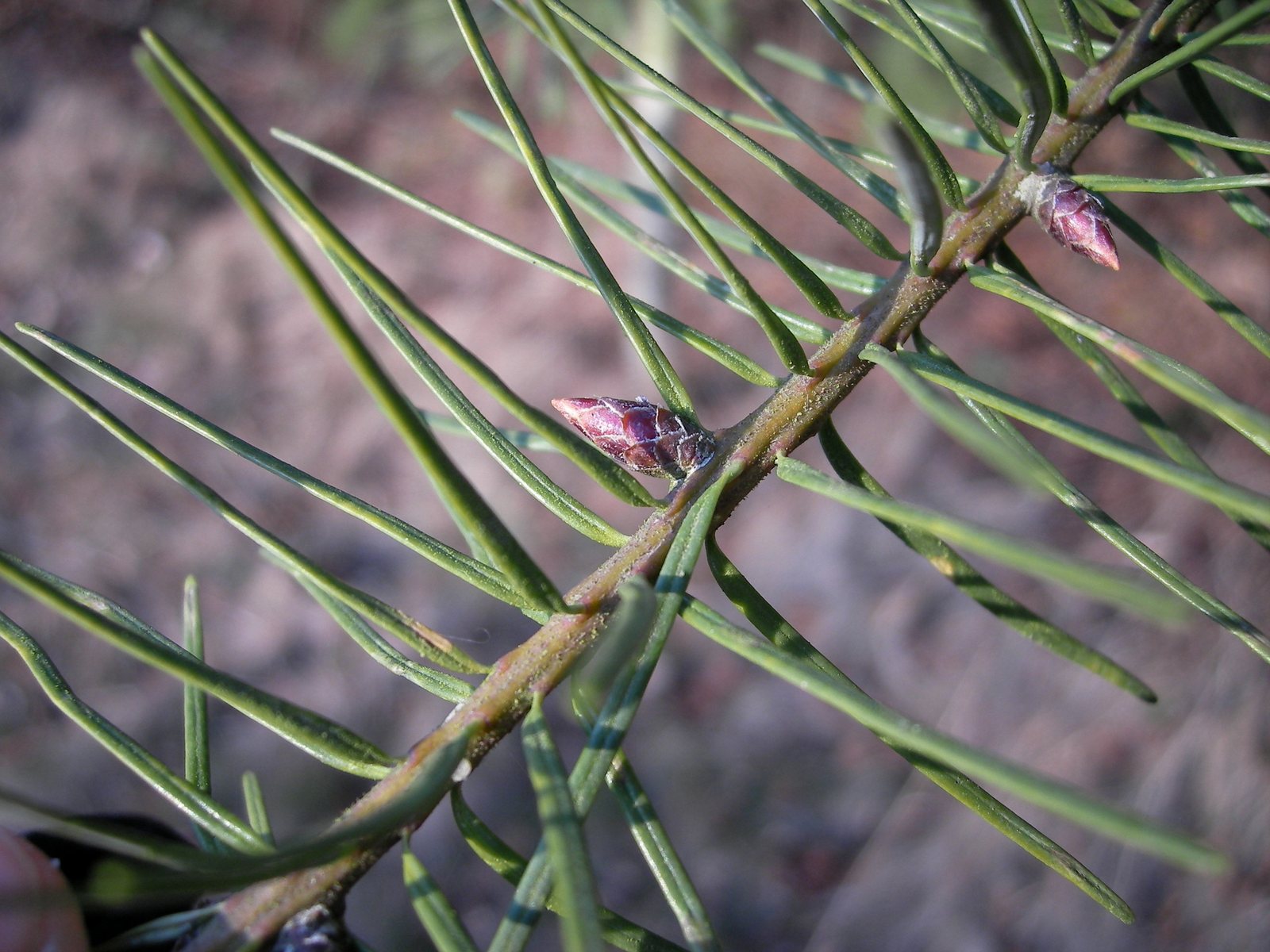
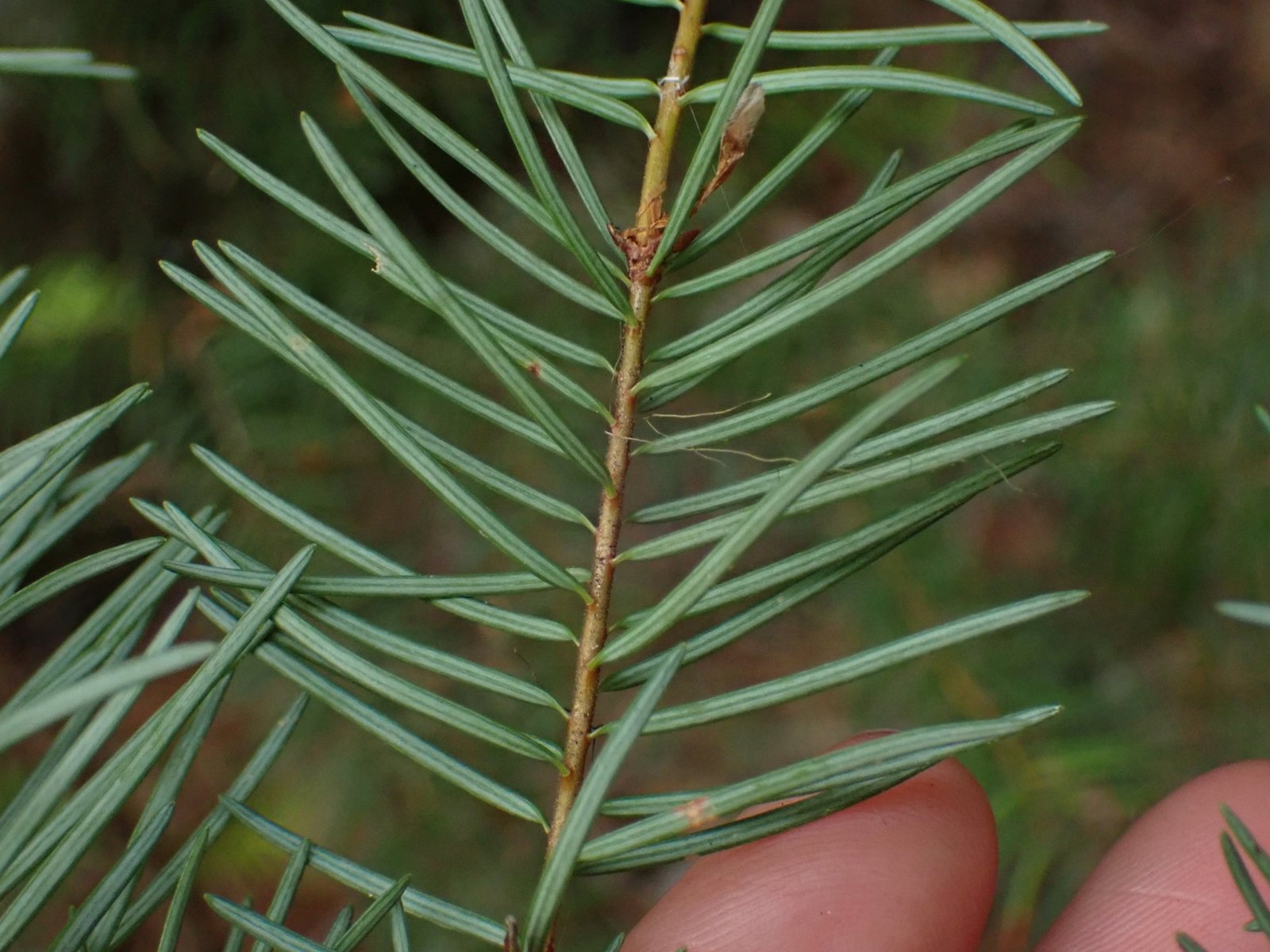
- Evergreen. Soft, flat green to blue-green needles with pale bands beneath and a resinous scent when crushed. Hanging brown cones have three-pointed bracts projecting between the scales.
- Growth
- Moderate to fast on suitable sites, often 1-2 ft (0.3-0.6 m) a year once established.
- Care needed
- Low
The year at a glance
- Cold hardy
- Wildlife
| J | F | M | A | M | J | J | A | S | O | N | D | |
|---|---|---|---|---|---|---|---|---|---|---|---|---|
| Fruit | ||||||||||||
| Plant |
Northern hemisphere months. In Australia, shift them by six.
- Difficulty
- Easy
- Toughness
- Fairly tough
Will it suit your garden?
Pick your zone, country, light and whether you have pets.
Full sun is 6 or more hours of direct sun a day, part shade 3 to 6 hours, shade under 3.
How it grows
Planting day
9 ft (2.9 m)
After 1 year
14 ft (4.2 m)
After 2 years
18 ft (5.5 m)
After 3 years
22 ft (6.8 m)
After 5 years
31 ft (9.5 m)
About 16 years to full size.
From a typical nursery size, at an average rate for this kind of plant. A rule of thumb, not a forecast.
Good to know
- Cats and dogs
- Mildly toxic: may upset a stomach
- Native to
- the US and Canada
- Growth rate
- Fast
Care
Jobs through the year
- WaterApr–May, Sep–Oct, every 21 days
- Deep-water established trees only during prolonged dry spells; young trees need more for two to three years.
- WaterJun–Aug, every 14 days
- During prolonged drought, soak the established root zone and let excess water drain.
- MulchMar–Apr
- Maintain 5–8 cm of organic mulch, keeping the trunk and root collar clear.
- PruneFeb–Mar
- Remove damaged or crossing branches while retaining one leader; never top or cut into bare old wood.
- Choose a locally suitable seed source and allow room for a full-sized tree, well clear of buildings and overhead wires.
- Water deeply during dry weather for the first two or three growing seasons; let the soil drain between waterings.
- Maintain a 2-3 in (5-8 cm) layer of organic mulch, keeping it away from the trunk.
- Avoid routine feeding; fertilize only where a soil test or clear deficiency indicates a need.
- Stake only if the root ball moves in wind, and remove supports once the tree is securely rooted.
Pruning. Remove dead, damaged or crossing branches in late winter or early spring, retaining the single leading shoot. Do not top the tree or cut back into bare old wood; use a qualified arborist for large branches.
Through the year
- Early spring
- Plant while the soil is workable in cold regions, and water the root ball thoroughly.
- Late winter
- Inspect the leader and branches; remove dead or damaged growth without reshaping the crown.
- Spring
- Renew mulch and keep grass away from the young tree's root zone.
- Summer
- Check soil moisture during dry spells and water young trees deeply when needed.
- Late summer
- Check for unusual needle yellowing, premature needle loss or shoot dieback.
- Autumn
- Plant in mild regions while soil remains warm; check that established trees enter winter with moist, freely draining soil.
In the garden
- Use as a solitary specimen in a large lawn or park-like garden, allowing its lower branches to remain.
- Plant in spacious woodland groups with other locally suitable conifers for a layered evergreen canopy.
- Use along a broad rural boundary for long-term screening, allowing generous spacing rather than treating it as a clipped hedge.
- Underplant the outer canopy with shade-tolerant shrubs and ferns where soil moisture allows.
Garden styles it suits: Pacific Northwest woodland, Woodland, Grand estate, Wildlife garden, Mountain lodge and Winter interest.
Plant it with: Vine maple, Salal, Oregon grape, Western sword fern and Rhododendrons.
Wildlife: Seeds feed squirrels and seed-eating birds, while the evergreen crown provides shelter and nesting sites. Mature trees support many insects, and old trees with cavities provide additional wildlife habitat.
Problems to watch for
- Needle-cast diseases can cause yellowing and premature needle drop, especially in humid conditions. Allow good airflow, avoid wetting foliage and seek a diagnosis before considering treatment.
- Root rot develops on poorly drained sites. Keep the root collar exposed, avoid overwatering and have leaning or declining trees assessed for safety.
- Aphids and adelgids may produce sticky honeydew or white waxy patches. Small infestations often need no treatment; encourage predators and avoid unnecessary broad-spectrum insecticides.
- Heat and drought stress can brown needles and kill shoots. Mulch and water young trees deeply; avoid planting where summers are persistently hot and dry.
Safety
Not known to be toxic to people, cats, dogs or horses. Needles, cones and resin are not suitable animal feed; chewing them may irritate the mouth or stomach, and resin can irritate sensitive skin.
Where it spreads. Spreads aggressively from plantations in parts of New Zealand, particularly South Island high country, where it is managed as a wilding conifer. It also invades some landscapes in Patagonia, Argentina and Chile; check local guidance before planting near natural vegetation.
Easily confused with
Grand fir (Abies grandis)
Grand fir has upright cones that break apart on the tree and rounded buds. Douglas fir has hanging cones with projecting three-pointed bracts and sharply pointed buds.
Western hemlock (Tsuga heterophylla)
Western hemlock usually has a drooping leading shoot, needles of noticeably unequal lengths and much smaller cones without projecting three-pointed bracts.
Sitka spruce (Picea sitchensis)
Sitka spruce has stiff, sharply pointed needles attached to woody pegs. Douglas fir needles are softer and lack those persistent pegs.
The name
Douglas fir honours Scottish botanist David Douglas, Pseudotsuga means 'false hemlock', and menziesii honours naturalist Archibald Menzies.
Propagation. Usually grown from seed given a period of cold, moist stratification before sowing. Choose seed of suitable geographic origin; named ornamental forms are generally grafted.
Checked against open data
- Accepted botanical name
- Pseudotsuga menziesii
- In the US and Canada
- Native in Canada and the lower 48 states.
- Native range
- Alaska, Alberta, Arizona, British Columbia, California, Colorado, Idaho, Mexico Central, Mexico Northeast, Mexico Northwest, Mexico Southwest and Montana.
- Measured
- Soil pH 5 to 7.5. Average height 2770 cm.
Sources: GBIF (CC BY 4.0), USDA PLANTS and Trefle (CC BY 4.0). The care and design notes are LandscapeGPT's own.
See it in your own yard.
Upload a photo of your yard and see it redesigned with plants that suit your climate, each checked against your zone.