Engelmann's hedgehog cactus
Echinocereus engelmannii. Family Cactaceae. Succulent.
Also called Engelmann's cactus, Strawberry hedgehog cactus.
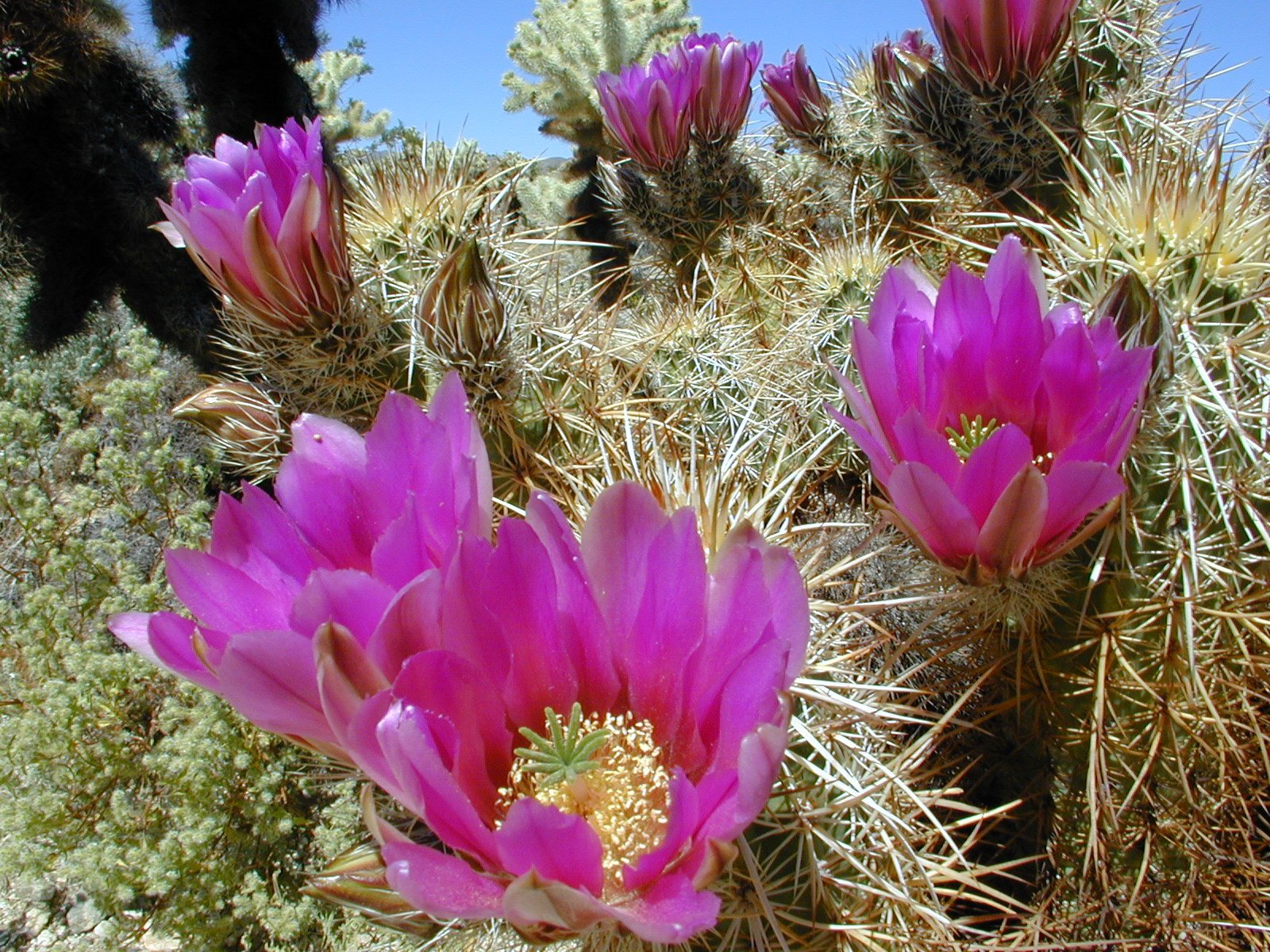
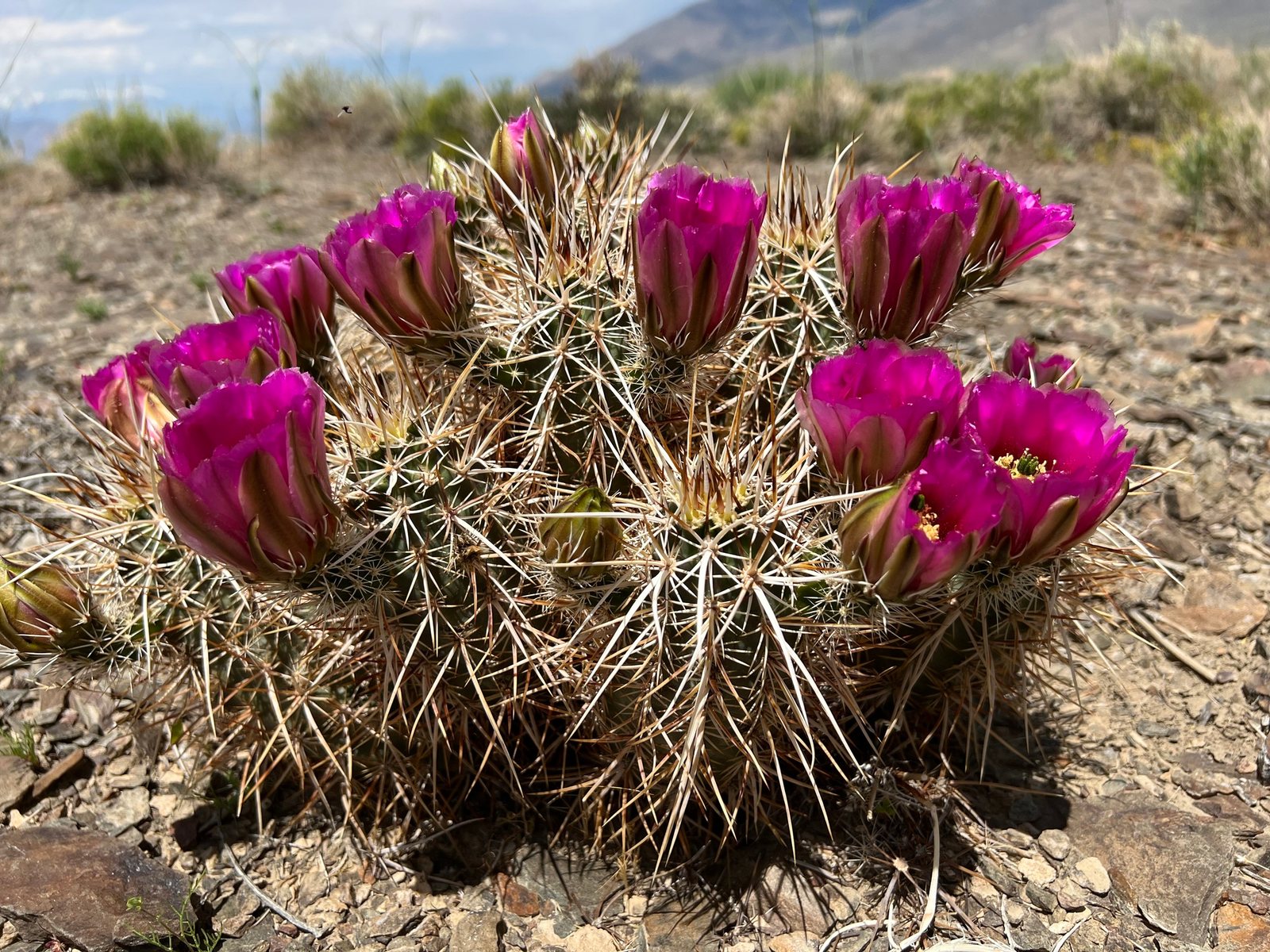
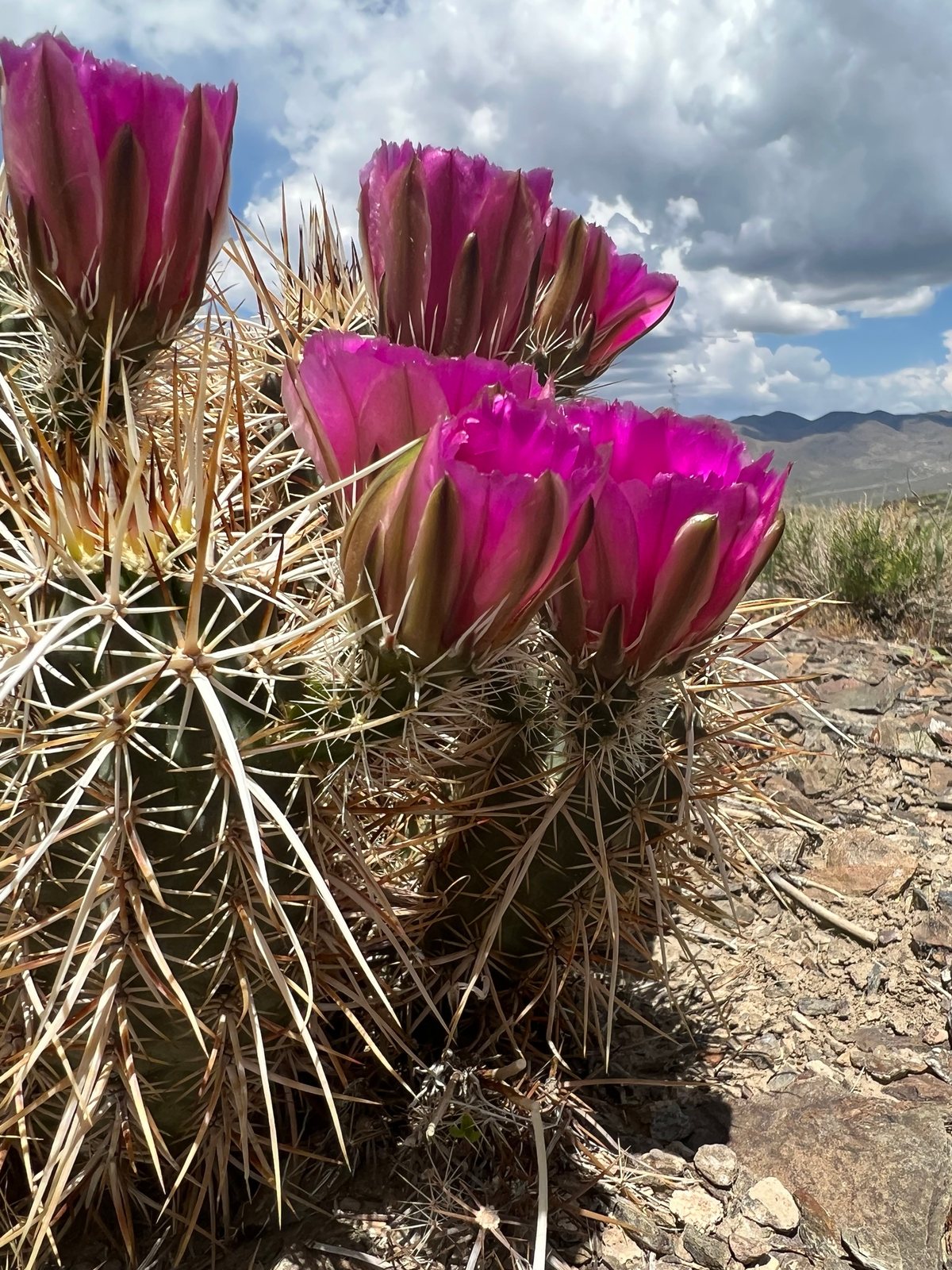
Engelmann's hedgehog cactus is a clump-forming cactus native to the southwestern United States and northern Mexico, grown for its dense spines and large magenta flowers. It suits sunny, dry gardens with exceptionally sharp drainage; in wetter or colder climates, grow it in a container protected from winter rain and severe frost.
At a glance
- Sun
- Full sun; give some afternoon shade in exceptionally hot sites, especially when establishing nursery-grown plants.
- Water
- Low water needs. Water deeply but infrequently during active growth, letting the soil dry completely between waterings; keep almost dry in winter.
- Soil
- Gritty, sharply drained soil, including sandy or gravelly ground. Avoid heavy clay, rich compost and sites that collect winter water.
- Height
- 0.5-2 ft (0.15-0.6 m)
- Spread
- 1-3 ft (0.3-0.9 m)
- Flowers
- Spring to early summer; large pink-purple to magenta flowers with green stigmas, opening during daylight.
- Foliage
- No conventional leaves; evergreen, ribbed green stems form upright clusters covered in stout, often multicoloured spines.
- Growth
- Slow
- Care needed
- Low
The year at a glance
- Pollinators
- Deer resistant
- Drought tolerant
- Heat tolerant
- Wildlife
- Low allergen
| J | F | M | A | M | J | J | A | S | O | N | D | |
|---|---|---|---|---|---|---|---|---|---|---|---|---|
| Flowers | ||||||||||||
| Fruit | ||||||||||||
| Plant |
Northern hemisphere months. In Australia, shift them by six.
- Difficulty
- Moderate
- Toughness
- Fairly tough
Will it suit your garden?
Pick your zone, country, light and whether you have pets.
Full sun is 6 or more hours of direct sun a day, part shade 3 to 6 hours, shade under 3.
How it grows
Planting day
0.8 ft (0.25 m)
After 1 year
0.9 ft (0.26 m)
After 2 years
0.9 ft (0.28 m)
After 3 years
0.9 ft (0.29 m)
After 5 years
1 ft (0.32 m)
About 10 years to full size.
From a typical nursery size, at an average rate for this kind of plant. A rule of thumb, not a forecast.
Good to know
- Cats and dogs
- Safe
- Growth rate
- Slow
Care
Jobs through the year
- WaterMay, Sep, every 30 days
- For established ground plants, water only in warm dry weather when soil is completely dry.
- WaterJun–Aug, every 21 days
- Soak only after soil dries completely; young plants and pots need closer moisture checks.
- MulchMay
- Use thin gravel mulch and keep stem bases above surrounding soil.
- ProtectJan–Apr, Oct–Dec
- In zone 6–7, shelter pots somewhere bright, frost-protected and rainproof; keep almost dry.
- ProtectMay
- Gradually reintroduce overwintered plants to outdoor sunshine after frost risk passes.
- Plant on a raised mound or in a pot with drainage holes, keeping the stem bases above surrounding soil.
- Acclimatise plants gradually to strong outdoor sun to prevent scorching.
- Water only when the root zone is dry; do not water routinely during cool, dormant weather.
- Use a thin gravel mulch around the stems rather than bark or moisture-holding organic mulch.
- Feed container plants once in spring with a dilute cactus fertiliser; plants in the ground usually need no feeding.
- In wet-winter climates, move pots under a bright, rainproof shelter with good airflow.
Pruning. No routine pruning is needed. In dry weather during the growing season, remove dead or rotting stems with a clean blade, cutting back to sound tissue and keeping the wound dry.
Through the year
- Early spring
- Inspect stem bases for rot and remove debris caught between stems without damaging the spines.
- Spring
- Repot crowded plants into a gritty cactus mix and gradually reintroduce sheltered plants to outdoor sun.
- Late spring
- Begin occasional deep watering once growth resumes; give container plants one light feed.
- Summer
- Let the soil dry fully between waterings and check sheltered plants for mealybugs.
- Autumn
- Reduce watering as temperatures fall and move pots out of persistent rain.
- Winter
- Keep plants almost dry and protect containers from prolonged freezing, especially where roots remain damp.
In the garden
- Place among boulders in a sunny desert garden, where its clustered stems contrast with broad agave leaves.
- Use in a raised gravel bed with other small, cold-tolerant cacti and dryland perennials.
- Grow in a broad, well-drained container as a compact architectural feature.
- Plant away from paths and seating, where the flowers are visible but the spines cannot catch passing people or pets.
Garden styles it suits: Desert modern, Southwestern, Desert / xeriscape, Dry gravel garden, Architectural minimal and California native.
Plant it with: Parry's agave, Red yucca, Banana yucca, Blackfoot daisy, Desert marigold and Blue grama.
Wildlife: Flowers provide pollen and nectar for native bees. Birds and other animals may eat the fleshy fruit.
Problems to watch for
- Root and stem rot: prevent with sharp drainage and very little winter water; remove affected stems promptly and discard plants with extensive basal rot.
- Mealybugs, including root mealybugs: inspect stem crevices and roots, isolate infested plants and use a treatment labelled for cacti and the pest.
- Sun scorch: pale or brown patches can follow a sudden move into strong sun; acclimatise gradually, since damaged tissue will not turn green again.
- Cold damage: wet plants are especially vulnerable; provide winter rain protection and move pots into a bright, frost-protected space when necessary.
Safety
Not known to be toxic to people, cats, dogs or horses. The main hazard is physical: sharp spines can cause painful punctures, eye injuries and embedded fragments, so keep plants away from play areas and animal access.
Easily confused with
Claret cup cactus (Echinocereus triglochidiatus)
Usually has scarlet or orange-red flowers rather than magenta flowers; spine number and density vary, so flowers are the clearest garden distinction.
Rainbow cactus (Echinocereus pectinatus)
Usually has solitary or sparsely clustered stems with short, closely packed, comb-like radial spines; Engelmann's hedgehog typically forms larger clumps with conspicuous projecting central spines.
The name
Echinocereus combines Greek echinos, meaning hedgehog, with Cereus, a cactus genus name derived from Latin for a wax candle; engelmannii honours botanist George Engelmann.
Propagation. Sow seed in a well-drained cactus mix in warm conditions. Alternatively, detach a healthy offset during the growing season, let the cut dry and callus, then set it in dry, gritty mix and water cautiously after rooting begins.
Checked against open data
- Accepted botanical name
- Echinocereus engelmannii
- Native range
- Arizona, California, Mexico Northwest, Nevada and Utah.
Sources: GBIF (CC BY 4.0) and Trefle (CC BY 4.0). The care and design notes are LandscapeGPT's own.
See it in your own yard.
Upload a photo of your yard and see it redesigned with plants that suit your climate, each checked against your zone.