Engelmann's prickly pear
Opuntia engelmannii. Family Cactaceae. Succulent.
Also called Engelmann prickly pear, Desert prickly pear.
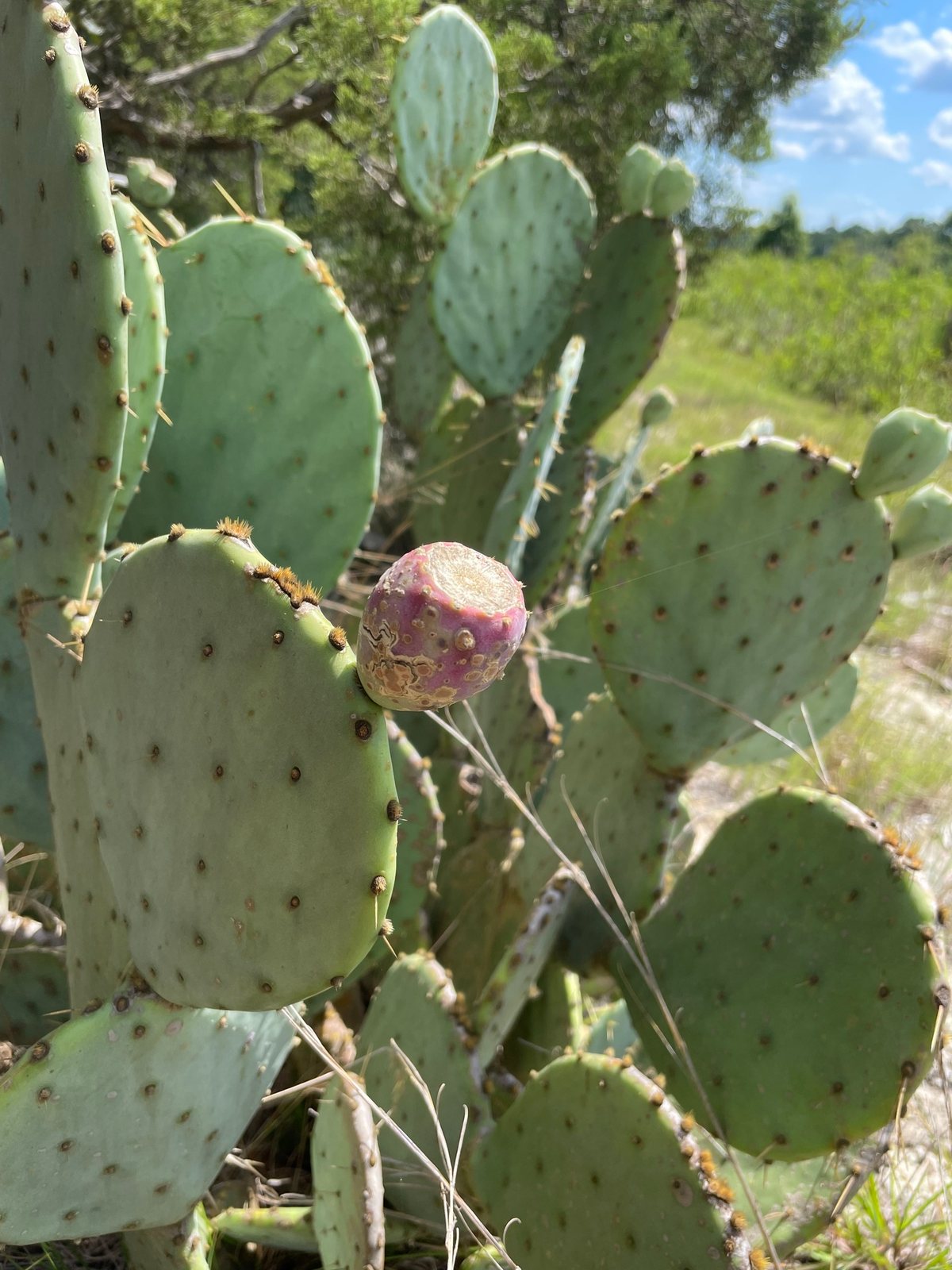
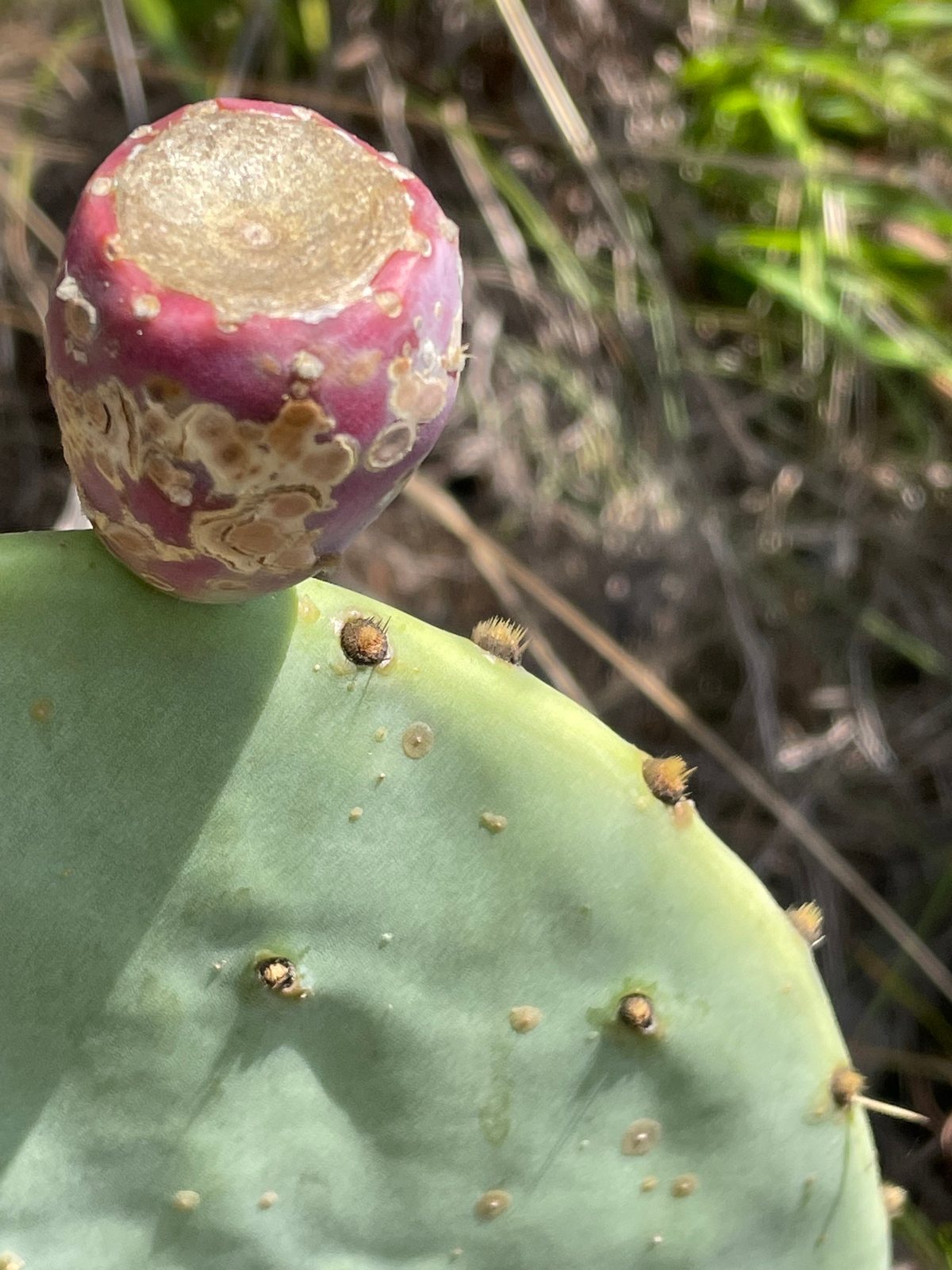
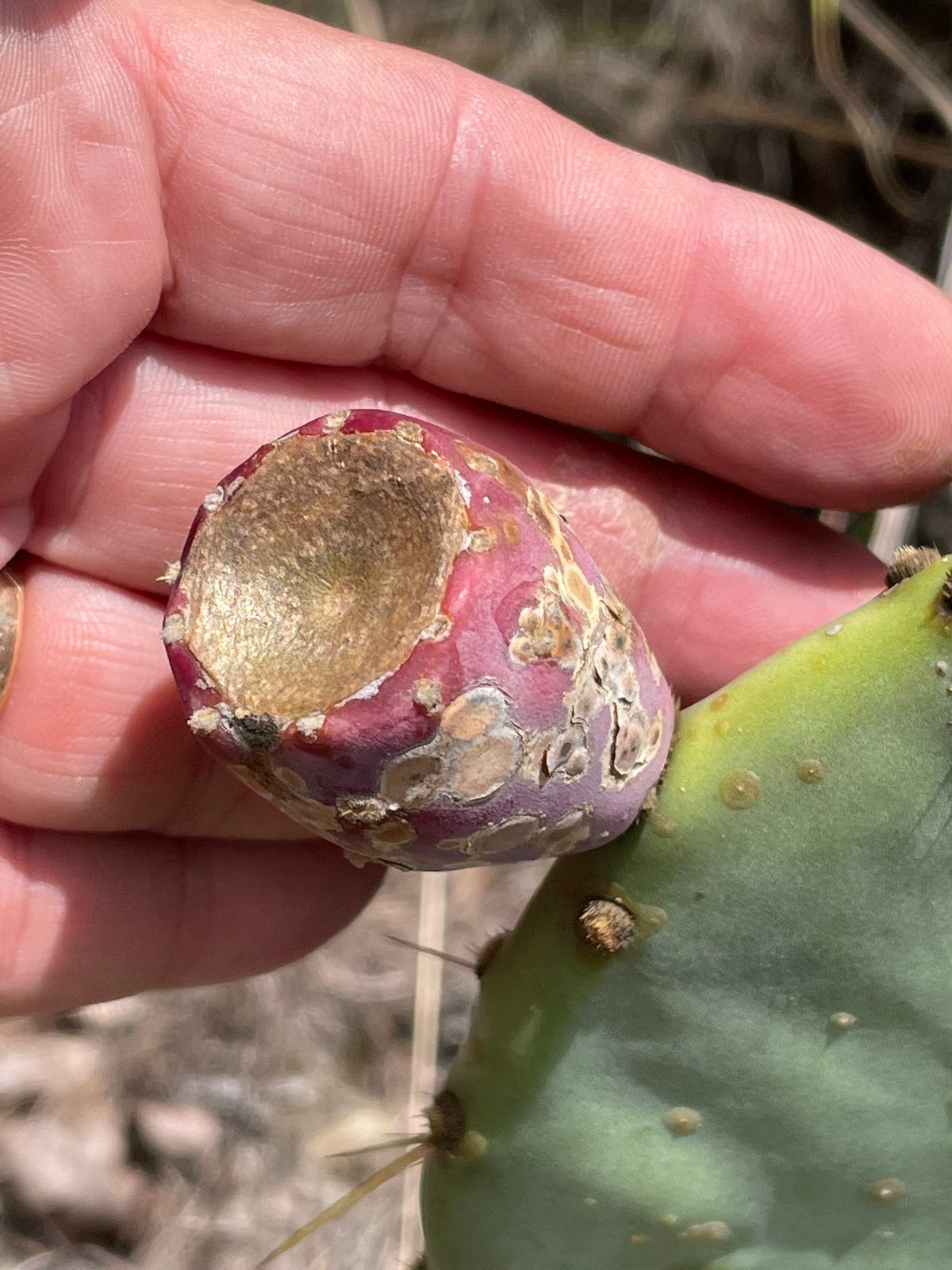
This large, shrubby cactus from the southwestern United States and Mexico forms spreading clumps of broad, spiny pads, with showy flowers followed by reddish-purple fruit. Gardeners grow it for its strong outline, drought tolerance and value to desert wildlife. It needs excellent drainage; in most of Canada and wetter or colder parts of the UK, a container moved into bright, dry, frost-protected shelter is safer than planting outdoors.
At a glance
- Sun
- Full sun; choose a hot, open position with shelter from persistent winter rain in cool climates.
- Water
- Low once established. Water new plants sparingly when the soil has dried out; established plants usually need extra water only during prolonged drought.
- Soil
- Sharply drained sandy, gravelly or rocky soil. Avoid waterlogged ground and rich, moisture-retentive compost.
- Height
- 3-6 ft (0.9-1.8 m)
- Spread
- 4-10 ft (1.2-3 m)
- Flowers
- Late spring to early summer; usually yellow, sometimes orange or reddish, often darkening with age.
- Foliage
- Evergreen. Broad, flattened green to blue-green stem pads with clusters of stout spines and tiny, easily detached barbed bristles called glochids; true leaves are tiny and short-lived.
- Growth
- Moderate in warm weather; slow in cool climates.
- Care needed
- Low
The year at a glance
- Pollinators
- Deer resistant
- Drought tolerant
- Heat tolerant
- Wildlife
- Low allergen
| J | F | M | A | M | J | J | A | S | O | N | D | |
|---|---|---|---|---|---|---|---|---|---|---|---|---|
| Flowers | ||||||||||||
| Fruit | ||||||||||||
| Plant |
Northern hemisphere months. In Australia, shift them by six.
- Difficulty
- Moderate
- Toughness
- Fairly tough
Will it suit your garden?
Pick your zone, country, light and whether you have pets.
Full sun is 6 or more hours of direct sun a day, part shade 3 to 6 hours, shade under 3.
How it grows
Planting day
0.8 ft (0.25 m)
After 1 year
1.3 ft (0.39 m)
After 2 years
1.7 ft (0.53 m)
After 3 years
2.2 ft (0.67 m)
After 5 years
3 ft (0.96 m)
About 8 years to full size.
From a typical nursery size, at an average rate for this kind of plant. A rule of thumb, not a forecast.
Good to know
- Cats and dogs
- Safe
- Invasive in
- Australia
- In the garden
- Spreads vigorously: plan to contain it.
- Growth rate
- Slow
Care
Jobs through the year
- WaterApr–May, Sep, every 30 days
- Check established plants; water only during prolonged drought with thoroughly dry soil; check new plants more often.
- WaterJun–Aug, every 21 days
- Water established plants only during prolonged drought after the root zone dries completely.
- MulchMay
- Apply gravel around the base without burying pads or holding moisture against them.
- PruneMay–Jun
- In dry weather, remove damaged or unwanted pads at joints using tongs and puncture-resistant gloves.
- ProtectJan–Apr, Oct–Dec
- In zones 6–7, overwinter in a bright, frost-free, nearly dry shelter; rain protection alone is insufficient.
- Plant on a raised gravelly mound if drainage is doubtful, keeping the base above surrounding soil level.
- Let the root zone dry between waterings; keep sheltered container plants almost dry through winter.
- Avoid routine feeding in the ground; give container plants a dilute cactus fertiliser once in late spring if growth is weak.
- Use gravel rather than moisture-holding organic mulch around the base.
- Handle pads with long tongs and puncture-resistant gloves; keep plants well away from paths, play areas and pets.
Pruning. In late spring or early summer, remove damaged pads or reduce spread by cutting cleanly at a pad joint with a disinfected blade. Collect every detached pad, since pieces left on the soil can root.
Through the year
- Early spring
- Check for winter rot and improve drainage before growth resumes.
- Late spring
- Plant or repot once frost risk has passed and the soil is warming.
- Early summer
- Remove damaged or unwanted pads during a spell of dry weather.
- Summer
- Check for cochineal and scale; water only after the soil dries thoroughly.
- Autumn
- Reduce container watering and move plants under cover before damaging cold or prolonged rain.
- Winter
- Keep sheltered plants bright and nearly dry; check outdoor plants for standing water.
In the garden
- Use as a sculptural focal point in a sunny gravel garden, with plenty of clearance around its mature spread.
- Combine with agaves, yuccas and drought-tolerant grasses for contrasting silhouettes in a desert planting.
- Plant on a dry, sunny bank where its broad clumps help create a substantial, informal barrier away from public access.
- Grow in a large, stable container on a sunny terrace where winter shelter is available.
Garden styles it suits: Desert modern, Architectural minimal, Dry gravel garden, Desert / xeriscape, Southwestern and Wildlife garden.
Plant it with: Red yucca, Banana yucca, Blackfoot daisy, Desert marigold, Blue grama and Parry's agave.
Wildlife: Flowers provide pollen for native bees, including cactus-specialist bees in its native range. Birds and mammals eat the fruit, and established clumps provide shelter for small animals.
Problems to watch for
- Root or basal rot in wet soil: stop watering, improve drainage and remove rotting tissue; salvage healthy pads if the base is lost.
- Cochineal insects forming white cottony patches: dislodge small infestations with a firm water jet and repeat inspections.
- Scale insects on pads: remove small colonies carefully and use a product labelled for scale on cacti if needed.
- Cold or winter-wet damage causing soft, dark pads: keep plants drier, provide rain shelter and remove damaged pads once conditions are warm and dry.
Safety
Not known to be chemically toxic to people, cats, dogs or horses. Properly prepared pads and ripe fruit are edible to people, but the spines and glochids on pads and fruit can cause painful skin injuries and serious mouth or eye damage; never offer unprepared material to pets or livestock.
Where it spreads. An invasive weed in parts of Australia, including Queensland and New South Wales. Its sale, planting, movement or propagation is prohibited or restricted in many Australian jurisdictions; check local rules before obtaining it. Detached pads can root and spread, so never dump garden waste.
Easily confused with
Indian fig (Opuntia ficus-indica)
Usually develops a taller, more tree-like framework with larger, elongated pads; cultivated forms often have few or no large spines. Spiny forms can be harder to distinguish.
Brown-spined prickly pear (Opuntia phaeacantha)
Usually forms lower, more sprawling clumps with smaller pads and often brownish spines. Features overlap, so identification may require flowers and a regional cactus key.
Purple prickly pear (Opuntia macrocentra)
Usually has smaller pads that become strongly purple in cold or drought, with conspicuously long, dark spines concentrated near the upper pad edge. Purple colouring alone is not diagnostic.
The name
The species name engelmannii honours George Engelmann, the German-American physician and botanist who studied North American cacti.
Propagation. Where legally permitted, detach a healthy mature pad in late spring or summer and leave the cut surface in a dry, shaded place until firmly callused, usually one to two weeks. Set the base shallowly into gritty cactus compost and water sparingly while roots form.
Checked against open data
- Accepted botanical name
- Opuntia engelmannii
- Native range
- Arizona, California, Louisiana, Mexico Central, Mexico Gulf, Mexico Northeast, Mexico Northwest, Mexico Southwest, Nevada, New Mexico, Texas and Utah.
Sources: GBIF (CC BY 4.0) and Trefle (CC BY 4.0). The care and design notes are LandscapeGPT's own.
See it in your own yard.
Upload a photo of your yard and see it redesigned with plants that suit your climate, each checked against your zone.