Florida silver palm
Coccothrinax argentata. Family Arecaceae. Tree.
Also called Silver palm, Florida thatch palm.
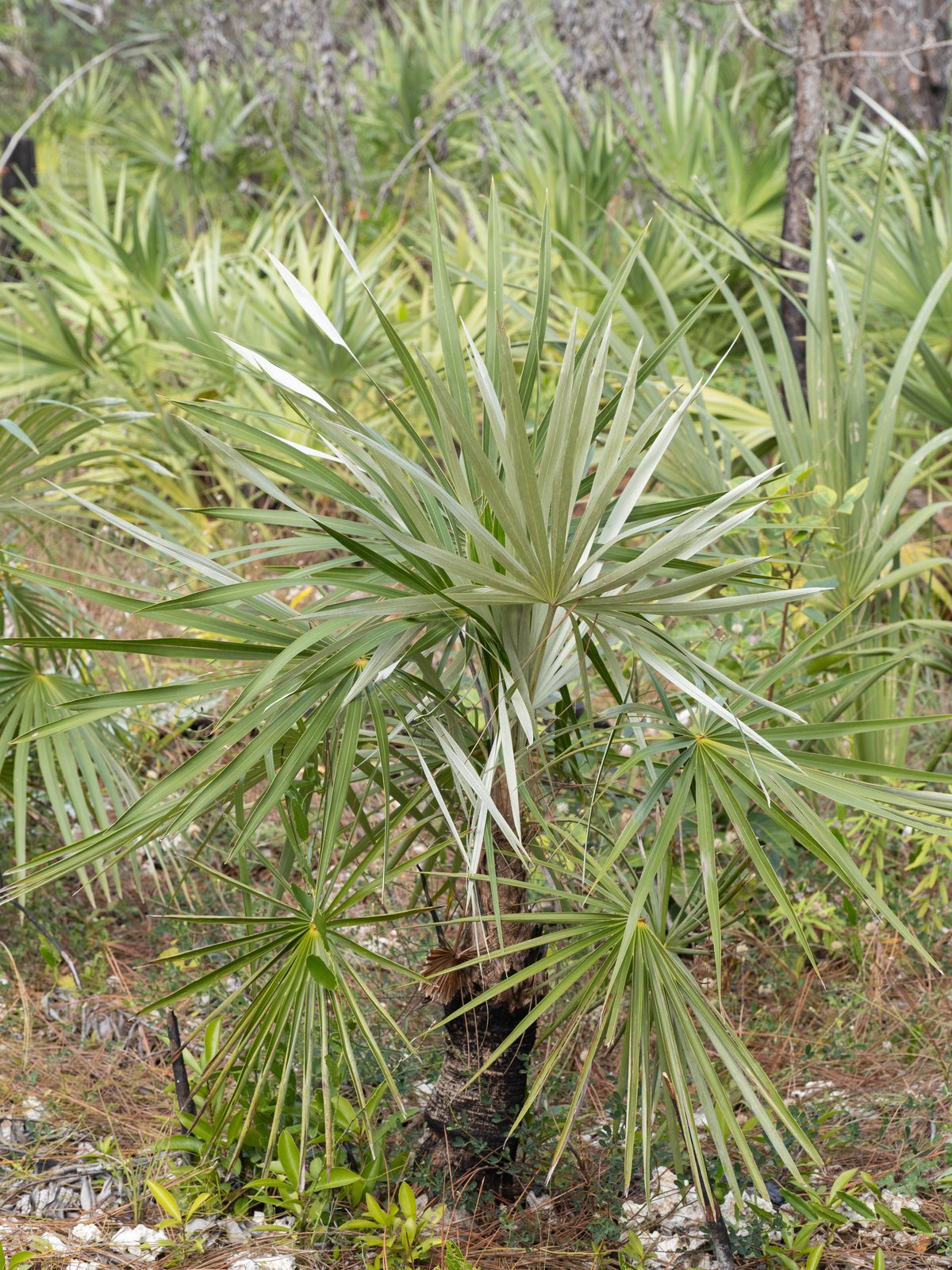
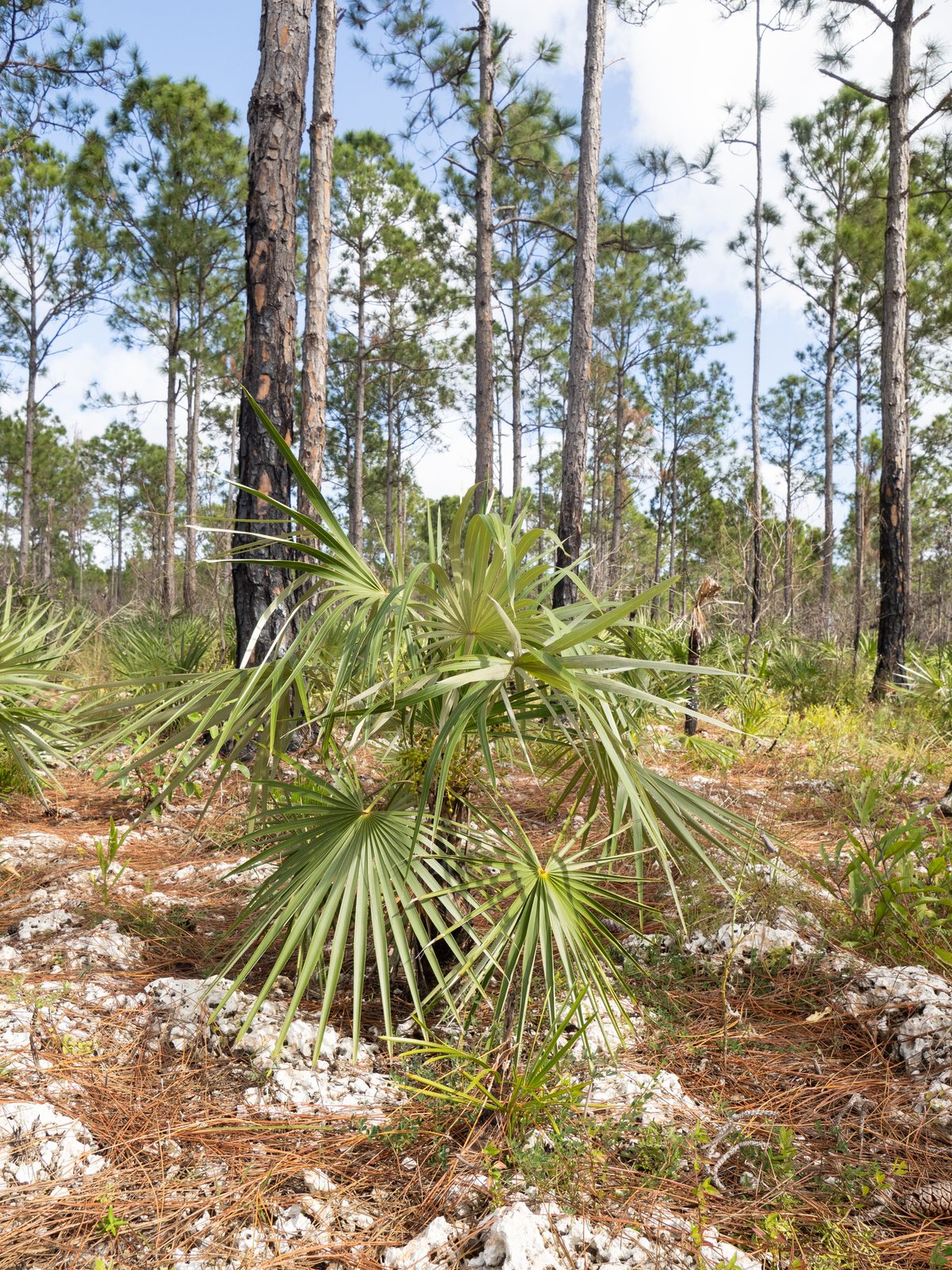
A slow-growing palm native to southern Florida and the northern Caribbean, with a slender trunk and fan-shaped leaves that flash silver underneath. Grow it for its fine texture, compact crown and tolerance of coastal conditions; it needs a frost-free climate or protected container culture in colder regions.
At a glance
- Sun
- Full sun to light partial shade; established plants develop best in an open, sunny position.
- Water
- Water regularly while establishing, then only during prolonged dry spells. Let container compost dry slightly between waterings; never leave the pot standing in water.
- Soil
- Free-draining sandy, gravelly or limestone-rich soil. Tolerates alkaline ground and low fertility but struggles in persistently wet soil.
- Height
- 10-20 ft (3-6 m), usually taking many years to reach this size
- Spread
- 5-8 ft (1.5-2.4 m)
- Flowers
- Small creamy-white flowers on branched stalks among the leaves, mainly in spring and summer; flowering can vary in warm climates.
- Foliage
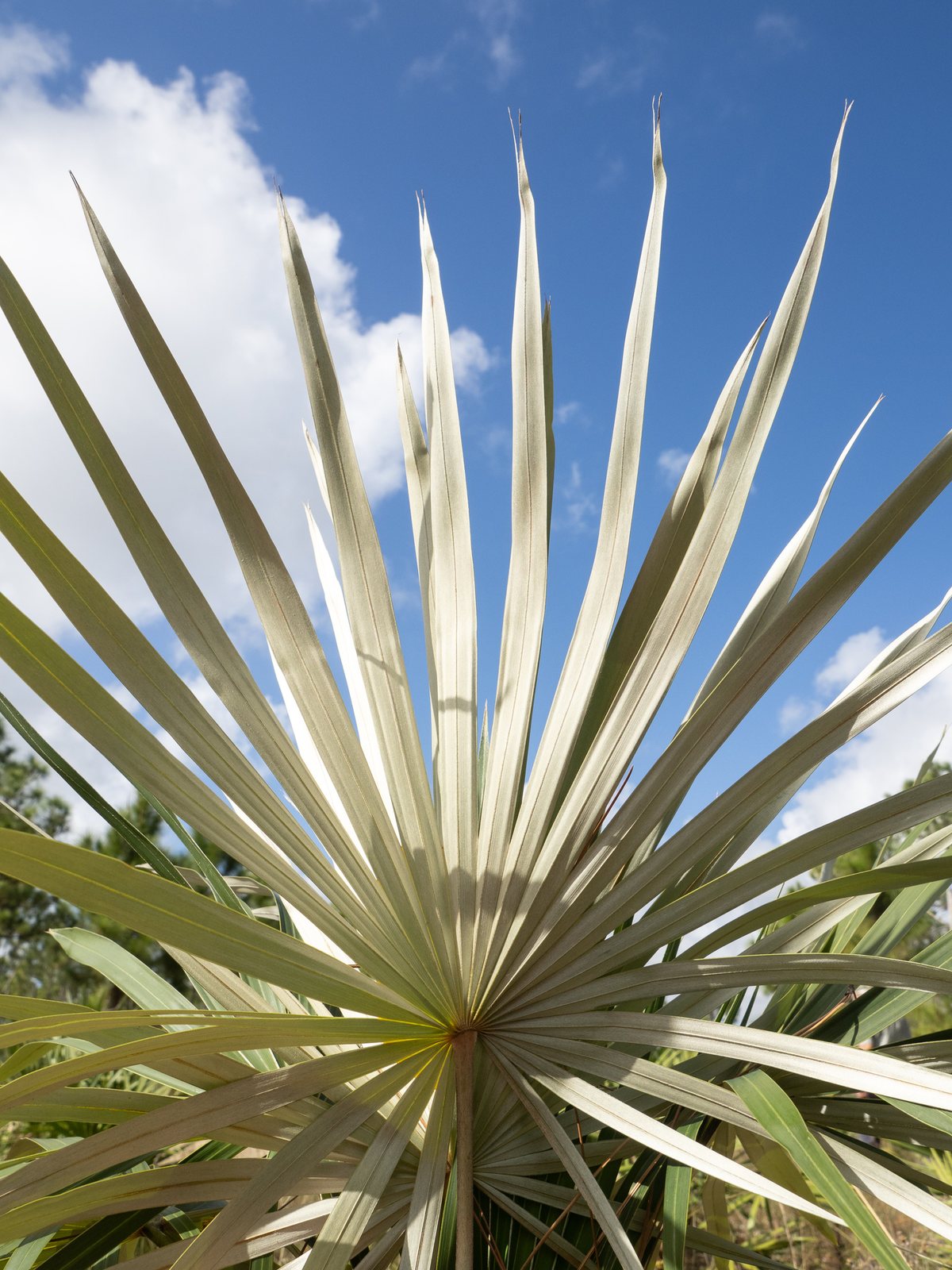
- Evergreen, deeply divided fan-shaped leaves, green above and conspicuously silvery beneath, on slender, unarmed stalks.
- Growth
- Slow
- Care needed
- Low
The year at a glance
- Pollinators
- Drought tolerant
- Heat tolerant
- Wildlife
| J | F | M | A | M | J | J | A | S | O | N | D | |
|---|---|---|---|---|---|---|---|---|---|---|---|---|
| Flowers | ||||||||||||
| Fruit | ||||||||||||
| Plant |
Northern hemisphere months. In Australia, shift them by six.
- Difficulty
- Hard
- Toughness
- Fairly tough
Will it suit your garden?
Pick your zone, country, light and whether you have pets.
Full sun is 6 or more hours of direct sun a day, part shade 3 to 6 hours, shade under 3.
How it grows
Planting day
7 ft (2 m)
After 1 year
7 ft (2.1 m)
After 2 years
7 ft (2.2 m)
After 3 years
7 ft (2.2 m)
After 5 years
8 ft (2.4 m)
About 32 years to full size.
From a typical nursery size, at an average rate for this kind of plant. A rule of thumb, not a forecast.
Good to know
- Cats and dogs
- Safe
- Native to
- the US
- Growth rate
- Slow
Care
Jobs through the year
- WaterApr–May, Sep–Oct, every 21 days
- For established ground-grown palms, water only during prolonged dryness; young plants need regular watering.
- WaterJun–Aug, every 14 days
- Water established palms during prolonged dry spells; check containers more often and let the surface dry slightly.
- WaterJan–Mar, Nov–Dec, every 21 days
- Check sheltered containers and water sparingly before the root ball dries completely.
- FeedMay
- Feed only if needed, using a slow-release palm fertilizer with potassium, magnesium and micronutrients.
- MulchMay
- Maintain a light organic mulch, leaving the trunk and root-ball surface unburied.
- PruneJun–Aug
- Remove fully dead leaves only; leave partly green leaves and trunk fibres intact.
- ProtectJan–May, Sep–Dec
- Grow in a movable container in zones 6–7 and overwinter in bright, frost-free shelter.
- Plant in spring or early summer in a well-drained position, keeping the root ball at its original depth.
- Water deeply during establishment, allowing the surface soil to dry between waterings.
- Keep mulch clear of the trunk and avoid piling soil over the root ball.
- If feeding is needed, use a slow-release palm fertiliser containing potassium, magnesium and micronutrients, following the label.
- In frost-prone regions, grow in a movable container and overwinter in bright, frost-free conditions with reduced watering.
Pruning. Remove fully brown leaves as needed during warm weather, cutting the stalk without damaging the trunk. Keep green and partly green leaves, and never cut the central growing spear or strip away the fibrous trunk covering.
Through the year
- Spring
- Plant or repot as temperatures rise, using a freely draining growing medium.
- Late spring
- Check leaf colour and apply a labelled palm fertiliser if growth or soil conditions indicate a need.
- Summer
- Water newly planted palms deeply during dry weather; check containers more frequently.
- Late summer
- Inspect leaf undersides for scale insects and mites; remove only fully dead leaves.
- Autumn
- Move container plants under bright, frost-free cover before cold nights arrive.
- Winter
- Reduce watering under cover, but do not let the root ball become completely dry.
In the garden
- Use as a slender specimen beside a sunny terrace, where moving leaves reveal their silver undersides.
- Plant in loose groups with low coastal shrubs and grasses for an open, naturalistic effect.
- Combine with agaves and other well-drained-soil plants in a warm gravel garden.
- Grow young plants in substantial containers for a bright courtyard, with winter shelter where necessary.
Garden styles it suits: Coastal, Florida subtropical, Caribbean, Modern tropical, Architectural minimal and Desert / xeriscape.
Plant it with: Coontie, Muhly grass, Firebush, Beach sunflower and Saw palmetto.
Wildlife: Flowers attract insects, and the small fruits are eaten by birds. The crown also provides shelter for small wildlife.
Problems to watch for
- Root decline in waterlogged soil: improve drainage or grow in a raised position; do not keep the root zone constantly wet.
- Cold injury: protect from frost and move container plants under cover; wait for new growth before judging recovery, and do not cut out a firm central spear.
- Potassium or magnesium deficiency: have soil or foliage assessed where practical and use an appropriate palm fertiliser; do not remove discoloured leaves while they remain partly green.
- Scale insects or spider mites, especially under cover: inspect leaf undersides, wash off light infestations and use a palm-safe labelled treatment if necessary.
Safety
Not known to be toxic to people, cats, dogs or horses, but species-specific safety information is limited. Do not treat the fruits or other parts as food.
Easily confused with
Florida thatch palm (Thrinax radiata)
Its leaf undersides lack the strong silver coating, and its ripe fruits are white rather than purple-black.
Key thatch palm (Leucothrinax morrisii)
It also has pale leaf undersides, but its ripe fruits are white; Florida silver palm has purple-black ripe fruits.
Cabbage palm (Sabal palmetto)
Usually much larger and heavier-trunked, with leaves folded around a prominent central extension of the stalk rather than flat, silvery-backed fans.
The name
The species name argentata means silvery, referring to the conspicuous silver undersides of the leaves.
Propagation. Grow from fresh seed after removing the fleshy fruit covering. Sow in a warm, freely draining medium and keep lightly moist; germination can take several months and may be uneven. This single-stemmed palm cannot be divided.
Checked against open data
- Accepted botanical name
- Coccothrinax argentata
- In the US and Canada
- Native in the lower 48 states.
- Native range
- Bahamas, Colombia, Florida, Southwest Caribbean and Turks-Caicos Is..
- Measured
- Average height 911 cm.
Sources: GBIF (CC BY 4.0), USDA PLANTS and Trefle (CC BY 4.0). The care and design notes are LandscapeGPT's own.
See it in your own yard.
Upload a photo of your yard and see it redesigned with plants that suit your climate, each checked against your zone.