Giant chain fern
Woodwardia fimbriata. Family Blechnaceae. Fern.
Also called Western chain fern, California chain fern.
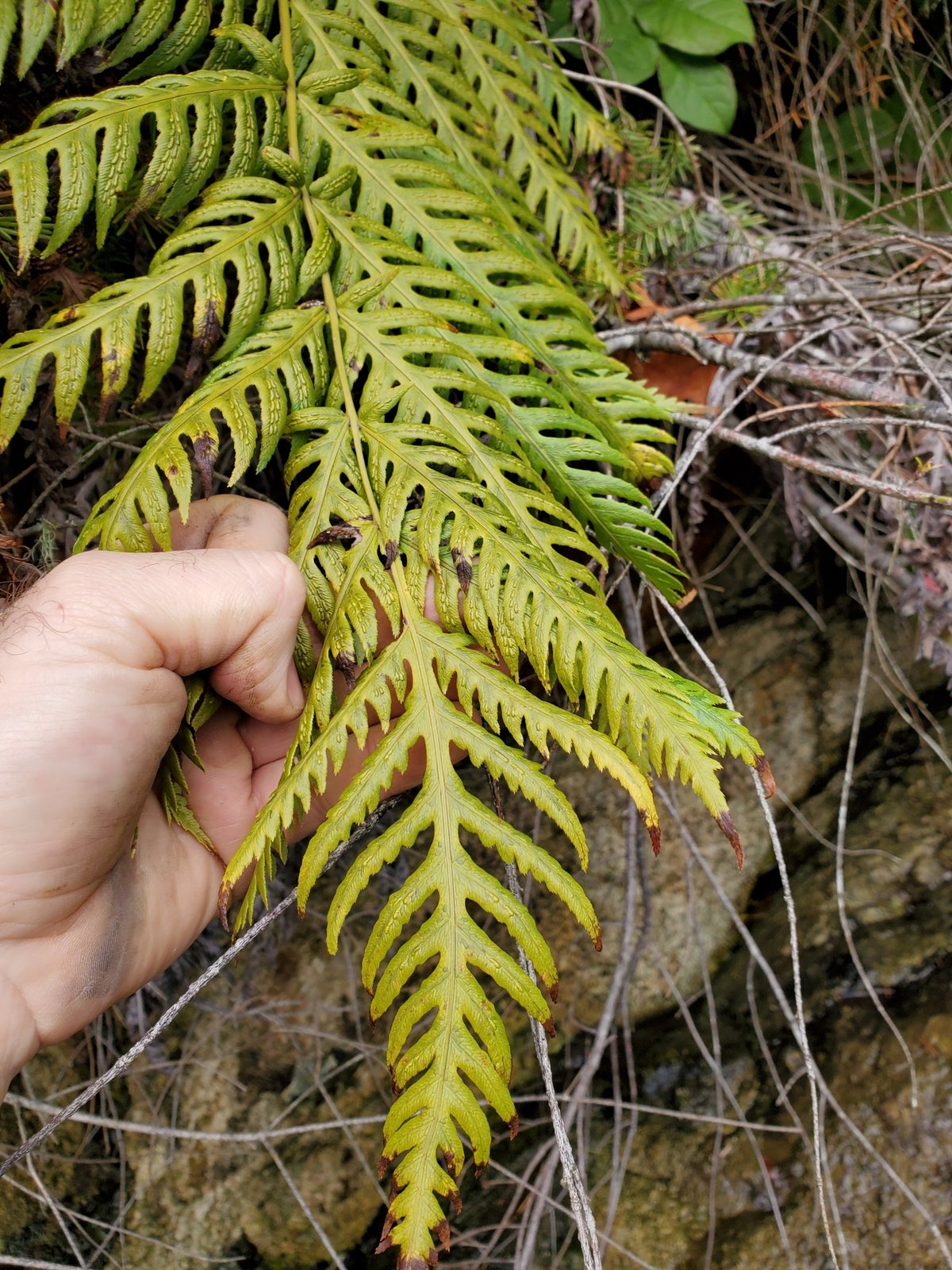
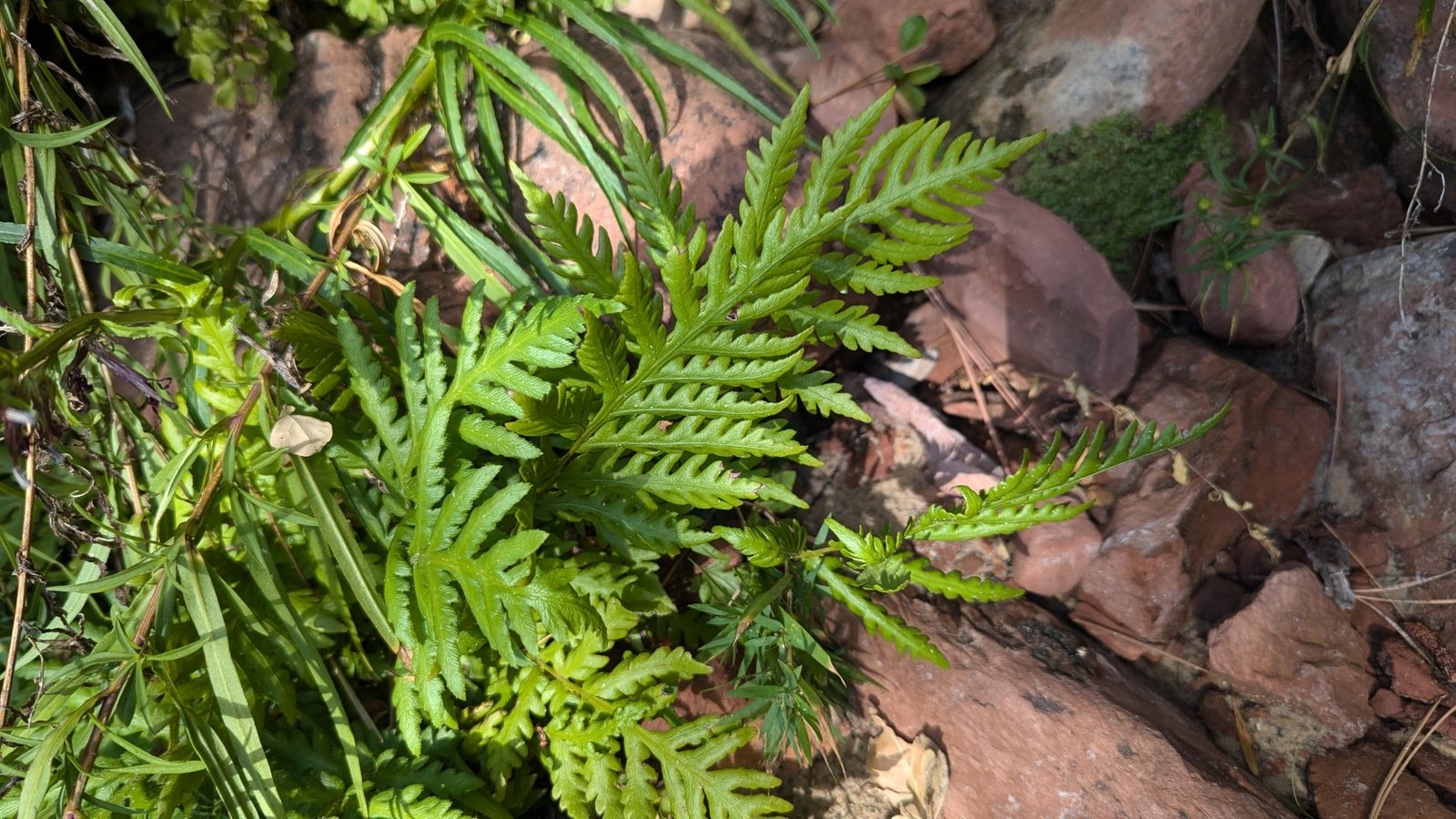
This large fern from western North America forms a bold clump of arching fronds, usually evergreen in mild climates. Grow it for height and texture in a sheltered, moist, shady border, allowing plenty of room for its mature spread.
At a glance
- Sun
- Partial shade to full shade; tolerates more sun in cool coastal gardens if the soil stays moist.
- Water
- Keep consistently moist, particularly while establishing and during dry summers. Avoid letting the root ball dry out.
- Soil
- Humus-rich, moist soil with good drainage; acidic to neutral soil is best. Avoid dry, chalky ground and stagnant, waterlogged soil.
- Height
- 4-8 ft (1.2-2.4 m)
- Spread
- 3-6 ft (0.9-1.8 m)
- Foliage
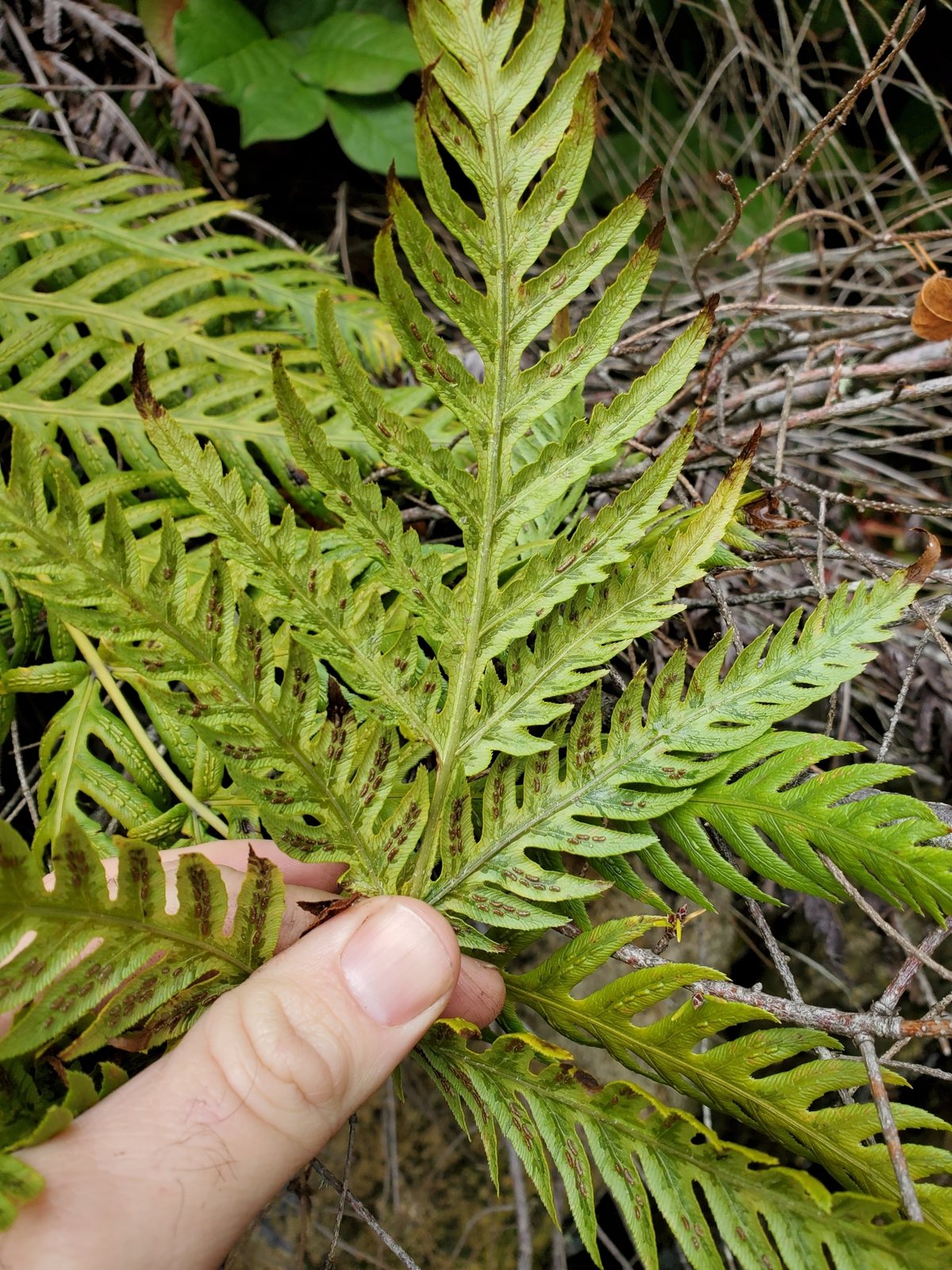
- Long, arching, green fronds with deeply lobed leaflets. Elongated spore-bearing patches form chain-like rows on the undersides of mature fronds. Usually evergreen, but hard frost can damage or kill back the foliage.
- Growth
- Moderate; faster with steady moisture and mild temperatures.
- Care needed
- Medium
The year at a glance
- Deer resistant
- Wildlife
- Low allergen
| J | F | M | A | M | J | J | A | S | O | N | D | |
|---|---|---|---|---|---|---|---|---|---|---|---|---|
| Plant |
Northern hemisphere months. In Australia, shift them by six.
- Difficulty
- Hard
- Toughness
- Needs looking after
Will it suit your garden?
Pick your zone, country, light and whether you have pets.
Full sun is 6 or more hours of direct sun a day, part shade 3 to 6 hours, shade under 3.
How it grows
Planting day
1 ft (0.3 m)
After 1 year
3 ft (0.92 m)
After 2 years
5 ft (1.5 m)
After 3 years
6 ft (1.8 m)
full size
About 2 years to full size.
From a typical nursery size, at an average rate for this kind of plant. A rule of thumb, not a forecast.
Good to know
- Cats and dogs
- Safe
- Native to
- the US and Canada
- Growth rate
- Fast
Care
Jobs through the year
- WaterApr–May, Sep–Oct, every 7 days
- Water established plants if rainfall is insufficient to keep soil moist; young plants need closer checks.
- WaterJun–Aug, every 3 days
- Water during dry weather to maintain consistent moisture without waterlogging.
- MulchApr
- Top-dress with leaf mould or compost, leaving the crown uncovered.
- PruneMar–Apr
- Cut dead or badly damaged fronds at their bases without injuring emerging shoots.
- ProtectJan–Mar, Nov–Dec
- Not reliably hardy in zones 6–7; use a frost-free winter shelter or a very mild sheltered site with crown insulation.
- Water deeply during dry spells so the root zone stays moist.
- Apply leaf mould or compost around the clump each spring, keeping it clear of the crown.
- Plant with the crown at soil level rather than burying it.
- Shelter from drying winds and strong afternoon sun.
- In colder gardens, mulch the root zone before winter and protect the crown during severe freezes.
Pruning. In late winter or early spring, cut dead and badly damaged fronds back near their bases before new growth unfurls. Leave healthy green fronds in place.
Through the year
- Spring
- Plant in moist, prepared soil once severe frost has passed; water thoroughly.
- Early spring
- Remove dead fronds carefully, avoiding emerging curled shoots.
- Spring
- Top-dress with compost or leaf mould and renew the mulch.
- Summer
- Check soil moisture frequently and water deeply during dry weather.
- Autumn
- Reduce watering as growth slows, but do not let the soil dry out.
- Late autumn
- In colder areas, mulch around the clump and have frost protection ready.
In the garden
- Use as a large focal clump in a shaded courtyard, with enough clearance for arching fronds.
- Plant beside a pond or stream in moist ground above the permanently submerged margin.
- Place behind smaller ferns and woodland perennials to create layers of foliage.
- Combine with broad-leaved shade plants for contrasting leaf shapes in a sheltered border.
Garden styles it suits: Woodland, Pacific Northwest woodland, California native, Bog garden, Green on green and Japanese.
Plant it with: Western sword fern, Deer fern, Hosta, Astilbe, Rodgersia and Vine maple.
Wildlife: Dense fronds and accumulated leaf litter provide shelter for small animals and invertebrates. It does not produce flowers, nectar or fruit.
Problems to watch for
- Brown, crisp frond edges usually indicate dry soil, hot sun or drying wind; water deeply, mulch and provide shelter.
- Crown or root rot can develop in stagnant, poorly drained soil; improve drainage and keep mulch away from the crown.
- Slugs and snails may damage emerging fronds; inspect new growth and use barriers or an approved iron-phosphate bait as directed.
- Severe frost can blacken fronds; leave damaged foliage until late winter, then remove it as new growth begins.
Safety
Not known to be toxic to cats, dogs, horses or people, but species-specific safety information is limited. Do not treat the fronds, young shoots or rhizomes as food.
Easily confused with
European chain fern (Woodwardia radicans)
Its long fronds commonly develop rooting buds near their tips and can establish new plants where they touch the ground; giant chain fern does not normally spread this way.
Oriental chain fern (Woodwardia orientalis)
Mature fronds often carry numerous small plantlets on their upper surfaces, unlike giant chain fern.
Western sword fern (Polystichum munitum)
Its narrow fronds have separate, toothed but unlobed leaflets and round spore patches underneath; giant chain fern has deeply lobed leaflets and elongated, chain-like spore patches.
The name
Woodwardia honours the English botanist Thomas Jenkinson Woodward, fimbriata means fringed, and chain fern refers to the chain-like arrangement of spore-bearing patches beneath the fronds.
Propagation. Raise from spores sown on a clean, moist medium under humid conditions; this is slow. Large clumps can sometimes be divided in spring if each division retains a growing crown and substantial roots, but established plants are best left undisturbed.
Checked against open data
- Accepted botanical name
- Woodwardia fimbriata
- In the US and Canada
- Native in Canada and the lower 48 states.
- Native range
- Arizona, British Columbia, California, Mexico Northwest, Nevada, Oregon and Washington.
Sources: GBIF (CC BY 4.0), USDA PLANTS and Trefle (CC BY 4.0). The care and design notes are LandscapeGPT's own.
See it in your own yard.
Upload a photo of your yard and see it redesigned with plants that suit your climate, each checked against your zone.