Giant hesperaloe
Hesperaloe funifera. Family Asparagaceae. Succulent.
Also called Giant false yucca, Coahuilan hesperaloe.
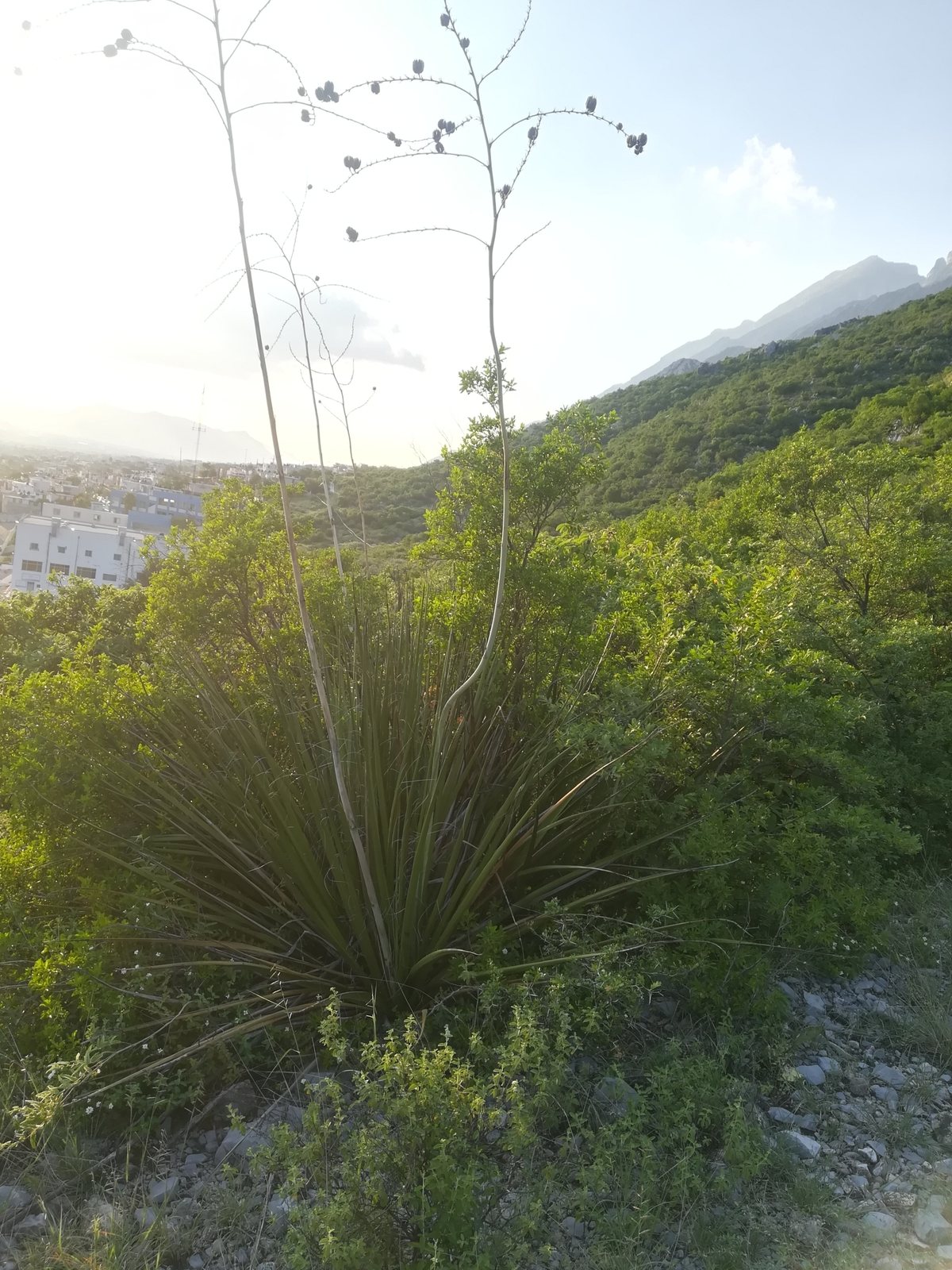
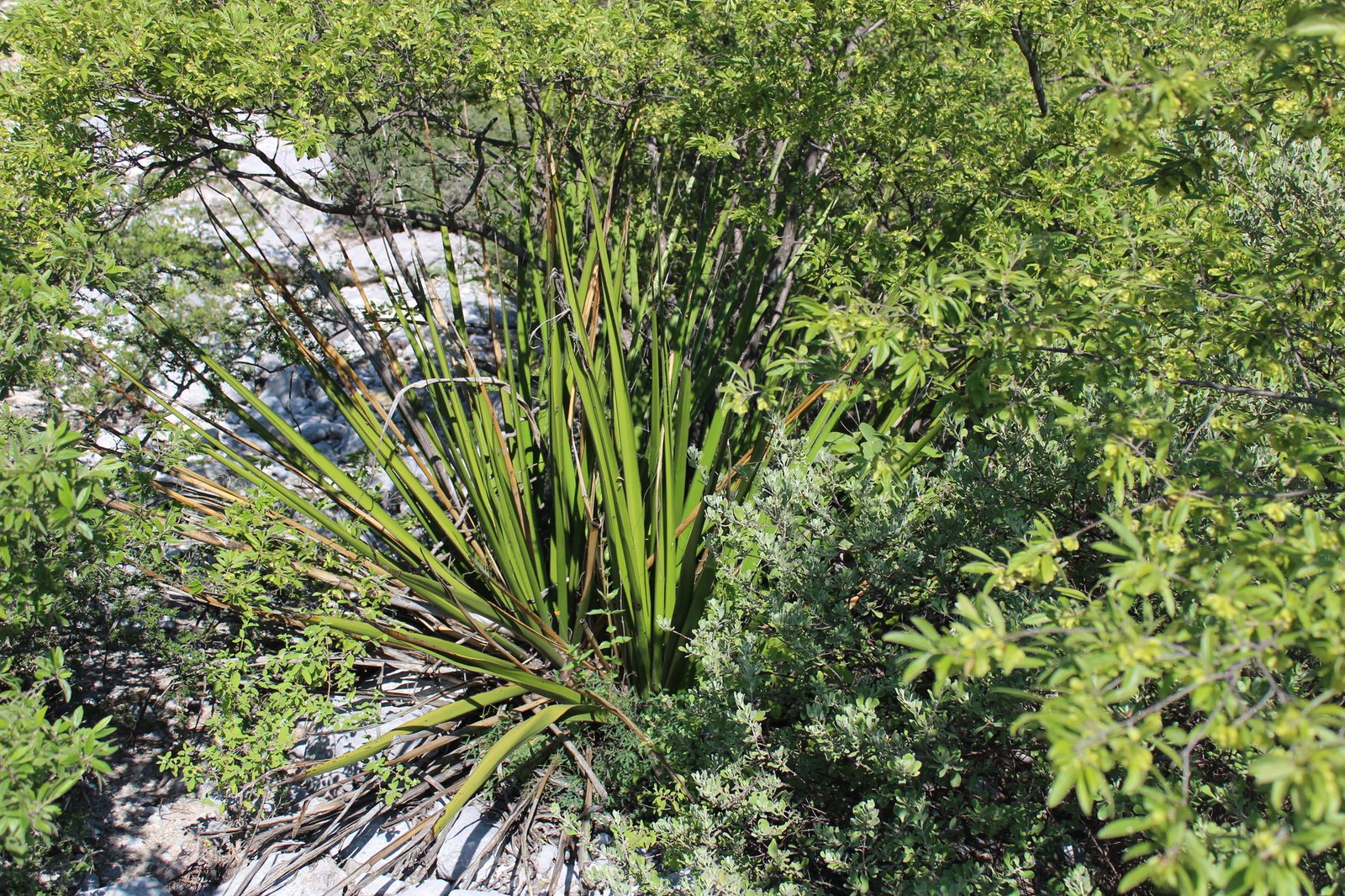
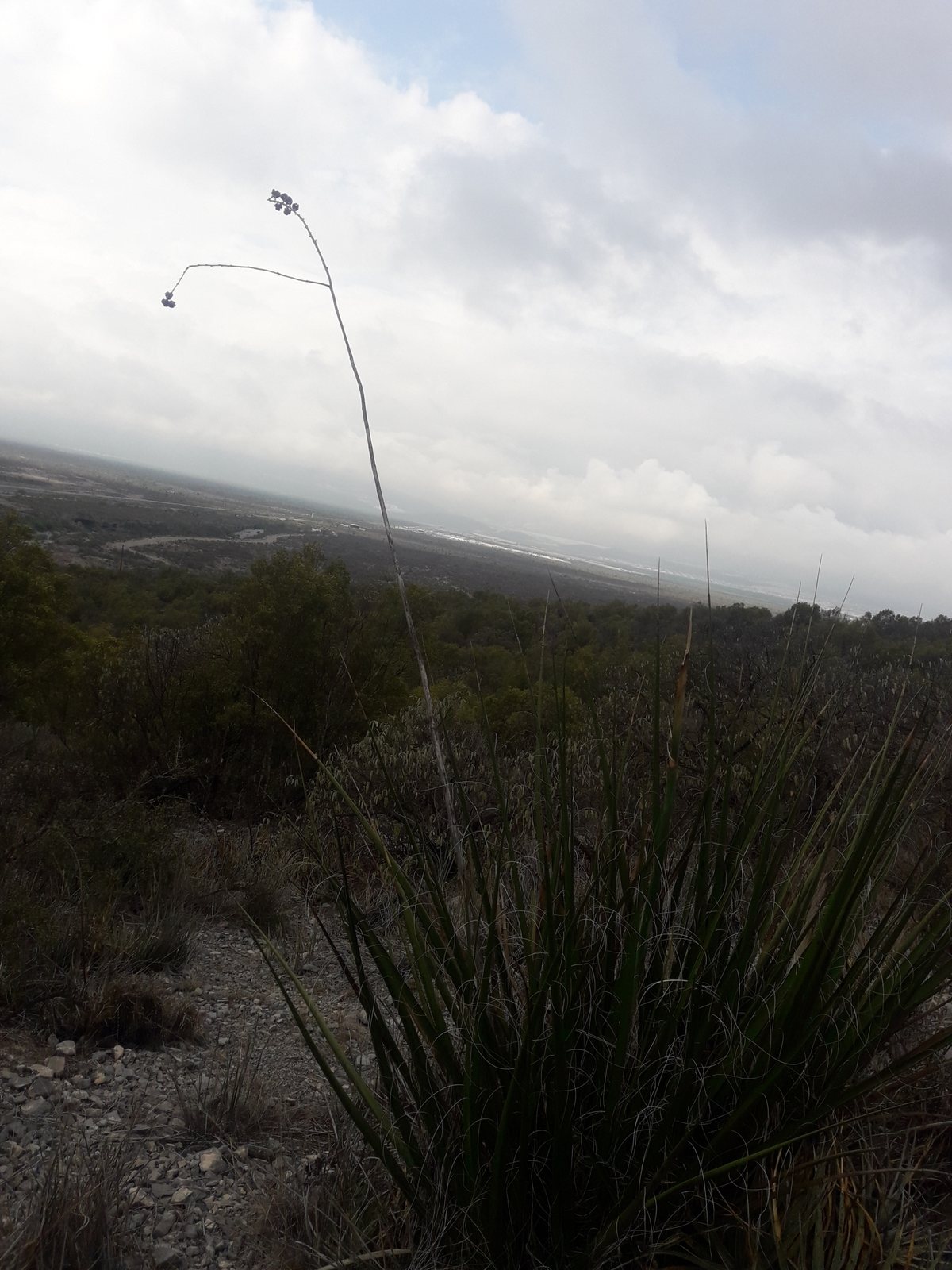
Giant hesperaloe is an evergreen, clump-forming succulent from northeastern Mexico, grown for its upright, strap-shaped leaves and tall, branched flower stems. It makes a strong architectural feature in dry gardens, but needs plenty of space and excellent drainage, especially where winters are wet.
At a glance
- Sun
- Full sun; light shade is tolerated, but flowering and upright growth are best in strong light.
- Water
- Low once established. Water deeply during establishment, then allow the soil to dry between waterings; avoid irrigation in cold, wet weather.
- Soil
- Sharply drained sandy, gravelly or rocky soil. Tolerates poor and alkaline soils, but not persistently wet ground.
- Height
- 4-6 ft (1.2-1.8 m) in leaf; flower stems reach 10-15 ft (3-4.6 m)
- Spread
- 4-6 ft (1.2-1.8 m), eventually wider as offsets develop
- Flowers
- Late spring through summer, with greenish-white to creamy-white flowers on tall, branching stems; young plants may take several years to flower.
- Foliage
- Evergreen. Long, stiff, upright green leaves with conspicuous curling white threads along the margins and pointed tips.
- Growth
- Slow to moderate; faster with summer warmth and occasional deep watering.
- Care needed
- Low
The year at a glance
- Pollinators
- Deer resistant
- Drought tolerant
- Heat tolerant
- Wildlife
- Low allergen
| J | F | M | A | M | J | J | A | S | O | N | D | |
|---|---|---|---|---|---|---|---|---|---|---|---|---|
| Flowers | ||||||||||||
| Fruit | ||||||||||||
| Plant |
Northern hemisphere months. In Australia, shift them by six.
- Difficulty
- Moderate
- Toughness
- Very tough
Will it suit your garden?
Pick your zone, country, light and whether you have pets.
Full sun is 6 or more hours of direct sun a day, part shade 3 to 6 hours, shade under 3.
How it grows
Planting day
0.8 ft (0.25 m)
After 1 year
1.5 ft (0.46 m)
After 2 years
2.2 ft (0.67 m)
After 3 years
2.9 ft (0.88 m)
After 5 years
4 ft (1.3 m)
About 6 years to full size.
From a typical nursery size, at an average rate for this kind of plant. A rule of thumb, not a forecast.
Good to know
- Cats and dogs
- Safe
- Native to
- the US
- Growth rate
- Moderate
Care
Jobs through the year
- WaterMay–Sep, every 28 days
- Water established clumps only in prolonged drought; new plants need watering when the root zone dries.
- MulchMay
- Apply gravel mulch around, but not against, the crown.
- PruneApr–May
- Remove dead or winter-damaged leaves at the base without shortening healthy leaves.
- PruneSep–Oct
- Cut finished flower stems at the base after any retained capsules dry.
- DivideMay–Jun
- Divide established clumps only if necessary, replanting in sharply drained soil.
- ProtectJan–Feb, Nov–Dec
- Keep the crown dry; provide frost protection in zone 6 and airy rain shelter in wet winters.
- Plant with the crown at soil level in a sunny, freely drained position; use a raised mound where drainage is doubtful.
- Water new plants deeply when the root zone dries during their first growing season.
- Once established, water only during prolonged dry spells or when stronger summer growth is wanted.
- Use gravel mulch and keep it clear of the crown; avoid moisture-retentive mulch against the leaves.
- Usually do not feed; avoid rich compost and high-nitrogen fertilisers.
- Leave room around the pointed leaves and keep the plant away from narrow paths and play areas.
Pruning. In spring, cut dead leaves close to the base without damaging the crown; do not shear or shorten healthy leaves. Cut spent flower stems down at the base after flowering, or leave them until the seed capsules have dried.
Through the year
- Spring
- Remove winter-damaged leaves and check that the crown is firm and free of trapped debris.
- Late spring
- Plant or transplant once the soil is warming; divide established clumps only if necessary.
- Summer
- Water newly planted specimens deeply when the root zone dries, allowing it to drain fully.
- Late summer
- Remove finished flower stems, or retain a few if you want to collect seed.
- Autumn
- Reduce watering as growth slows and clear leaves or organic mulch away from the crown.
- Winter
- Keep plants as dry as practical; move containers under bright, rain-sheltered cover in cold, wet climates.
In the garden
- Use as a single architectural specimen in a sunny gravel garden, leaving its full mature width clear.
- Repeat in widely spaced groups beside contemporary buildings to create a strong upright rhythm.
- Combine with low, rounded drought-tolerant plants to contrast with its stiff leaves and airy flower stems.
- Plant on a sunny, well-drained bank with agaves and other dry-garden plants, away from pedestrian edges.
Garden styles it suits: Architectural minimal, Desert modern, Desert / xeriscape, Dry gravel garden, Southwestern and Modern Mediterranean.
Plant it with: Red yucca, Texas sage, Blackfoot daisy, Desert marigold, Blue grama and Parry's agave.
Wildlife: Flowers attract visiting insects, while mature clumps offer shelter for small animals. Its wildlife value varies with the local climate and fauna.
Problems to watch for
- Crown or root rot in wet soil: improve drainage, stop unnecessary watering and replace badly rotted plants in a drier position.
- Cold damage, especially during wet winters: choose a sheltered sunny site, keep the crown dry and remove dead foliage in spring.
- Mealybugs or scale insects: inspect leaf bases and remove small infestations by hand; use a labelled treatment if they persist.
- Little or no flowering: allow young plants time to mature and provide full sun; avoid excessive nitrogen fertiliser.
Safety
Not known to be toxic to people, cats, dogs or horses, but species-specific safety information is limited; do not treat it as edible. The stiff, pointed leaves can injure skin or eyes.
Easily confused with
Red yucca (Hesperaloe parviflora)
Usually has narrower, more arching leaves and coral-red or pink flowers, although yellow-flowered forms exist; giant hesperaloe has broader, more upright leaves and greenish-white flowers.
Our Lord's candle (Hesperoyucca whipplei)
Has a dense rosette of narrower, often blue-grey leaves with finely toothed margins and a very dense flower spike; each flowering rosette dies afterward.
Adam's needle (Yucca filamentosa)
Also has curling leaf threads, but bears much larger, pendulous white bell-shaped flowers on a denser flower stem.
The name
Hesperaloe means 'western aloe', referring to its aloe-like appearance, while funifera means 'rope-bearing', referring to the strong fibres in its leaves.
Propagation. Sow ripe seed in a warm, freely drained seed mix. Established clumps can also be divided in late spring by separating rooted offsets with a clean, sharp tool; large plants are heavy and awkward to handle.
Checked against open data
- Accepted botanical name
- Hesperaloe funifera
- In the US and Canada
- Native in the lower 48 states.
- Native range
- Mexico Northeast and Texas.
Sources: GBIF (CC BY 4.0), USDA PLANTS and Trefle (CC BY 4.0). The care and design notes are LandscapeGPT's own.
See it in your own yard.
Upload a photo of your yard and see it redesigned with plants that suit your climate, each checked against your zone.