Pacific dogwood
Cornus nuttallii. Family Cornaceae. Tree.
Also called Western flowering dogwood, Mountain dogwood.
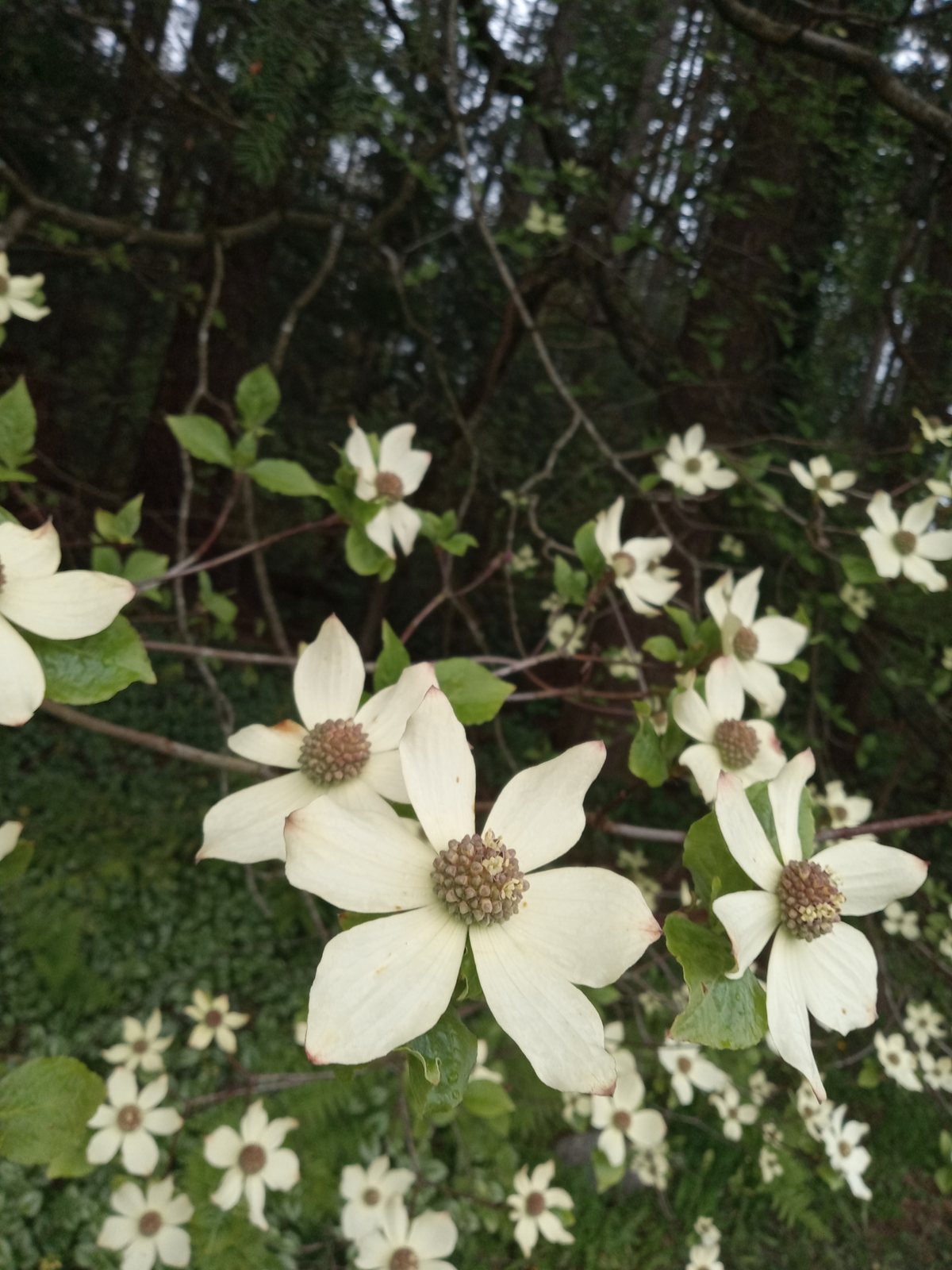
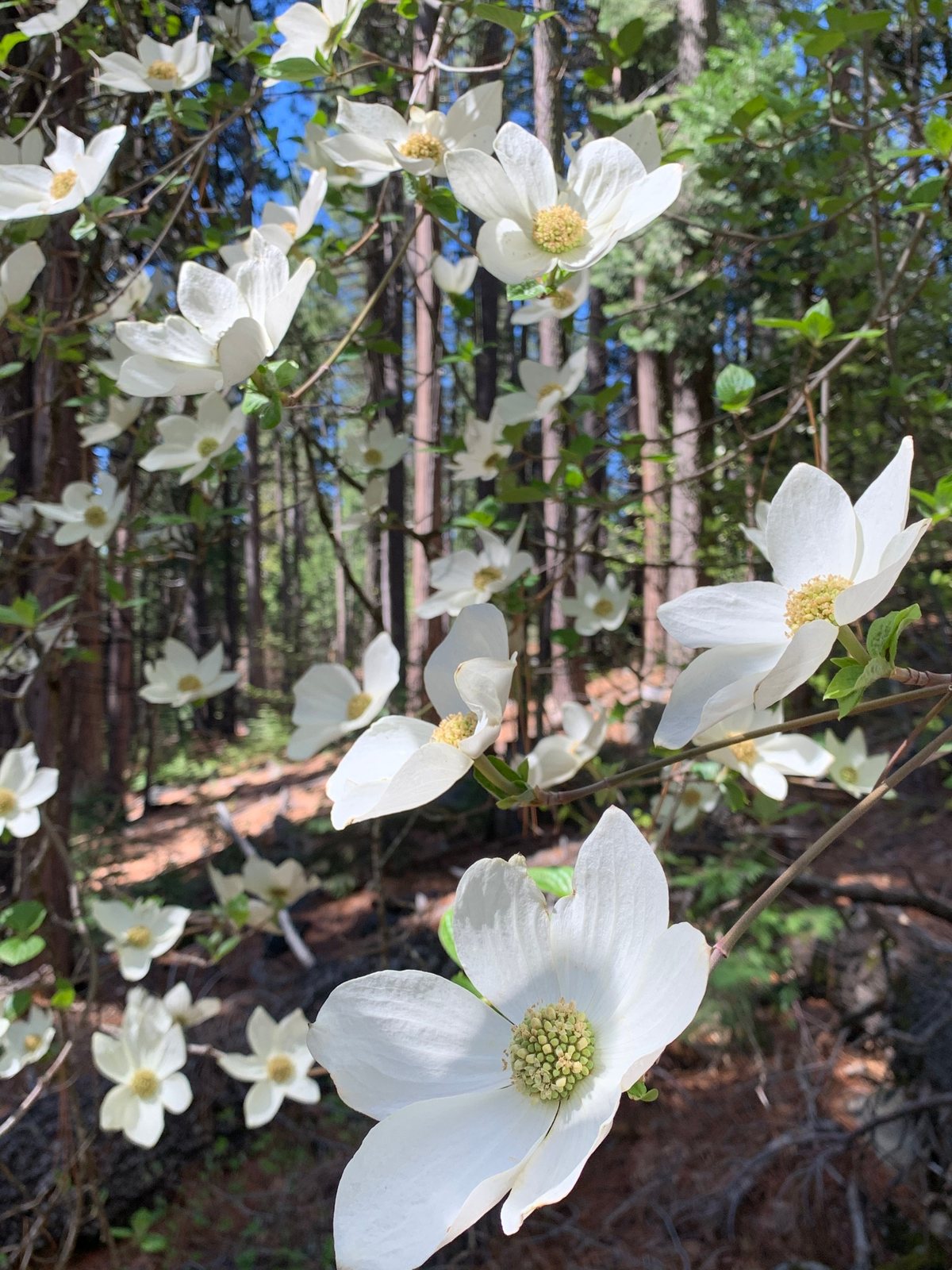
Pacific dogwood is a deciduous tree native to western North America, grown for its large white flower bracts, tiered branches and red to orange autumn foliage. It suits sheltered woodland gardens with cool roots and freely draining soil, but susceptibility to dogwood anthracnose makes it a demanding choice in some areas.
At a glance
- Sun
- Partial shade or sun in cool climates; protect from intense afternoon sun in hot locations. Avoid deep shade and stagnant air.
- Water
- Moderate; keep evenly moist while establishing, then water deeply during prolonged dry spells. Avoid waterlogged soil and frequent shallow watering.
- Soil
- Humus-rich, well-drained, acidic to neutral soil. Poor drainage, compacted ground and strongly alkaline soil are unsuitable.
- Height
- 40-60 ft (12-18 m)
- Spread
- 20-30 ft (6-9 m)
- Flowers
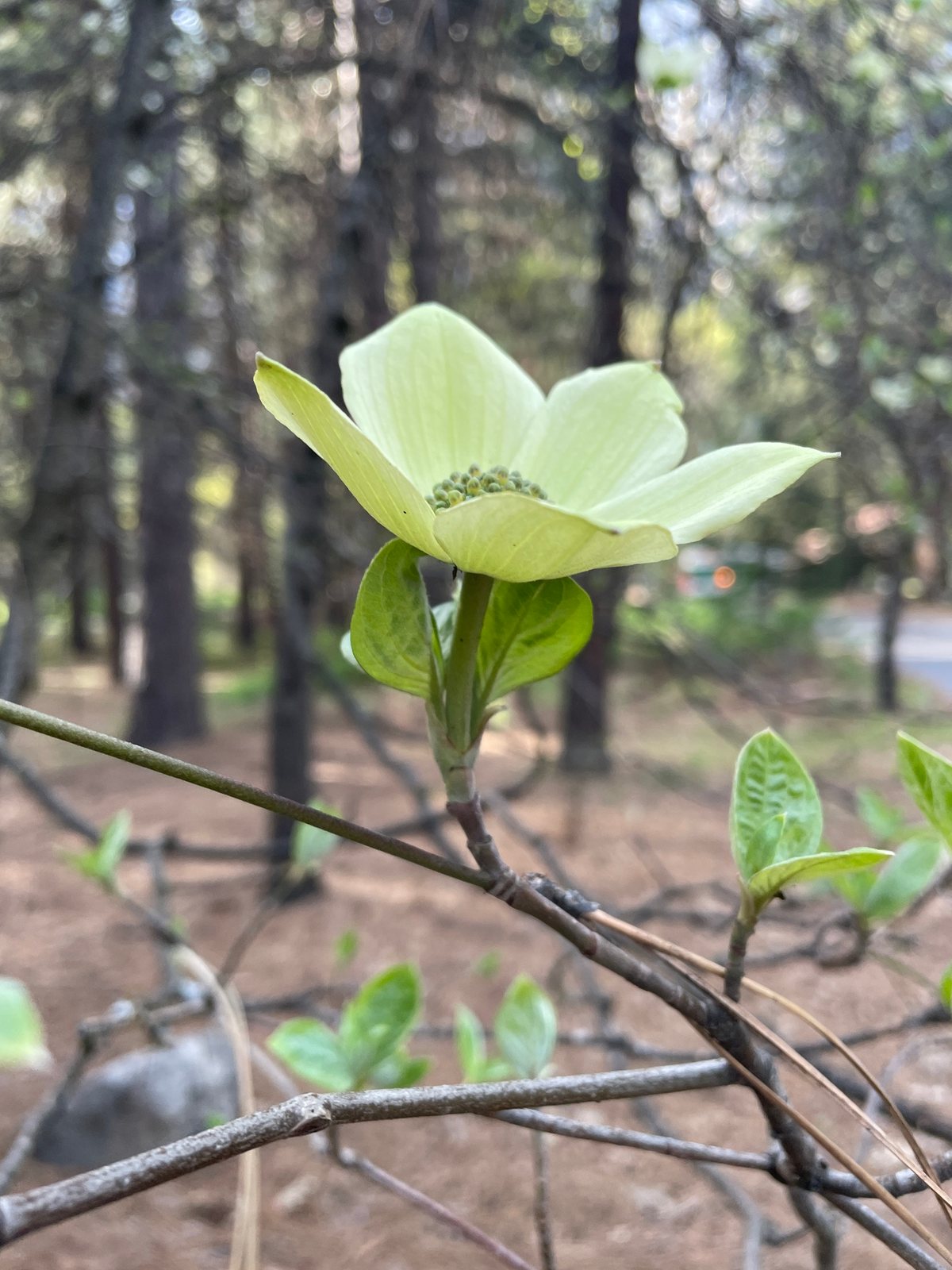
- Spring: small greenish flowers surrounded by large creamy-white bracts, usually six per flower head. A lighter second flowering sometimes occurs in late summer or early autumn.
- Foliage
- Opposite, oval green leaves with conspicuous curved veins; turns yellow, orange or red in autumn.
- Growth
- Moderate
- Care needed
- High
The year at a glance
- Pollinators
- Wildlife
- Low allergen
| J | F | M | A | M | J | J | A | S | O | N | D | |
|---|---|---|---|---|---|---|---|---|---|---|---|---|
| Flowers | ||||||||||||
| Fruit | ||||||||||||
| Plant |
Northern hemisphere months. In Australia, shift them by six.
- Difficulty
- Hard
- Toughness
- Needs looking after
Will it suit your garden?
Pick your zone, country, light and whether you have pets.
Full sun is 6 or more hours of direct sun a day, part shade 3 to 6 hours, shade under 3.
How it grows
Planting day
7 ft (2 m)
After 1 year
9 ft (2.7 m)
After 2 years
11 ft (3.3 m)
After 3 years
13 ft (4 m)
After 5 years
17 ft (5.3 m)
About 20 years to full size.
From a typical nursery size, at an average rate for this kind of plant. A rule of thumb, not a forecast.
Good to know
- Cats and dogs
- Mildly toxic: may upset a stomach
- Native to
- Canada
- Growth rate
- Moderate
Care
Jobs through the year
- WaterApr–May, Sep–Oct, every 14 days
- Deep-water established trees when soil begins drying; keep young trees evenly moist for two to three years.
- WaterJun–Aug, every 7 days
- During dry spells, soak the established root zone at ground level; avoid waterlogging and wet foliage.
- MulchMar
- Maintain 5–8 cm of leaf mould or bark over roots, keeping the trunk clear.
- FeedApr
- Feed only for a confirmed deficiency; avoid routine high-nitrogen fertilizer.
- PruneMay–Jun
- After flowering in dry weather, remove damaged or infected shoots; disinfect tools between cuts.
- ProtectOct–Nov
- Remove diseased fallen leaves to reduce anthracnose infection.
- ProtectJan–Mar, Nov–Dec
- Protect young trees from severe frost and cold winds; choose a sheltered site at the edge of hardiness.
- Plant a young, container-grown tree with its root flare at soil level; avoid disturbing established roots.
- Water deeply during dry weather for the first two or three growing seasons.
- Spread 2-3 in (5-8 cm) of leaf mould or bark mulch over the root area, keeping it clear of the trunk.
- Keep lawn, digging and heavy foot traffic away from the shallow roots.
- Avoid routine high-nitrogen feeding; use a soil test if growth or leaf colour suggests a deficiency.
- Water at ground level and remove fallen diseased leaves to reduce infection pressure.
Pruning. Prune sparingly in dry weather after flowering, removing dead, damaged or crossing branches without spoiling the natural tiers. Cut out anthracnose-infected shoots back to healthy wood and disinfect tools between cuts.
Through the year
- Early spring
- Check drainage and renew mulch before growth begins, keeping the trunk clear.
- Spring
- Inspect new leaves and shoots for anthracnose spots, blotches and dieback.
- Late spring
- After flowering, remove damaged or crossing branches only where necessary.
- Summer
- Check soil moisture during dry spells and water deeply when the root area is drying out.
- Autumn
- Remove diseased fallen leaves; retain healthy leaf litter elsewhere in the garden for wildlife.
- Autumn
- Plant young trees while soil is workable, unless the site has cold, wet winters; then wait until spring.
In the garden
- Use as a specimen at a woodland edge, where the white bracts stand out against dark conifers.
- Plant above ferns and low woodland groundcovers to build a layered shade garden.
- Include in a western North American native planting for spring flowers, autumn colour and bird food.
- Place beside a broad lawn or clearing where its branching structure can be seen without crowding.
Garden styles it suits: Woodland, Pacific Northwest woodland, California native, Wildlife garden, Autumn colour and White garden.
Plant it with: Western sword fern, Deer fern, Inside-out flower, Vanilla leaf, Vine maple and Salal.
Wildlife: The red fruit feeds birds and some small mammals. The small true flowers attract insects, and the canopy provides shelter and nesting sites.
Problems to watch for
- Dogwood anthracnose causes leaf blotches, twig dieback and sometimes death: provide good airflow, avoid overhead watering, remove infected material and seek local advice if branch dieback develops.
- Powdery mildew coats leaves with white growth: reduce crowding, maintain steady soil moisture and avoid excessive nitrogen feeding.
- Root rot develops in wet or compacted soil: correct drainage before planting and never leave the root zone waterlogged.
- Leaf scorch causes brown margins during heat or drought: protect from hot afternoon sun, mulch the roots and water deeply during prolonged dry weather.
Safety
Not known to be seriously toxic to people, cats, dogs or horses, but species-specific safety information is limited. The fruit is not recommended for eating; eating quantities may cause stomach upset.
Easily confused with
Flowering dogwood (Cornus florida)
Usually has four broad bracts with conspicuously notched tips; Pacific dogwood usually has six bracts with unnotched tips.
Kousa dogwood (Cornus kousa)
Usually flowers after the leaves have expanded, has four pointed bracts and produces round, strawberry-like fruits rather than clusters of individual red fruits.
Eddie's white wonder dogwood (Cornus 'Eddie's White Wonder')
This hybrid of Pacific and flowering dogwood commonly has four or five broad, overlapping white bracts. Features overlap with both parents, so a nursery label is often needed for confident identification.
The name
The species name nuttallii honours the English naturalist Thomas Nuttall, while Pacific refers to the tree's western North American range.
Propagation. Grow from cleaned fresh seed; dormancy can be prolonged, and germination may require warm followed by cold stratification. Named selections are usually grafted by specialist nurseries; cuttings can be difficult to root.
Checked against open data
- Accepted botanical name
- Cornus nuttallii
- Native range
- British Columbia, California, Idaho, Oregon and Washington.
- Measured
- Soil pH 4.9 to 7.3. Average height 1893 cm.
Sources: GBIF (CC BY 4.0) and Trefle (CC BY 4.0). The care and design notes are LandscapeGPT's own.
See it in your own yard.
Upload a photo of your yard and see it redesigned with plants that suit your climate, each checked against your zone.