Palmer's agave
Agave palmeri. Family Asparagaceae. Succulent.
Also called Palmer's century plant.
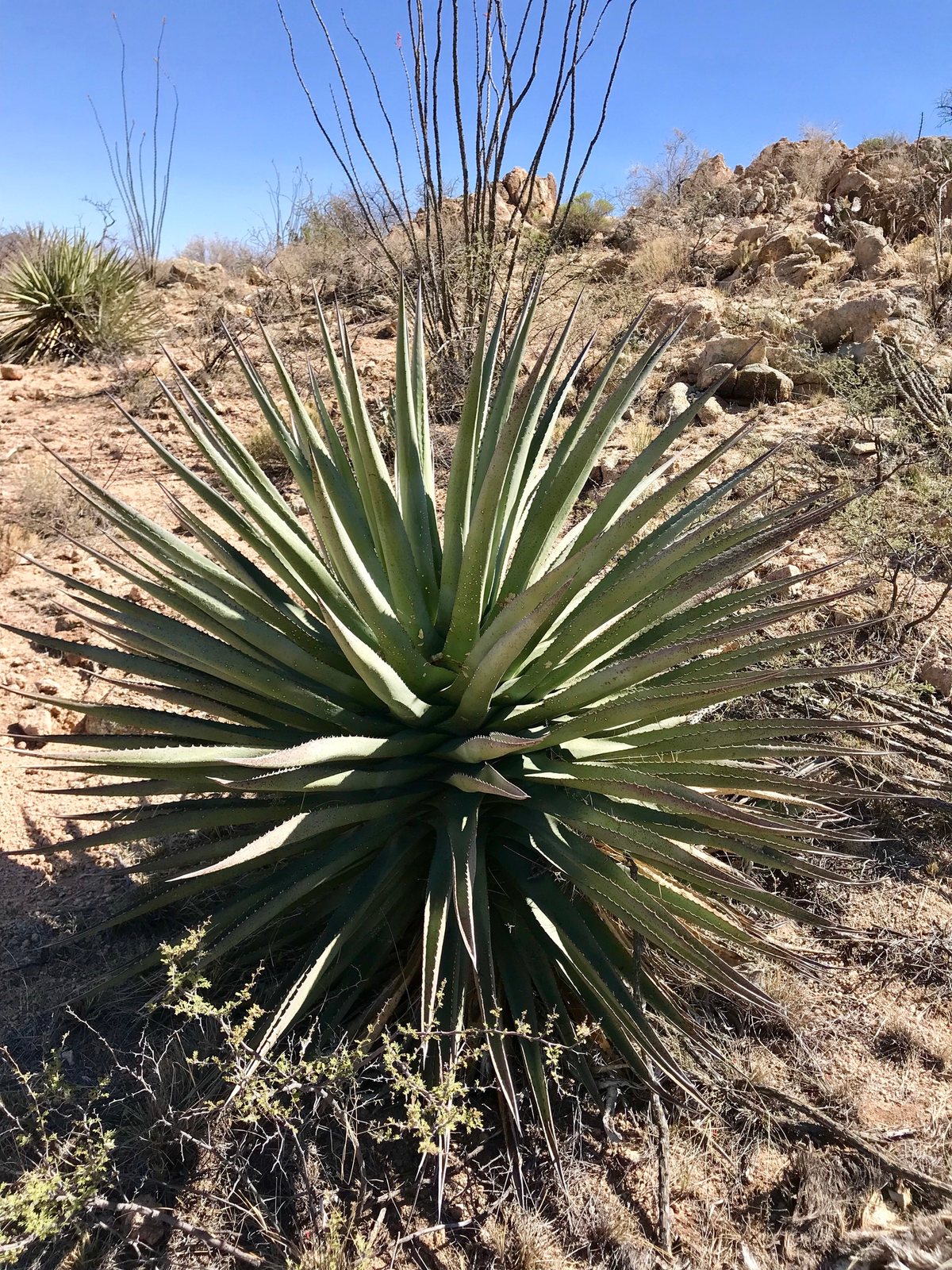
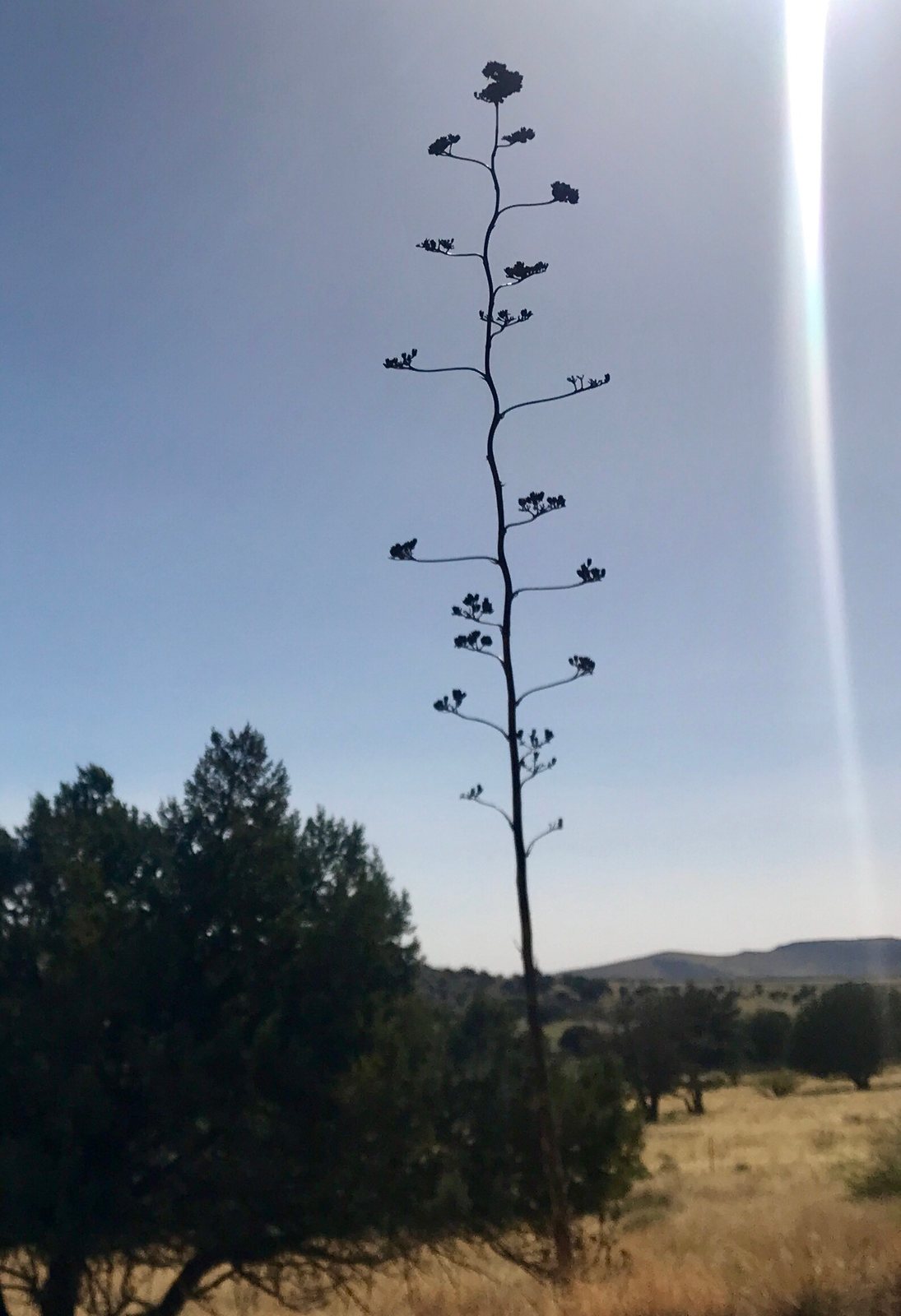
Palmer's agave forms a large, evergreen rosette of blue-grey leaves with toothed edges and sharp tips. Gardeners grow it for its strong outline in dry, sunny gardens; after many years, a tall, branched flower stalk appears, and the flowering rosette then dies. Its cold tolerance depends heavily on excellent drainage and relatively dry winters.
At a glance
- Sun
- Full sun; light afternoon shade is useful in exceptionally hot sites.
- Water
- Low once established. Water deeply but infrequently during active growth, letting the soil dry between waterings; keep almost dry in winter.
- Soil
- Sharply drained sandy, gravelly or rocky soil. Avoid heavy clay, wet hollows and moisture-retentive potting compost.
- Height
- 3-4 ft (0.9-1.2 m); flower stalk 12-20 ft (3.7-6.1 m)
- Spread
- 4-6 ft (1.2-1.8 m)
- Flowers
- Summer, on mature plants only: pale greenish-yellow flowers, often with reddish or purplish buds, on a tall, branched stalk.
- Foliage
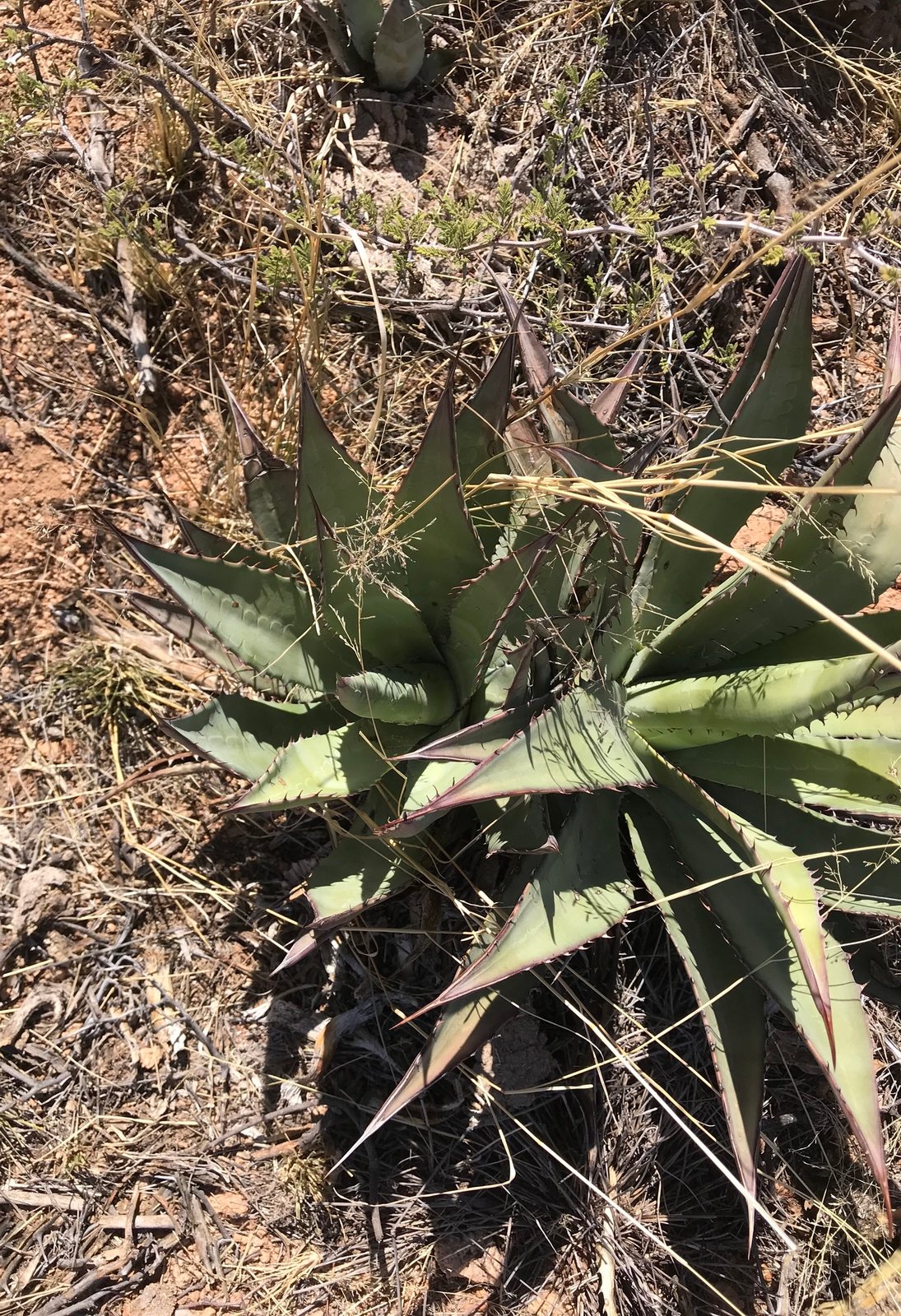
- Evergreen. Thick, rigid, blue-grey to grey-green leaves with brown marginal teeth and a strong terminal spine.
- Growth
- Slow to moderate, depending on warmth and summer moisture.
- Care needed
- Low
The year at a glance
- Pollinators
- Deer resistant
- Drought tolerant
- Heat tolerant
- Wildlife
- Low allergen
| J | F | M | A | M | J | J | A | S | O | N | D | |
|---|---|---|---|---|---|---|---|---|---|---|---|---|
| Flowers | ||||||||||||
| Plant |
Northern hemisphere months. In Australia, shift them by six.
- Difficulty
- Hard
- Toughness
- Needs looking after
Will it suit your garden?
Pick your zone, country, light and whether you have pets.
Full sun is 6 or more hours of direct sun a day, part shade 3 to 6 hours, shade under 3.
How it grows
Planting day
0.8 ft (0.25 m)
After 1 year
1.2 ft (0.35 m)
After 2 years
1.5 ft (0.46 m)
After 3 years
1.8 ft (0.56 m)
After 5 years
2.5 ft (0.76 m)
About 8 years to full size.
From a typical nursery size, at an average rate for this kind of plant. A rule of thumb, not a forecast.
Good to know
- Cats and dogs
- Toxic
- Native to
- the US
- Growth rate
- Slow
Care
Jobs through the year
- WaterMay, Sep, every 28 days
- For sheltered in-ground plants, water only if fully dry; young plants need closer checks.
- WaterJun–Aug, every 21 days
- Water established in-ground plants deeply only during drought; let roots dry fully between waterings.
- MulchMay
- Apply gravel around the plant, leaving leaf bases and the central crown clear.
- PruneApr–May
- Remove only fully dead lower leaves using long tools, gloves and eye protection.
- ProtectSep–Oct
- In zones 6–7, move container plants into bright, frost-protected shelter before damaging cold.
- ProtectJan–Mar, Nov–Dec
- Keep nearly dry under bright shelter; outdoor survival is unreliable in cold, wet gardens.
- ProtectMay–Jun
- After frost, acclimatize sheltered plants gradually to outdoor sun.
- ProtectJun–Sep
- Flowering occurs only at maturity; keep clear of unstable stalks and arrange safe removal of the dying rosette.
- Plant on a raised mound or slope where winter rain drains away quickly.
- Water new plants when the root zone has dried; reduce watering once established.
- Use gravel mulch, keeping the leaf bases and central growing point clear.
- Avoid routine feeding in the ground; give container plants a light cactus fertiliser feed in spring if needed.
- In cold, wet climates, grow in a movable container and overwinter somewhere bright, sheltered and nearly dry.
- Leave its full mature width clear of paths, doors and play areas.
Pruning. In spring, remove fully dead lower leaves with long-handled tools, wearing gloves and eye protection; do not cut healthy leaves merely to reduce its size. After flowering, have the heavy stalk and dying rosette removed safely, preserving any healthy offsets.
Through the year
- Spring
- Plant or repot once severe frost has passed, using a sharply drained growing medium.
- Late spring
- Remove dead leaves and check the leaf bases for rot or insect damage.
- Summer
- Water deeply during prolonged dry spells, then allow the root zone to dry.
- Summer
- Leave flowers for visiting wildlife; keep people clear if the tall stalk becomes unstable.
- Autumn
- Reduce watering and move container plants under bright, rainproof shelter before damaging cold.
- Winter
- Keep drainage outlets clear and remove fallen debris that traps moisture around the crown.
In the garden
- Use a single rosette as a focal point in a sunny gravel garden.
- Combine with fine-textured ornamental grasses to contrast with its broad, rigid leaves.
- Plant on a dry bank among rocks, with smaller drought-tolerant perennials around its outer edge.
- Grow in a large, frost-resistant container in a sunny courtyard, away from circulation routes.
Garden styles it suits: Desert modern, Architectural minimal, Dry gravel garden, Desert / xeriscape, Southwestern and Low-maintenance.
Plant it with: Red yucca, Blue grama, Desert marigold, Parry's penstemon and Blackfoot daisy.
Wildlife: The nectar-rich flowers feed nectar-feeding bats within its native range, as well as hummingbirds and insects. It is native to parts of the southwestern United States and northern Mexico.
Problems to watch for
- Crown or root rot in wet soil: improve drainage, reduce watering and keep mulch away from the crown; discard plants with a soft, collapsing centre.
- Agave snout weevil in regions where it occurs: watch for sudden wilting and loose central leaves; promptly remove badly infested plants and larvae.
- Cold and wet damage: provide rain shelter and move container plants under cover; wait until spring before removing damaged tissue.
- Scorch after moving a sheltered plant into strong sun: increase sun exposure gradually over several weeks.
Safety
Sap from damaged leaves can cause marked skin and eye irritation in people. Treat all parts as potentially harmful if chewed by cats, dogs or horses; species-specific poisoning information is limited. The terminal spines and leaf teeth can also cause serious puncture injuries, so wear protective clothing and keep it away from children and pets.
Easily confused with
Parry's agave (Agave parryi)
Usually forms a smaller, tighter, more rounded rosette with shorter, broader leaves; Palmer's agave has a more open rosette of longer leaves.
American century plant (Agave americana)
Usually grows larger, with longer, often arching or recurved leaves, and commonly produces numerous offsets; Palmer's agave is generally more upright and less freely offsetting.
Mountain agave (Agave montana)
Typically has a dense rosette of broader, greener leaves with prominent pale impressions; Palmer's agave is usually more open and blue-grey.
The name
The epithet palmeri honours the botanist and plant collector Edward Palmer.
Propagation. Grow from seed sown in warmth in a free-draining medium. Some plants produce offsets; separate these in spring or early summer when they have roots, allow cut surfaces to dry, then pot into a gritty mix.
Checked against open data
- Accepted botanical name
- Agave palmeri
- In the US and Canada
- Native in the lower 48 states.
- Native range
- Arizona, Mexico Northeast, Mexico Northwest and New Mexico.
Sources: GBIF (CC BY 4.0), USDA PLANTS and Trefle (CC BY 4.0). The care and design notes are LandscapeGPT's own.
See it in your own yard.
Upload a photo of your yard and see it redesigned with plants that suit your climate, each checked against your zone.