Parry's penstemon
Penstemon parryi. Family Plantaginaceae. Perennial.
Also called Parry's beardtongue, Desert penstemon.
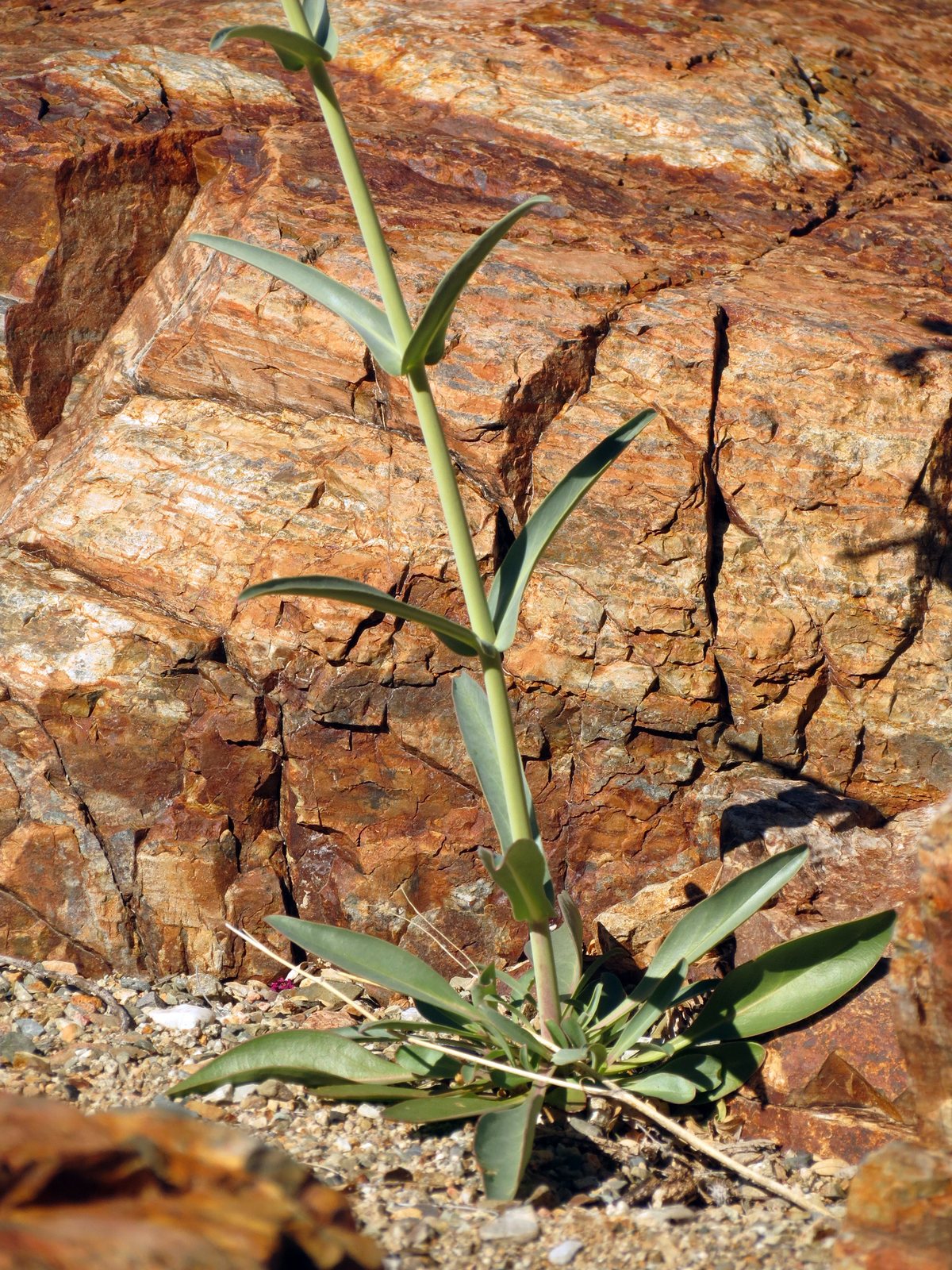
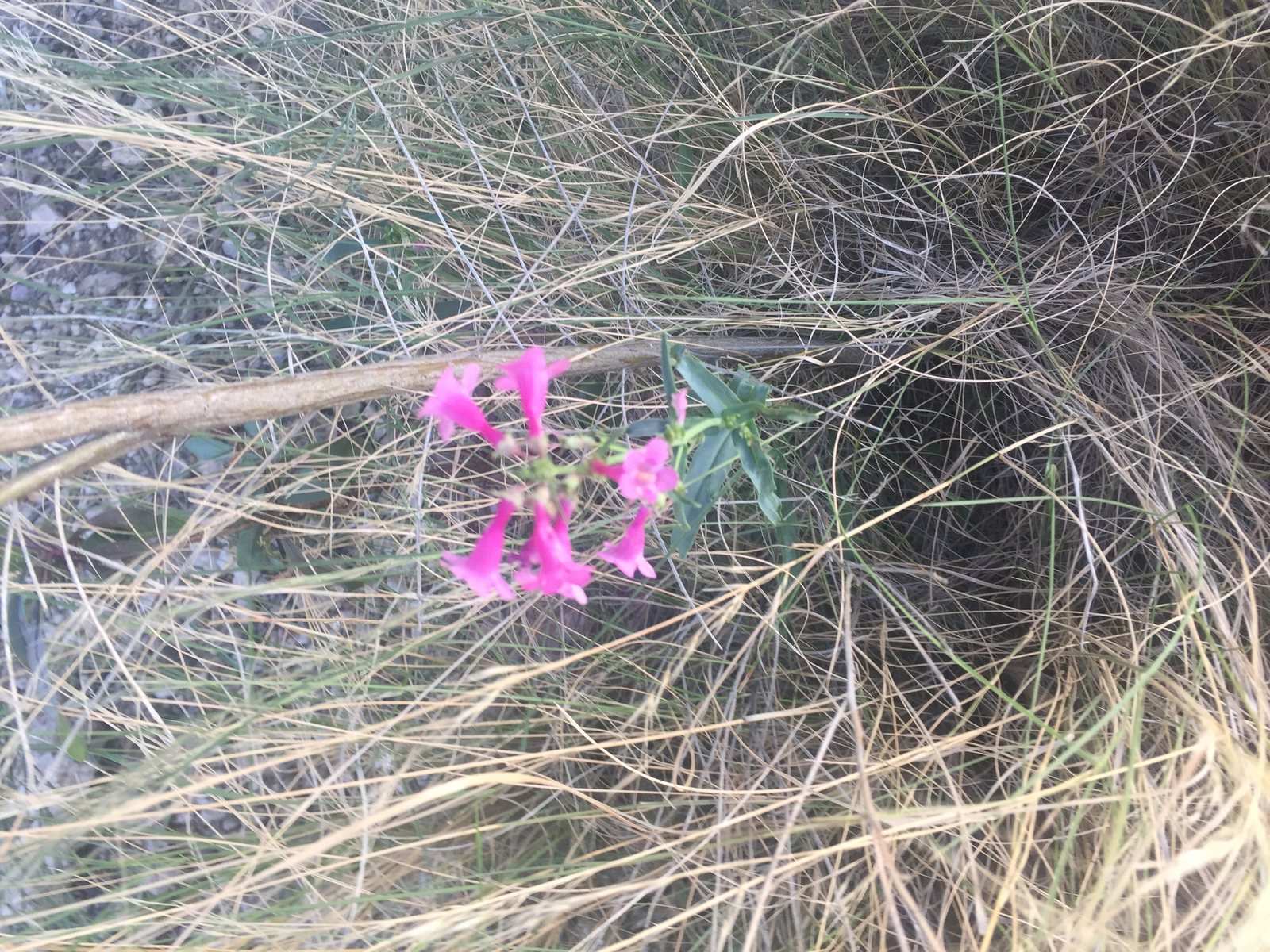
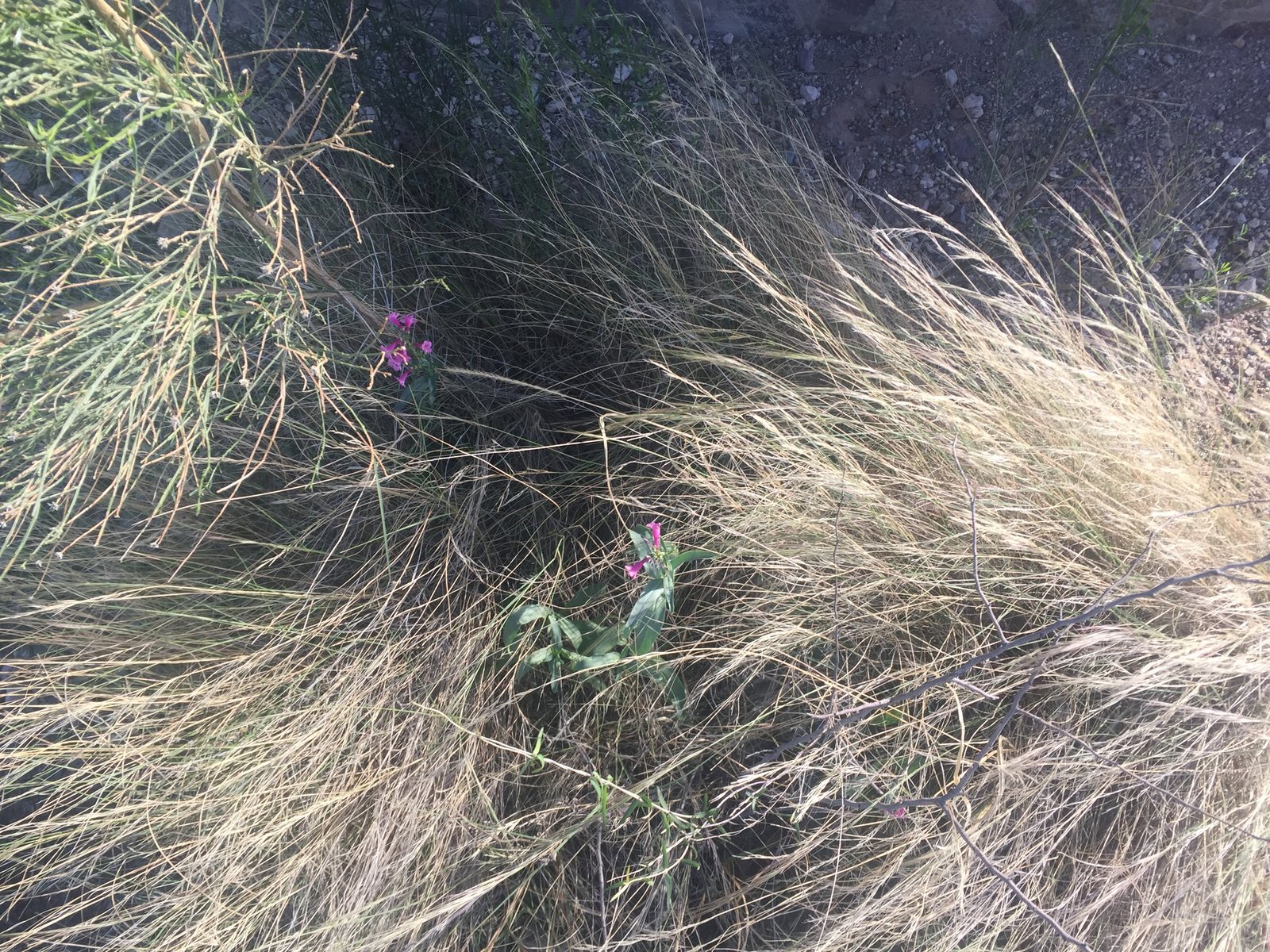
Parry's penstemon is a short-lived perennial from the Sonoran Desert of Arizona and northwestern Mexico, grown for tall, airy spikes of pink flowers above blue-green leaves. It brings early colour and hummingbirds to dry gardens, but needs excellent drainage and is unreliable in cold, wet winters.
At a glance
- Sun
- Full sun; light afternoon shade is useful in very hot desert gardens.
- Water
- Low once established. Water deeply during establishment, then let the soil dry between waterings; avoid frequent irrigation, especially in summer.
- Soil
- Lean, sharply drained sandy, gravelly or rocky soil. Tolerates alkaline soil; avoid heavy clay and moisture-retentive planting pockets.
- Height
- 2-4 ft (0.6-1.2 m), including flower stems
- Spread
- 1-2 ft (0.3-0.6 m)
- Flowers
- Late winter through spring in warm climates, later in cooler locations; clear pink to rose-pink tubular flowers on tall, branching stems.
- Foliage
- Evergreen. Narrow, smooth-edged, blue-green leaves form a low basal rosette, with smaller paired leaves along the flower stems.
- Growth
- Moderate to fast; plants may flower in their first spring under favourable conditions.
- Care needed
- Low
The year at a glance
- Pollinators
- Deer resistant
- Drought tolerant
- Heat tolerant
- Wildlife
- Low allergen
| J | F | M | A | M | J | J | A | S | O | N | D | |
|---|---|---|---|---|---|---|---|---|---|---|---|---|
| Flowers | ||||||||||||
| Fruit | ||||||||||||
| Plant |
Northern hemisphere months. In Australia, shift them by six.
- Difficulty
- Moderate
- Toughness
- Fairly tough
Will it suit your garden?
Pick your zone, country, light and whether you have pets.
Full sun is 6 or more hours of direct sun a day, part shade 3 to 6 hours, shade under 3.
How it grows
Planting day
1 ft (0.3 m)
After 1 year
1.8 ft (0.55 m)
After 2 years
2.6 ft (0.8 m)
After 3 years
3 ft (0.9 m)
full size
About 2 years to full size.
From a typical nursery size, at an average rate for this kind of plant. A rule of thumb, not a forecast.
Good to know
- Cats and dogs
- Safe
- Native to
- the US
- Growth rate
- Fast
Care
Jobs through the year
- WaterApr–May, Sep, every 28 days
- Water established plants only when dry; give new plants more frequent establishment watering.
- WaterJun–Aug, every 21 days
- Water established plants only in prolonged drought after checking the root zone is dry.
- PruneMar–Apr
- Remove dead leaves without shearing the living basal rosette.
- MulchApr–May
- Apply a thin gravel mulch, keeping it clear of the crown.
- DeadheadMay–Jul, every 14 days
- Cut finished stalks to basal foliage; leave a few to set replacement seed.
- ProtectJan–Mar, Oct–Dec
- Not reliably hardy in zone 6–7; overwinter containers bright, cool, frost-free and sheltered from rain.
- Plant with the crown at soil level in a sunny, freely draining position.
- Water new plants deeply, allowing the surface soil to dry before watering again.
- Give established plants occasional deep watering during prolonged drought, rather than frequent light watering.
- Avoid routine feeding and rich compost, which encourage weak growth.
- Use a thin gravel mulch and keep it clear of the crown.
- Allow a few flower stems to set seed so seedlings can replace ageing plants.
Pruning. After flowering, cut spent flower stems back to the basal foliage, leaving a few if you want seed. Remove dead leaves as needed, but do not shear off the living basal rosette.
Through the year
- Autumn
- Plant in mild-winter areas while the soil is warm; choose a raised or gravelly site where winter rain drains quickly.
- Late autumn
- Sow seed on the surface of a free-draining seed mix and press it in; protect pots from persistent heavy rain.
- Late winter
- Remove dead foliage and check that wet mulch or fallen leaves are not covering the crown.
- Spring
- Plant in cooler areas after severe frost risk has passed, and water new plants while their roots establish.
- Late spring
- Cut down finished flower stems, retaining selected stems until the seed capsules dry.
- Summer
- Reduce irrigation after flowering; check soil moisture before watering plants that slow down in the heat.
In the garden
- Plant loose groups among agaves, yuccas and small desert shrubs for spring colour above bold foliage.
- Use in gravel gardens with low grasses and drought-tolerant perennials, allowing the flower stems to rise above neighbouring plants.
- Place near a path or seating area where visiting hummingbirds can be watched.
- Repeat through a dry, informal border and allow limited self-seeding to maintain a natural-looking display.
Garden styles it suits: Desert modern, Southwestern, Desert / xeriscape, Dry gravel garden, Wildlife garden and Pollinator garden.
Plant it with: Desert marigold, Brittlebush, Blackfoot daisy, Red yucca, Deer grass and Fairy duster.
Wildlife: Flowers attract hummingbirds in its native range and are visited by bees. In the UK and Australia, where hummingbirds do not occur, expect insect visitors instead.
Problems to watch for
- Crown and root rot in wet soil: improve drainage, keep mulch away from the crown and stop frequent watering; replace badly rotted plants.
- Aphids on tender flower stems: wash off small colonies with water and encourage natural predators.
- Floppy flower stems in shade or rich soil: provide more sun, stop feeding and support individual stems if necessary.
- Plants disappearing after a few seasons: this is naturally short-lived; retain seedlings or sow fresh seed regularly.
Safety
Not known to be toxic to cats, dogs, horses or people. Species-specific toxicity information is limited, and no particular part is established as poisonous; it is not an edible plant.
Easily confused with
Firecracker penstemon (Penstemon eatonii)
Usually has scarlet to orange-red flowers with narrower, more tubular mouths, rather than the pink, more open-mouthed flowers of Parry's penstemon.
Palmer's penstemon (Penstemon palmeri)
Has larger, inflated, pale pink flowers that are often fragrant, and broader, toothed leaves; Parry's penstemon has smaller flowers and narrow, smooth-edged leaves.
The name
The species name parryi honours the botanist Charles Christopher Parry, while beardtongue refers to the hairy sterile stamen inside the flower.
Propagation. Grow from seed collected when the capsules turn brown and dry. Surface-sow in autumn or late winter in a sharply drained mix, press the seed into contact with the surface and keep lightly moist during germination. Move volunteer seedlings while small.
Checked against open data
- Accepted botanical name
- Penstemon parryi
- In the US and Canada
- Native in the lower 48 states.
- Native range
- Arizona and Mexico Northeast.
Sources: GBIF (CC BY 4.0), USDA PLANTS and Trefle (CC BY 4.0). The care and design notes are LandscapeGPT's own.
See it in your own yard.
Upload a photo of your yard and see it redesigned with plants that suit your climate, each checked against your zone.