Teddy bear cholla
Cylindropuntia bigelovii. Family Cactaceae. Succulent.
Also called Teddy-bear cactus, Teddybear cholla.
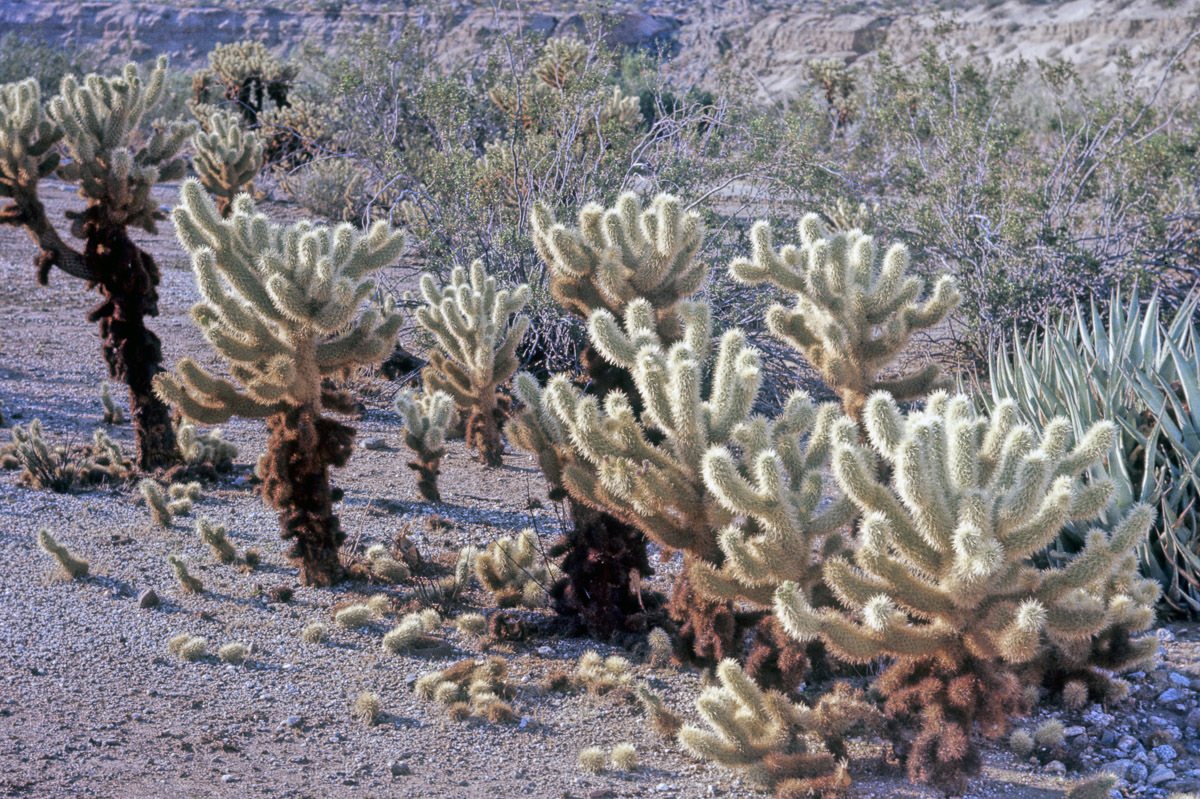
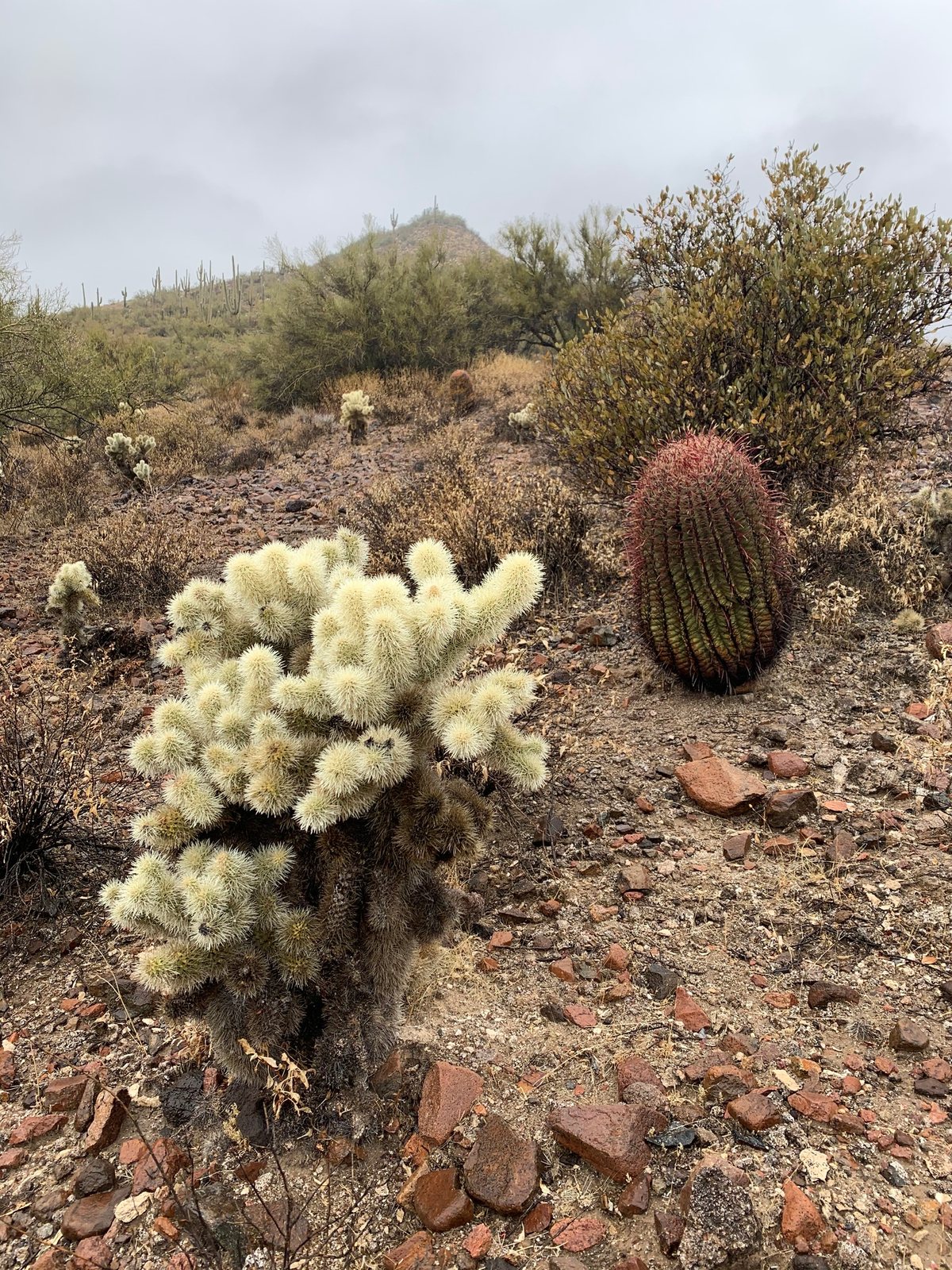
Teddy bear cholla is a branching desert cactus native to the southwestern United States and northwestern Mexico, grown for its sculptural shape and dense, golden spines. Its soft-looking surface is dangerously misleading: barbed spines and easily detached stem joints make it unsuitable beside paths, play areas or places used by pets. It needs strong sun, exceptionally sharp drainage and protection from prolonged cold and winter wet.
At a glance
- Sun
- Full sun; give indoor or greenhouse plants the brightest available position and introduce them gradually to direct outdoor sun.
- Water
- Very low once established. Water containers thoroughly only after the compost has dried completely; keep almost dry during cool winter conditions.
- Soil
- Very freely draining sandy or gravelly soil. For containers, use a cactus mix amended generously with pumice, grit or another coarse mineral material.
- Height
- 3-8 ft (0.9-2.4 m)
- Spread
- 3-6 ft (0.9-1.8 m)
- Flowers
- Pale yellow-green flowers at stem tips in spring to early summer; flowering is less reliable in containers or cool climates.
- Foliage
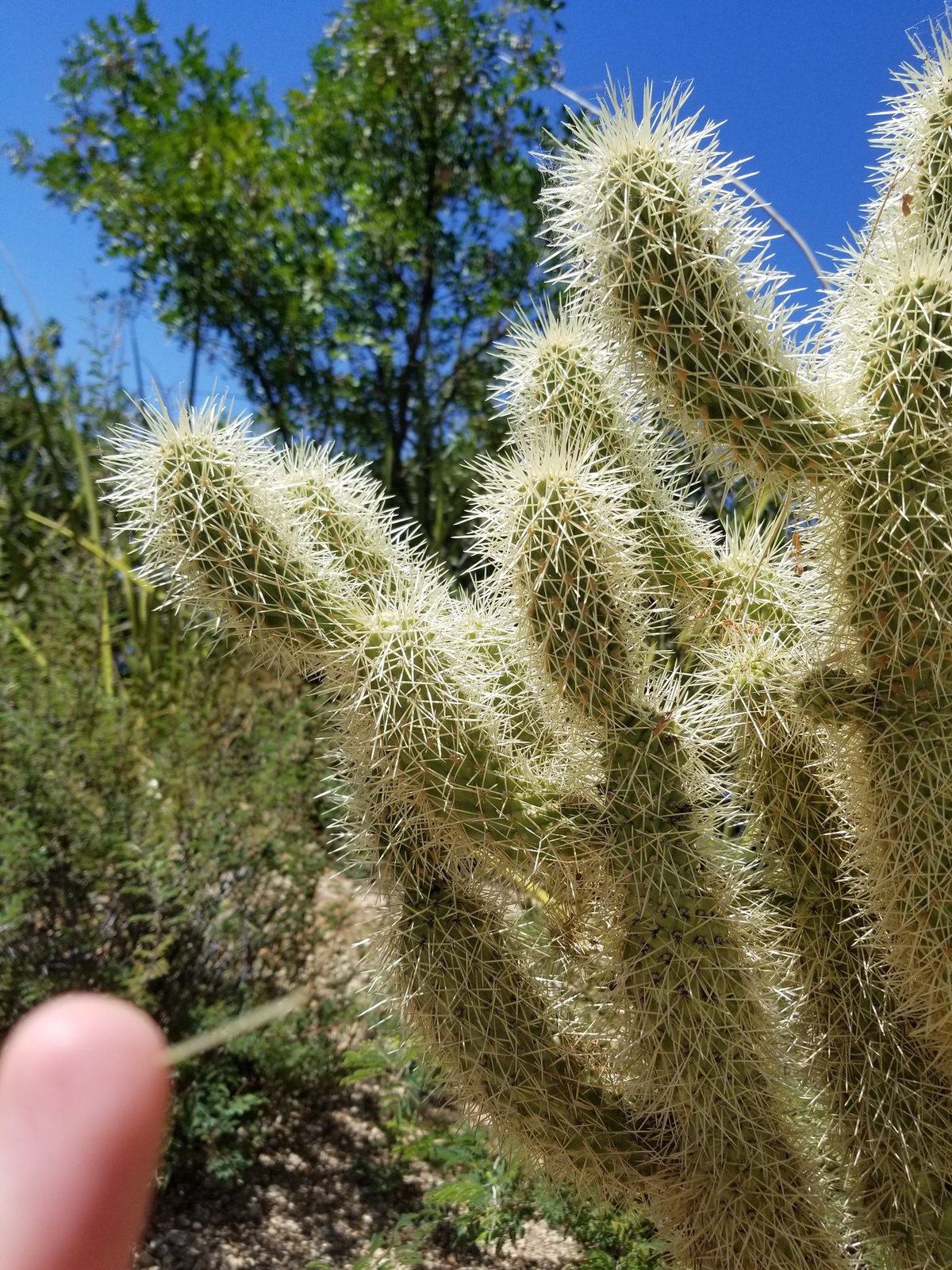
- Evergreen. Green, cylindrical, jointed stems almost hidden by dense yellowish to straw-coloured spines. Tiny temporary leaves appear on new growth and soon fall.
- Growth
- Slow to moderate in warm, sunny conditions.
- Care needed
- Medium
The year at a glance
- Pollinators
- Deer resistant
- Drought tolerant
- Heat tolerant
- Wildlife
- Low allergen
| J | F | M | A | M | J | J | A | S | O | N | D | |
|---|---|---|---|---|---|---|---|---|---|---|---|---|
| Flowers | ||||||||||||
| Fruit | ||||||||||||
| Plant |
Northern hemisphere months. In Australia, shift them by six.
- Difficulty
- Moderate
- Toughness
- Fairly tough
Will it suit your garden?
Pick your zone, country, light and whether you have pets.
Full sun is 6 or more hours of direct sun a day, part shade 3 to 6 hours, shade under 3.
How it grows
Planting day
0.8 ft (0.25 m)
After 1 year
1.4 ft (0.43 m)
After 2 years
2 ft (0.61 m)
After 3 years
2.6 ft (0.79 m)
After 5 years
4 ft (1.1 m)
About 8 years to full size.
From a typical nursery size, at an average rate for this kind of plant. A rule of thumb, not a forecast.
Good to know
- Cats and dogs
- Safe
- Invasive in
- Australia
- In the garden
- Spreads vigorously: plan to contain it.
- Growth rate
- Slow
Care
Jobs through the year
- WaterApr–May, Sep, every 30 days
- For established plants, water only if warm and completely dry; check containers and new plants more often.
- WaterJun–Aug, every 21 days
- Water established plants only if the root zone is fully dry; skip after rain.
- FeedApr
- Give containers one dilute cactus feed; do not routinely feed established ground plants.
- MulchMay
- Apply a thin gravel layer, leaving stem bases uncovered.
- ProtectMay–Jun
- Acclimatise containers gradually to outdoor sun after frost risk passes.
- ProtectJan–Apr, Sep–Dec
- In zone 6-7, overwinter in bright, dry, frost-free shelter and keep almost dry.
- ProtectMay–Sep, every 14 days
- Collect fallen joints with long-handled tongs and eye protection; keep plants away from paths.
- Plant well away from paths, seating, children and pets; leave enough space to avoid brushing against mature branches.
- Water newly planted specimens sparingly while they establish, allowing the soil to dry fully between waterings.
- Use gravel rather than moisture-retaining organic mulch, keeping the stem base uncovered.
- Feed container plants lightly with cactus fertiliser once in spring; established plants in the ground usually need no feeding.
- In cold or wet climates, grow in a movable container and overwinter in a bright, dry, frost-free position.
- Use long-handled tongs and eye protection when handling it; ordinary gardening gloves do not reliably stop the spines.
Pruning. Routine pruning is unnecessary. In warm, dry weather, remove dead or badly placed joints at their connections using long-handled tools, and collect every fallen piece without touching it directly.
Through the year
- Early spring
- Inspect for rot and pests, and resume occasional watering only as warmth and active growth return.
- Spring
- Repot only if necessary, using a pot with drainage holes and a gritty cactus mix.
- Late spring
- Gradually acclimatise overwintered container plants to outdoor sun after frost risk has passed.
- Summer
- Check container moisture and water only when fully dry; collect detached joints with long-handled tongs.
- Autumn
- Reduce watering as temperatures fall and move containers under bright, frost-free cover before cold weather.
- Winter
- Keep sheltered plants almost dry and check that rain cannot leave outdoor roots waterlogged.
In the garden
- Use as an isolated sculptural specimen in a broad gravel bed, well beyond reach of passing people.
- Combine with agaves, yuccas and boulders for a southwestern desert planting.
- Place against a plain wall where low-angle sunlight highlights the dense spines.
- Grow in a heavy, stable container in a restricted-access sunny courtyard, with dry winter shelter available.
Garden styles it suits: Desert modern, Desert / xeriscape, Southwestern, Architectural minimal, Dry gravel garden and California native.
Plant it with: Joshua tree, Banana yucca, Desert spoon, Parry's agave, Brittlebush and Desert marigold.
Wildlife: Flowers provide pollen for native bees. In its native desert habitat, the spiny branches can shelter nesting birds and small animals.
Problems to watch for
- Root or stem rot in wet soil: improve drainage, stop watering during cool conditions and remove affected material; severely rotted plants may not recover.
- Mealybugs or scale insects: inspect sheltered stem joints and treat infestations with a product labelled for use on cacti, following its directions.
- Cold damage: provide frost-free winter shelter in marginal climates and keep roots dry during cold spells.
- Detached joints rooting around the plant: inspect the surrounding ground regularly and remove pieces with tools before they establish.
Safety
Not known to be chemically toxic to people, cats, dogs or horses. The serious hazard is physical: all spiny stem sections, including detached joints, can lodge barbed spines deeply in skin, eyes or mouths. Keep children and animals away, and seek medical or veterinary help for eye, mouth or extensive injuries.
Where it spreads. Detached stem joints can root and form colonies. In Australia it is a regulated invasive cactus, including in Queensland and New South Wales; possession, sale, movement or planting may be prohibited or restricted. Check current state rules before obtaining it, and never dump stems in garden waste or bushland.
Easily confused with
Chain-fruit cholla (Cylindropuntia fulgida)
Usually develops conspicuous hanging chains of persistent fruits and a more open, tree-like crown; teddy bear cholla has densely golden-spined joints and does not form long fruit chains.
Silver cholla (Cylindropuntia echinocarpa)
Usually has slimmer joints, a more open branching habit and paler spines that leave more stem visible; teddy bear cholla has stout joints densely concealed by spines.
The name
The common name refers to its deceptively plush-looking coat of spines, while bigelovii honours American physician and botanist John Milton Bigelow.
Propagation. Where legal, propagate from a detached stem joint in warm weather. Handle it with long tongs, allow the broken surface to dry and callus, then set it shallowly in dry, gritty cactus mix; water sparingly after roots begin forming. Do not propagate where the plant is regulated.
Checked against open data
- Accepted botanical name
- Cylindropuntia fosbergii Cylindropuntia bigelovii is an older name for Cylindropuntia fosbergii.
- Native range
- California.
Sources: GBIF (CC BY 4.0) and Trefle (CC BY 4.0). The care and design notes are LandscapeGPT's own.
See it in your own yard.
Upload a photo of your yard and see it redesigned with plants that suit your climate, each checked against your zone.