Texas red oak
Quercus buckleyi. Family Fagaceae. Tree.
Also called Buckley's oak, Texas oak.
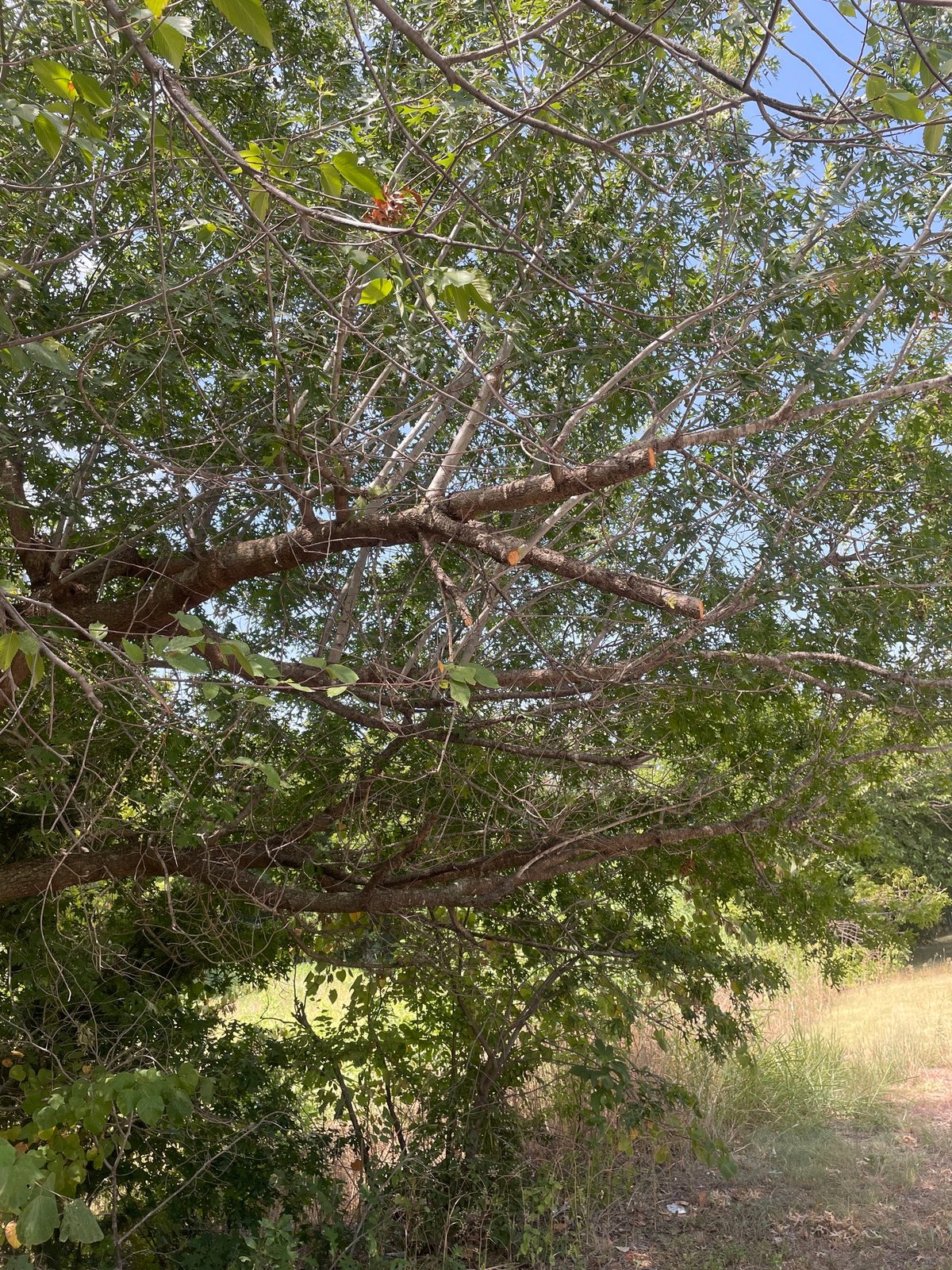
Texas red oak is a medium-sized deciduous oak native mainly to Texas and Oklahoma, grown for its spreading shade canopy and red to bronze autumn foliage. It suits sunny gardens with well-drained soil, including limestone ground, and tolerates heat and drought once established. Autumn colour varies with the tree and the weather.
At a glance
- Sun
- Full sun; tolerates light shade, but develops a better crown and autumn colour in sun.
- Water
- Water regularly while establishing; low to moderate needs once established. Avoid persistently wet soil.
- Soil
- Well-drained loam, clay or rocky soil, including limestone-derived soils; tolerates moderately alkaline conditions. Avoid waterlogged sites.
- Height
- 30-50 ft (9-15 m)
- Spread
- 30-40 ft (9-12 m)
- Flowers
- Spring, as leaves emerge; yellow-green male catkins and tiny, inconspicuous female flowers.
- Foliage
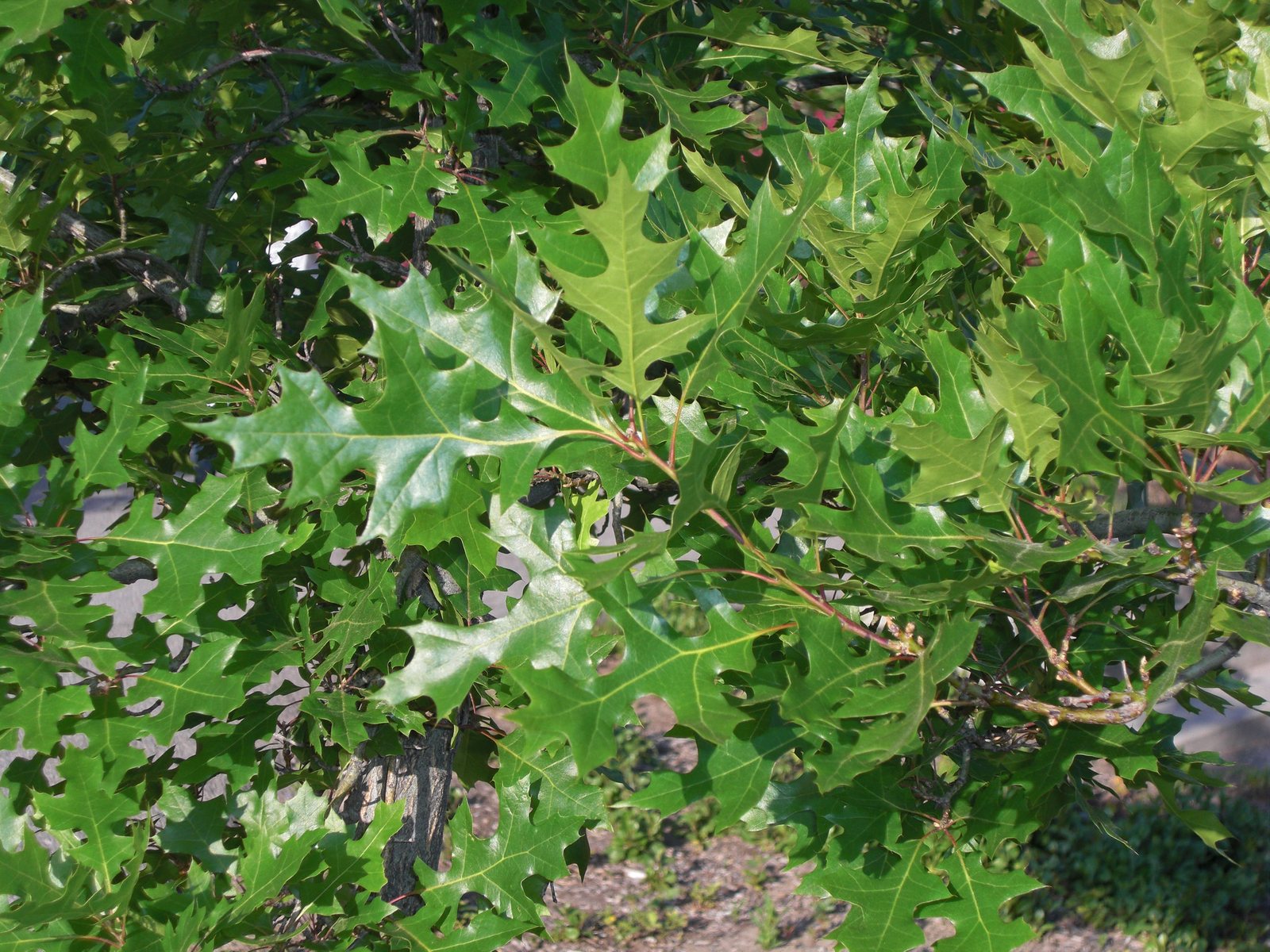
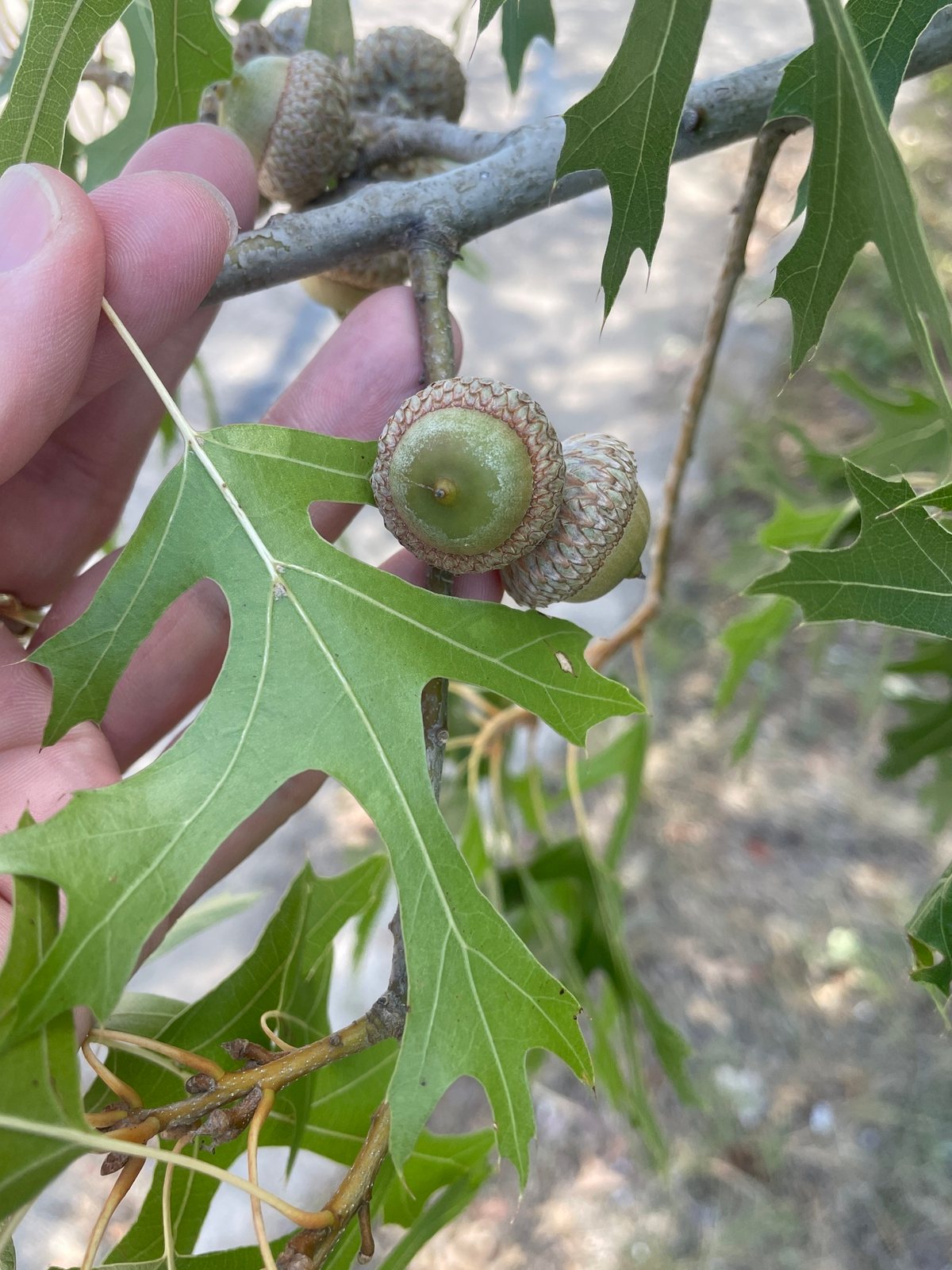
- Glossy green leaves with pointed, bristle-tipped lobes, turning red, bronze or brown in autumn. Young trees may retain some brown leaves into winter.
- Growth
- Moderate; faster on deeper soil with adequate moisture.
- Care needed
- Low
The year at a glance
- Drought tolerant
- Heat tolerant
- Wildlife
| J | F | M | A | M | J | J | A | S | O | N | D | |
|---|---|---|---|---|---|---|---|---|---|---|---|---|
| Flowers | ||||||||||||
| Fruit | ||||||||||||
| Plant |
Northern hemisphere months. In Australia, shift them by six.
- Difficulty
- Easy
- Toughness
- Very tough
Will it suit your garden?
Pick your zone, country, light and whether you have pets.
Full sun is 6 or more hours of direct sun a day, part shade 3 to 6 hours, shade under 3.
How it grows
Planting day
7 ft (2 m)
After 1 year
9 ft (2.6 m)
After 2 years
11 ft (3.3 m)
After 3 years
13 ft (3.9 m)
After 5 years
17 ft (5.1 m)
About 16 years to full size.
From a typical nursery size, at an average rate for this kind of plant. A rule of thumb, not a forecast.
Good to know
- Cats and dogs
- Toxic
- Native to
- the US
- Growth rate
- Fast
Care
Jobs through the year
- WaterApr–May, Sep–Oct, every 30 days
- Water established trees only if the root zone is dry; water regularly for the first 2–3 years.
- WaterJun–Aug, every 21 days
- During prolonged drought, soak the root zone deeply; skip watering if soil remains moist.
- MulchApr, Oct
- Maintain 5–8 cm of mulch, keeping the root flare exposed and mulch away from the trunk.
- PruneJan, Dec
- Train young trees without topping; follow local oak-wilt restrictions and wound-painting guidance.
- Plant with the root flare at soil level, allowing room for the mature crown away from buildings and overhead wires.
- Water deeply through the first two or three growing seasons, letting the soil begin to dry between waterings.
- Spread mulch 2-3 in (5-8 cm) deep over the root area, keeping it clear of the trunk.
- Do not fertilise routinely; use a soil test if growth is poor or leaves become unusually pale.
- Avoid trenching, soil compaction and changes in soil level beneath the canopy.
Pruning. Train young trees during winter dormancy to develop a sound main framework, removing competing leaders and damaged branches without topping. In oak-wilt areas, follow local pruning restrictions—particularly avoiding February through June in Texas—and immediately paint any fresh pruning cuts or accidental wounds.
Through the year
- Autumn
- Plant where winters are mild, and water thoroughly after planting.
- Winter
- Inspect the branch structure and carry out necessary formative pruning, following local oak-wilt guidance.
- Spring
- Plant in colder districts once the ground is workable; renew mulch without covering the trunk.
- Late spring
- Check for sudden wilting or browning, especially where oak wilt occurs, and seek prompt diagnosis.
- Summer
- Water young trees deeply during dry spells; check soil moisture before watering established trees.
- Autumn
- Keep fallen leaves as mulch in suitable beds, and remove unwanted acorn seedlings while small.
In the garden
- Use as a shade tree in a medium-sized or large lawn, leaving space for its broad crown.
- Place against evergreen planting to make its autumn foliage more visible.
- Combine with drought-tolerant grasses and perennials in a sunny, limestone-soil garden.
- Plant in an open native woodland or wildlife garden where fallen leaves and acorns can remain.
Garden styles it suits: Texas Hill Country, Southwestern, Woodland, Wildlife garden, Autumn colour and Desert / xeriscape.
Plant it with: Little bluestem, Sideoats grama, Texas sage, Autumn sage, Flame acanthus and Texas mountain laurel.
Wildlife: Acorns feed squirrels, jays and other birds and mammals. The foliage supports many moth and butterfly caterpillars, while mature trees provide nesting sites and shelter.
Problems to watch for
- Oak wilt can cause rapid decline and death. Avoid wounding during locally advised high-risk periods, paint fresh wounds immediately in affected regions, and contact an oak-wilt specialist promptly; root-graft spread may require professional treatment.
- Waterlogged soil can cause root decline and root rot. Choose a freely draining site, keep the root flare exposed and reduce unnecessary irrigation.
- Iron chlorosis can produce yellow leaves with green veins on very alkaline soil. Test the soil and seek a suitable iron treatment rather than adding general fertiliser.
- Leaf-chewing caterpillars can cause seasonal damage. Established trees usually tolerate limited feeding; identify the pest before treating, and seek advice if young trees are repeatedly stripped.
Safety
Acorns and young leaves contain tannins and can poison horses and other livestock, sometimes causing serious kidney and digestive damage. Dogs, cats and people may also become ill if they eat them; larger amounts are more concerning, and whole acorns can cause choking or intestinal blockage in pets. Do not treat raw acorns as edible nuts.
Easily confused with
Shumard oak (Quercus shumardii)
Usually a larger tree associated with deeper, moister soils, often with larger leaves. Leaf shape overlaps strongly with Texas red oak, so buds, acorns and local habitat may be needed for identification.
Southern red oak (Quercus falcata)
Often has a long, curved terminal leaf lobe, a rounded or bell-shaped leaf base and a persistently hairy underside; Texas red oak leaves are generally more evenly lobed and less hairy beneath.
The name
The epithet buckleyi honours botanist Samuel Botsford Buckley, while Texas red oak refers to its main native region and autumn foliage.
Propagation. Grow from sound, ripe acorns collected in autumn; acorns mature in their second growing season. Keep them from drying out and sow outdoors in a protected nursery bed or deep pots, guarding against rodents; moist cold stratification can help germination. Seedlings vary, and oaks may hybridise with related species.
Checked against open data
- Accepted botanical name
- Quercus buckleyi
- In the US and Canada
- Native in the lower 48 states.
- Native range
- Oklahoma and Texas.
Sources: GBIF (CC BY 4.0), USDA PLANTS and Trefle (CC BY 4.0). The care and design notes are LandscapeGPT's own.
See it in your own yard.
Upload a photo of your yard and see it redesigned with plants that suit your climate, each checked against your zone.