Western red cedar
Thuja plicata. Family Cupressaceae. Tree.
Also called Western redcedar, Pacific red cedar, Giant arborvitae.
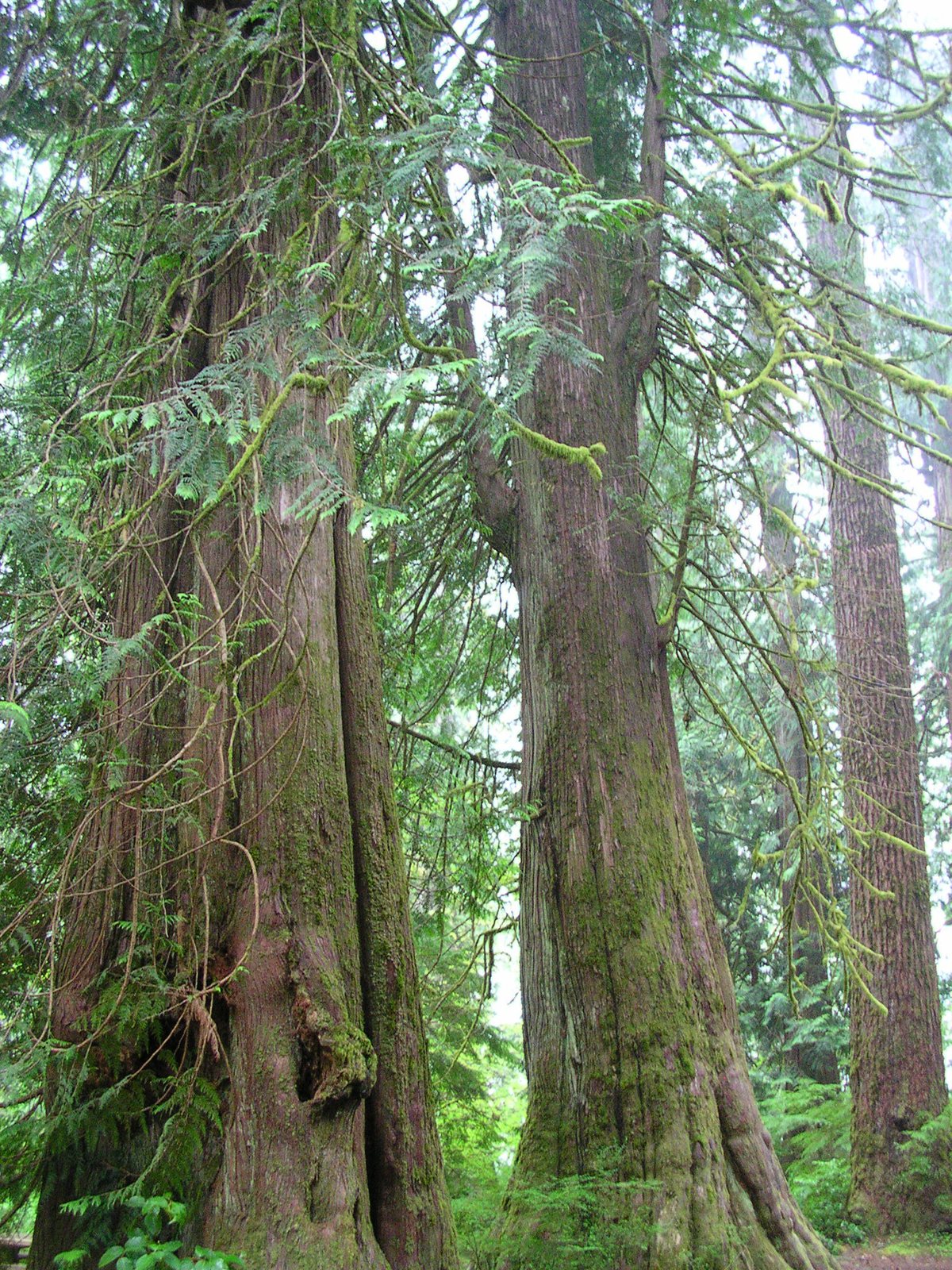
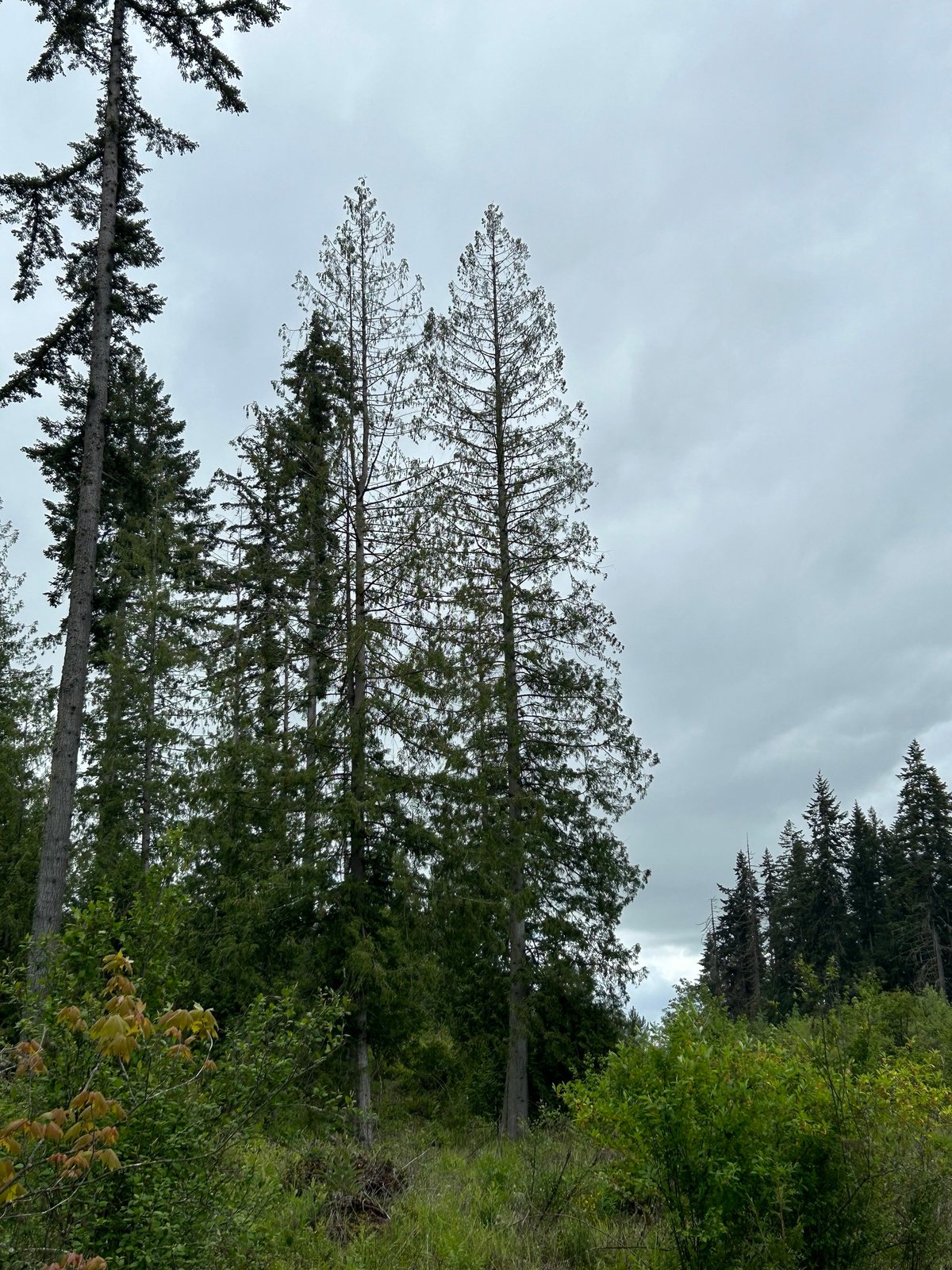
A large evergreen conifer native to western North America, with aromatic, flattened foliage and reddish-brown, fibrous bark. Gardeners grow it as a substantial specimen, windbreak or clipped screening hedge, but the species needs considerable space and dependable soil moisture.
At a glance
- Sun
- Full sun to partial shade; tolerates deeper shade but grows less densely.
- Water
- Moderate to high; keep young trees evenly moist and water established trees during prolonged dry spells. Poorly suited to hot, dry gardens without irrigation.
- Soil
- Deep, moist, well-drained soil, preferably rich in organic matter; tolerates clay and a range of soil pH, but avoid persistently waterlogged or very dry ground.
- Height
- 50-100 ft (15-30 m) in large gardens; can exceed 200 ft (61 m) in its native forests.
- Spread
- 15-30 ft (4.6-9.1 m), sometimes wider on old, open-grown trees.
- Foliage
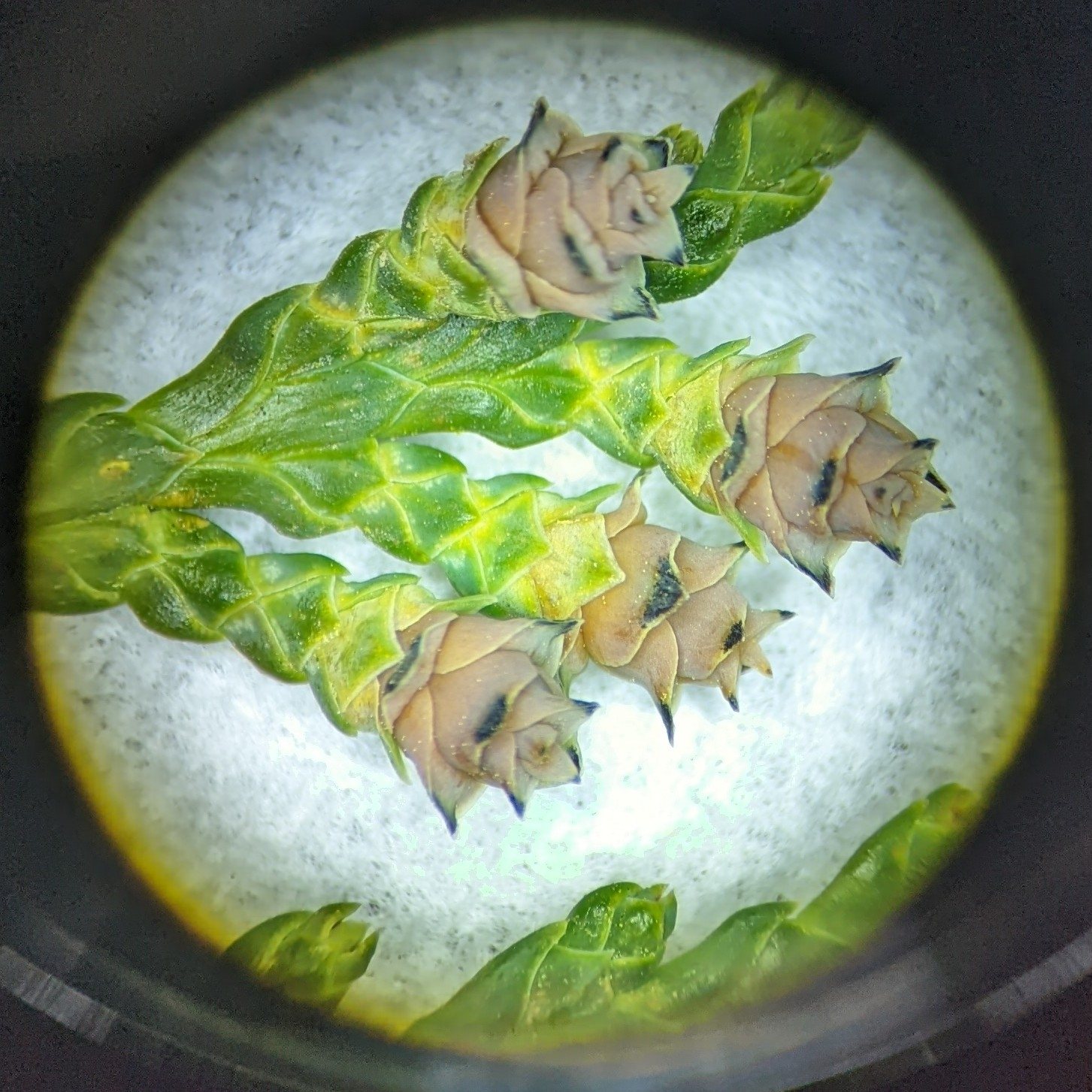
- Evergreen, glossy green scales arranged in flattened sprays, with pale markings underneath and a strong aromatic scent when crushed; small cones ripen brown.
- Growth
- Fast when young and well watered, often 1-3 ft (0.3-0.9 m) per year.
- Care needed
- Medium
The year at a glance
- Wildlife
| J | F | M | A | M | J | J | A | S | O | N | D | |
|---|---|---|---|---|---|---|---|---|---|---|---|---|
| Plant |
Northern hemisphere months. In Australia, shift them by six.
- Difficulty
- Moderate
- Toughness
- Fairly tough
Will it suit your garden?
Pick your zone, country, light and whether you have pets.
Full sun is 6 or more hours of direct sun a day, part shade 3 to 6 hours, shade under 3.
How it grows
Planting day
9 ft (2.7 m)
After 1 year
14 ft (4.2 m)
After 2 years
19 ft (5.7 m)
After 3 years
24 ft (7.3 m)
After 5 years
34 ft (10.3 m)
About 13 years to full size.
From a typical nursery size, at an average rate for this kind of plant. A rule of thumb, not a forecast.
Good to know
- Cats and dogs
- Toxic
- Native to
- Canada
- Growth rate
- Fast
Care
Jobs through the year
- WaterMar–May, Sep–Nov, every 14 days
- Deeply water established trees if soil is drying; young trees need more frequent watering for 2–3 years.
- WaterJun–Aug, every 7 days
- During dry weather, soak the broad root zone before foliage begins browning.
- WaterJan–Feb, Dec, every 28 days
- Water established trees only during prolonged dry weather when soil is unfrozen.
- MulchMar, Oct
- Top up organic mulch to 5–8 cm as needed, keeping it away from the trunk.
- FeedMar–Apr
- Feed only for weak growth or a confirmed nutrient deficiency.
- PruneMar
- Remove small dead or broken branches; use an arborist for large-tree work and never top.
- PruneMay–Jun, Aug
- For hedges only, trim green growth after checking for nests; a light August trim is optional.
- ProtectJan–Mar, Nov–Dec
- Where deer visit, fence young trees to prevent browsing.
- Water deeply during the first two or three growing seasons, allowing the surface soil to begin drying between soakings.
- Spread 2-3 in (5-8 cm) of organic mulch over the root area, keeping it clear of the trunk.
- During drought, soak the root zone rather than giving frequent light sprinklings.
- Feed only if growth is weak or a soil test shows a deficiency; avoid heavy nitrogen feeding.
- Allow for the mature crown and roots when planting near buildings, paths and neighbouring gardens.
Pruning. Trim hedges in late spring or early summer, with a light second trim in late summer if needed; keep the base wider than the top. Retain green foliage on cut branches where possible, and leave large-tree pruning to a qualified arborist rather than topping the tree.
Through the year
- Early spring
- Check for winter damage and remove small dead or broken branches.
- Spring
- Plant where soil is workable, water thoroughly and mulch the root area.
- Late spring
- Trim hedges after the first flush of growth, checking for active bird nests before cutting.
- Summer
- Check soil moisture during dry weather and water deeply before foliage begins to brown.
- Late summer
- Give formal hedges a light second trim if needed; avoid cutting during hot, dry weather.
- Autumn
- Plant in mild regions, replenish mulch and water before winter if the soil is dry.
In the garden
- Use as a tall evergreen screen along a spacious boundary, allowing room for regular hedge maintenance.
- Plant as a specimen in a large lawn or park-like garden to show its conical outline and sweeping lower branches.
- Combine with western hemlock, ferns and shade-tolerant shrubs in a moist woodland garden.
- Use in a mixed windbreak on moisture-retentive ground, rather than relying on a tightly crowded single-species row.
Garden styles it suits: Pacific Northwest woodland, Woodland, Formal, Grand estate, Wildlife garden and Winter interest.
Plant it with: Western hemlock, Vine maple, Western sword fern, Salal, Evergreen huckleberry and Rhododendrons.
Wildlife: Dense branches provide shelter and nesting sites for birds. Deer browse the foliage, especially on young plants, and native forest trees support a range of insects and other wildlife.
Problems to watch for
- Drought and heat stress: browning, thinning or dieback can follow dry summers; water deeply, mulch and avoid planting on hot, shallow soils.
- Phytophthora root rot: declining growth and dying roots are associated with wet, poorly drained ground; improve drainage and seek a diagnosis before replacing a failed tree.
- Cedar leaf blight: infected sprays develop brown patches, particularly in damp conditions; remove badly affected small shoots, improve airflow and avoid overhead watering.
- Cypress aphids: feeding can cause patches of browning in hedges; inspect affected shoots and use a labelled insecticidal soap on reachable infestations while protecting beneficial insects.
Safety
Do not allow people, cats, dogs or horses to eat the foliage or drink preparations made from it. The aromatic foliage and especially concentrated leaf oil contain potentially harmful compounds; species-specific poisoning information for pets and horses is limited, so the severity cannot be reliably stated. Sap and foliage may irritate sensitive skin, and wood dust can cause allergic reactions. Contact a veterinarian or poison service after significant ingestion.
Easily confused with
Northern white cedar (Thuja occidentalis)
Usually a smaller tree with duller, often yellowish-green foliage; western red cedar has glossier sprays and more conspicuous pale markings underneath. Cones and foliage should be checked together because cultivars vary.
Lawson's cypress (Chamaecyparis lawsoniana)
Has small, rounded, woody cones rather than western red cedar's elongated cones with overlapping scales.
Incense cedar (Calocedrus decurrens)
Its foliage forms narrower, more upright flattened sprays, and its larger cones open into conspicuous, spreading scales rather than the small, many-scaled cones of western red cedar.
The name
The species name plicata means 'folded', referring to the folded scale leaves; 'western red cedar' describes its western North American range and reddish wood, although it is not a true cedar.
Propagation. Sow seed in autumn, or cold-stratify it before spring sowing. Root semi-ripe cuttings in late summer under humid conditions; propagate named cultivars from cuttings to retain their characteristics.
Checked against open data
- Accepted botanical name
- Thuja plicata
- Native range
- Alaska, Alberta, British Columbia, California, Idaho, Montana, Oregon and Washington.
- Measured
- Soil pH 5.1 to 7.1. Average height 2030 cm.
Sources: GBIF (CC BY 4.0) and Trefle (CC BY 4.0). The care and design notes are LandscapeGPT's own.
See it in your own yard.
Upload a photo of your yard and see it redesigned with plants that suit your climate, each checked against your zone.