Wild plantain
Heliconia bihai. Family Heliconiaceae. Perennial.
Also called Macaw flower, Lobster claw.
Wild plantain is a large, tropical perennial grown for its banana-like leaves and upright flower heads with brightly coloured, boat-shaped bracts. It needs year-round warmth and generous moisture; outside frost-free climates, grow it in a heated greenhouse or a large container that can be moved into warm shelter. Despite its common name, it is not an edible plantain.
At a glance
- Sun
- Full sun to partial shade; light afternoon shade helps in very hot, dry locations. Shelter from strong winds.
- Water
- Keep evenly moist during active growth, watering thoroughly when the surface begins to dry. Reduce watering in cooler weather without allowing the root ball to dry out completely.
- Soil
- Rich, moisture-retentive soil with good drainage. For containers, use a fertile, open potting mix rather than heavy garden soil.
- Height
- 6-15 ft (1.8-4.6 m)
- Spread
- 3-6 ft (0.9-1.8 m), widening over time through spreading rhizomes
- Flowers
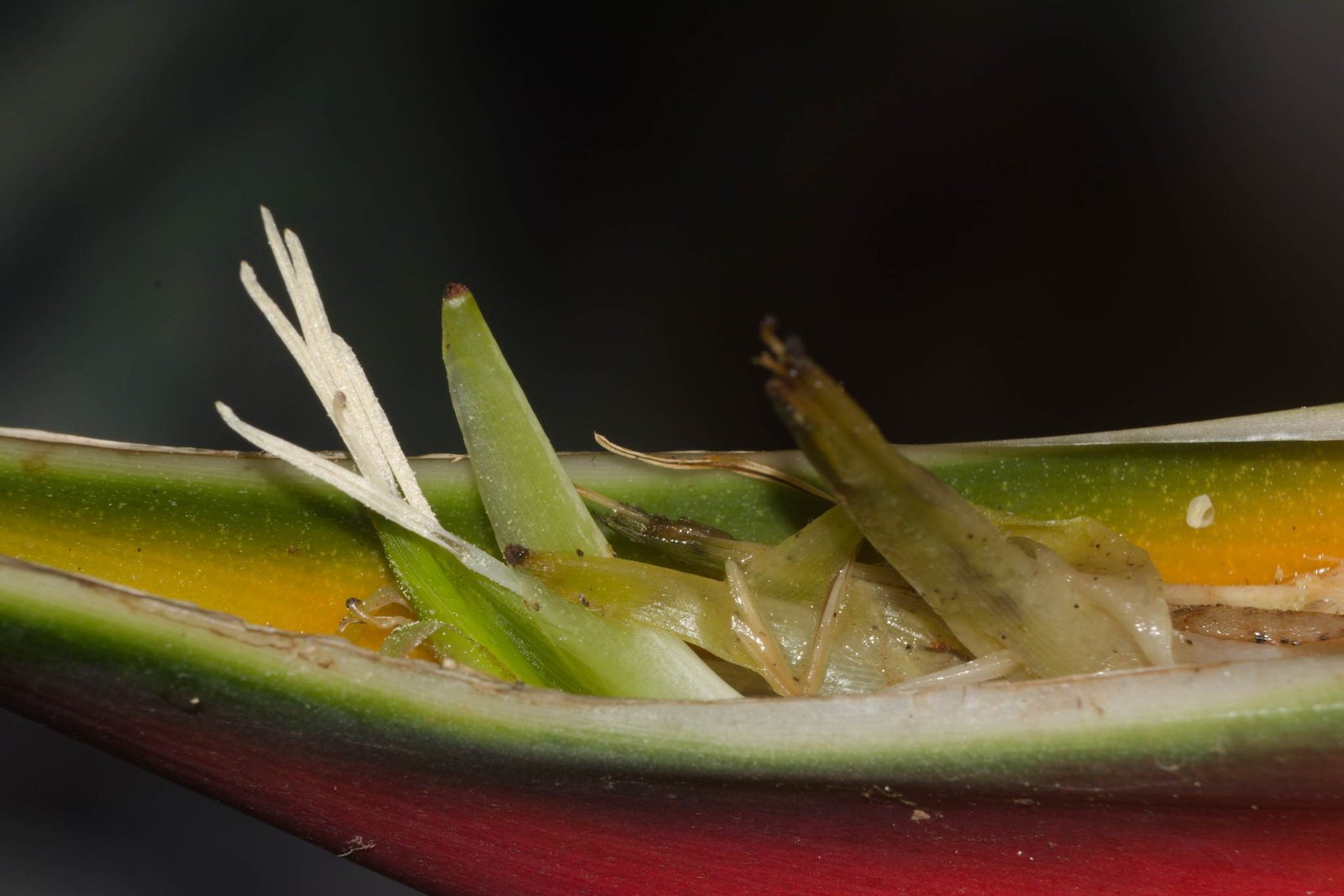
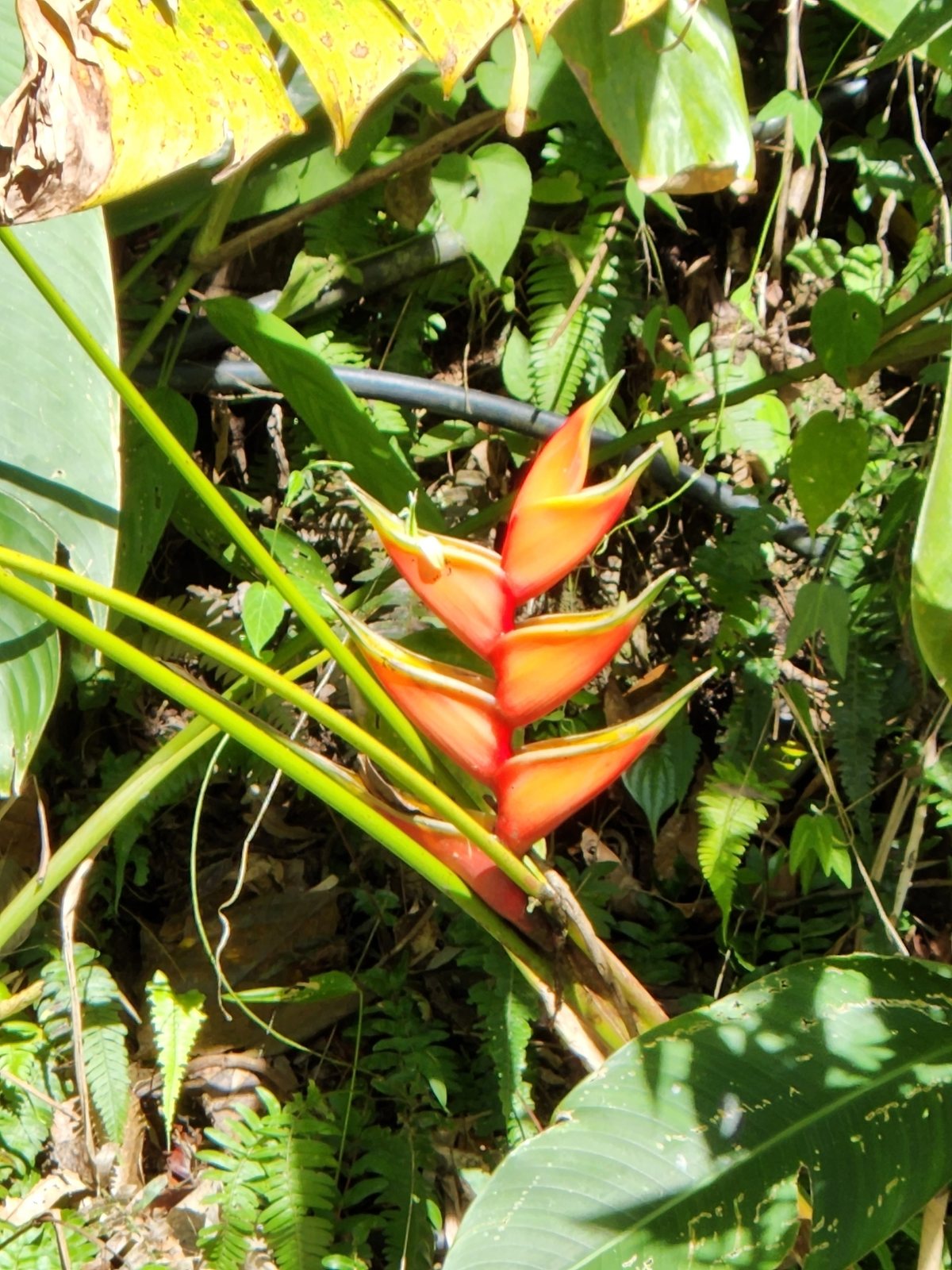
- Usually summer into autumn, potentially throughout the year in consistently warm tropical climates. Upright red to orange-red bracts, often edged with yellow or green, surround small tubular flowers.
- Foliage
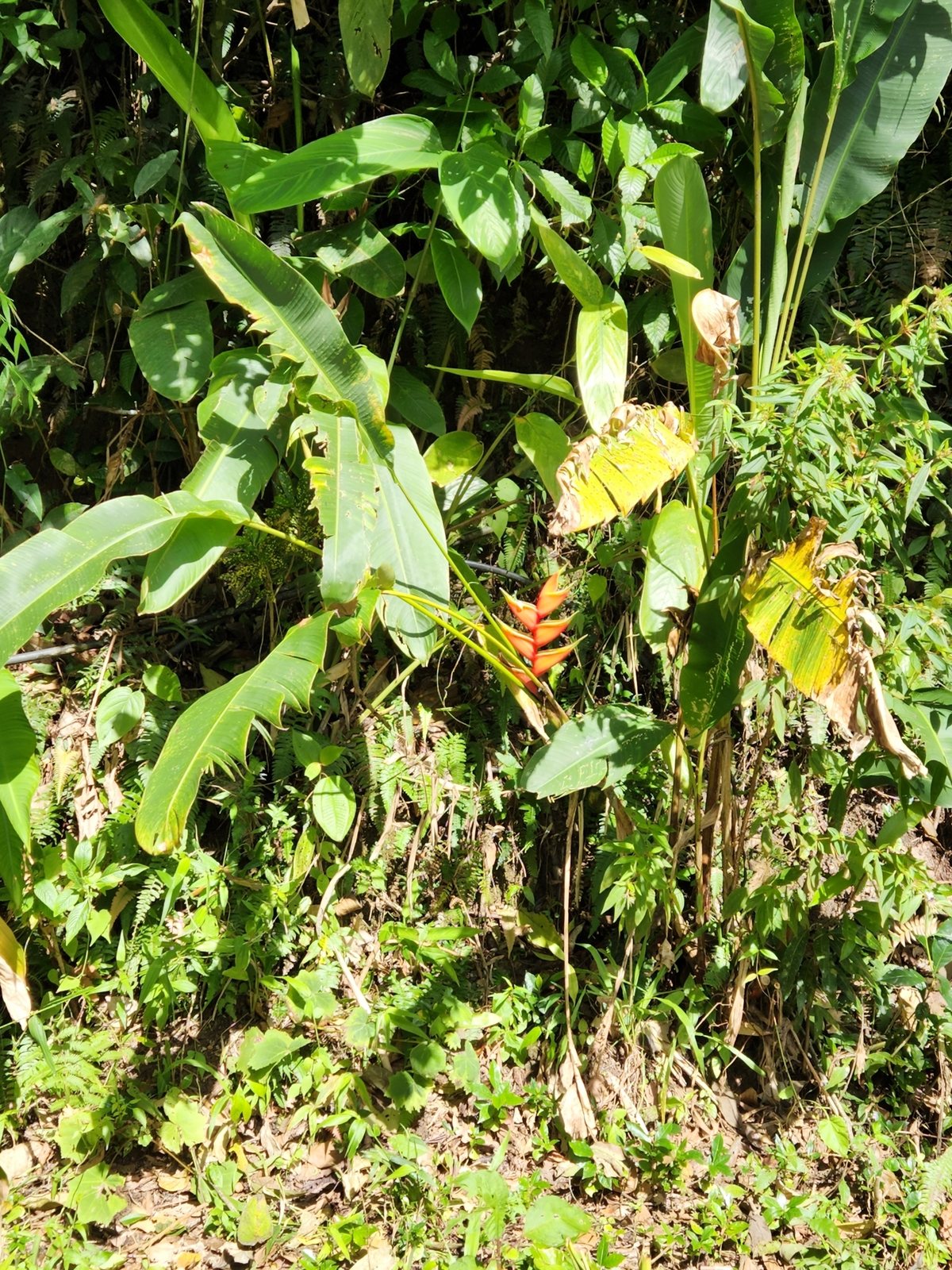
- Evergreen. Large, paddle-shaped green leaves on long stalks, forming upright, banana-like shoots. Wind readily splits the leaf blades.
- Growth
- Fast in warm, humid conditions; slow in cool weather
- Care needed
- High
The year at a glance
- Heat tolerant
- Low allergen
| J | F | M | A | M | J | J | A | S | O | N | D | |
|---|---|---|---|---|---|---|---|---|---|---|---|---|
| Flowers | ||||||||||||
| Plant |
Northern hemisphere months. In Australia, shift them by six.
- Difficulty
- Hard
- Toughness
- Needs looking after
Will it suit your garden?
Pick your zone, country, light and whether you have pets.
Full sun is 6 or more hours of direct sun a day, part shade 3 to 6 hours, shade under 3.
How it grows
Planting day
1.3 ft (0.38 m)
After 1 year
4 ft (1.3 m)
After 2 years
7 ft (2.3 m)
After 3 years
10 ft (3.2 m)
full size
About 3 years to full size.
From a typical nursery size, at an average rate for this kind of plant. A rule of thumb, not a forecast.
Good to know
- Cats and dogs
- Safe
- Growth rate
- Moderate
Care
Jobs through the year
- WaterApr–May, Sep–Oct, every 7 days
- Keep established roots moist, watering as the surface dries; young plants and pots need closer checks.
- WaterJun–Aug, every 3 days
- Water established plants deeply when the surface starts drying; avoid waterlogging.
- WaterJan–Mar, Nov–Dec, every 10 days
- In warm shelter, water when the surface dries without letting the root ball dry out.
- FeedMay–Aug, every 14 days
- Feed actively growing plants with balanced fertiliser at the label rate.
- MulchJun
- Apply compost mulch, keeping shoot bases clear.
- DivideMay–Jun
- Divide only congested clumps when sustained warmth and active growth return.
- PruneJul–Oct, every 14 days
- Cut finished flowering shoots to ground level; retain healthy unflowered shoots.
- ProtectSep
- Move into bright, heated shelter before cold nights; a chilly frost-free shed is insufficient.
- ProtectJun
- Move outside only when nights are reliably warm, acclimatising gradually and sheltering from wind.
- Water deeply and regularly during warm weather; do not leave containers standing in water.
- Feed regularly during active growth with a balanced fertiliser, following the label rate.
- Mulch the root area with compost or other organic material, keeping it clear of shoot bases.
- Provide a sheltered position to reduce torn leaves and broken stems.
- Move container plants into bright, warm shelter before nights become cold; a frost-free but chilly shed is unsuitable.
- Divide crowded clumps when warm growing conditions return.
Pruning. Cut each flowered shoot to ground level once its display has finished; that shoot will not flower again. Remove dead or badly damaged leaves at their bases, but retain healthy foliage to feed the rhizomes.
Through the year
- Spring
- Divide congested clumps or repot container plants once sustained warmth returns.
- Late spring
- Move sheltered plants outdoors only when nights are reliably warm, introducing them gradually to stronger sunlight.
- Summer
- Water regularly and feed during active growth; check container plants frequently in hot weather.
- Late summer
- Remove finished flowering shoots at ground level and check leaf undersides for mites and mealybugs.
- Autumn
- Bring container plants into warm, bright shelter before cold nights arrive.
- Winter
- Keep sheltered plants warm and water less as growth slows, without letting the roots become completely dry.
In the garden
- Plant in groups at the back of a frost-free tropical border for tall foliage and strong flower colour.
- Combine with gingers, cordylines and ferns to build contrasting layers of tropical foliage.
- Use a large container as a summer focal point beside a sheltered patio, allowing space to move it indoors.
- Plant against a plain wall or fence where the upright flower heads and broad leaves stand out.
Garden styles it suits: Tropical, Modern tropical, Luxury resort, Architectural minimal, Caribbean and Balinese.
Plant it with: Shell ginger, Red ginger, Ti plant, Elephant's ear, Bird's nest fern and Croton.
Wildlife: In its native tropical American range, hummingbirds visit the flowers for nectar. It offers little comparable nectar value to birds in the UK, Canada or Australia, where hummingbirds do not occur.
Problems to watch for
- Cold damage: leaves blacken and growth stalls in chilly conditions; move containers into warm shelter before cold weather and remove dead tissue.
- Spider mites: stippled leaves and fine webbing develop, especially indoors; rinse leaf undersides and use a labelled insecticidal soap if needed.
- Mealybugs and scale insects: inspect leaf sheaths and undersides, remove small infestations by hand and treat persistent infestations with a suitable labelled product.
- Rhizome rot: waterlogged, especially cool, soil causes soft bases and collapse; improve drainage, reduce watering and discard rotten rhizomes.
Safety
Not known to be toxic to people, cats, dogs or horses, but species-specific safety information is limited. No part should be treated as food, and pets should be discouraged from chewing it.
Easily confused with
Hanging lobster claw (Heliconia rostrata)
Its red-and-yellow flower heads hang downward; those of wild plantain stand upright.
Caribbean heliconia (Heliconia caribaea)
It usually has broader, more tightly crowded upright bracts. The species and their hybrids can be difficult to separate reliably without a botanical identification.
Bird of paradise (Strelitzia reginae)
It has stiff, grey-green leaves and orange-and-blue flowers emerging from a horizontal, beak-like spathe, rather than a stack of colourful upright bracts.
The name
Heliconia refers to Mount Helicon in Greece, while the common name wild plantain describes the plant's resemblance to a banana or plantain.
Propagation. Divide rhizomes when active growth begins in warm conditions. Keep a healthy growing point and roots on each division, then pot into a moist, free-draining mix and keep warm until established. Seed propagation is possible but slow and unpredictable.
Checked against open data
- Accepted botanical name
- Heliconia bihai
- In the US and Canada
- Native in Puerto Rico. Introduced in Hawaii.
- Native range
- Brazil North, Colombia, Dominican Republic, French Guiana, Guyana, Haiti, Leeward Is., Mexico Central, Mexico Gulf, Mexico Southeast, Mexico Southwest and Puerto Rico.
Sources: GBIF (CC BY 4.0), USDA PLANTS and Trefle (CC BY 4.0). The care and design notes are LandscapeGPT's own.
See it in your own yard.
Upload a photo of your yard and see it redesigned with plants that suit your climate, each checked against your zone.