Buttonwood
Conocarpus erectus. Family Combretaceae. Tree.
Also called Green buttonwood, Silver buttonwood, Button mangrove.
Buttonwood is a tropical evergreen tree or large shrub grown for its dense canopy, tolerance of coastal salt spray and suitability for clipped screens. Most plants have green leaves; silver buttonwood forms have softly hairy, silvery foliage. It needs a nearly frost-free climate and is not reliably hardy outdoors in the United Kingdom or Canada.
At a glance
- Sun
- Full sun; tolerates light partial shade, but growth is less dense.
- Water
- Water regularly while establishing; established plants tolerate drought and occasional wet soil.
- Soil
- Adaptable to sandy, loamy or clay soils, including alkaline and saline soils; good drainage is preferable in gardens.
- Height
- 20-40 ft (6-12 m)
- Spread
- 15-30 ft (4.5-9 m)
- Flowers
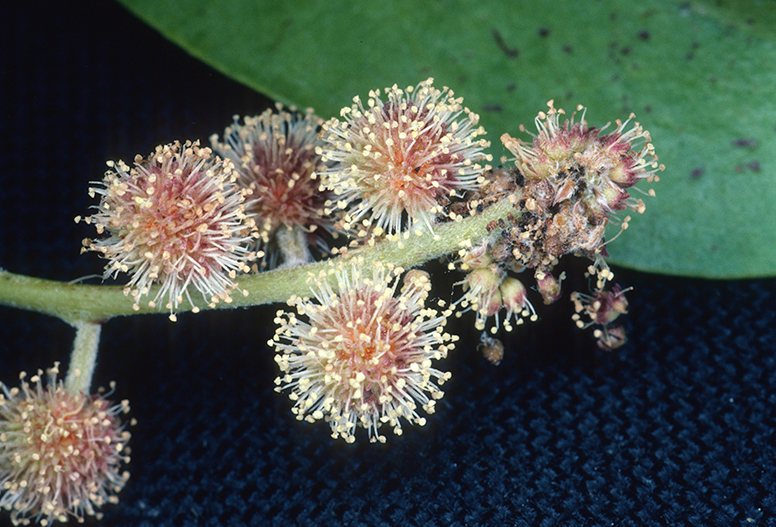
- Small, inconspicuous greenish-white flowers in rounded heads, mainly from spring through autumn; flowering can occur year-round in tropical climates.
- Foliage
- Evergreen. Leathery, oval to elliptic leaves arranged alternately along the stems; green in the typical form and densely silver-haired in silver forms.
- Growth
- Moderate to fast in warm conditions.
- Care needed
- Medium
The year at a glance
- Pollinators
- Drought tolerant
- Heat tolerant
- Wildlife
| J | F | M | A | M | J | J | A | S | O | N | D | |
|---|---|---|---|---|---|---|---|---|---|---|---|---|
| Flowers | ||||||||||||
| Fruit | ||||||||||||
| Plant |
Northern hemisphere months. In Australia, shift them by six.
- Difficulty
- Hard
- Toughness
- Needs looking after
Will it suit your garden?
Pick your zone, country, light and whether you have pets.
Full sun is 6 or more hours of direct sun a day, part shade 3 to 6 hours, shade under 3.
How it grows
Planting day
7 ft (2 m)
After 1 year
8 ft (2.4 m)
After 2 years
9 ft (2.9 m)
After 3 years
11 ft (3.3 m)
After 5 years
14 ft (4.2 m)
About 16 years to full size.
From a typical nursery size, at an average rate for this kind of plant. A rule of thumb, not a forecast.
Good to know
- Cats and dogs
- Safe
- Native to
- the US
- Growth rate
- Fast
Care
Jobs through the year
- ProtectSep–Oct
- Not hardy in zones 6–7; move containers into bright, frost-free shelter before cold nights.
- ProtectJun
- Acclimatize plants gradually to outdoor sun once nights are reliably warm.
- WaterApr–May, Sep–Oct, every 7 days
- Check container moisture and water when the surface starts drying; outdoor overwintering is unsuitable.
- WaterJun–Aug, every 3 days
- Check sun-exposed containers frequently; water when the surface dries and allow drainage.
- WaterJan–Mar, Nov–Dec, every 14 days
- Check overwintering containers and water as needed, keeping soil slightly moist rather than saturated.
- PruneApr–May
- Remove damaged wood and select well-spaced main branches as growth resumes.
- MulchJun
- Apply a light mulch to large containers without covering the trunk.
- Water the root ball deeply during establishment, allowing the surface soil to begin drying between waterings.
- Once established, water during prolonged drought rather than keeping the soil constantly wet.
- Apply a broad layer of organic mulch, keeping it clear of the trunk.
- Feed lightly in spring only if growth is weak or the soil is poor; avoid heavy nitrogen feeding.
- Allow room for the mature canopy and roots; do not plant close to paving, drains or small foundations.
- Keep container-grown plants in strong light and move them into frost-free shelter before cold weather.
Pruning. Prune in late winter or early spring after the risk of cold damage has passed, removing dead wood and selecting well-spaced main branches on young trees. Trim hedges lightly during warm-season growth rather than repeatedly cutting back into large branches.
Through the year
- Spring
- Plant after cold weather has passed, water thoroughly and mulch the root zone.
- Late spring
- Check new growth and feed lightly only if the plant shows poor growth.
- Summer
- Water young plants during dry spells and trim screens lightly as needed.
- Late summer
- Inspect leaves and stems for scale insects, sooty mould and feeding damage.
- Autumn
- Move container plants under frost-free cover where winters are too cold.
- Late winter
- In frost-free gardens, remove damaged branches and correct weak or crowded branching.
In the garden
- Use as a salt-tolerant screen or wind-filtering hedge in warm coastal gardens.
- Train as a small shade tree over a lawn or spacious courtyard, leaving ample rooting room.
- Clip into formal hedges or broad topiary shapes where regular maintenance is practical.
- Use silver forms as a pale foliage contrast beside dark green shrubs, palms and bold-leaved tropical plants.
Garden styles it suits: Coastal, Modern tropical, Florida subtropical, Caribbean, Formal and Topiary garden.
Plant it with: Sea grape, Cocoplum, Saw palmetto, Coontie, Muhly grass and Beach sunflower.
Wildlife: The small flowers attract visiting insects, and the dense canopy provides shelter and nesting cover for birds.
Problems to watch for
- Frost damage: leaves and young shoots can be scorched or killed; choose a sheltered, frost-free position and protect small plants during cold snaps.
- Scale insects and sooty mould: inspect stems and leaf undersides, manage ants and treat accessible infestations with horticultural oil according to the label.
- Chewing insects: caterpillars and beetles can damage foliage; identify the pest first and tolerate minor damage rather than spraying routinely.
- Root conflicts and weak branching: allow generous space around paving and buildings, and train young trees to develop well-spaced main branches.
Safety
Buttonwood is not known to be toxic to people, cats, dogs or horses, but species-specific safety information is limited. Do not treat its leaves, bark or button-like fruits as food.
Easily confused with
Buttonbush (Cephalanthus occidentalis)
Buttonbush is deciduous, with opposite or whorled leaves and conspicuous white spherical flower heads with projecting styles; buttonwood has alternate evergreen leaves and much smaller, less showy flower heads.
White mangrove (Laguncularia racemosa)
White mangrove has opposite, broadly rounded leaves, usually with a slightly notched tip; buttonwood has alternate leaves, usually with more pointed tips.
Black mangrove (Avicennia germinans)
Black mangrove has opposite leaves with pale undersides and commonly produces upright breathing roots in wet ground; buttonwood has alternate leaves and does not produce these breathing roots.
The name
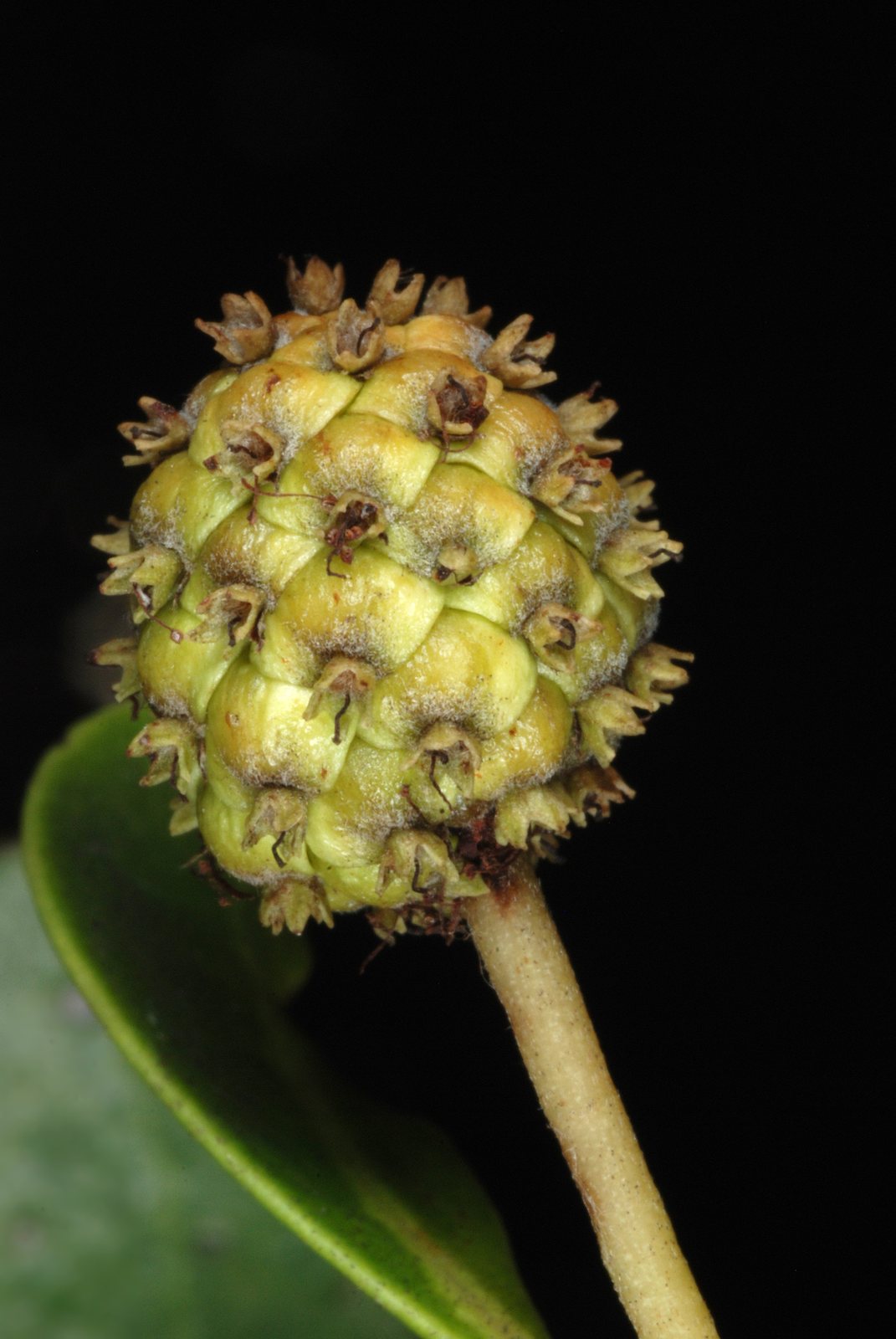
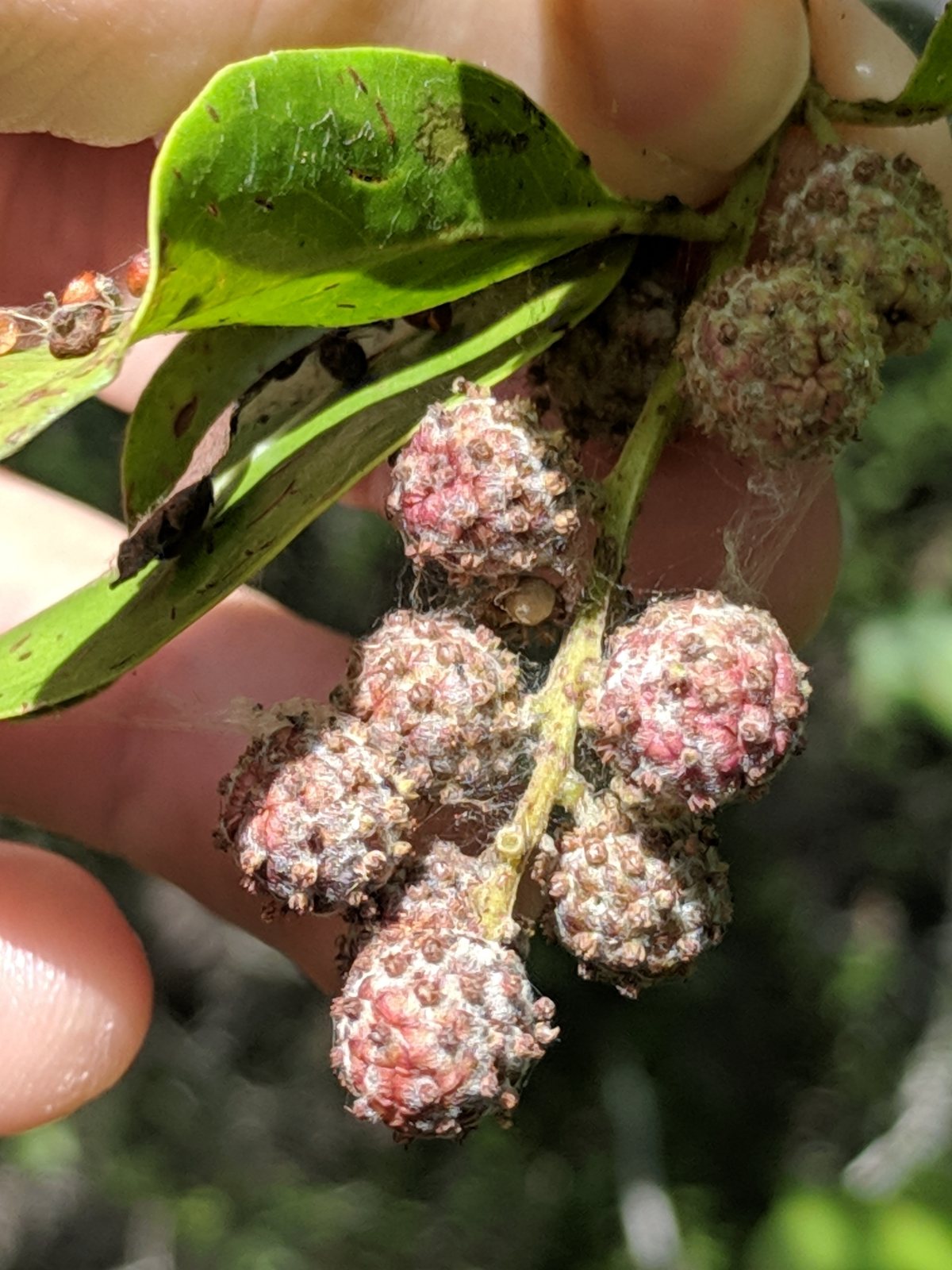
Buttonwood refers to the rounded, woody, button-like fruiting heads, while Conocarpus comes from Greek words meaning cone and fruit.
Propagation. Propagate from fresh seed or semi-ripe cuttings taken during warm weather. Use cuttings from a silver plant to retain its foliage characteristics; seedlings may vary.
Checked against open data
- Accepted botanical name
- Conocarpus erectus
- In the US and Canada
- Native in the lower 48 states, Puerto Rico and US Virgin Islands. Introduced in Hawaii.
- Native range
- Angola, Aruba, Bahamas, Belize, Benin, Bermuda, Brazil North, Brazil Northeast, Brazil South, Brazil Southeast, Cabinda and Cameroon.
Sources: GBIF (CC BY 4.0), USDA PLANTS and Trefle (CC BY 4.0). The care and design notes are LandscapeGPT's own.
See it in your own yard.
Upload a photo of your yard and see it redesigned with plants that suit your climate, each checked against your zone.