Gumbo limbo
Bursera simaruba. Family Burseraceae. Tree.
Also called Gumbo-limbo, Tourist tree, West Indian birch.
Gumbo limbo is a tropical shade tree grown for its copper-red, peeling bark, spreading crown and tolerance of coastal conditions. Native to southern Florida, the Caribbean and tropical America, it needs a frost-free garden with room for a substantial tree; ordinary outdoor conditions in the UK and Canada are too cold.
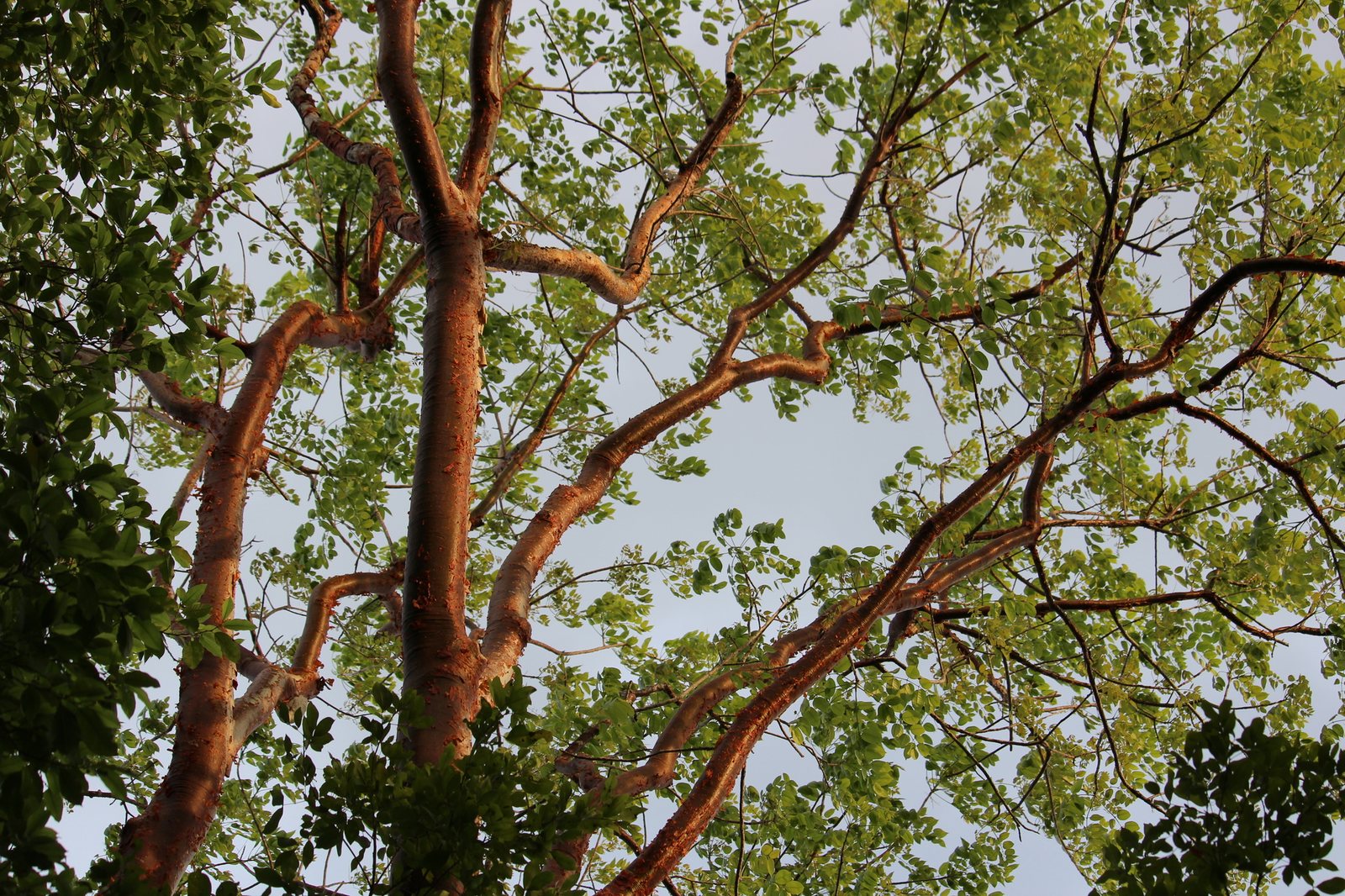
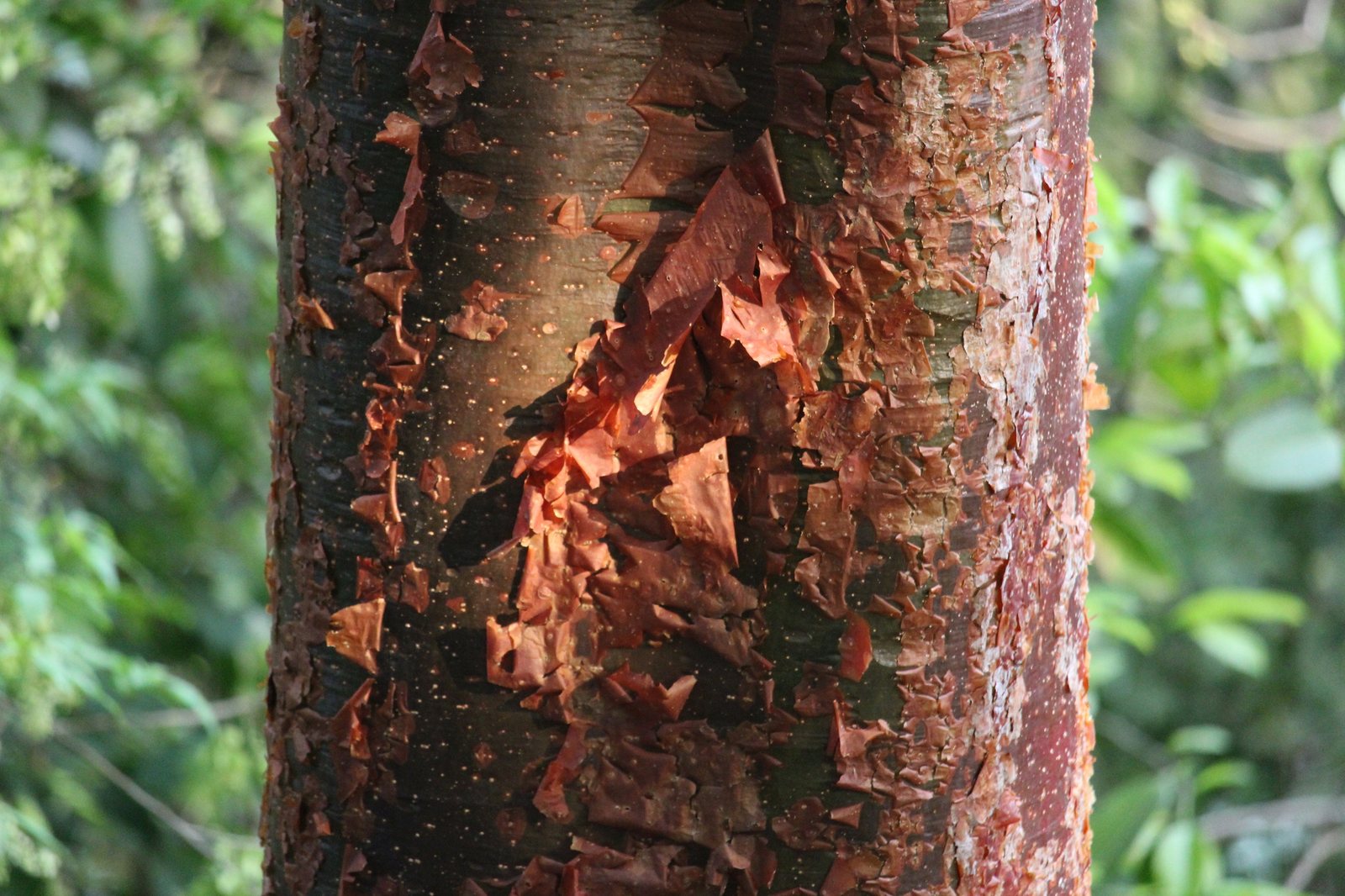
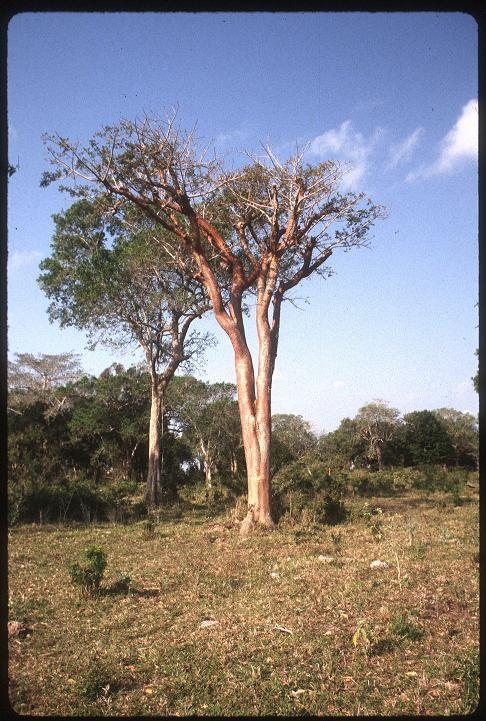
At a glance
- Sun
- Full sun to partial shade; develops its best crown in full sun.
- Water
- Water regularly while establishing. Once established, it tolerates seasonal drought and usually needs watering only during prolonged dry spells.
- Soil
- Well-drained sand, loam or limestone-based soil; tolerates alkaline soil and coastal salt spray, but not prolonged waterlogging.
- Height
- 40-60 ft (12-18 m)
- Spread
- 30-50 ft (9-15 m)
- Flowers
- Small, inconspicuous greenish-white flowers in spring and early summer; timing varies with climate.
- Foliage
- Compound green leaves with usually 5-9 leaflets. Briefly deciduous or semi-evergreen, often shedding leaves during dry weather or before new growth.
- Growth
- Fast in warm conditions.
- Care needed
- Low
The year at a glance
- Pollinators
- Drought tolerant
- Heat tolerant
- Wildlife
- Low allergen
| J | F | M | A | M | J | J | A | S | O | N | D | |
|---|---|---|---|---|---|---|---|---|---|---|---|---|
| Flowers | ||||||||||||
| Fruit | ||||||||||||
| Plant |
Northern hemisphere months. In Australia, shift them by six.
- Difficulty
- Hard
- Toughness
- Needs looking after
Will it suit your garden?
Pick your zone, country, light and whether you have pets.
Full sun is 6 or more hours of direct sun a day, part shade 3 to 6 hours, shade under 3.
How it grows
Planting day
7 ft (2 m)
After 1 year
10 ft (3 m)
After 2 years
13 ft (4 m)
After 3 years
16 ft (5 m)
After 5 years
23 ft (7 m)
About 13 years to full size.
From a typical nursery size, at an average rate for this kind of plant. A rule of thumb, not a forecast.
Good to know
- Cats and dogs
- Safe
- Native to
- the US
- Growth rate
- Fast
Care
Jobs through the year
- ProtectSep–Oct
- Not ground-hardy in zones 6–7; move container specimens into a bright, warm, frost-free conservatory.
- ProtectJun
- Move outdoors only after nights are reliably warm, acclimatizing gradually to sun.
- WaterApr–May, Sep–Oct, every 14 days
- Check container soil and water only after partial drying; this tree cannot overwinter outdoors here.
- WaterJun–Aug, every 7 days
- Check containers and soak when partly dry; young or root-bound plants may need water sooner.
- WaterJan–Mar, Nov–Dec, every 21 days
- Check sheltered plants and water sparingly, especially while leafless; never leave roots waterlogged.
- PruneMar–Apr
- Before strong growth, remove competing leaders and establish well-spaced branches; never top.
- MulchJun
- Use a light mulch on large containers, keeping it away from the trunk.
- Plant well away from paving, buildings and overhead wires so the trunk, roots and crown have room to develop.
- Water the root ball deeply during establishment, allowing the surrounding soil to drain between waterings.
- Spread 2-3 in (5-8 cm) of mulch over the root zone, keeping it clear of the trunk.
- Avoid routine heavy feeding; fertilize only if growth is weak and a soil assessment indicates a deficiency.
- Stake only if the root ball is unstable, and remove supports once the roots hold it firmly.
Pruning. Prune young trees in late winter or early spring to establish a sound framework of well-spaced branches and remove competing leaders. On mature trees, remove dead, damaged or poorly attached branches as needed; avoid topping and have large limbs assessed by a qualified arborist.
Through the year
- Late winter
- Check branch structure and arrange any necessary structural pruning before strong new growth.
- Spring
- Plant when the soil is warm and frost risk has passed; water the root ball thoroughly.
- Late spring
- Refresh mulch without piling it against the trunk.
- Summer
- Check newly planted trees frequently and water deeply when the root ball begins to dry.
- Autumn
- Inspect for broken limbs after storms and check that young-tree supports are not rubbing the bark.
- Winter
- Protect small young trees during unusual cold snaps; avoid keeping the soil constantly wet.
In the garden
- Use as a specimen shade tree in a large, frost-free lawn where its peeling trunk remains visible.
- Include in a coastal garden with salt-tolerant shrubs and groundcovers.
- Plant in a Caribbean or tropical-style garden with palms and low foliage plants beneath the crown.
- Use in a native South Florida wildlife garden, leaving space for its broad mature canopy.
Garden styles it suits: Modern tropical, Tropical, Coastal, Florida subtropical, Caribbean and Wildlife garden.
Plant it with: Coontie, Saw palmetto, Cocoplum, Firebush, Sea grape and Muhly grass.
Wildlife: Its small fruits open to expose seeds with a red covering that attracts fruit-eating birds. Flowers provide food for visiting insects, and the broad crown offers shelter and nesting sites.
Problems to watch for
- Root decline in waterlogged soil: improve drainage before planting and avoid sites that remain saturated.
- Cold damage: choose a frost-free site; protect young trees during brief cold snaps and wait for new growth before judging which branches have died.
- Weak branch unions on poorly trained young trees: establish well-spaced scaffold branches early rather than making large corrective cuts later.
- Scale insects and associated sooty mould: inspect stems and leaf undersides, encourage beneficial insects and use a labelled horticultural oil if an infestation warrants treatment.
Safety
Not known to be toxic to people, cats, dogs or horses, but reliable species-specific information for pets and livestock is limited. Do not treat the leaves, bark, resin or fruits as food; avoid sap contact if you have sensitive skin.
Easily confused with
Nakedwood (Colubrina elliptica)
Also has peeling reddish bark, but its leaves are simple rather than divided into several leaflets.
Jamaican dogwood (Piscidia piscipula)
Has compound leaves, but its bark is grey and rough rather than copper-red and peeling; its showy pea-shaped flowers and winged pods are also distinctive.
The name
The genus Bursera honours the botanist Joachim Burser, and the common name tourist tree refers to the reddish, peeling bark resembling sunburned skin.
Propagation. Propagate from fresh seed or large woody cuttings in warm conditions. Branch cuttings root readily, but keep the rooting medium well drained and give new plants time to establish before exposing them to strong winds.
Checked against open data
- Accepted botanical name
- Bursera simaruba
- In the US and Canada
- Native in the lower 48 states, Navassa Island, Puerto Rico and US Virgin Islands.
- Native range
- Aruba, Bahamas, Belize, Brazil North, Cayman Is., Colombia, Costa Rica, Cuba, Dominican Republic, El Salvador, Florida and French Guiana.
- Measured
- Soil pH 6 to 7. Average height 1135 cm.
Sources: GBIF (CC BY 4.0), USDA PLANTS and Trefle (CC BY 4.0). The care and design notes are LandscapeGPT's own.
See it in your own yard.
Upload a photo of your yard and see it redesigned with plants that suit your climate, each checked against your zone.