Narrowleaf zinnia
Zinnia angustifolia. Family Asteraceae. Annual.
Also called Narrow-leaved zinnia, Creeping zinnia.
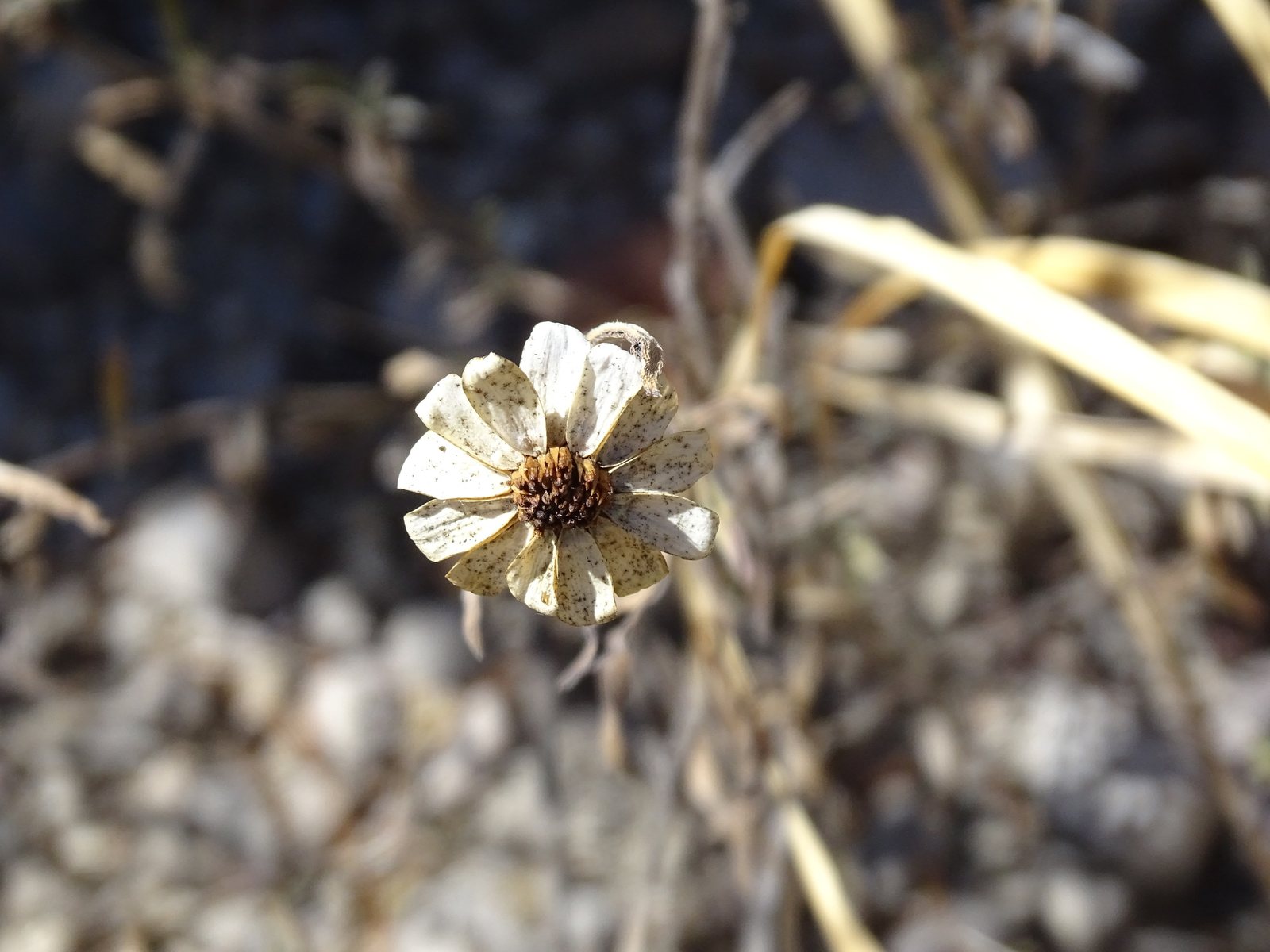
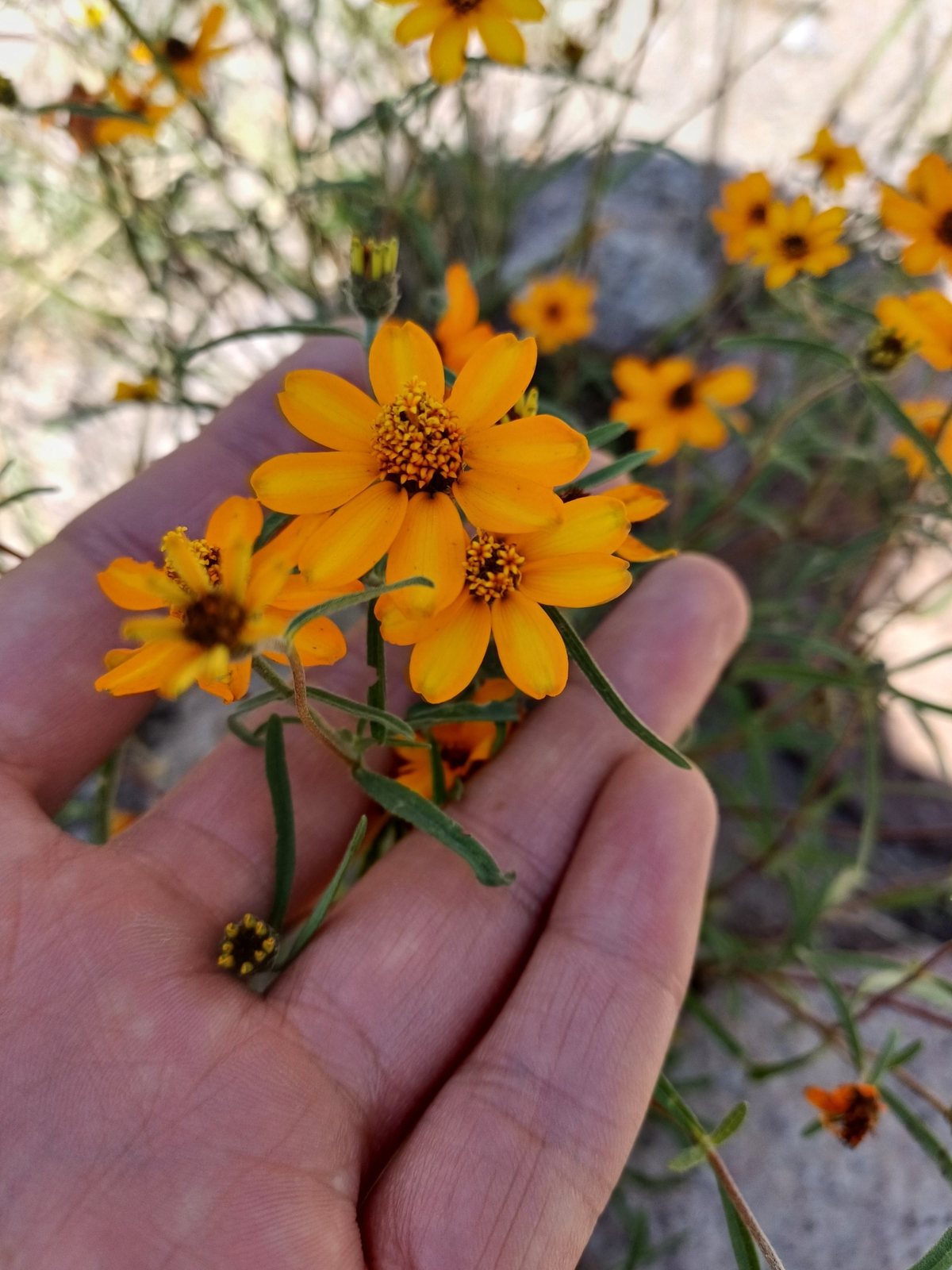
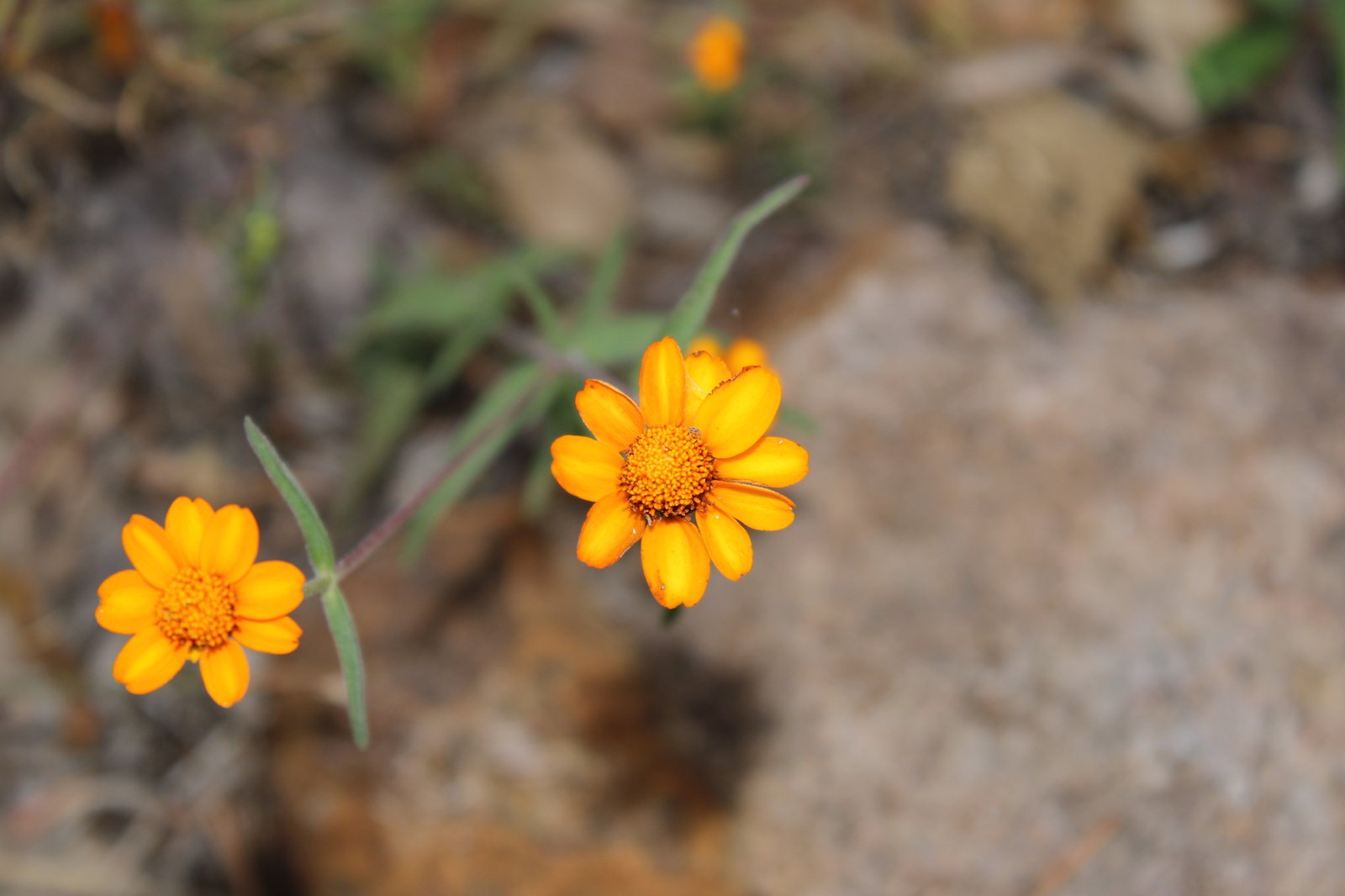
Narrowleaf zinnia is a compact, branching Mexican plant grown as an annual for its small, daisy-like flowers from summer until frost. It tolerates heat and short dry spells once established, and is generally less troubled by powdery mildew than common garden zinnias.
At a glance
- Sun
- Full sun; flowering is best with at least 6 hours of direct sunlight daily.
- Water
- Water regularly while establishing, then when the upper soil dries. Established plants tolerate short dry spells, but containers need more frequent watering.
- Soil
- Well-drained sandy, loamy or gritty soil; average fertility is sufficient. Avoid ground that stays wet.
- Height
- 0.5-1.5 ft (0.15-0.45 m)
- Spread
- 1-1.5 ft (0.3-0.45 m)
- Flowers
- Summer to the first frost; usually orange in the species, with yellow and white forms also available.
- Foliage
- Narrow, pointed green leaves arranged in opposite pairs on branching, slightly hairy stems.
- Growth
- Fast; reaches flowering size in one growing season.
- Care needed
- Low
The year at a glance
- Pollinators
- Deer resistant
- Drought tolerant
- Heat tolerant
- Disease resistant
- Low allergen
| J | F | M | A | M | J | J | A | S | O | N | D | |
|---|---|---|---|---|---|---|---|---|---|---|---|---|
| Flowers | ||||||||||||
| Fruit | ||||||||||||
| Plant |
Northern hemisphere months. In Australia, shift them by six.
- Difficulty
- Easy
- Toughness
- Very tough
Will it suit your garden?
Pick your zone, country, light and whether you have pets.
Full sun is 6 or more hours of direct sun a day, part shade 3 to 6 hours, shade under 3.
How it grows
Planting day
0.5 ft (0.15 m)
After 1 year
1 ft (0.3 m)
full size
Full size in one season.
From a typical nursery size, at an average rate for this kind of plant. A rule of thumb, not a forecast.
Good to know
- Cats and dogs
- Safe
- Growth rate
- Fast
Care
Jobs through the year
- WaterMay–Jun, every 7 days
- Water established plants at soil level when the upper soil dries; seedlings need more frequent watering.
- WaterJul–Aug, every 7 days
- Soak the root zone during dry weather; skip after useful rain and check containers more often.
- WaterSep–Oct, every 14 days
- Water only if the upper soil is dry, stopping after frost kills the plants.
- MulchJun
- Apply a light mulch after soil warms, keeping stems clear.
- DeadheadJun–Oct, every 14 days
- Optionally remove faded flowers for tidiness; leave a few late heads if saving seed.
- ProtectMay–Jun
- Protect young seedlings from slugs and snails with barriers or approved iron-based bait.
- Plant out only after frost risk has passed and the soil has warmed.
- Space plants about 1 ft (0.3 m) apart to allow air movement.
- Water at soil level rather than repeatedly wetting the leaves.
- Use a light mulch to reduce weeds, keeping it away from the stems.
- Feed container plants lightly with a balanced fertiliser according to the label; avoid heavy feeding in beds.
Pruning. Pinch young shoot tips once if you want denser branching, though this is usually unnecessary. Remove spent flowers to tidy the plants; routine deadheading is not essential for continued flowering.
Through the year
- Early spring
- Sow indoors about 4-6 weeks before your last expected frost, using individual modules to limit root disturbance.
- Late spring
- Harden off seedlings and plant out after frost, or sow directly into warm, prepared soil.
- Early summer
- Thin seedlings to about 1 ft (0.3 m) apart and water regularly until established.
- Summer
- Check containers frequently for dry compost and remove damaged or diseased growth.
- Early autumn
- Let a few flower heads dry on the plant if you want to collect seed.
- Late autumn
- Remove plants after frost kills them; compost healthy material and discard diseased remains.
In the garden
- Edge sunny paths and borders with a low ribbon of summer colour.
- Plant in groups in hot borders alongside salvias and ornamental grasses.
- Use in sunny containers with trailing verbena for contrasting flower shapes.
- Fill seasonal gaps at the front of a pollinator border.
Garden styles it suits: Cottage garden, Pollinator garden, Low-maintenance, Hot border, Small-space and Mexican hacienda.
Plant it with: Mealycup sage, Globe amaranth, French marigold, Moss rose, Verbena and Purple fountain grass.
Wildlife: The open flower heads provide nectar and pollen for bees, butterflies and other visiting insects. Single-flowered forms offer easier access than densely double flowers.
Problems to watch for
- Powdery mildew: less common than on many zinnias, but possible in crowded planting; improve spacing, water at soil level and remove badly affected leaves.
- Leaf spots: avoid overhead watering and handling wet plants; remove infected foliage and clear affected debris at season's end.
- Slugs and snails: protect young seedlings with barriers or locally approved iron-based slug bait used according to the label.
- Root rot or collapse in wet soil: improve drainage, let the surface dry between waterings and use containers with unobstructed drainage holes.
Safety
Not known to be toxic to people, cats, dogs or horses. No part is recognised as poisonous, but it is an ornamental plant rather than a food crop.
Easily confused with
Common zinnia (Zinnia elegans)
Usually has much broader leaves and larger flower heads, often on taller, more upright stems; many cultivars have densely double flowers.
Creeping zinnia (Sanvitalia procumbens)
Forms a lower, trailing mat with broader oval leaves and small yellow flowers that usually have conspicuous dark centres. The shared common name can cause confusion.
The name
Zinnia honours the German botanist Johann Gottfried Zinn, while angustifolia means narrow-leaved.
Propagation. Grow from seed, either sown indoors shortly before the last frost or directly outdoors once the soil is warm. Sow shallowly and keep evenly moist until germination. Seed saved from named cultivars may not produce plants identical to the parent.
Checked against open data
- Accepted botanical name
- Zinnia angustifolia
- In the US and Canada
- Introduced in the lower 48 states.
- Native range
- Mexico Central, Mexico Northeast, Mexico Northwest and Mexico Southwest.
- Measured
- Average height 21 cm.
Sources: GBIF (CC BY 4.0), USDA PLANTS and Trefle (CC BY 4.0). The care and design notes are LandscapeGPT's own.
See it in your own yard.
Upload a photo of your yard and see it redesigned with plants that suit your climate, each checked against your zone.