Our Lord's candle
Hesperoyucca whipplei. Family Asparagaceae. Succulent.
Also called Chaparral yucca, Spanish bayonet, Yucca whipplei.
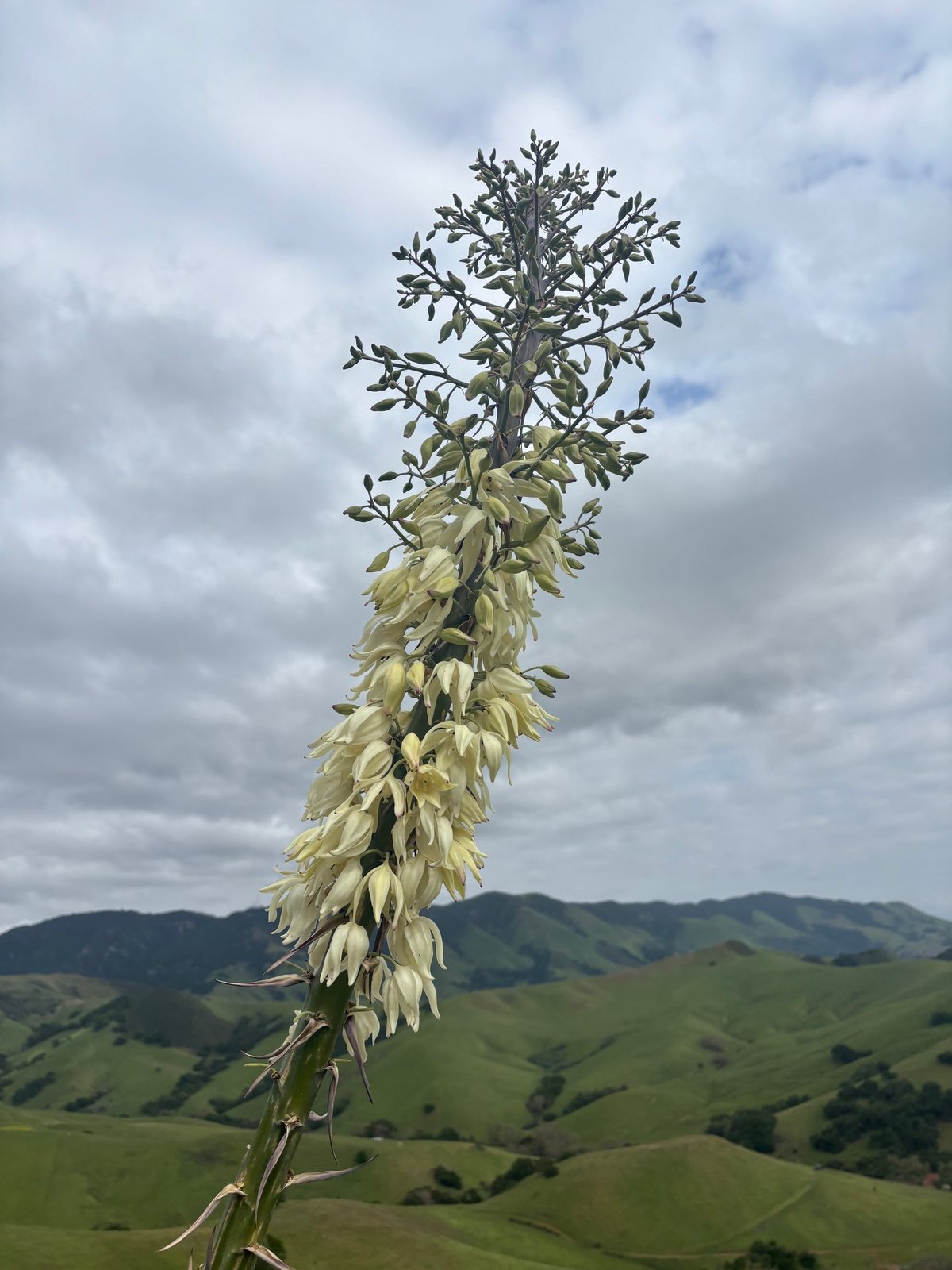
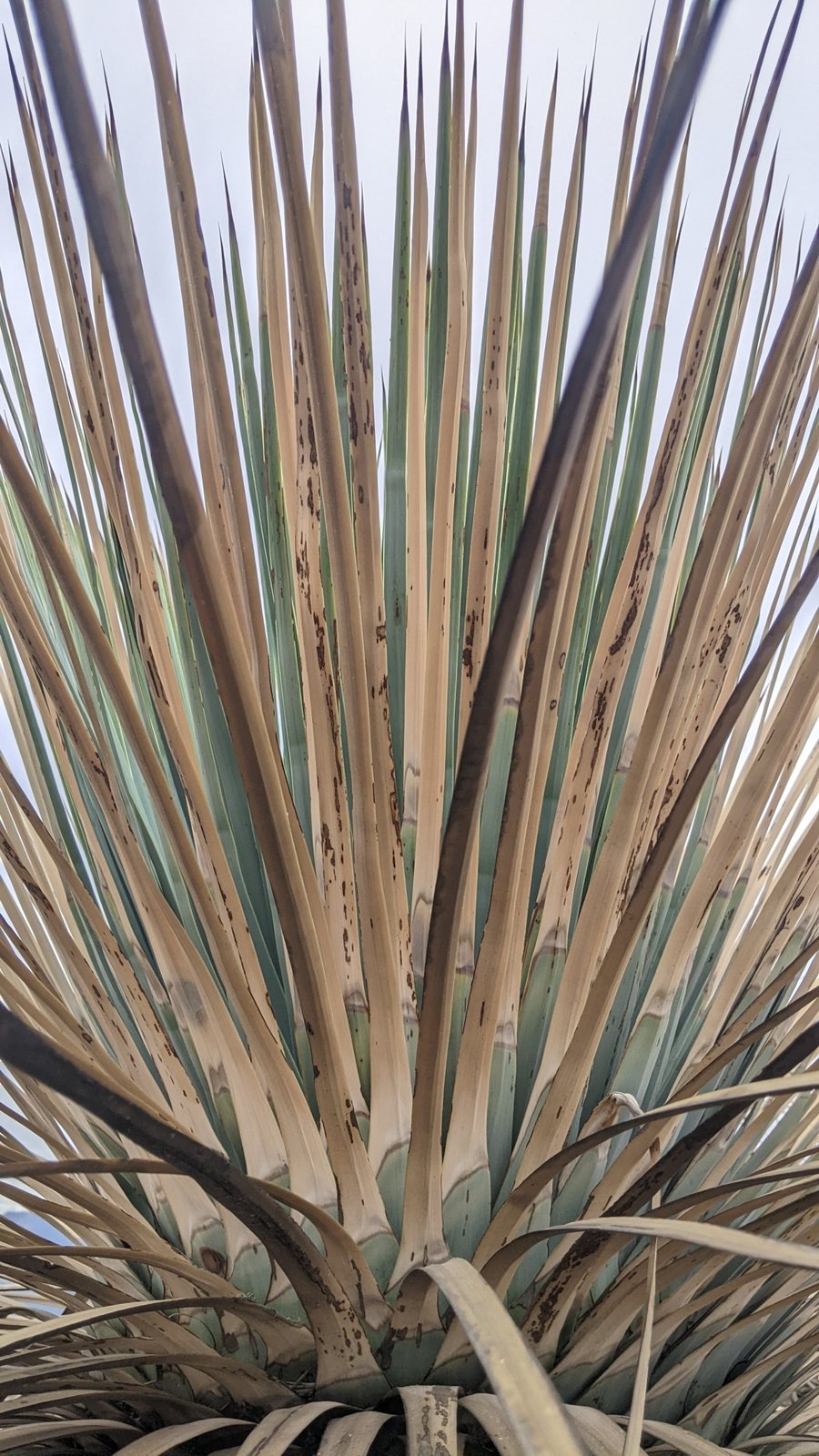
This evergreen succulent from California and Baja California forms a dense rosette of narrow, silver-blue leaves and eventually sends up a towering spike of creamy flowers. Gardeners grow it for its strong shape and drought tolerance; each rosette flowers once, usually after many years, then dies, though some forms leave offsets.
At a glance
- Sun
- Full sun.
- Water
- Low once established; water young plants occasionally during prolonged dry spells. Keep especially dry in winter.
- Soil
- Lean, sharply drained sandy or gravelly soil. Avoid heavy clay, winter waterlogging and rich, moisture-retentive compost.
- Height
- Foliage 2-3 ft (0.6-0.9 m); flowering spike 6-12 ft (1.8-3.7 m).
- Spread
- 3-5 ft (0.9-1.5 m) per rosette; offsetting forms can spread wider.
- Flowers
- Late spring to early summer; a tall, densely branched spike of creamy-white, bell-shaped flowers, sometimes flushed purple.
- Foliage
- Evergreen. Stiff, narrow, silver-blue to grey-green leaves with finely toothed edges and very sharp terminal spines.
- Growth
- Slow; the flower stalk grows rapidly once flowering begins.
- Care needed
- Low
The year at a glance
- Pollinators
- Deer resistant
- Drought tolerant
- Heat tolerant
- Low allergen
| J | F | M | A | M | J | J | A | S | O | N | D | |
|---|---|---|---|---|---|---|---|---|---|---|---|---|
| Flowers | ||||||||||||
| Plant |
Northern hemisphere months. In Australia, shift them by six.
- Difficulty
- Hard
- Toughness
- Fairly tough
Will it suit your garden?
Pick your zone, country, light and whether you have pets.
Full sun is 6 or more hours of direct sun a day, part shade 3 to 6 hours, shade under 3.
How it grows
Planting day
0.8 ft (0.25 m)
After 1 year
1.1 ft (0.33 m)
After 2 years
1.4 ft (0.42 m)
After 3 years
1.6 ft (0.5 m)
After 5 years
2.2 ft (0.67 m)
About 6 years to full size.
From a typical nursery size, at an average rate for this kind of plant. A rule of thumb, not a forecast.
Good to know
- Cats and dogs
- Mildly toxic: may upset a stomach
- Native to
- the US
- Growth rate
- Moderate
Care
Jobs through the year
- WaterApr–May, Sep, every 30 days
- For established outdoor plants, water only during prolonged drought when soil is fully dry; young plants need more.
- WaterJun–Aug, every 21 days
- Water established plants only if exceptionally dry; let soil dry completely between soakings.
- MulchApr–May
- Apply gravel mulch, keeping the crown clear and drainage unobstructed.
- PruneApr
- Remove completely dead outer leaves using long tools, stout gloves and eye protection.
- PruneJul–Aug
- After flowering, remove the spent stalk and loosened dying rosette, preserving healthy offsets.
- ProtectJan–Apr, Oct–Dec
- Not reliably hardy in zone 6–7; overwinter containers in bright, cool, frost-free shelter and keep nearly dry.
- Plant on a raised mound or slope where rain drains away quickly.
- Water deeply but infrequently during establishment, letting the soil dry between waterings.
- Avoid routine feeding; rich feeding is unnecessary.
- Use gravel mulch and keep it clear of the crown.
- Leave room around the sharp leaves, well away from paths, play areas and pets.
- In cool, wet climates, use a container that can be moved under a bright, rain-sheltered cover for winter.
Pruning. Remove completely dead outer leaves in spring with long-handled tools, wearing stout gloves and eye protection. After flowering, cut down the spent stalk and remove the dying rosette once it loosens, preserving any healthy offsets.
Through the year
- Spring
- Plant once the soil is warming, choosing full sun and excellent drainage.
- Spring
- Remove dead leaves and check that mulch or fallen debris has not collected in the crown.
- Late spring
- Watch mature rosettes for an emerging flower stalk and keep access clear around it.
- Summer
- Water recently planted specimens during extended drought; leave established plants mostly dry.
- Late summer
- Remove spent flower stalks unless you are retaining developing seed capsules.
- Autumn
- Clear drainage outlets and move containers out of persistent winter rain in cool climates.
In the garden
- Use as a solitary focal point in a gravel garden, with open ground around the rosette.
- Combine with low drought-tolerant plants so its upright leaves remain clearly visible.
- Plant on a sunny, dry bank among boulders for a California chaparral effect.
- Use in a large, freely draining container beside modern architecture, away from circulation routes.
Garden styles it suits: California native, Desert / xeriscape, Desert modern, Architectural minimal, Dry gravel garden and Modern Mediterranean.
Plant it with: California buckwheat, White sage, Cleveland sage, Deer grass, California fuchsia and Rockrose.
Wildlife: In its native range, flowers are pollinated by a specialist yucca moth whose larvae eat some developing seeds. Reliable seed production is unlikely where that moth is absent.
Problems to watch for
- Crown or root rot in wet soil: improve drainage, reduce watering and keep water from collecting in the crown; badly rotted plants rarely recover.
- Cold and winter-wet damage: choose a sheltered, sharply drained site or grow in a movable container where winters are cold and rainy.
- Scale insects or mealybugs: inspect leaf bases and remove small infestations by hand; use a labelled treatment if they persist.
- Rosette dies after flowering: this is normal, not a disease; retain healthy offsets if present, otherwise replace the plant or raise seedlings.
Safety
Species-specific toxicity to people, cats, dogs and horses is not well established, so it should not be treated as safe to eat. Related yuccas contain saponins that can cause digestive upset if swallowed. The sharp leaf tips and toothed edges are a clear puncture and cut hazard.
Easily confused with
Beaked yucca (Yucca rostrata)
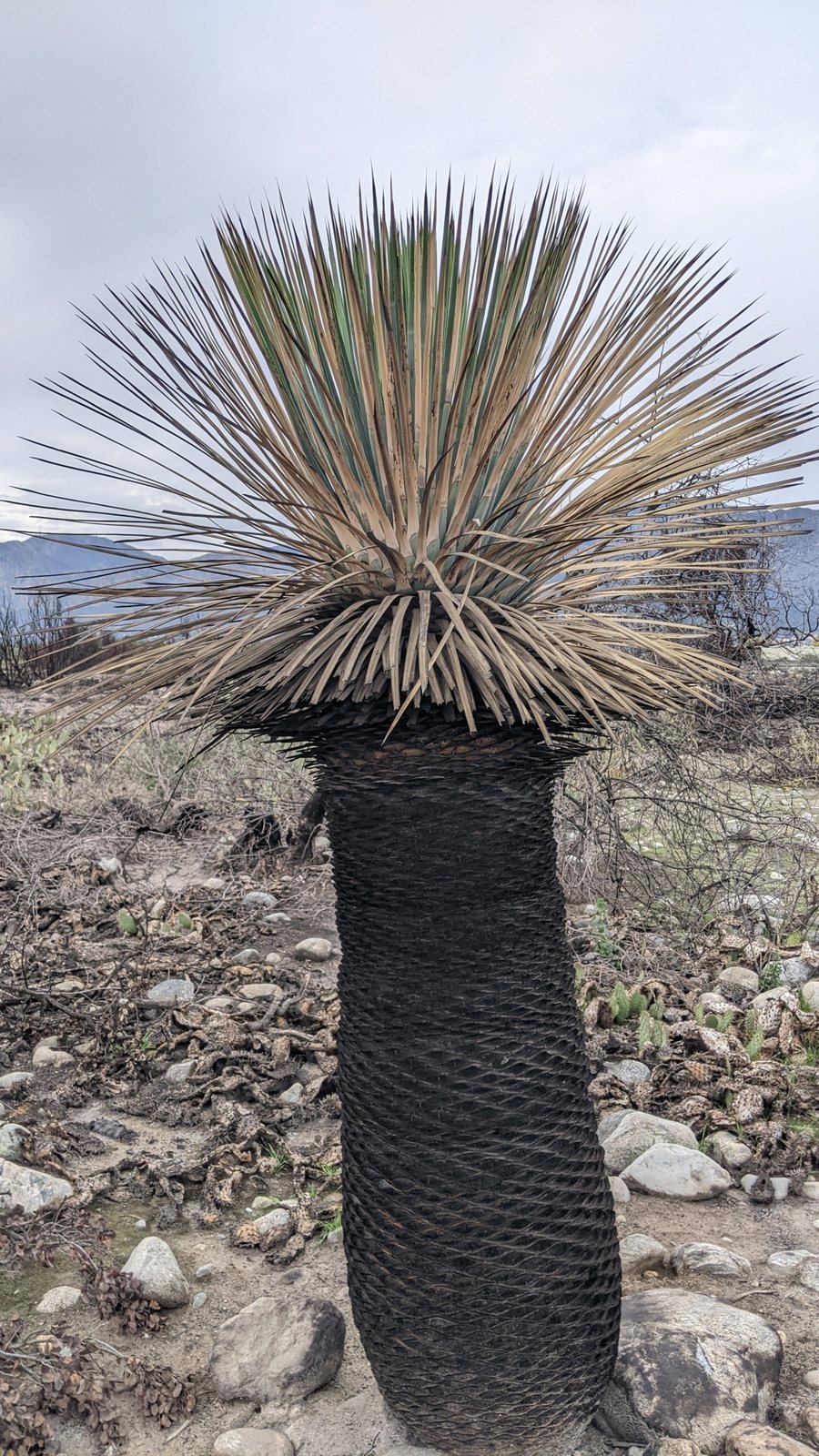
Develops a conspicuous woody trunk topped by a rounded head of narrow leaves; Our Lord's candle normally remains a ground-level rosette.
Banana yucca (Yucca baccata)
Has much broader leaves, often with curling edge threads, and a shorter flower cluster followed by large, fleshy fruits.
Desert spoon (Dasylirion wheeleri)
Has conspicuous hooked teeth along its leaves and a narrow stalk of tiny flowers rather than large, hanging, bell-shaped blooms.
The name
Hesperoyucca means western yucca, whipplei honours American surveyor Amiel Weeks Whipple, and Our Lord's candle refers to the tall, pale flower spike.
Propagation. Sow seed in a warm, freely draining medium, keeping it lightly moist rather than wet. Where offsets form, separate well-rooted ones in spring with protective gloves; not every form produces offsets.
Checked against open data
- Accepted botanical name
- Hesperoyucca whipplei
- In the US and Canada
- Native in the lower 48 states.
- Native range
- California and Mexico Northwest.
- Measured
- Soil pH 6.4 to 8.5. Average height 242 cm.
Sources: GBIF (CC BY 4.0), USDA PLANTS and Trefle (CC BY 4.0). The care and design notes are LandscapeGPT's own.
See it in your own yard.
Upload a photo of your yard and see it redesigned with plants that suit your climate, each checked against your zone.